
Dadaism – What Is the Meaning of the Meaninglessness of Dada Art?

Dada was an international avant-garde network that emerged during the First World War and turned artistic rebellion into a method. Its artists used performance, nonsense, collage, photomontage, readymades, found materials, provocative publications, and chance procedures to challenge the authority of art institutions and the rational values they believed had failed modern society. Dada had no single visual style: Zürich, Berlin, Cologne, Hanover, Paris, and New York developed different priorities, and those differences are essential to understanding the movement.
What Is Dadaism?
Dada—often called Dadaism—was less a unified style than a deliberately unstable network of artists, writers, performers, publishers, and exhibition organizers. It took recognizable form around 1916 and remained especially active into the early 1920s. World War One was the central historical shock behind European Dada, but the movement also responded to mass media, advertising, industrial production, nationalism, academic art, and the expanding machinery of modern urban life.
The movement’s refusal of convention did not mean that its members simply believed “nothing matters.” Dada was full of arguments about what mattered. A nonsense poem could attack the authority of ordinary language. A newspaper photomontage could expose political propaganda by rearranging the same mass-media images. A manufactured object could force an exhibition society to reveal the limits of its own supposedly open rules. The meaning of Dada often lies in that collision between an action and the system it tests.
Performance art, photography, collage, painting, sculpture, typography, poetry, magazines, sound, film, and everyday objects all became possible Dada media. For that reason, “Dada characteristics” are better understood as strategies—chance, appropriation, irreverence, absurdity, collaboration, fragmentation, and institutional challenge—than as a list of shapes or colors.
Dada at a Glance
| Question | Short Answer |
|---|---|
| When? | Most concentrated activity ran from 1916 into the early 1920s, although related New York experiments began earlier and individual legacies continued much longer. |
| Where? | Zürich and New York developed as independent early centers; Berlin, Cologne, Hanover, and Paris produced distinct local forms. |
| Why? | Responses ranged from antiwar protest and political satire to attacks on artistic authorship, bourgeois taste, institutional authority, and rational order. |
| How? | Performance, sound poetry, collage, photomontage, assemblage, readymades, chance procedures, magazines, photography, film, and media provocations. |
| One style? | No. A Berlin photomontage, a Zürich sound poem, a New York readymade, and a Schwitters Merz collage can look completely different while sharing Dada’s experimental position. |
The Key Ideas of Dada Art
Dada repeatedly questioned who gets to decide what art is, what counts as artistic skill, and where meaning comes from. Marcel Duchamp’s readymades shifted attention from fabrication toward selection, naming, orientation, and context. That move did not erase the manufactured object’s visual qualities; it made the relationship between industrial design and artistic designation impossible to ignore.
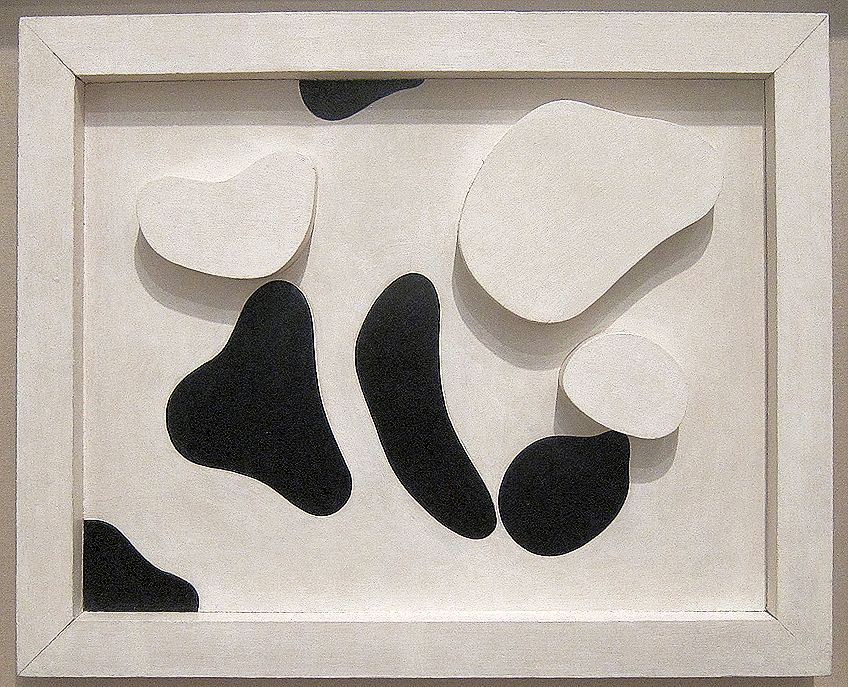
Chance offered a different challenge to authorship. Jean Arp described dropping or arranging paper elements according to chance, while other Dada artists used fragments, accidents, typographic disruption, or collaborative procedures to weaken the authority of a fully planned composition. Chance was important, but it was never the universal recipe for every Dada work.
Dada also used humor more seriously than the word “joke” suggests. Puns, deliberate stupidity, parody, false advertising, ridiculous costumes, scandalous titles, and deadpan presentation could expose the rituals through which art, politics, masculinity, nationalism, or cultural prestige maintained authority. The joke often works because the viewer recognizes the convention being violated.
Dada did not replace meaning with nonsense. It used nonsense to make the systems that manufacture meaning suddenly visible.
The Birth of Dada in Zürich
Neutral Switzerland became a refuge for artists and intellectuals during World War One. On February 5, 1916, Emmy Hennings and Hugo Ball opened the Cabaret Voltaire in Zürich. Poetry, music, dance, masks, visual art, and performances collided in a small venue that quickly attracted figures including Tristan Tzara, Jean Arp, Marcel Janco, Richard Huelsenbeck, and Sophie Taeuber-Arp.
The origin of the word Dada remains deliberately slippery. French dada can mean “hobbyhorse,” and later accounts tell of a dictionary being opened or stabbed at random, but no single anecdote should be treated as settled fact. The ambiguity suited a group that resisted stable programs. Dada could sound childish, international, meaningless, or newly invented depending on who was using it.
Ball’s performances became emblematic of Zürich Dada. He read sound poems in costume, breaking language into rhythm, phonetic force, breath, and noise. Tzara became an energetic publisher and promoter; Arp developed chance-based collage; Taeuber-Arp connected abstraction, dance, textiles, marionettes, and design. Emmy Hennings was not merely Ball’s partner: as a performer, poet, singer, and co-founder of the Cabaret, she was integral to the movement’s first public form.
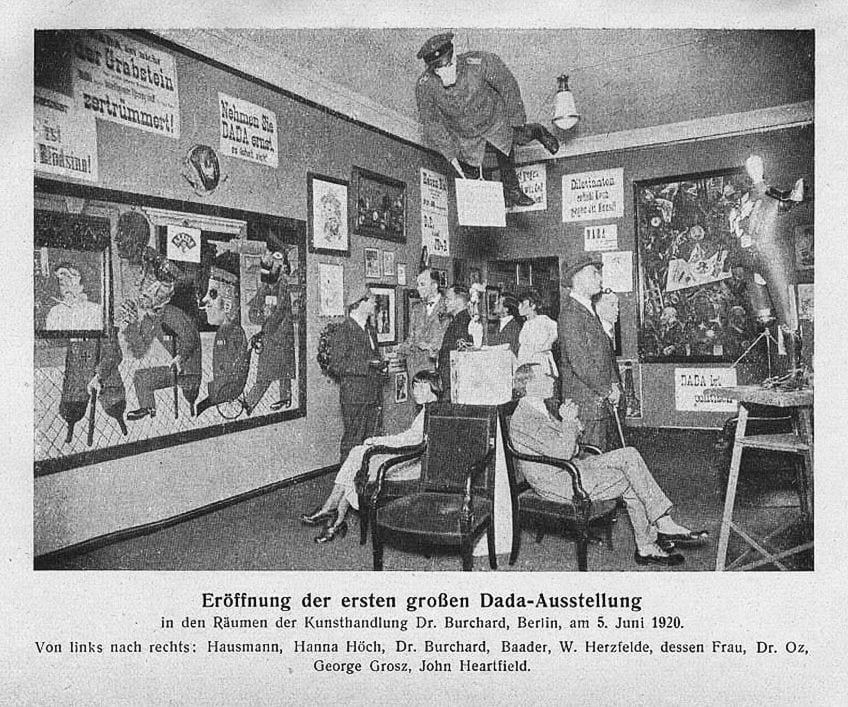
The Berlin photograph above belongs to a later center, but it demonstrates how quickly Dada moved from a cramped Zürich cabaret into exhibitions, publications, and confrontational public events. By 1918–1919, “Dada” was no longer a local Zürich word.
Manifestos, Magazines, and Audience Provocation
Ball delivered a Dada manifesto in 1916, while Tzara later published manifestos that deliberately combined assertion and contradiction. The group’s magazines were just as important as gallery objects because typography, image, text, and distribution could themselves become experimental media.
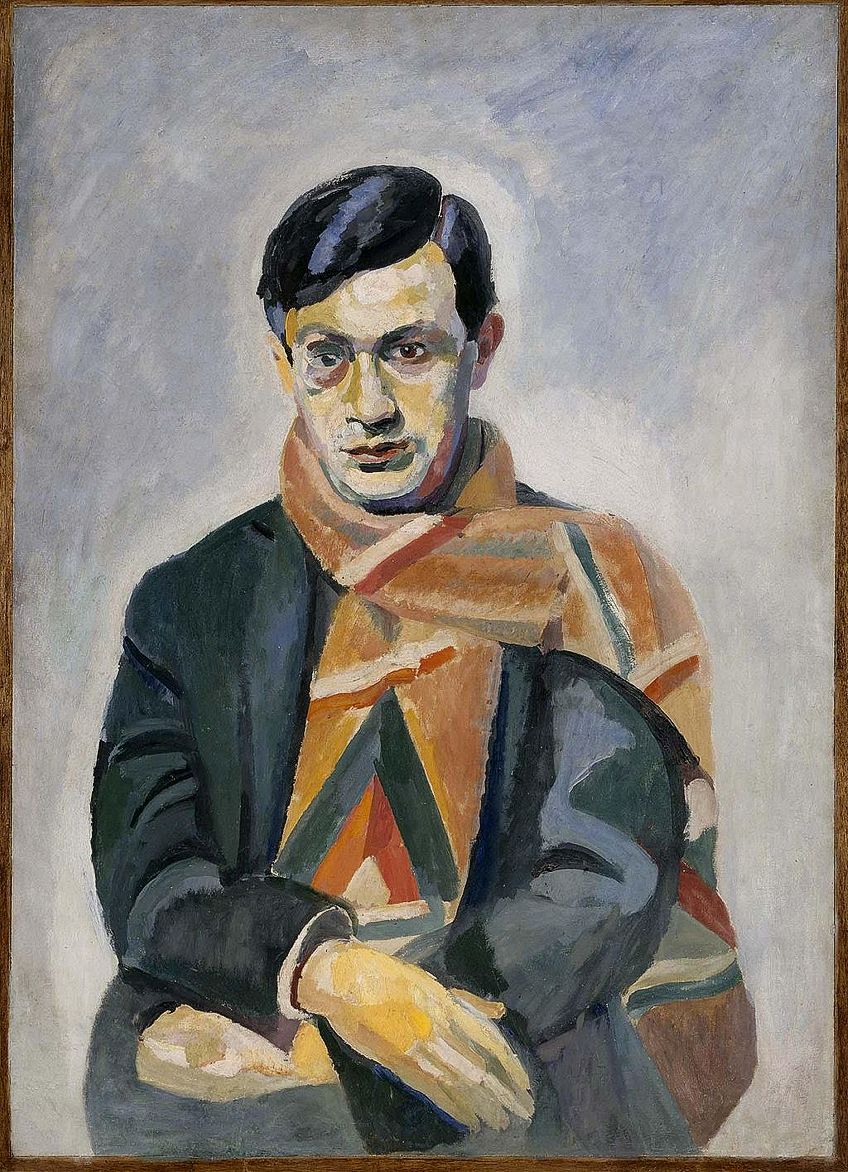
Zürich activity continued after Ball withdrew from the center of the group. Galerie Dada, public soirées, magazines, and Tzara’s international correspondence extended the network. The major 1919 Zürich events turned audience disruption into part of the work: speeches, music, dance, poetry, and deliberate provocation blurred the difference between spectators and participants.
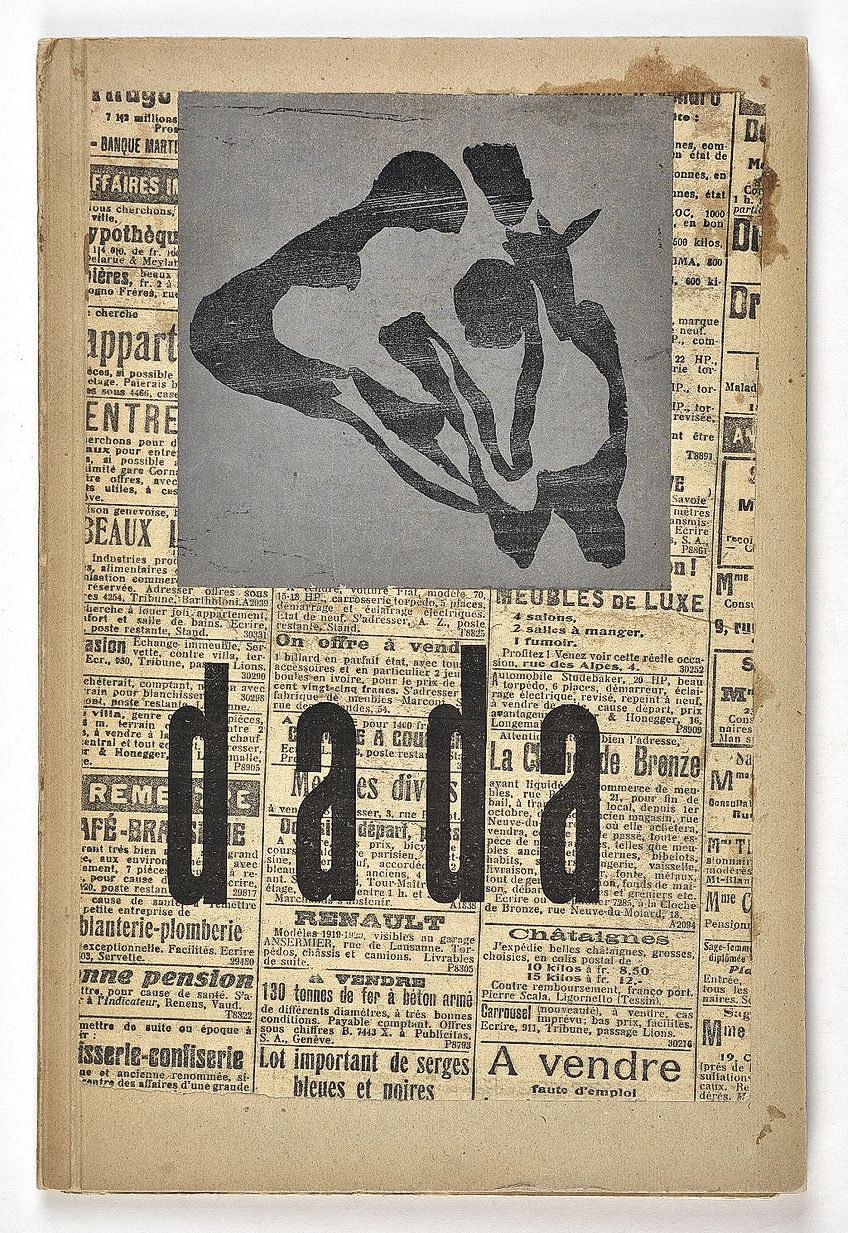
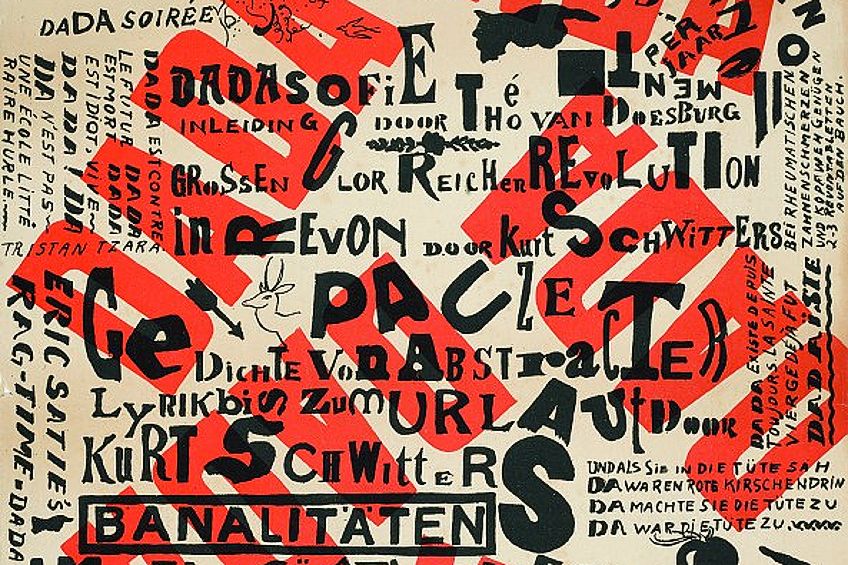
The cover of Dada 4–5 shows how publication could become an artwork rather than a neutral container. Woodcut, collage, lettering, editorial sequencing, and international circulation gave Dada a portable form that could cross borders more efficiently than a single exhibition.
Dada Centers Compared
Each Dada center developed under different political and cultural pressures. Treating them as one style hides much of the movement’s originality.
| Center | Key Figures | Typical Emphasis |
|---|---|---|
| Zürich | Hugo Ball, Emmy Hennings, Tristan Tzara, Jean Arp, Sophie Taeuber-Arp, Marcel Janco | Cabaret performance, sound poetry, masks, chance, abstraction, manifestos, and internationalist antiwar culture. |
| Berlin | Hannah Höch, Raoul Hausmann, George Grosz, John Heartfield, Johannes Baader, Richard Huelsenbeck | Photomontage, political satire, anti-militarism, mass-media critique, and aggressive exhibition culture. |
| Cologne | Max Ernst, Johannes Baargeld, Jean Arp | Collage, absurd exhibition strategies, hybrid imagery, and an important bridge toward Surrealism. |
| Hanover | Kurt Schwitters | Merz: compositions built from discarded tickets, paper, typography, packaging, wood, and other fragments; related to Dada but independently named. |
| New York | Marcel Duchamp, Francis Picabia, Man Ray, Beatrice Wood, Mina Loy and the Arensberg/Stieglitz circles | Readymades, machine imagery, authorship, publishing, photography, wordplay, and the institutional status of the art object. |
| Paris | Tristan Tzara, André Breton, Louis Aragon, Paul Éluard, Francis Picabia and others | Manifestos, literary events, public confrontations, and the increasingly tense transition from Dada toward Surrealism. |
Berlin Dada: Politics and Photomontage
Berlin Dada developed amid revolution, military defeat, political violence, inflation, and the unstable early Weimar Republic. Artists cut photographs and words from illustrated newspapers, advertisements, and magazines and recombined them into photomontages whose fractured surfaces could mimic—and attack—the modern media environment.
Hannah Höch, Raoul Hausmann, John Heartfield, and George Grosz used mass-reproduced imagery differently, but Berlin Dada was generally more explicitly political than Zürich or New York. Its critique could target militarism, nationalist authority, capitalist power, gender roles, and the gap between technological modernity and political reaction.
The First International Dada Fair, which opened at Otto Burchard’s gallery on 1 July 1920, condensed this strategy into an exhibition. Around 180 works by 31 participants turned photomontage, signs, political caricature, assemblage, and deliberately offensive display into a visual attack rather than a quiet space for contemplation.
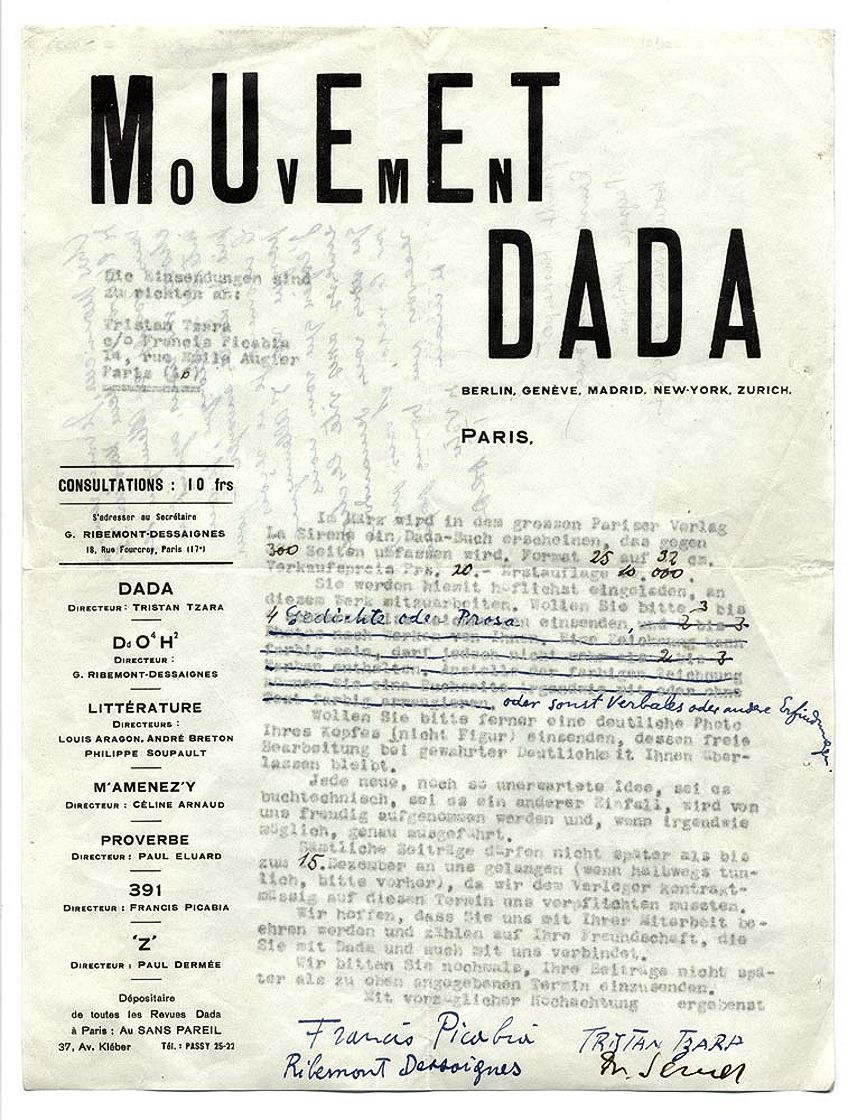
Dada’s internationalism was not just rhetoric. In 1920, Tzara planned Dadaglobe, an anthology intended to gather works and self-portraits from contributors across several countries. The project was never published in his lifetime, but its surviving letters and submissions show how correspondence, reproduction, and editorial networks helped bind local Dada scenes together.
Cologne and Hanover: Ernst, Arp, and Schwitters
Cologne Dada coalesced around Max Ernst, Johannes Baargeld, and Arp. Their 1920 exhibition became notorious for its unusual setting and conflict with authorities. Ernst’s collage practice made technical illustrations, machinery, anatomical fragments, and found pictures collide in images that helped open the way toward Surrealism.
Hanover requires a different label. Kurt Schwitters was close to Dada networks but developed the word Merz for his own practice after Berlin Dadaists kept him at a distance. Merz works absorbed tickets, packaging, printed scraps, wire, wood, and urban debris into carefully organized compositions. Calling Schwitters simply the “only member of Hanover Dada” misses the point: his independence is part of what makes the Hanover story distinctive.
Paris Dada and the Road to Surrealism
Tzara’s arrival in Paris brought him into contact with André Breton, Louis Aragon, Paul Éluard, Philippe Soupault, and a literary circle already interested in revolt and experimental writing. Paris Dada produced festivals, manifestos, public disruptions, and short-lived journals such as Le Cannibale as well as issues of Dada, but alliances deteriorated rapidly.
By 1921–1923, disputes over organization, politics, scandal, and the future of experimentation pulled the Paris scene apart. Breton increasingly wanted a sustained investigation of dreams, desire, automatism, and the unconscious; Tzara resisted Breton’s authority. Several people moved from Dada into the emerging Surrealist movement, but Surrealism was not simply a renamed Dada. It developed a different intellectual program and a more organized group structure.
New York Dada: Machines, Readymades, and the Art Institution
New York was an independent early center of the activity later grouped under Dada. Francis Picabia had encountered New York’s avant-garde before the war; Marcel Duchamp arrived in 1915; Man Ray was already active there. Alfred Stieglitz’s 291 gallery and publications, along with the home of Louise and Walter Arensberg, created meeting points for artists, collectors, writers, and experiments with modern media.
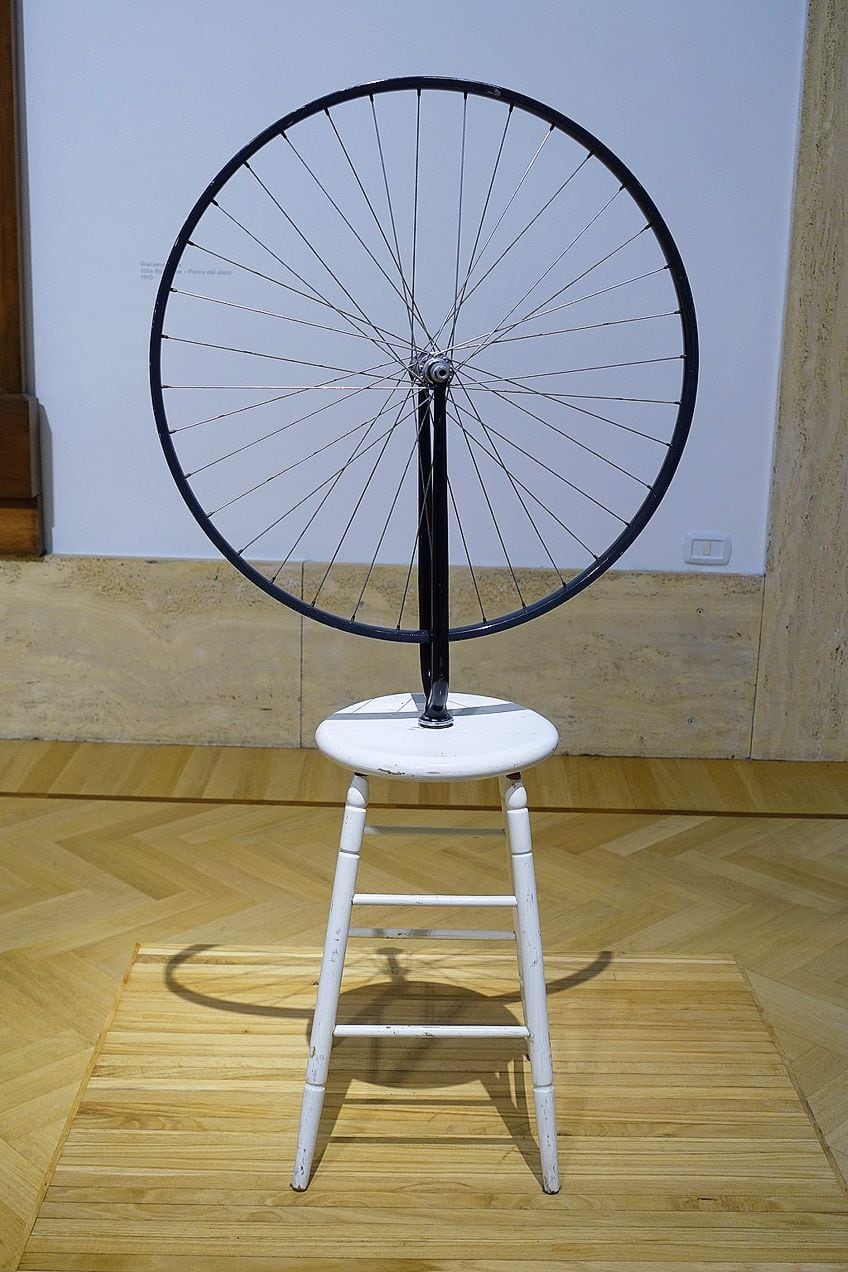
Duchamp’s first Bicycle Wheel was assembled in Paris in 1913 and his bottle rack was selected in 1914, before the Zürich group had named itself Dada. That chronology matters. The readymade became central to later Dada history, but it was not invented as the result of a Zürich manifesto.
In New York, Duchamp was also developing The Bride Stripped Bare by Her Bachelors, Even (The Large Glass) (1915–1923), a monumental work on two glass panels that joined mechanomorphic imagery, erotic wordplay, notes, dust, and unconventional materials. It is not a readymade, but it belongs to the same expanded challenge to conventional painting and became central to his New York circle. Its later accidental shattering—and Duchamp’s decision to accept and repair the cracks rather than erase them—gave chance an additional role in the work’s history.
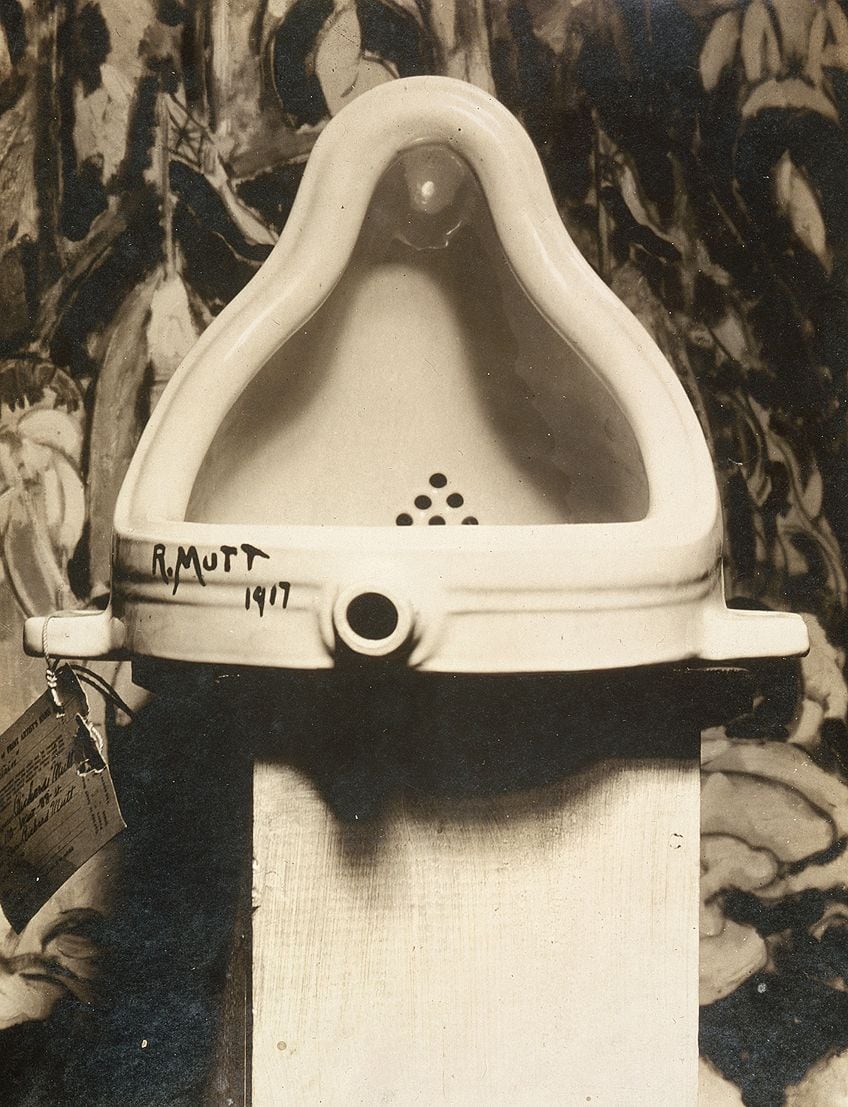
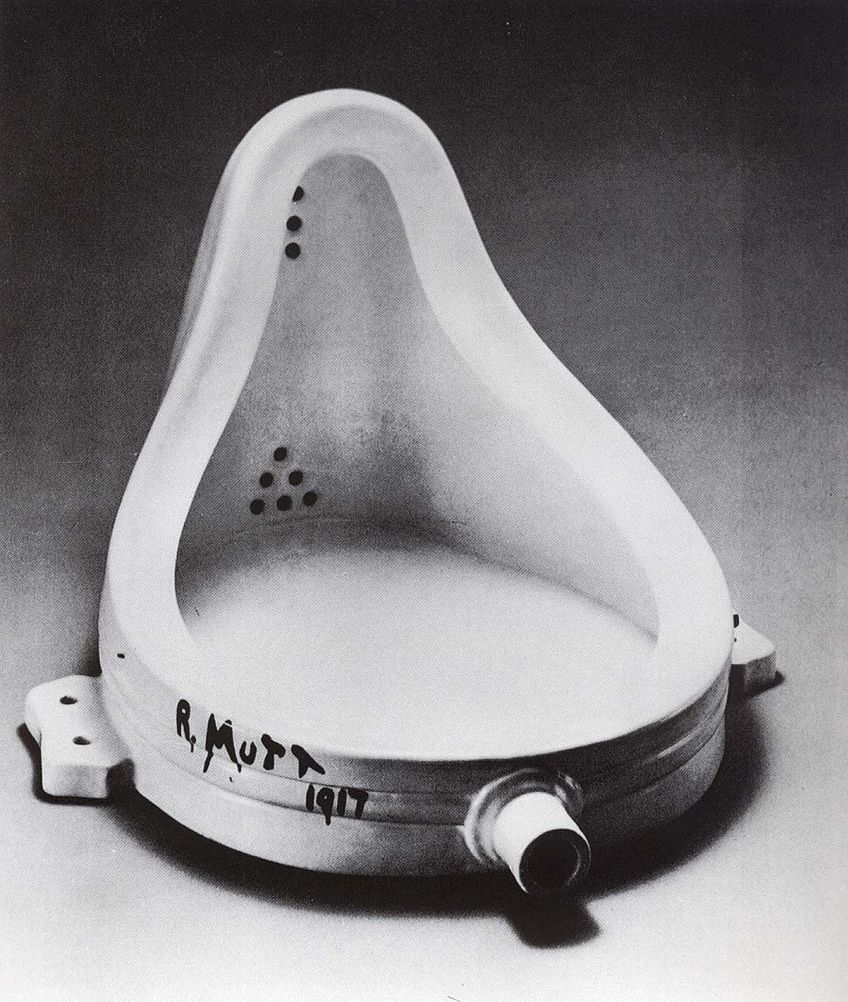
The decisive New York episode came in 1917. Duchamp submitted Fountain, a porcelain urinal signed “R. Mutt,” to the Society of Independent Artists. The organization promoted a no-jury principle, yet the work was withheld from exhibition. Duchamp resigned from the board. Alfred Stieglitz photographed the object, and The Blind Man defended it in print. The original disappeared, so the work’s history now includes the lost object, photograph, magazine, later replicas, and continuing debates about authorship.
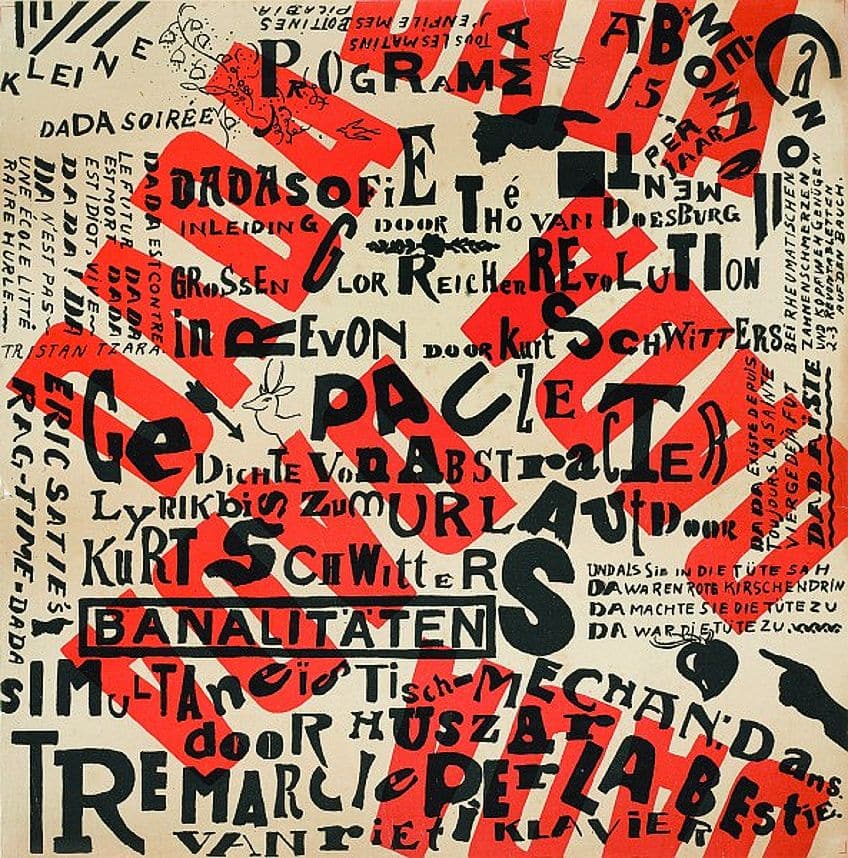
Picabia’s magazine 391, The Blind Man, Rongwrong, and New York Dada demonstrate how magazines made New York Dada as much a media practice as a collection of objects.
How Dada Artists Made Art
Dada’s formats were deliberately heterogeneous. The most useful way to organize them is by what each strategy changed about authorship, materials, language, or the viewer.
Readymades and Assemblage
A readymade is a manufactured object selected and designated as art, most closely associated with Duchamp. An assisted readymade combines or modifies existing things; Bicycle Wheel, which joins a bicycle fork and wheel to a stool, is a classic example. Assemblage is broader: it describes a three-dimensional work constructed from multiple found or made components.
These categories overlap, but they are not synonyms. More importantly, readymades were not simply “objects guided by chance.” Selection could be highly deliberate. Their challenge was to relocate artistic authorship from handmade execution toward choice, naming, context, documentation, and institutional recognition.
Collage and Photomontage
Collage joins fragments from different sources on a new support. Photomontage makes photography and mass-media reproduction especially visible as raw material. Berlin Dada exploited the fact that newspapers already chopped reality into headlines, portraits, machines, advertisements, and political symbols. By cutting those fragments again, artists exposed how images could be manufactured, circulated, and ideologically framed.
Photomontage also destabilized scale and identity. A politician’s head could be placed on a machine, a map could collide with a dancer, or a domestic image could interrupt military propaganda. The resulting discontinuity was not merely an aesthetic effect; it could become a form of argument.
Performance, Sound Poetry, and the Body
Cabaret Voltaire performances treated voice, costume, gesture, music, and audience response as artistic material. Hugo Ball’s sound poetry broke words into syllables and invented phonetic units, while Hennings combined singing, poetry, performance, and cabaret culture. Taeuber-Arp brought dance and movement into the same experimental field.
Performance also made Dada difficult to preserve. The event disappears, leaving photographs, programs, descriptions, printed poems, costumes, and later recollections. That incomplete archive is not a flaw in Dada history; it reminds us that many avant-garde works were actions before they became museum objects.
Chance, Accident, and Material Fragments
Chance could challenge the ideal of the artist as a controller who plans every element. Arp’s chance collages are the clearest examples, while Schwitters transformed scavenged debris into Merz compositions and Duchamp accepted the accidental cracking of The Large Glass into the work’s later history.
But accident did not eliminate composition. Dada artists selected which accidents to preserve, which scraps to collect, how to publish them, and where to exhibit them. The more precise question is therefore not “Was this random?” but “Where did the artist give up control, and where did control return?”
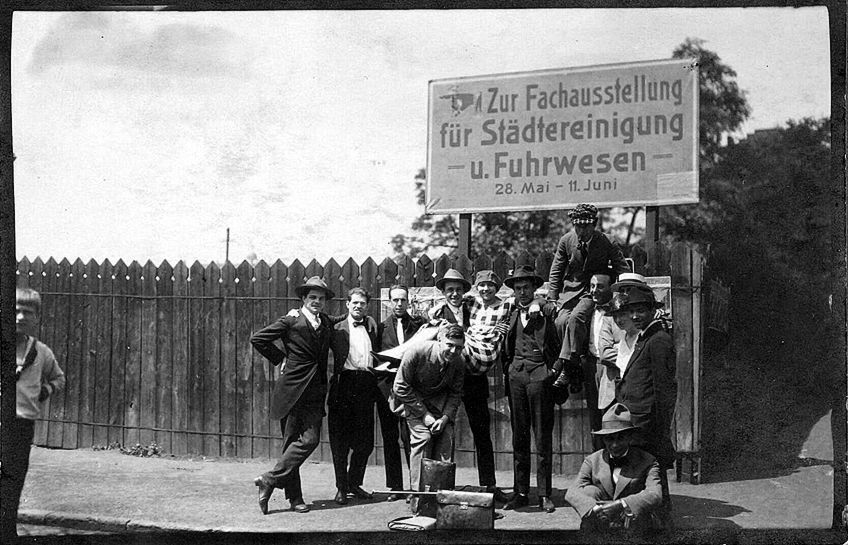
The 1922 Congress of Progressive Artists pictured above was not a single Dada group portrait. Its mixture of Dada, Constructivist, and other progressive artists demonstrates how quickly former Dada networks overlapped with new international formations.
Humor, Irreverence, and Media Pranks
Dada humor ranged from sophisticated wordplay to crude jokes. It could attack museum seriousness, patriotic language, gender conventions, advertising, or the cult of the artistic genius. The point was often to make a cultural rule visible by breaking it in public.
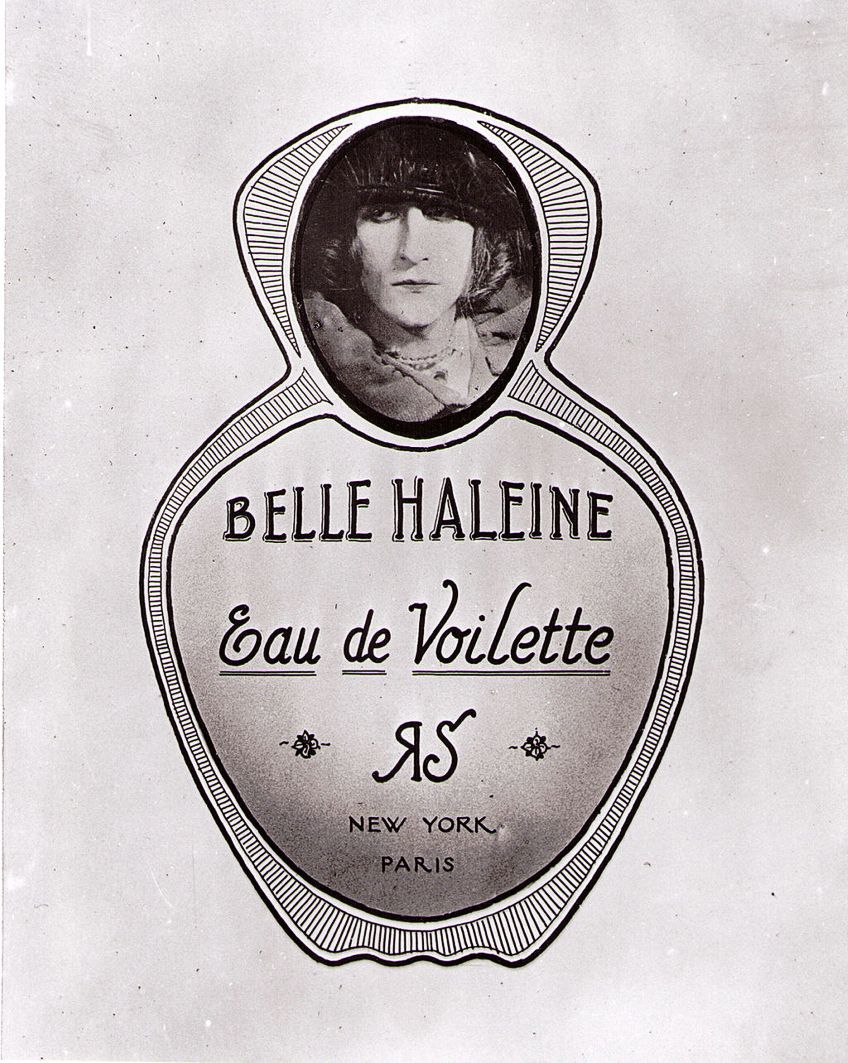
Man Ray and Duchamp’s altered perfume-bottle imagery around Belle Haleine: Eau de Voilette shows Dada’s fascination with commercial branding, gender performance, pseudonyms, photography, and magazine culture. The boundary between advertisement and artwork could itself become the joke.
How to Analyze a Dada Work
- Identify the historical network. Was the work connected to Zürich, Berlin, Cologne, Hanover, New York, Paris, a Dada magazine, or a documented collaborator?
- Identify the convention being tested. Is the work challenging craftsmanship, beauty, political authority, language, gender, exhibition rules, or the status of the art object?
- Separate material from procedure. Newspaper fragments, a urinal, a metronome, a photograph, or nonsense syllables matter differently depending on how they were selected, altered, performed, or circulated.
- Check the role of chance and authorship. Determine which decisions were random, collaborative, industrially manufactured, or consciously composed instead of assuming that all Dada was accidental.
- Include reception and reproduction. Rejection, scandal, publication, photography, later replicas, and museum display can become part of a work’s meaning.
This method avoids the easiest but least useful definition of Dada: “weird art.” Dada becomes much more legible when the specific target of the weirdness is identified.
Why Dada Ended—and Why It Did Not Disappear
Dada did not collapse because Adolf Hitler suddenly destroyed the movement. Most of its major circles had already fractured, changed direction, or dissolved by the early 1920s. Internal conflicts, migration, new political commitments, and the emergence of Surrealism and Constructivism redirected artists into other projects.
The later Nazi campaign against “degenerate art” nevertheless affected many artists associated with Dada and the wider avant-garde. Works were removed from German museums, publicly mocked, confiscated, or displaced. That belongs to Dada’s later reception rather than the immediate reason for the movement’s early-1920s fragmentation.
Dada’s afterlife was unusually broad. Surrealism inherited and transformed chance, collage, found objects, and revolt against rational convention. Neo-Dada, Fluxus, Pop Art, Conceptual Art, performance, institutional critique, punk graphics, zines, and appropriation practices later revisited Dada questions about authorship, media, provocation, and the ordinary object.
Famous Dada Artworks
The works below are not famous because they all look alike. Each makes a different part of Dada visible: machine culture, sound, the readymade, photomontage, appropriation, assemblage, collage, found material, or cameraless photography.
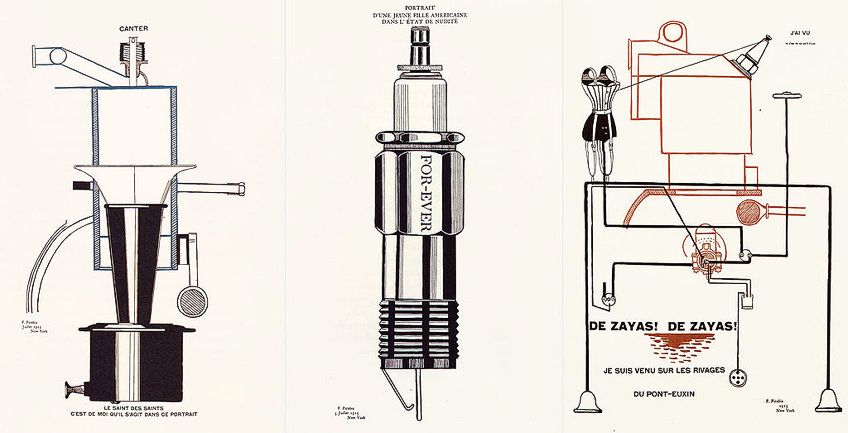
Francis Picabia: Ici, C’est Stieglitz (1915)
Picabia’s mechanical portrait of Alfred Stieglitz predates the formal founding of Zürich Dada, so it is better understood as part of the New York avant-garde context that was later incorporated into Dada history. Instead of depicting the photographer’s face, Picabia used a diagram-like machine: camera bellows, levers, lettering, and mechanical parts replace conventional likeness.
The image turns portraiture into a system of analogies. The machinery can suggest photography, modernity, personality, and malfunction at once, but interpretations that reduce every component to one fixed insult go beyond what the image itself proves. Its importance lies in the way a human identity is rebuilt through the graphic language of machines and magazines.
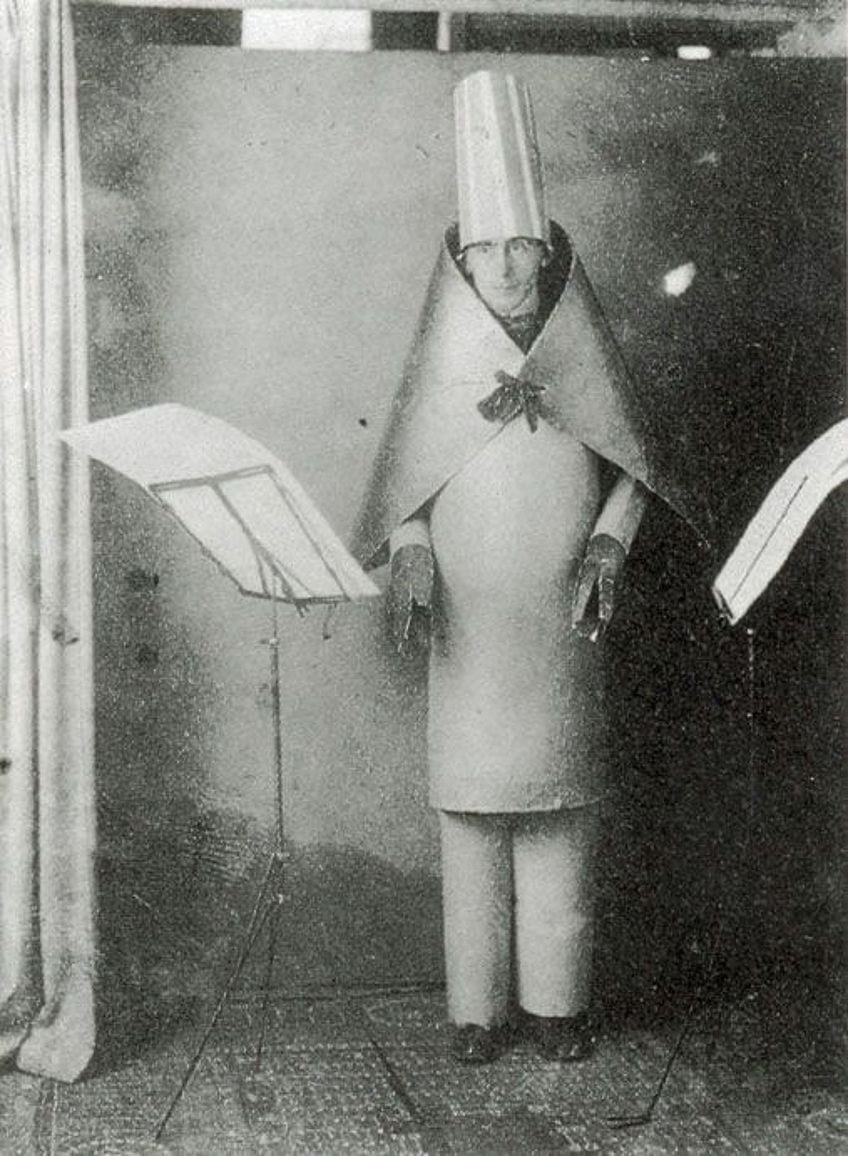
Hugo Ball: Karawane (1916)
Hugo Ball’s sound poem Karawane removes ordinary semantic syntax while preserving the physical experience of speech. Its opening—“jolifanto bambla o falli bambla”—asks the listener to attend to rhythm, consonants, breath, stress, and vocal performance rather than translate a message.
Ball’s costume at Cabaret Voltaire intensified the separation between familiar language and the speaking body. The poem has often been connected to the breakdown of rational European discourse during the war, but its power does not depend on one symbolic explanation. It demonstrates that a poem can communicate intensity before it communicates dictionary meaning.
Marcel Duchamp: Fountain (1917)
Fountain turned a manufactured urinal into a test of artistic authority. Signed “R. Mutt 1917,” reoriented, titled, and submitted to an exhibition that claimed to accept all fee-paying entries, it forced the Society of Independent Artists to decide whether its openness extended to an object that violated its expectations of art.
The object was withheld rather than publicly judged by a Dada jury. Stieglitz’s photograph and the defense published in The Blind Man then moved the controversy into photography and print. The 1917 original was lost; familiar museum examples are later replicas or editions. The work therefore cannot be understood through the porcelain object alone.
Questions about whether Elsa von Freytag-Loringhoven may have played a role in the submission have generated substantial debate. Major museum catalogues continue to attribute Fountain to Duchamp, while the surviving evidence makes it reasonable to explain the debate rather than pretend the authorship question never existed.
Hannah Höch: Cut with the Kitchen Knife (1919–1920)
Hannah Höch’s large photomontage Cut with the Kitchen Knife Dada through the Last Weimar Beer-Belly Cultural Epoch in Germany collides politicians, artists, dancers, machinery, words, and mass-media fragments across a dense surface. It belongs to postwar Weimar culture, not “pre-war Germany.”
A small map marks European countries where women had voting rights. Germany had introduced women’s suffrage in 1918, so the map should not be read as a simple campaign demanding Germany grant the vote. Instead, it operates inside a larger critique of gender, political authority, the “New Woman,” media culture, and the male-dominated Dada environment in which Höch worked.
The work’s scale and complexity also make a useful correction to the idea that photomontage is merely random cutting. Placement, direction, clusters of faces, mechanical forms, typography, and repeated fragments create zones that can be followed and compared.
Marcel Duchamp: L.H.O.O.Q. (1919)
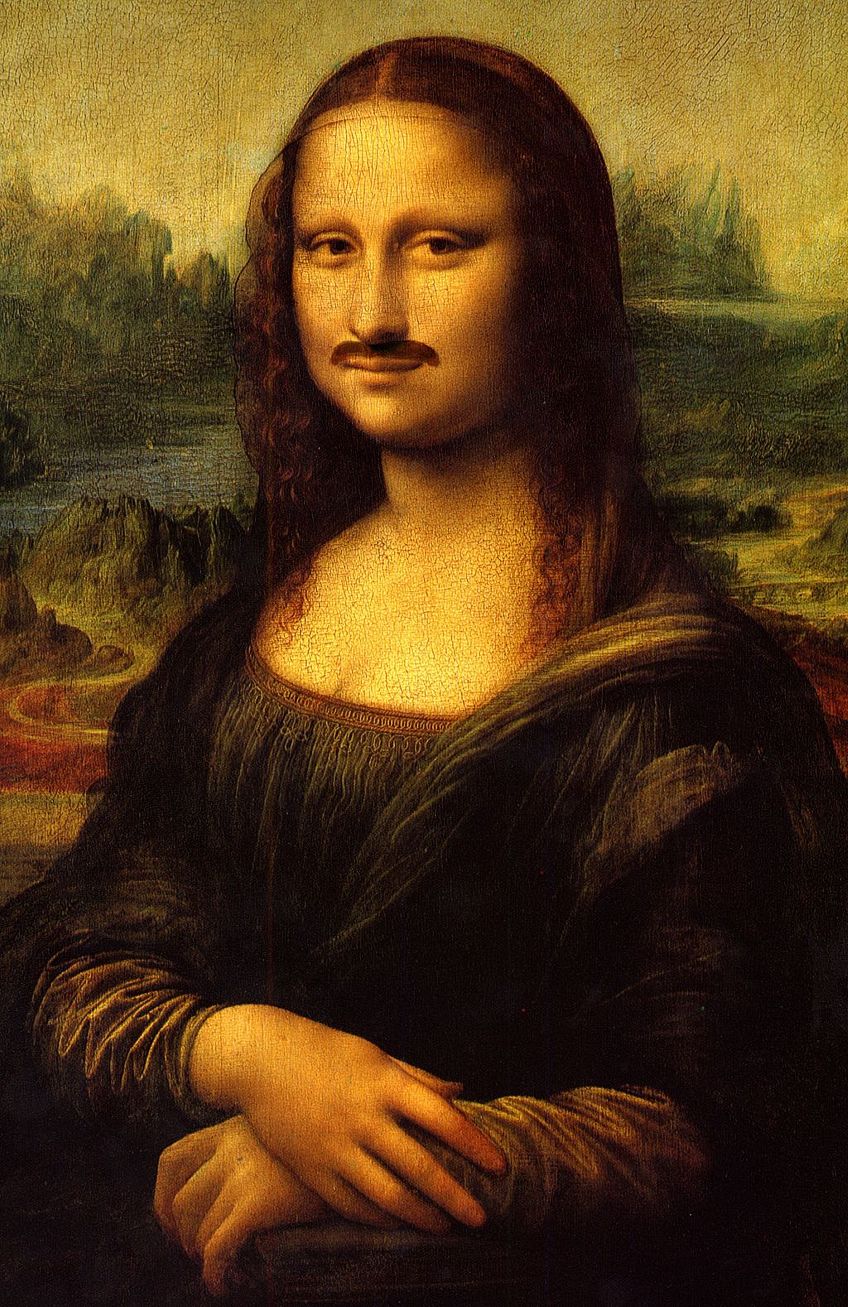
Duchamp drew a moustache and goatee on a commercial reproduction of Leonardo da Vinci’s Mona Lisa and added the letters L.H.O.O.Q., which produce a risqué French pun when spoken aloud. The intervention is tiny; the change in cultural meaning is not.
The work targets reproduction as much as Renaissance authority. The Mona Lisa had already become a mass-media celebrity after its theft in 1911 and recovery in 1913. Duchamp did not vandalize the Louvre painting; he altered a reproduction, making mass circulation itself the condition for irreverence.
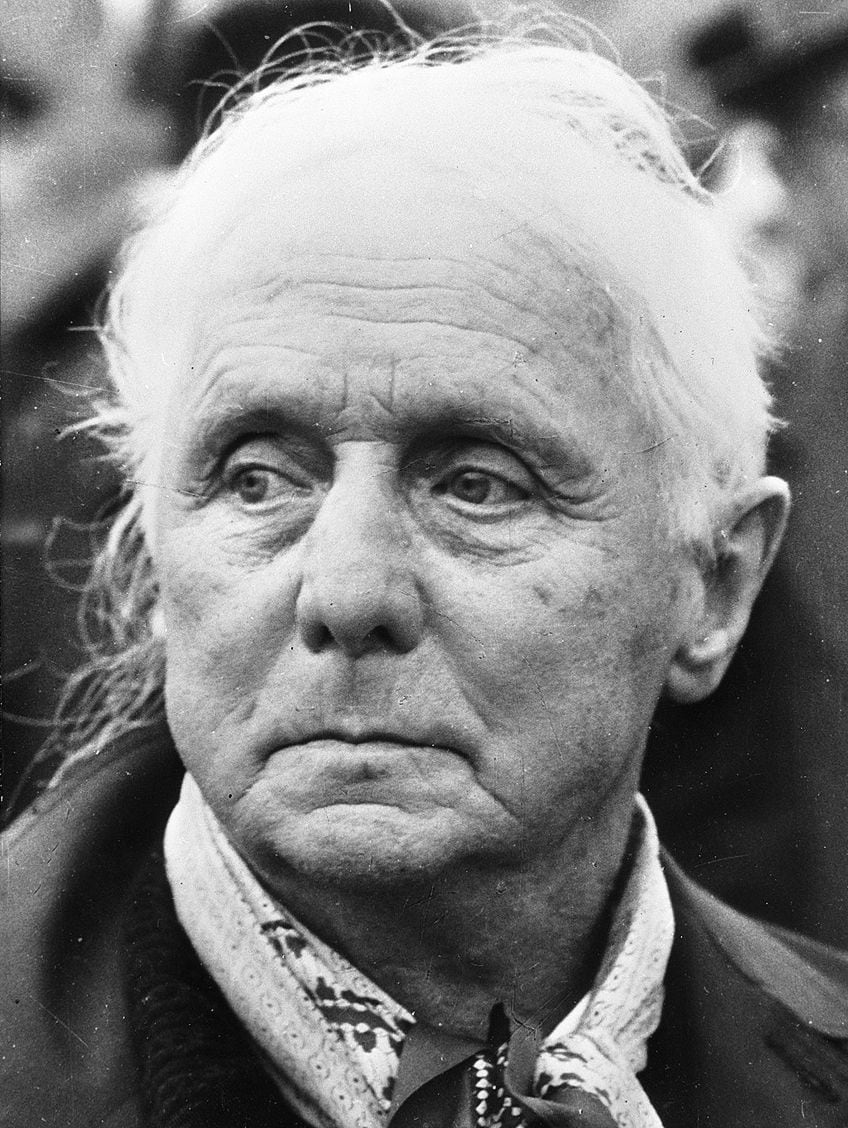
The image above is a later derivative based on Duchamp’s intervention rather than the original 1919 object, a distinction worth keeping visible because appropriation generates its own chains of copies.
Raoul Hausmann: The Spirit of Our Time (c. 1919–1920)
Hausmann attached measuring instruments and everyday components to a wooden mannequin head. The work has often been read as an image of modern consciousness governed by external information, measurement, machinery, and social convention rather than independent thought.
That interpretation fits Berlin Dada’s attack on automated obedience, but the object is more effective when read materially: the head is literally treated as a surface onto which systems are attached. Instead of representing a rich inner psyche, it stages the body as an interface for data, devices, and social roles.
Max Ernst: The Chinese Nightingale (1920)
Ernst’s Cologne Dada collages often combined technical and anatomical images taken from unrelated printed sources. The Chinese Nightingale constructs a hybrid creature from fragments that refuse to settle into a normal body. Machinery can look organic; a human limb can become part of a bird-like figure.
The effect is not simply “random.” The source material comes from a modern world saturated with diagrams, weapons, bodies, and printed illustrations, while Ernst’s recombination turns that rational visual information into something unstable and poetic. This is one of the clearest points where Dada collage begins to anticipate Surrealism.
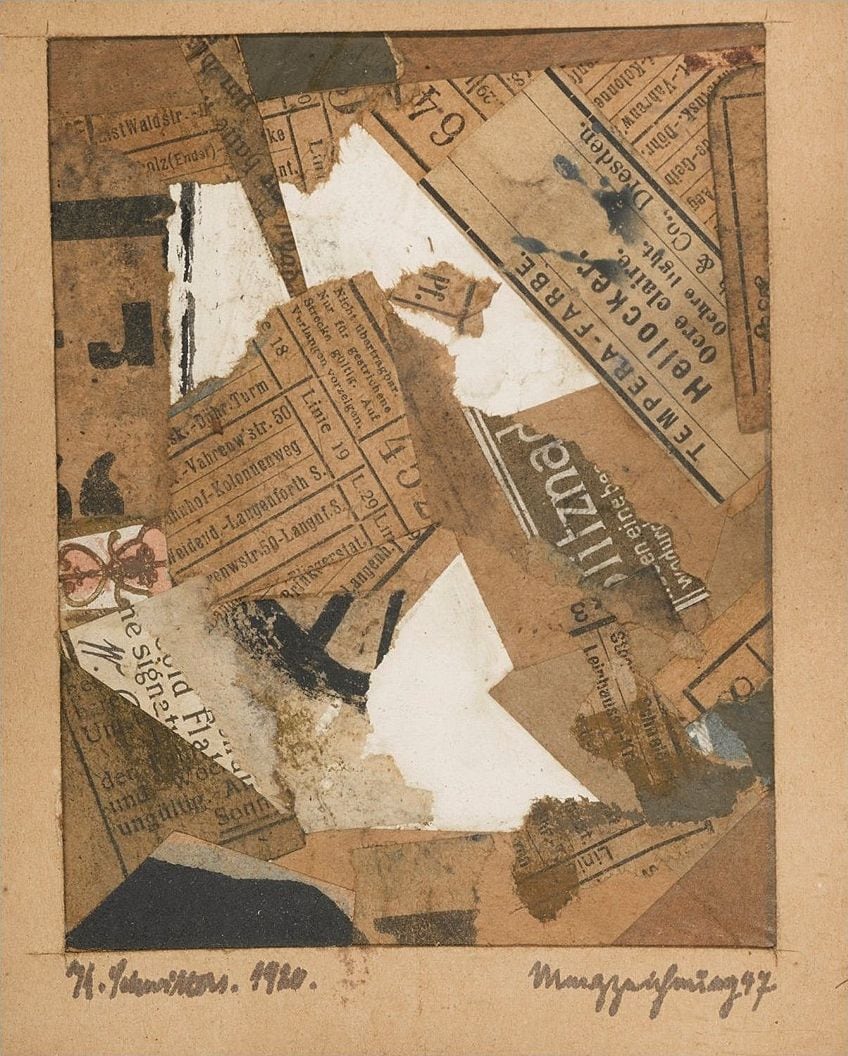
Kurt Schwitters: Merz Picture 46A: The Skittle Picture (1921)
Schwitters built Merz works from the remains of urban life: ticket stubs, advertisements, scraps of paper, wood, string, printed fragments, and discarded objects. The word Merz itself was extracted from Commerz, turning a fragment of commercial language into the name of an artistic system.
The crucial point is that scavenged material did not mean careless composition. Schwitters organized texture, color, direction, typography, and physical depth with considerable precision. Merz therefore complicates the assumption that Dada must reject beauty: some of its most radical materials were arranged into visually rigorous structures.
Man Ray: Rayograph (1922)
Man Ray made rayographs by placing objects directly on or near light-sensitive photographic paper and exposing the paper to light. The technique itself—photogram photography—existed before him, but he turned it into a distinctive artistic language and renamed his versions with a pun on his own name.
Because there is no camera lens, objects become silhouettes, translucent shapes, gradients, and traces. Recognizable things can lose scale and function, producing a photographic image that is not a straightforward window onto the world. Rayographs therefore join Dada interests in chance and estrangement with precise control over exposure and arrangement.
Dada and Surrealism: What Is the Difference?
Dada and Surrealism share people, methods, and a rejection of conventional rationality, but they are not interchangeable. Dada developed during World War One as a loose international attack on cultural authority and artistic convention. Surrealism, formally organized around André Breton’s 1924 manifesto, placed greater emphasis on psychic automatism, dreams, desire, and the unconscious.
A Dada photomontage may use fragmentation to attack a government or newspaper culture; a Surrealist collage may use unexpected combination to probe desire or unconscious association. Either movement can be political or humorous, and some artists moved between both. Historical context, not visual weirdness alone, is the best guide.
Frequently Asked Questions
What Is Dadaism?
Dada was an international avant-garde network that emerged during World War One and challenged conventional ideas about art, reason, authorship, political authority, and cultural prestige. Its artists used performance, sound poetry, collage, photomontage, readymades, found materials, publications, chance, and absurdity rather than one shared visual style.
Where Did Dada Begin?
Cabaret Voltaire in Zürich became a crucial Dada meeting place in 1916, while New York developed an independent avant-garde circle around Duchamp, Picabia, Man Ray, Stieglitz, and the Arensbergs. Dada then developed distinct centers in Berlin, Cologne, Hanover, and Paris.
What Are the Main Characteristics of Dada Art?
Common Dada strategies include appropriation, found materials, readymades, collage, photomontage, chance procedures, nonsense, irony, typography, media experimentation, collaborative performance, and attacks on established artistic or social conventions. No single combination is required, so date, network, and context matter.
Why Is Duchamp’s Fountain Important?
Fountain made selection, naming, exhibition rules, reproduction, and institutional judgment part of the artwork’s history. The original 1917 urinal is lost, but Stieglitz’s photograph, The Blind Man publication, later replicas, and the unresolved authorship debate keep the event central to discussions of modern art.
What Is the Difference Between Dada and Surrealism?
Dada was primarily a loose, anti-authoritarian network born in the context of World War One, while Surrealism developed a more organized program after 1924 centered on automatism, dreams, desire, and the unconscious. The movements overlap through artists and techniques, but their historical aims and group structures were different.

Isabella studied at the University of Cape Town in South Africa and graduated with a Bachelor of Arts majoring in English Literature & Language and Psychology. Throughout her undergraduate years, she took Art History as an additional subject and absolutely loved it. Building on from her art history knowledge that began in high school, art has always been a particular area of fascination for her. From learning about artworks previously unknown to her, or sharpening her existing understanding of specific works, the ability to continue learning within this interesting sphere excites her greatly.
Her focal points of interest in art history encompass profiling specific artists and art movements, as it is these areas where she is able to really dig deep into the rich narrative of the art world. Additionally, she particularly enjoys exploring the different artistic styles of the 20th century, as well as the important impact that female artists have had on the development of art history.
Learn more about Isabella Meyer and the Art in Context Team.
Cite this Article
Isabella, Meyer, “Dadaism – What Is the Meaning of the Meaninglessness of Dada Art?.” Art in Context. May 1, 2021. URL: https://artincontext.org/dadaism/
Meyer, I. (2021, 1 May). Dadaism – What Is the Meaning of the Meaninglessness of Dada Art?. Art in Context. https://artincontext.org/dadaism/
Meyer, Isabella. “Dadaism – What Is the Meaning of the Meaninglessness of Dada Art?.” Art in Context, May 1, 2021. https://artincontext.org/dadaism/.