
Pointillism – The Neo-Impressionist Dot Painting Technique

Pointillism is a late-19th-century painting technique associated with Neo-Impressionism. Georges Seurat, Paul Signac, and their circle placed small, distinct touches of color so that contrasts, rhythms, and mixtures would emerge across the painted surface and in the viewer’s perception. The familiar dots are only one part of a broader artistic system shaped by color theory, modern life, and radical ideas about society.
What Is Pointillism?
Pointillism describes a technique in which an artist builds an image from separate touches of color, often small dots. It is most closely associated with the Neo-Impressionists who exhibited in France and Belgium from the mid-1880s. Their paintings can appear meticulously dotted at close range and more continuous from a distance, but the eye does not simply “blend” every mark into a perfectly uniform new color. Viewers perceive both the individual touches and the relationships among them.
The word is useful, yet it can be misleading when treated as the name of a complete movement. Contemporary critic Félix Fénéon coined “Neo-Impressionism” in 1886 for the group’s broader project. “Divisionism” refers chiefly to separating colors rather than mixing all pigments on the palette, while “Pointillism” emphasizes the visible mark. Artists did not all use identical dots: strokes could be short, rectangular, mosaic-like, or increasingly broad.
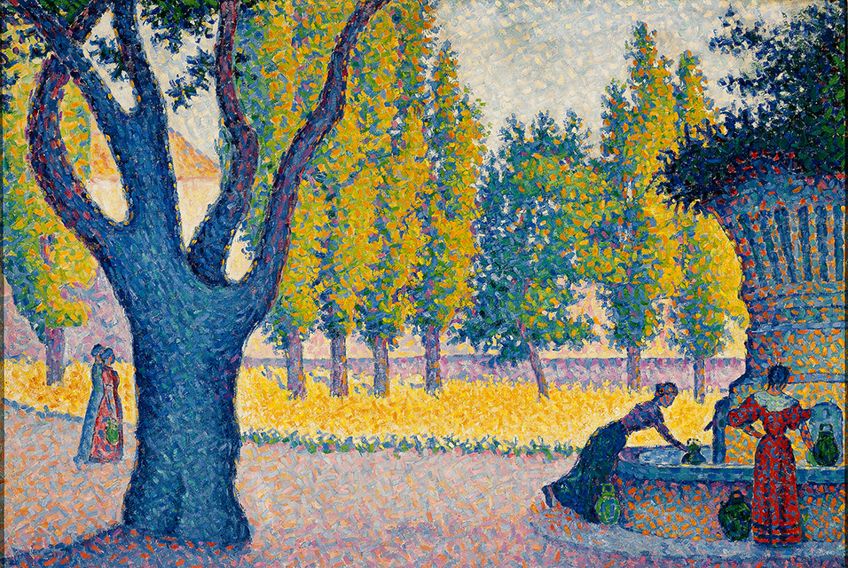
Pointillist pictures were not mechanical demonstrations. Artists selected hues, adjusted the scale and direction of marks, organized contours, and balanced optical vibration against stable design. The result could serve landscapes, portraits, labor scenes, entertainment, or imagined political futures.
A History of Pointillism
Pointillism emerged from the experimental Paris art world of the 1880s. Seurat and Signac admired the lighter palettes and modern subjects of Impressionism but sought a more deliberate method. They studied color writings by Michel-Eugène Chevreul and Ogden Rood as well as Charles Henry’s ideas about expressive line and color. These sources offered vocabulary and hypotheses, not a scientifically guaranteed recipe for painting.
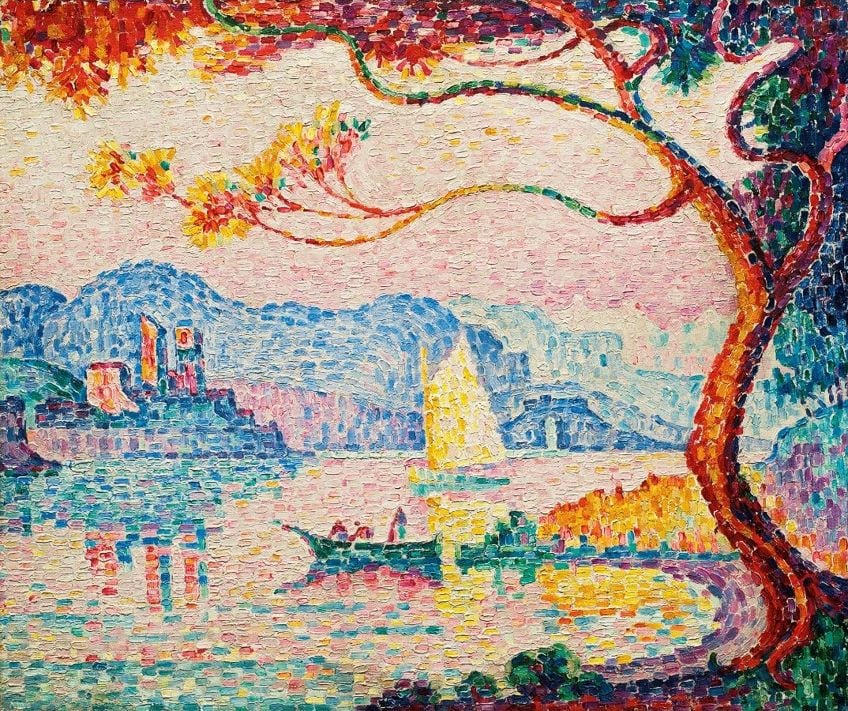
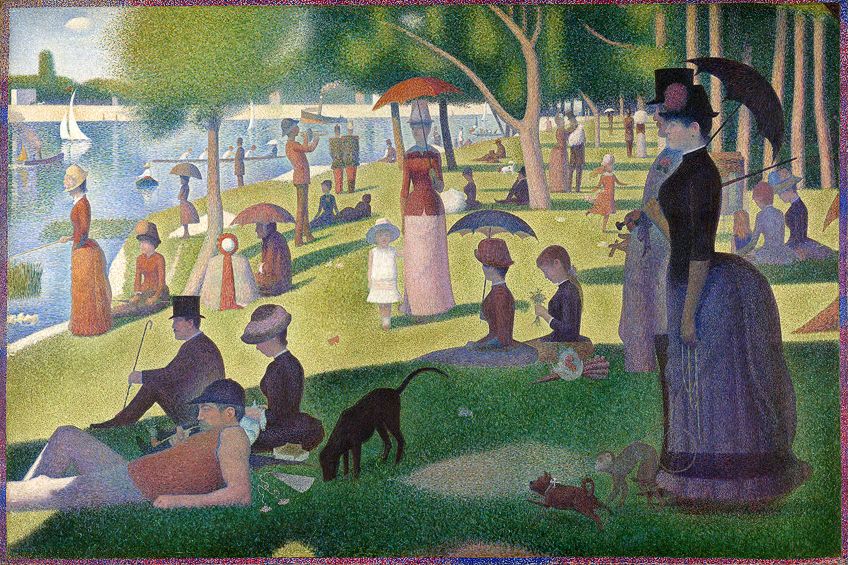
Seurat’s A Sunday on La Grande Jatte—1884 became a public manifesto for the new approach when it appeared at the eighth and final Impressionist exhibition in 1886. That year Fénéon used “Neo-Impressionist” to distinguish the younger painters. Signac was Seurat’s collaborator and later the method’s most influential advocate, not Seurat’s student. His 1899 book From Eugène Delacroix to Neo-Impressionism helped codify the movement’s history and theory.
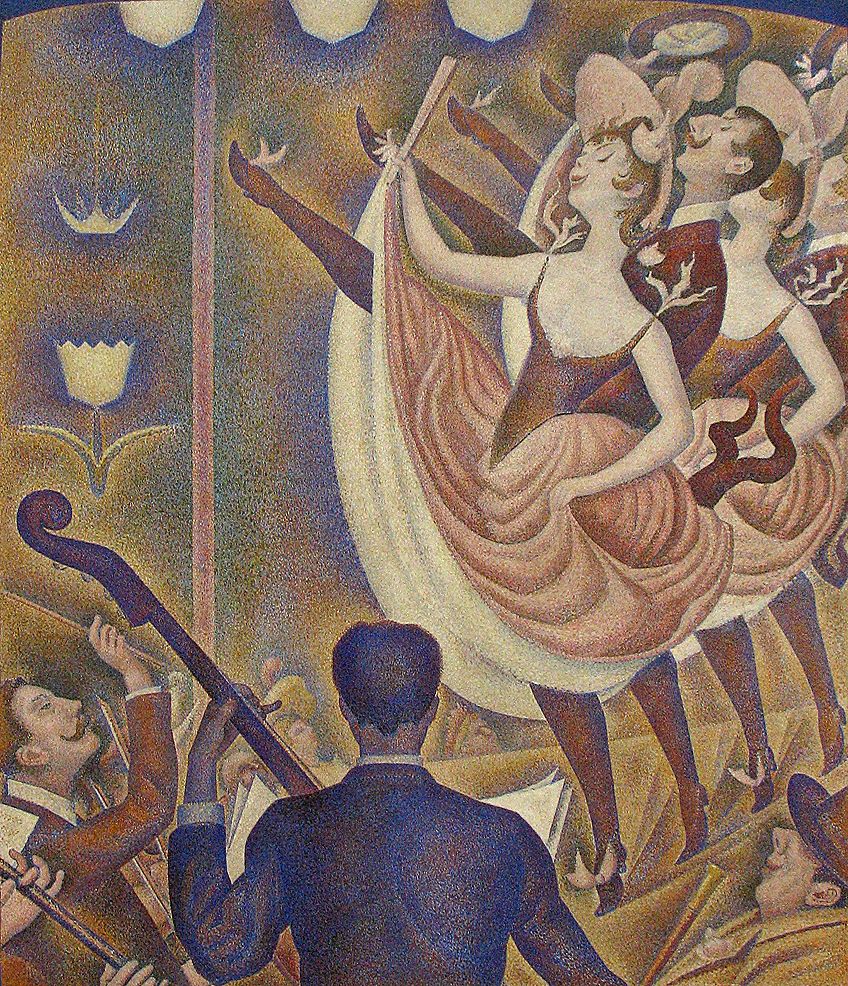
The Société des Artistes Indépendants provided an important exhibition network. Camille and Lucien Pissarro, Charles Angrand, Henri-Edmond Cross, Maximilien Luce, and Léo Gausson participated at different moments. In Brussels, the group Les XX helped circulate the work; Belgian artists such as Théo van Rysselberghe developed distinctive forms of divided color. Seurat’s death in 1891 at age 31 was a severe loss, but it did not end Neo-Impressionism. Signac, Cross, Luce, and others continued to change the technique into the 20th century.
The movement also had political dimensions. Several Neo-Impressionists held anarchist or libertarian socialist commitments. Signac’s In the Time of Harmony, for example, imagines a future of leisure, work, learning, and recreation rather than a timeless decorative paradise. Style and politics cannot be reduced to one another, but the ordered cooperation of distinct colors could resonate with hopes for a society of free individuals.
Technique and Practice of Pointillism
Pointillist practice begins with division: colors are kept distinct in many passages rather than blended into a single intermediate pigment. An artist may place complementary or near-complementary hues side by side, vary warm and cool notes, or alternate light and dark marks. From farther away, these relationships can produce luminosity or chromatic vibration. At close range, the material pattern remains visible.
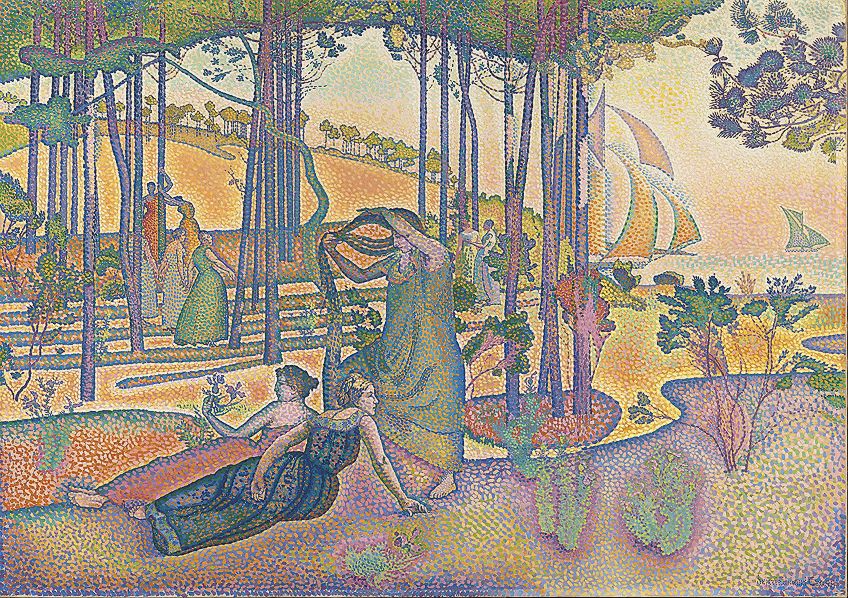
Planning mattered. Seurat made drawings, oil sketches, and painted studies before completing large canvases. Composition, value, contour, and rhythm were established alongside color. Later Neo-Impressionists often loosened the system: Cross and Signac adopted larger rectangular touches that read like tesserae in a mosaic. The movement therefore cannot be defined by one dot size or brush.
Science of the Eye
Chevreul’s account of simultaneous contrast described how neighboring colors affect one another. Rood discussed additive light and subtractive pigment, while Henry proposed links among line, color, emotion, and measure. Neo-Impressionists adapted these theories selectively. Their canvases explore perception, but they are artworks rather than laboratory controls, and historical claims that every adjacent pigment optically fuses into a brighter color overstate what vision does.
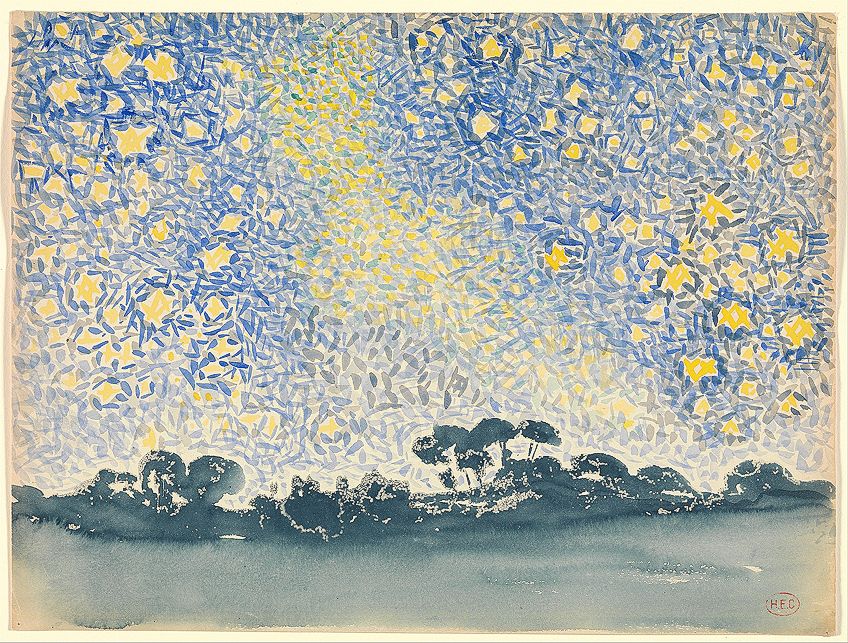
Viewing distance changes the experience. Up close, a blue stroke may remain plainly blue beside orange or yellow. Several steps back, the pattern can contribute to an integrated area while retaining a flicker that ordinary blending would suppress. That oscillation between mark and image is central to the technique.
Points of Undiluted and Unmixed Color
The phrase “pure color” belongs to Neo-Impressionist theory, but actual paintings are more complex. Artists used available manufactured pigments, underpainting, overlaps, mixtures, whites, and darks. Many marks are not entirely unmixed, and aging can alter their relationships. “Division” is best understood as a compositional tendency: the painter preserves more distinct chromatic components than conventional palette mixing would.
Complementary contrasts can heighten intensity, while related hues can build a nuanced transition. Shadows need not be made simply by adding black; they can include blues, violets, greens, and reflected color. The choice remains artistic rather than automatic.
Precise Technique
Seurat’s most controlled pictures use repeated touches within firm silhouettes and carefully staged space. Yet precision does not mean that every work was improvised directly on the final canvas or calculated by a fixed formula. Studies, revisions, borders, and changes reveal sustained construction.
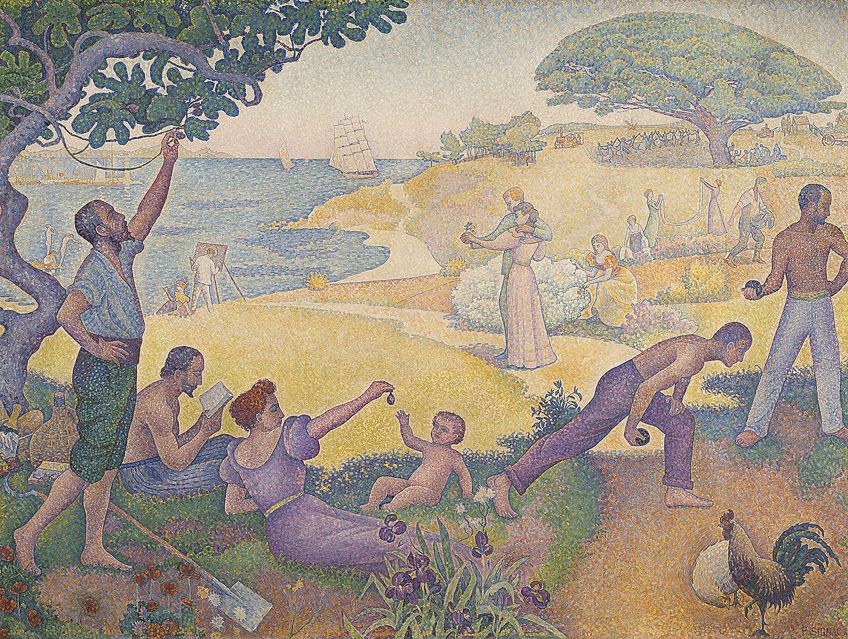
Signac and Cross later opened the touch, increased color saturation, and allowed more white canvas or ground to participate. Their method could be systematic without looking uniformly stippled. This evolution helped make divided color useful to younger artists who did not adopt the entire Neo-Impressionist program.
Characteristics of Pointillism
Pointillist and Neo-Impressionist works vary, but several recurring features help identify them:
- Distinct color touches: dots, short strokes, or blocks remain legible on the surface.
- Chromatic division: neighboring hues create contrast, vibration, and partial perceptual integration.
- Deliberate structure: contours, repeated curves, verticals, diagonals, and measured intervals organize the composition.
- Luminous palettes: many artists favored bright color, although dark or muted passages also occur.
- Modern and social subjects: ports, parks, cafés, labor, leisure, coastlines, and political hopes appear alongside portraits.
- Variable viewing experience: the image changes as the viewer moves between a close inspection of marks and a distant reading of forms.
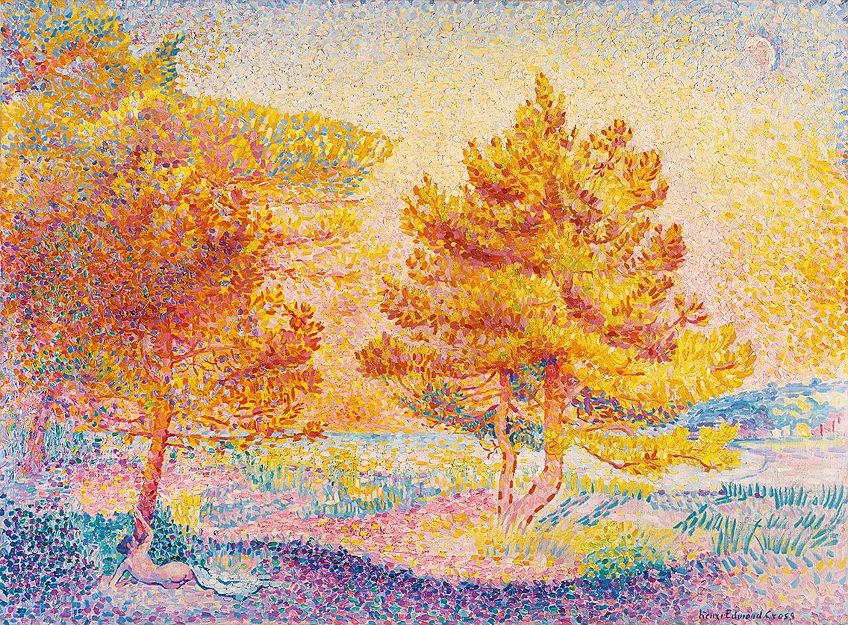
These characteristics are diagnostic rather than absolute. A painting with dots is not automatically Pointillist, and a Neo-Impressionist canvas can use strokes instead of circular points.
Understanding the Distinction Between Pointillism and Divisionism
The terms overlap but emphasize different things. Divisionism is the broader color principle; Pointillism is a specific way of applying separated touches. In practice, writers often use both labels for works by Seurat and Signac. Neither term captures every aspect of Neo-Impressionism, which also involved exhibition networks, subjects, compositional ideas, and sometimes political commitments.
| Term | Primary Emphasis | Typical Evidence | Important Limit |
|---|---|---|---|
| Neo-Impressionism | Historical movement and artistic program | Artists, exhibitions, criticism, color and design | Members did not share one uniform style or politics |
| Divisionism | Separation of chromatic components | Adjacent colors used to structure light and contrast | Does not require perfectly round dots |
| Pointillism | Visible point-like application | Small discrete touches across a surface | Dots alone do not prove a Neo-Impressionist context |
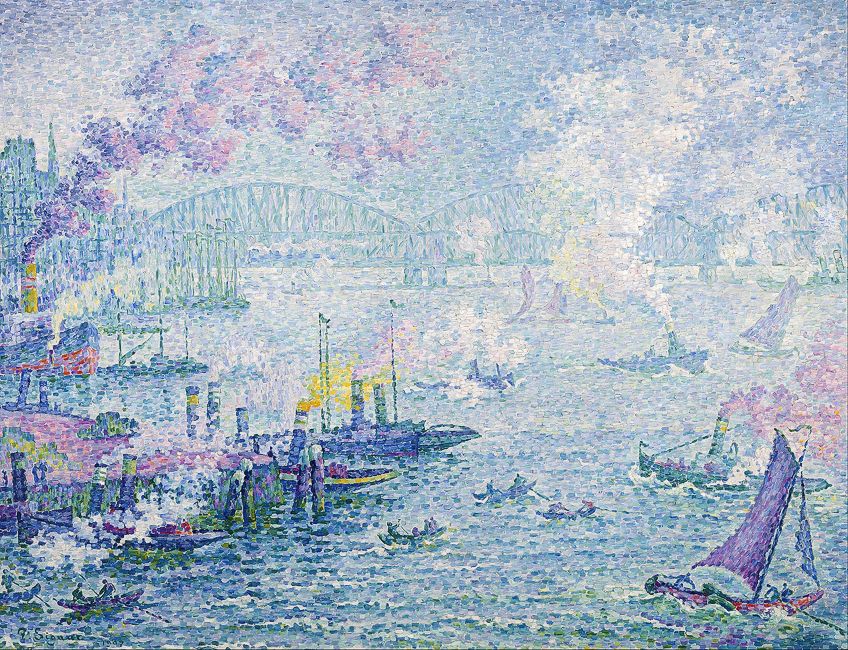
The broad, tile-like marks in later works by Signac or Cross make the distinction visible. They divide color while departing from the tight points commonly associated with Seurat.
Understanding the Distinction Between Pointillism and Dotted Art
“Dotted art” is a descriptive phrase, not one coherent movement. Dots appear in printmaking, decoration, textiles, illustration, comics, digital screens, contemporary installation, and many culturally specific traditions. Similar-looking marks can have unrelated materials, meanings, histories, and protocols.
Pointillism belongs to a specific late-19th-century European context of Neo-Impressionist color theory and exhibition culture. It should not be used as a blanket label for every dotted surface. In particular, Aboriginal Australian dot painting grows from distinct communities, Country, ceremony, knowledge, and contemporary art histories. Describing it merely as Pointillism erases those contexts. Comparison can be useful when it is precise about visual resemblance and equally precise about historical difference.
Famous Pointillism Artists and Their Paintings
The following artists did not all remain committed to one method. Some were central Neo-Impressionists; others experimented briefly with divided touches or adapted them to independent goals.
Camille Pissarro (1830 – 1903)
Camille Pissarro exhibited with the Impressionists and, from 1886, adopted Neo-Impressionist methods for several years. He worked alongside the younger group without surrendering his interest in rural labor and changing atmospheric conditions. The technique offered a new way to organize color, though he eventually found its demands restrictive and returned to a freer touch.
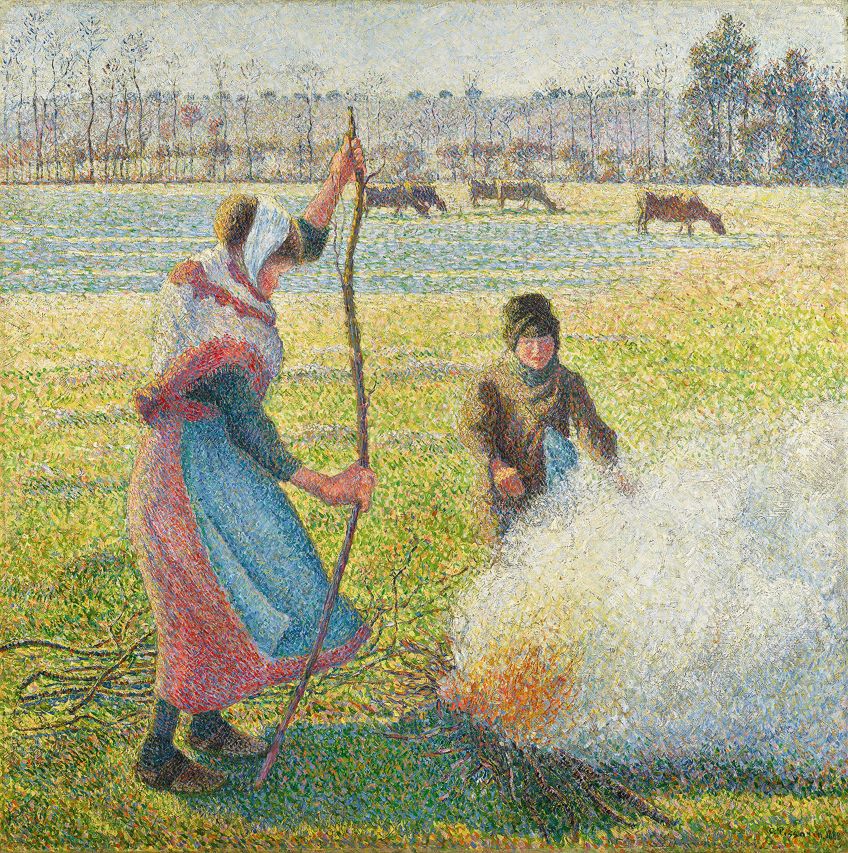
His Neo-Impressionist phase demonstrates that the movement was not an absolute break with Impressionism. Artists moved between networks and adjusted techniques to their own subjects.
Vincent van Gogh (1853 – 1890)
Van Gogh encountered Seurat, Signac, and other avant-garde painters after arriving in Paris in 1886. He experimented with stippled and divided strokes, especially in portraits, still lifes, and views of Asnières. He was not a formal Pointillist disciple, and he did not live as Pissarro’s tenant. Instead, he absorbed Neo-Impressionist color contrasts into a highly personal, directional brushwork.
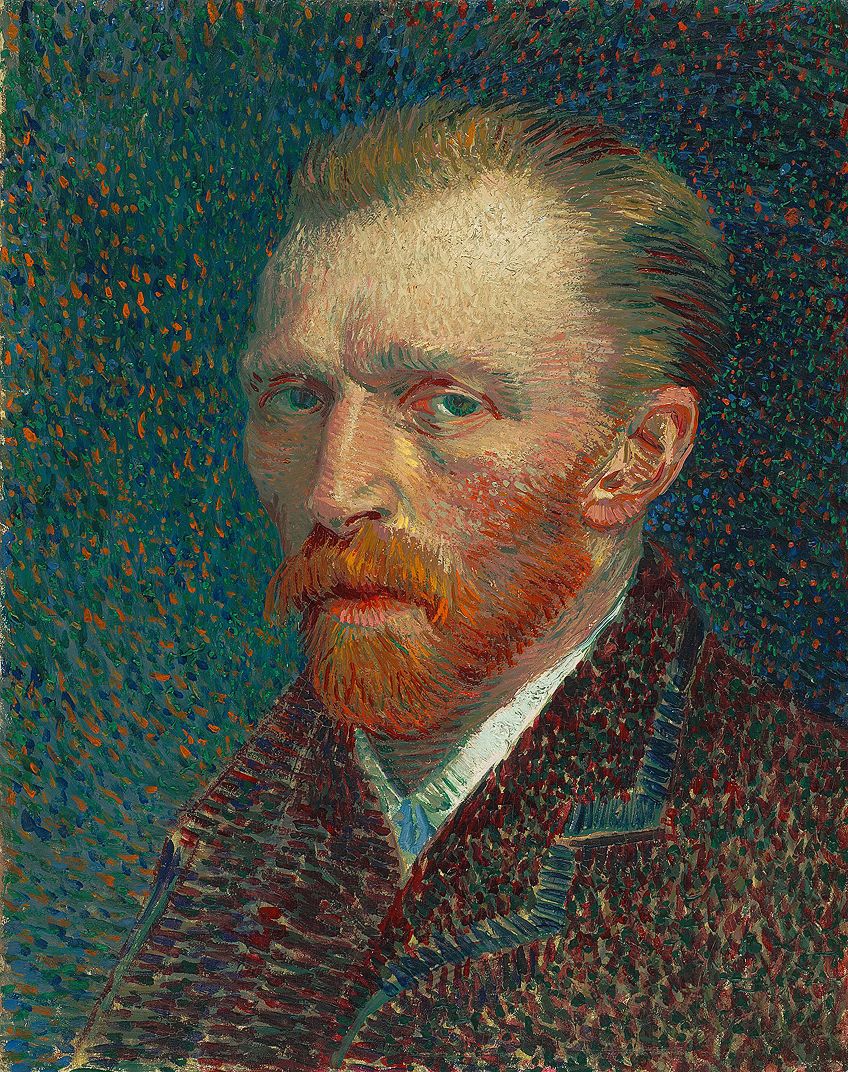
The short marks in this self-portrait build the face and jacket while the background sets blue-green strokes against orange and red. The result relates to divided color but differs from Seurat’s more regular construction.
Charles Angrand (1854 – 1926)
Charles Angrand participated in the Société des Artistes Indépendants and became associated with Seurat, Signac, Cross, and Luce. He applied divided color to rural and urban subjects, often with quieter tonal ranges than the most brilliant Signac landscapes. His later work also included charcoal drawings in which soft darkness replaces chromatic division.
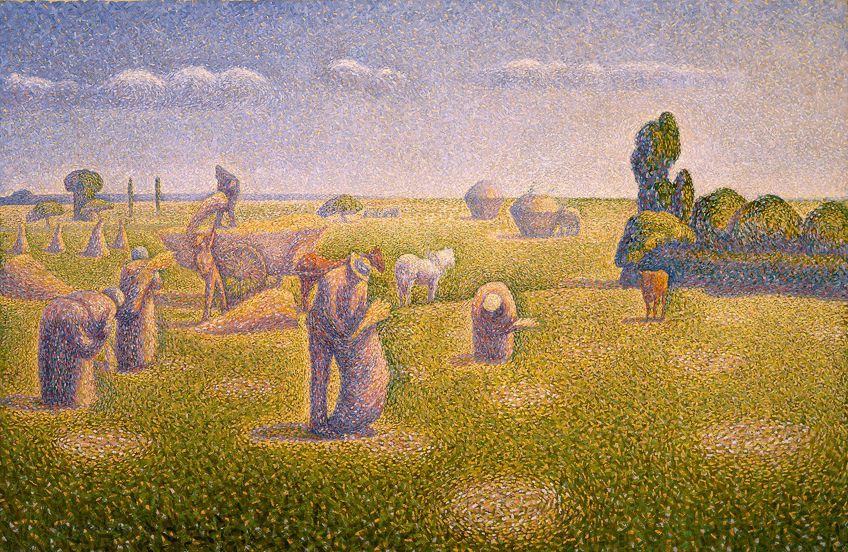
The Harvesters combines labor, broad landscape structure, and a woven field of marks. It expands Pointillism beyond scenes of metropolitan leisure.
Henri-Edmond Cross (1856 – 1910)
Henri-Edmond Cross adopted divided color around 1891. In southern French landscapes and scenes of imagined communal life, his touches became larger, freer, and more saturated. The method often resembles a luminous mosaic rather than a field of pinpoints.
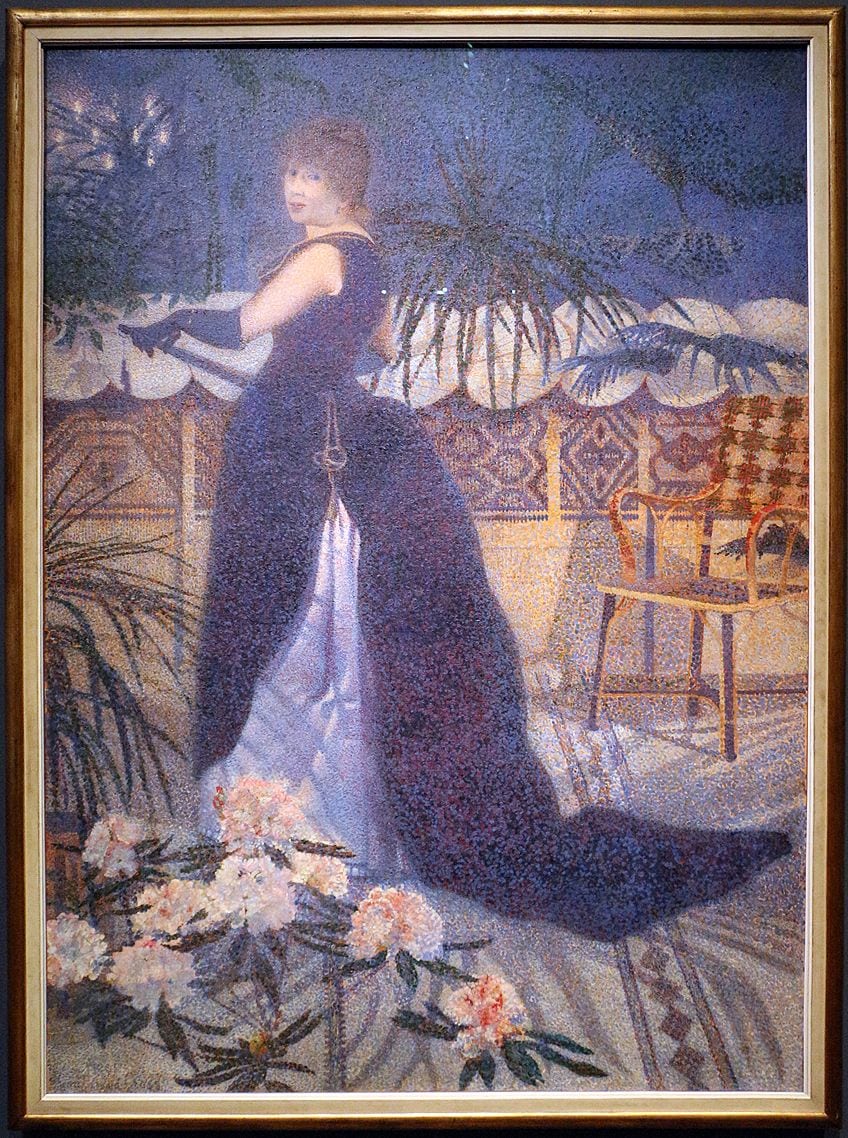
Cross’s development was important for Henri Matisse and other painters who explored intensified color in the early 20th century. The connection concerns chromatic construction, not a simple transfer of identical dots.
Maximilien Luce (1858 – 1941)
Maximilien Luce brought Neo-Impressionist color to interiors, city views, industrial landscapes, and images of workers. His anarchist politics and interest in labor gave the movement a socially engaged dimension. He did not apply a single formula throughout his long career, and his brushwork later became less divided.
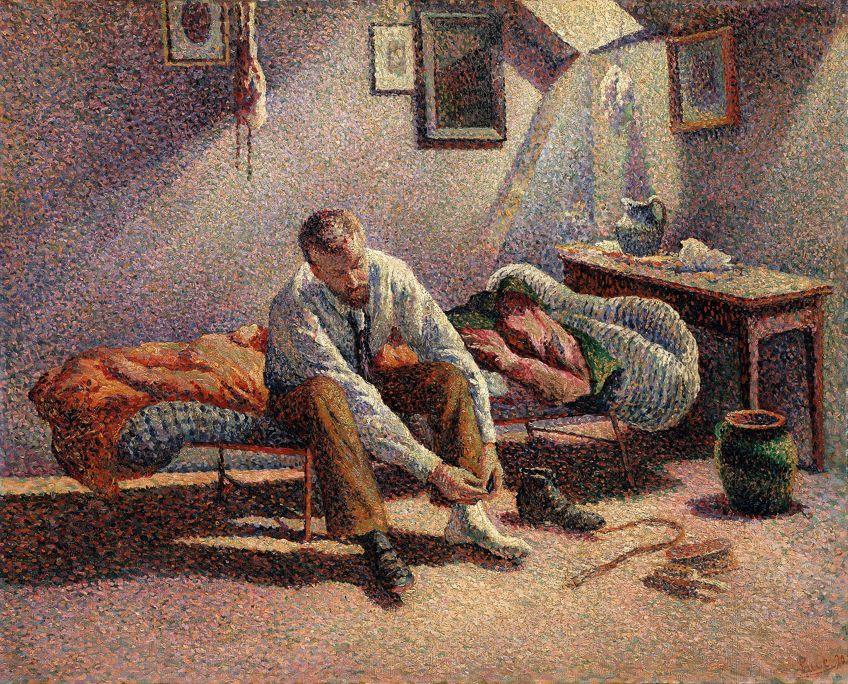
In Morning, Interior, light and atmosphere are inseparable from an ordinary domestic action. The subject prevents Pointillism from being understood only as a formal exercise.
Georges Seurat (1859 – 1891)
Georges Seurat was the pivotal innovator of Neo-Impressionism. He combined disciplined drawing, tonal studies, color theory, and a fascination with modern Paris. Works such as Bathers at Asnières, La Grande Jatte, Le Chahut, and The Circus turn leisure and entertainment into stable yet psychologically ambiguous designs.
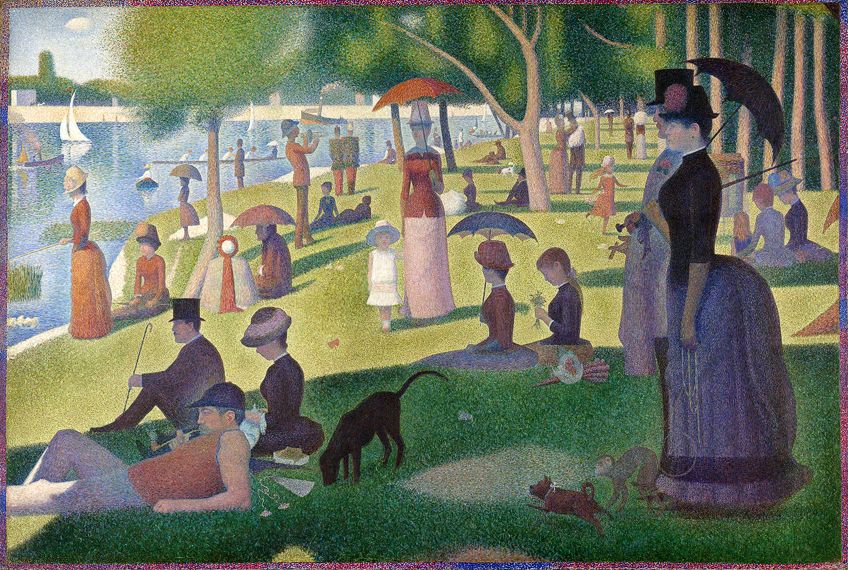
Seurat worked on La Grande Jatte from 1884 to 1886 and prepared it through numerous drawings and painted studies. Its figures occupy a carefully orchestrated riverside space rather than recording one spontaneous afternoon. He later added a dotted painted border, now understood as part of the work’s continuing revision.
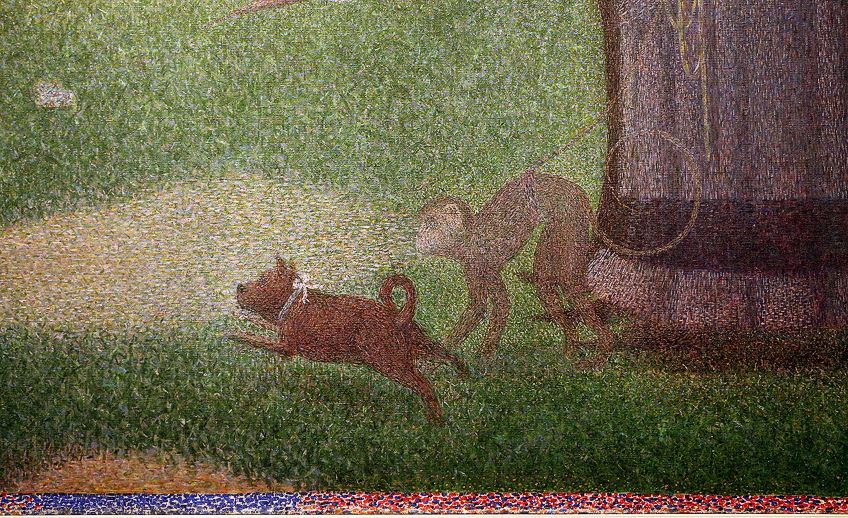
The monkey, dog, repeated profiles, and rhythmic silhouettes encourage social interpretation, yet the scene resists one definitive narrative. Seurat’s art is simultaneously modern observation and highly artificial construction.
Théo van Rysselberghe (1862 – 1926)
Belgian painter Théo van Rysselberghe encountered Seurat’s work through Les XX and became an important transmitter of Neo-Impressionism. He used divided color for coastal scenes and ambitious portraits, adapting the method to model faces, clothing, and group relationships.
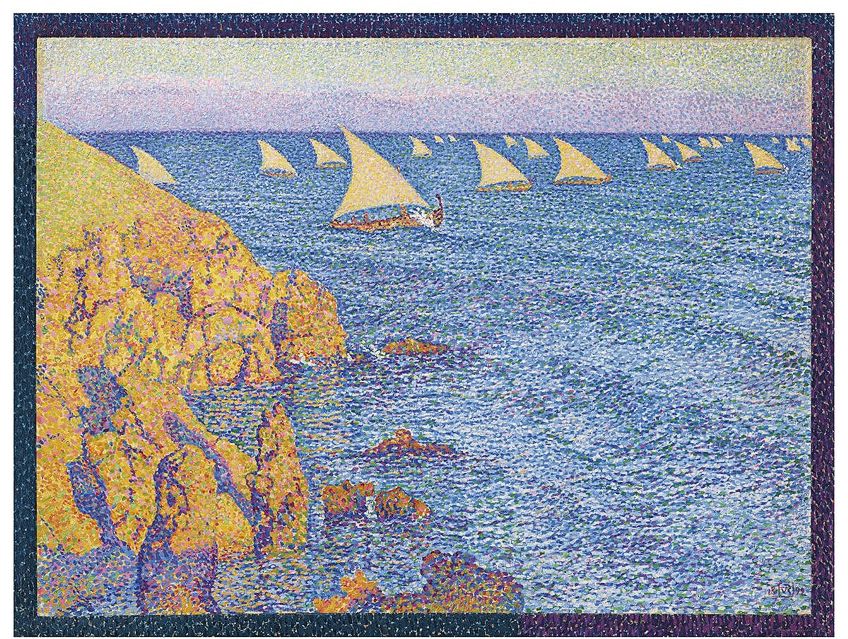
His practice shows how quickly Neo-Impressionism became transnational. Belgian exhibitions were not a secondary afterthought; they were crucial sites of exchange.
Paul Signac (1863 – 1935)
Paul Signac helped develop Neo-Impressionism with Seurat, organized exhibitions, supported fellow artists, collected art, and explained the method in print. Sailing shaped many of his harbor and coastal subjects. Across his career, his marks widened and his colors grew increasingly brilliant.
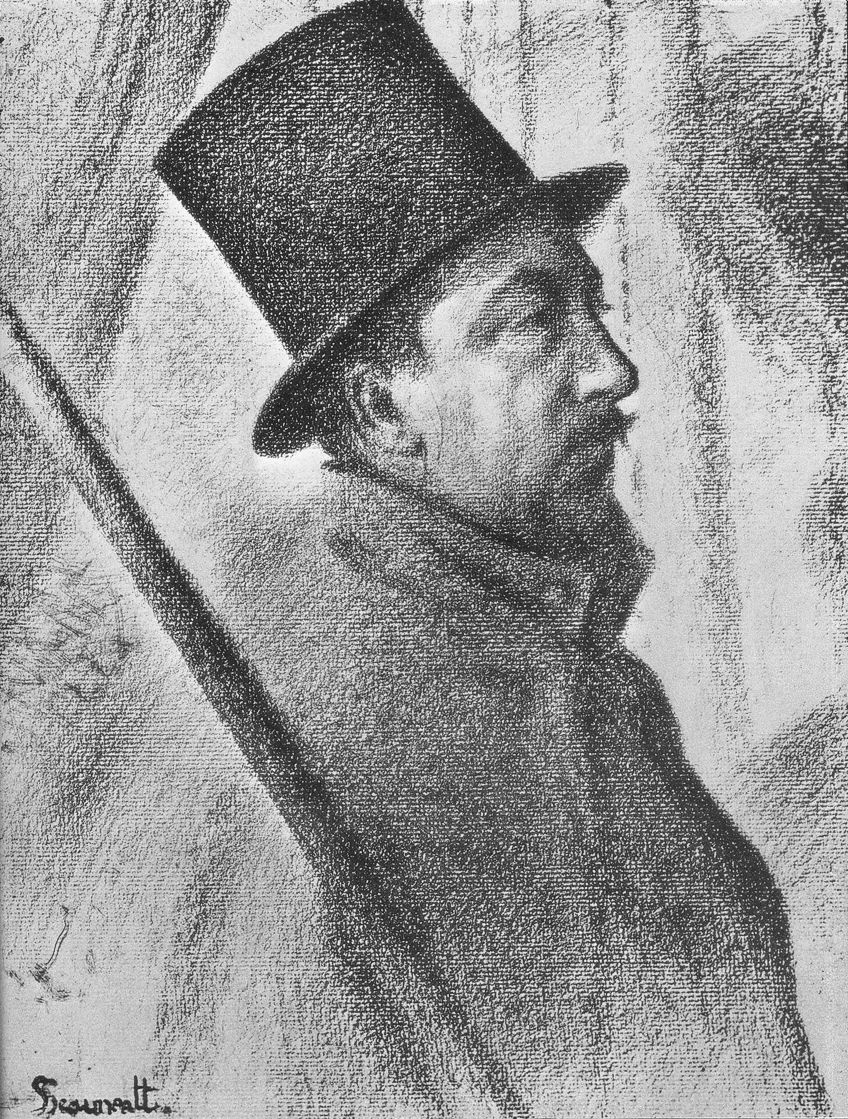
His portrait of critic Félix Fénéon sets a sharply profiled figure against a rotating abstract pattern. The title’s elaborate language and the decorative background acknowledge contemporary theories while also displaying wit.
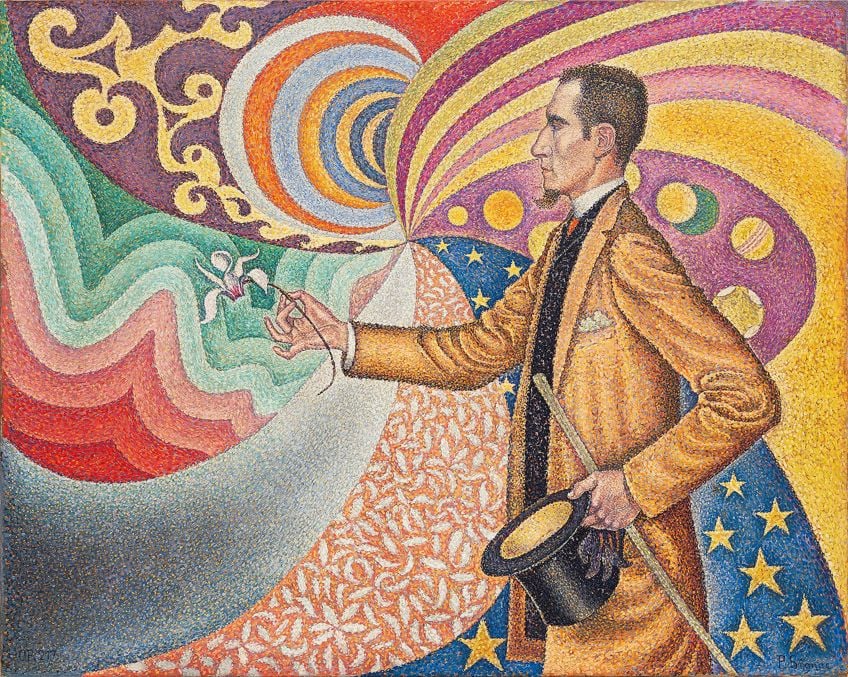
Signac’s role after Seurat’s death ensured that divided color remained a living practice rather than a short-lived formula. His interpretation influenced artists who accepted some Neo-Impressionist lessons while rejecting its regularity.
The Legacy of Pointillism
Neo-Impressionism changed modern painting through its analysis of color, its tension between surface and image, and its insistence that sensation could be constructed. Around 1904–1905, Matisse and André Derain engaged the freer divided strokes of Signac and Cross as they moved toward Fauvism. Italian Divisionists developed related but distinct methods, and some Futurists later drew on their luminous, separated color.
The movement also offered precedents for abstraction. Repeated marks could flatten depth, turn color into structure, and make the canvas operate as a field. Its measured geometry informed artists interested in order, including some associated with Cubism and later abstraction. These are lines of influence and selective reuse, not proof that Pointillism single-handedly produced every subsequent movement.
Pointillism also survives as a teaching example because it makes color interaction visible. That pedagogical familiarity can flatten its history into a craft exercise. The strongest works remain compelling because perception, subject, design, and social meaning operate together.
Influence of Pointillism on Contemporary Artists Today
Contemporary artists often use repeated circles, pixels, pegs, lights, or printed dots, but visual resemblance does not establish direct historical influence. The useful question is not simply whether a work contains spots; it is how the marks behave, what process produced them, and what cultural or conceptual framework gives them meaning.
Damien Hirst (Born 1965)
Damien Hirst’s spot paintings arrange colored circles in regular grids. They share with Pointillism an interest in repetition and color relationships, but they do not use small divided touches to construct modeled scenes or pursue Neo-Impressionist optical mixture. Hirst’s series is better understood through systems, pharmaceutical naming, production, authorship, and the art market. Calling it an homage to Seurat requires evidence rather than resemblance alone.
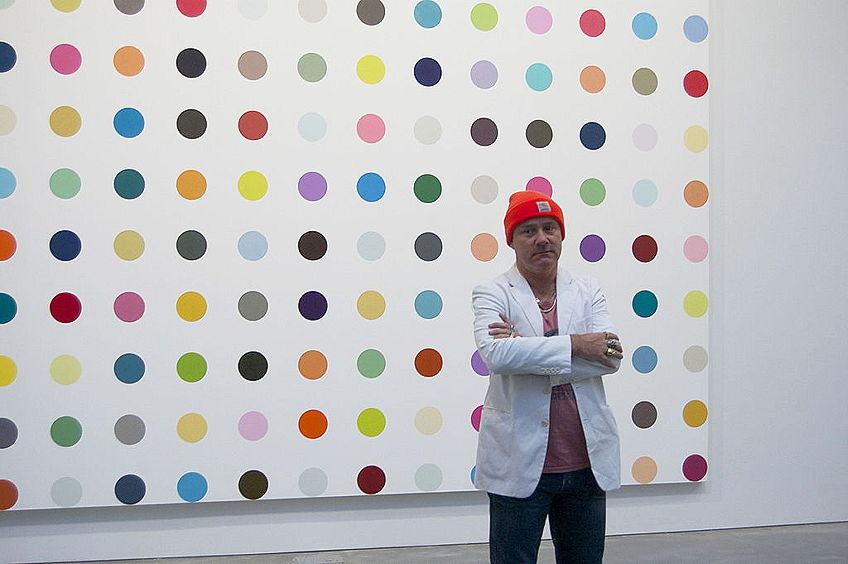
The photograph’s Creative Commons license applies to the photograph. Any reuse that prominently reproduces underlying contemporary artworks may involve separate rights, which should be assessed for the intended jurisdiction and use.
Philip Karlberg (Born 1973)
Photographer Philip Karlberg has made portraits using fields of painted wooden pegs and carefully controlled shadows. At a distance, the pegs resolve into recognizable faces; up close, the physical array dominates. That shift between component and image offers a productive comparison with Pointillism.
The process and purpose are nevertheless different. Karlberg works with sculpture, photography, light, and shadow rather than separated pigments on a canvas. Unless a reliable source documents a direct Neo-Impressionist influence, the relationship should be described as an optical analogy, not a historical lineage.
Pointillism remains useful precisely when the term is kept specific. It names a remarkable intersection of painting, perception, social modernity, and late-19th-century theory—not every image assembled from dots.
Frequently Asked Questions
What Is Pointillism?
Pointillism is a technique associated with late-19th-century Neo-Impressionism in which artists build images from distinct touches of color, often dots. Seurat and Signac were central to its development. The marks interact across the surface and in perception, but they do not always fuse into one uniform optical color.
What Are the Key Principles and Techniques Used in Pointillism?
Key principles include dividing chromatic components, placing contrasting colors side by side, controlling the scale and rhythm of marks, planning composition carefully, and considering viewing distance. Historical artists used dots, short strokes, and larger mosaic-like blocks rather than one fixed application method.
Examples of Famous Artists Known for Their Work in Pointillism?
Georges Seurat and Paul Signac are the best-known Neo-Impressionists. Henri-Edmond Cross, Maximilien Luce, Charles Angrand, and Théo van Rysselberghe also made important divided-color works. Camille Pissarro experimented with the method, while Vincent van Gogh adapted some of its color contrasts without becoming a committed Pointillist.

Isabella studied at the University of Cape Town in South Africa and graduated with a Bachelor of Arts majoring in English Literature & Language and Psychology. Throughout her undergraduate years, she took Art History as an additional subject and absolutely loved it. Building on from her art history knowledge that began in high school, art has always been a particular area of fascination for her. From learning about artworks previously unknown to her, or sharpening her existing understanding of specific works, the ability to continue learning within this interesting sphere excites her greatly.
Her focal points of interest in art history encompass profiling specific artists and art movements, as it is these areas where she is able to really dig deep into the rich narrative of the art world. Additionally, she particularly enjoys exploring the different artistic styles of the 20th century, as well as the important impact that female artists have had on the development of art history.
Learn more about Isabella Meyer and the Art in Context Team.
Cite this Article
Isabella, Meyer, “Pointillism – The Neo-Impressionist Dot Painting Technique.” Art in Context. May 14, 2021. URL: https://artincontext.org/pointillism/
Meyer, I. (2021, 14 May). Pointillism – The Neo-Impressionist Dot Painting Technique. Art in Context. https://artincontext.org/pointillism/
Meyer, Isabella. “Pointillism – The Neo-Impressionist Dot Painting Technique.” Art in Context, May 14, 2021. https://artincontext.org/pointillism/.