


Guatemalan Artists – The 10 Most Famous Painters to Know

Guatemalan artists reflect a unique blend of Indigenous heritage and modern influences, making their work distinct within the global art scene. From the colorful villages around Lake Atitlan to the vibrant capital of Guatemala City, artists draw inspiration from local traditions, history, and the evolving realities of contemporary life. Prominent figures like Carlos Mérida have played a significant role in shaping modernist art while honoring Latin American roots. Others, including Antonio Coche Mendoza and Edgar Calel, bring stories from their communities to a wider audience, using techniques ranging from painting and sculpture to photography. This fusion of old and new gives Guatemalan art its unmistakable character and ongoing relevance.
The Evolution of Guatemalan Art
Guatemalan art reflects both ancient traditions and dynamic contemporary influences. From the early Maya to today’s visual creators, the nation’s artists draw from cultural roots, political history, and popular life.
Historical Overview
The roots of Guatemalan art stretch back to the ancient Maya civilization, known for its elaborate murals, stelae, and pottery. These early works frequently depicted mythology, daily life, and religious ceremonies. Techniques and symbols from this era persist in contemporary craftsmanship.
Spanish colonization introduced Christian motifs and European painting methods. Churches and public buildings became canvases for murals and carvings blending indigenous symbols with imported styles. Over centuries, Guatemalan art absorbed elements from various cultures while maintaining core indigenous characteristics.

In the nineteenth and twentieth centuries, art responded to political shifts and growing national identity. Themes such as revolution, resistance, and social justice appeared, particularly in paintings and public art.
Movements and Influences
Guatemalan art has experienced several notable movements. The folk art tradition, especially in textiles and ceramics, remains strong and relies on centuries-old techniques. Modern art took form in the mid-twentieth century, with artists such as Carlos Mérida introducing abstract and surreal influences inspired by both European art and native history.
The late twentieth and early twenty-first centuries saw a surge in contemporary art, marked by experimentation with new materials and themes. Young artists began addressing issues like migration, identity, and memory. Exhibitions such as “Guatemala from 33000 km: Contemporary Art, 1960–Present” highlighted this development.
International connections and digital media have become more influential. While older movements emphasized narrative and tradition, recent works often focus on personal expression and critical perspectives.
Popular Culture and Art
Popular culture in Guatemala influences art through festivals, music, everyday life, and political events. Street art and murals, especially in Guatemala City and Antigua, depict scenes from modern life and pay tribute to local customs.
Community-based art cooperatives promote indigenous painters and artisans, blending traditional aesthetics with popular symbols. Artisans use vibrant colors, geometric patterns, and motifs representing nature and everyday experiences.
Radio, film, and music also shape visual art trends. Artists collaborate with musicians and filmmakers to fuse sound, movement, and image, expanding the boundaries of Guatemalan art into the broader realm of popular culture.
Notable Guatemalan Artists
Guatemala has produced a diverse range of artists working in painting, sculpture, and other visual media. From modernist pioneers to Maya folk painters, these individuals have made significant contributions to national and international art scenes.
Carlos Mérida (1891–1984)
Carlos Mérida is often recognized as one of Central America’s most important modern artists. He explored abstraction and merged elements from Latin American traditions with European avant-garde styles. Mérida’s work spans painting, muralism, and printmaking.

| Fact | Detail |
|---|---|
| Field | Modernist painting, muralism |
| Influences | European Modernism, Latin American culture |
| Notable Works | “Festival of Birds,” murals in Mexico City |
| Contribution | Integrated indigenous motifs in modern art |
| Birth/Death | Guatemala City, 1891 – Mexico, 1984 |
He spent much of his career in Mexico, collaborating with artists such as Diego Rivera. Mérida frequently featured geometric abstraction and vibrant color in his compositions.
Over the decades, he became a reference for blending the indigenous heritage of the Americas into international art movements.
Roberto González Goyri (1924–2007)
Roberto González Goyri’s work includes painting, sculpture, and reliefs. He was part of the “Generación de 1940,” a group that pushed Guatemalan art toward modern styles.
| Fact | Detail |
|---|---|
| Field | Painting, sculpture, muralism |
| Group | Generación de 1940 |
| Notable Works | “El árbol de la vida,” murals at Banco de Guatemala |
| Contribution | Modern public art, muralist icon in Guatemala |
| Birth/Death | Guatemala City, 1924–2007 |
Goyri is remembered for large-scale murals and public art, including works at the Banco de Guatemala and other civic sites.

His art combined figurative and abstract elements, often referencing Guatemalan landscapes and daily life.
Paula Nicho Cumez (b. 1955)
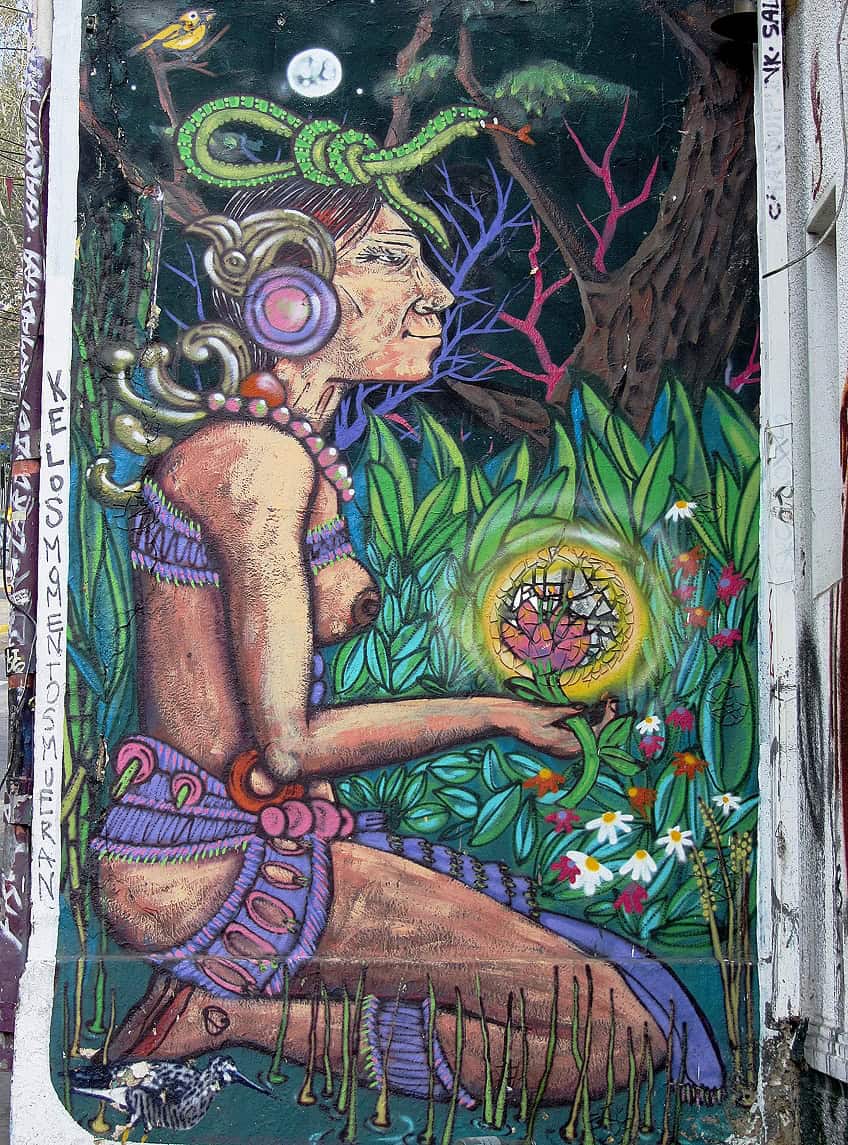
Paula Nicho Cumez is a contemporary painter from the Tz’utujil Maya community near Lake Atitlán. She is noted for her symbolic works that highlight Maya cosmology, women’s experiences, and nature.
| Fact | Detail |
|---|---|
| Background | Tz’utujil Maya |
| Field | Painting |
| Themes | Maya cosmology, women, environment |
| Contribution | Amplifies indigenous voices, focuses on Maya women |
| Birth | San Juan Comalapa, Chimaltenango, 1955 |
Her paintings often blend surreal landscapes with mythological components, reflecting her Indigenous roots and personal experiences.
Nicho Cumez is an advocate for Guatemalan women artists and often addresses gender and tradition in her work.
Rodolfo Abularach (1933–2020)
Rodolfo Abularach is acclaimed for his striking graphic work, particularly his detailed studies of the human eye. His art is characterized by a minimalist, almost monochromatic palette.
| Fact | Detail |
|---|---|
| Field | Painting, printmaking |
| Style | Minimalist, graphic |
| Signature Motif | Human eye |
| Contribution | Helped develop Guatemalan graphic art |
| Birth/Death | Guatemala City, 1933–2020 |
Abularach’s work reflects existential themes and close observation of anatomy. He exhibited widely across Latin America and the United States.

He is regarded as a major figure in the development of Guatemalan printmaking.
Zipacná de León (b. 1930)
Zipacná de León is a multi-disciplinary artist known for painting and sculpture rooted in Indigenous Maya culture. He often draws inspiration from ancient Maya mythology and symbolism.

| Fact | Detail |
|---|---|
| Field | Painting, sculpture |
| Influence | Maya mythology, symbolism |
| Contribution | Elevates Indigenous iconography in fine art |
| Birth | Quetzaltenango, 1930 |
De León’s works frequently depict Maya deities and cosmic themes, using bold color and intricate linework.
He has influenced a new generation of artists to engage with Guatemala’s ancestral heritage.
Erwin Guillermo (b. 1951)
Erwin Guillermo works across painting, sculpture, and installation. He is recognized for projects that address social justice, historical memory, and the struggles of marginalized communities.
| Fact | Detail |
|---|---|
| Field | Painting, sculpture, installation |
| Themes | Human rights, historical memory |
| Contribution | Art as social commentary |
| Birth | Guatemala City, 1951 |
Guillermo’s provocative use of symbolic imagery challenges oppression and violence, reflecting Guatemala’s complex history.
He continues to exhibit locally and internationally, prioritizing issues such as labor rights and indigenous recognition.
Mariano González Chavajay (b. 1960)
Mariano González Chavajay is a Tz’utujil Maya artist known for detailed narrative paintings depicting everyday life and rituals in Santiago Atitlán.

| Fact | Detail |
|---|---|
| Background | Tz’utujil Maya |
| Field | Painting |
| Themes | Daily life, tradition, ritual |
| Contribution | Preservation of Maya customs through art |
| Birth | Santiago Atitlán, Sololá, 1960 |
He portrays communal scenes, markets, and ceremonies, chronicling Tz’utujil stories and social dynamics.
González Chavajay’s paintings provide insight into the continuity and adaptation of Maya culture.
Oscar Peren (b. 1950)
Oscar Peren is celebrated for paintings that capture daily moments and festivals in the Kaqchikel Maya community.
| Fact | Detail |
|---|---|
| Background | Kaqchikel Maya |
| Field | Painting |
| Themes | Festivals, community, local tradition |
| Birth | Comalapa, Chimaltenango, 1950 |
His detailed, colorful canvases document rituals, music, and dance, emphasizing the vibrancy of Guatemalan village life.
Peren’s work is featured in museums and private collections, including the Museo Ixchel del Traje Indígena.
Sandra Monterroso (b. 1974)
Sandra Monterroso is a multidisciplinary artist and activist addressing identity, colonialism, and gender through video, performance, and installation art.

| Fact | Detail |
|---|---|
| Field | Video, performance, installation |
| Themes | Identity, colonialism, gender |
| Contribution | Expands conversation on contemporary Maya art |
| Birth | Guatemala City, 1974 |
Her work often incorporates Maya symbolism and references to native languages, challenging historic power structures.
Monterroso exhibits widely and participates in international biennials, highlighting the experience of indigenous women in art.
Andrés Curruchich (1891–1969)
Andrés Curruchich was the pioneering naïve painter from the Kaqchikel Maya town of San Juan Comalapa. He is regarded as the founder of San Juan Comalapa’s distinctive community painting tradition.
| Fact | Detail |
|---|---|
| Field | Naïve painting |
| Community | Kaqchikel Maya, San Juan Comalapa |
| Influence | Influenced artists like Angelina Quic Ixtamer, Antonio Coche Mendoza |
| Contribution | Established a tradition of Maya communal art |
| Birth/Death | San Juan Comalapa, 1891–1969 |
His genre scenes, bustling markets, and processions inspire generations of Maya painters in Comalapa.
Curruchich’s legacy fostered a community of artists, several of whom, such as Angelina Quic Ixtamer and Antonio Coche Mendoza, continue to shape Guatemalan art today.
Frequently Asked Questions
What Makes Guatemalan Art Unique in the Global Art Scene?
Guatemalan art is unique because it blends Indigenous heritage with modern influences. Artists often draw from Maya traditions, colonial history, and current social issues. This fusion creates bold, meaningful work that reflects both ancient culture and contemporary life. Figures like Carlos Mérida and Paula Nicho Cumez show how traditional and modern elements can coexist in powerful ways.
How Has Guatemalan Art Evolved Throughout History?
Guatemalan art began with the ancient Maya, who created symbolic murals and pottery. During Spanish colonization, Christian themes mixed with Indigenous symbols. In the 20th century, artists responded to political and social change through modern styles. Today, artists use new media to explore themes like identity, memory, and justice, while still honoring cultural roots.
Who Are Some of the Most Influential Guatemalan Artists?
Carlos Mérida helped shape modernist Latin American art by combining Indigenous and European styles. Roberto González Goyri is known for public murals and modern sculpture. Paula Nicho Cumez paints scenes inspired by Maya women’s experiences. Sandra Monterroso uses video and performance to challenge colonialism and explore identity. Each artist adds a distinct voice to Guatemala’s diverse art scene.

Isabella studied at the University of Cape Town in South Africa and graduated with a Bachelor of Arts majoring in English Literature & Language and Psychology. Throughout her undergraduate years, she took Art History as an additional subject and absolutely loved it. Building on from her art history knowledge that began in high school, art has always been a particular area of fascination for her. From learning about artworks previously unknown to her, or sharpening her existing understanding of specific works, the ability to continue learning within this interesting sphere excites her greatly.
Her focal points of interest in art history encompass profiling specific artists and art movements, as it is these areas where she is able to really dig deep into the rich narrative of the art world. Additionally, she particularly enjoys exploring the different artistic styles of the 20th century, as well as the important impact that female artists have had on the development of art history.
Learn more about Isabella Meyer and the Art in Context Team.
Cite this Article
Isabella, Meyer, “Guatemalan Artists – The 10 Most Famous Painters to Know.” Art in Context. November 16, 2025. URL: https://artincontext.org/guatemalan-artists/
Meyer, I. (2025, 16 November). Guatemalan Artists – The 10 Most Famous Painters to Know. Art in Context. https://artincontext.org/guatemalan-artists/
Meyer, Isabella. “Guatemalan Artists – The 10 Most Famous Painters to Know.” Art in Context, November 16, 2025. https://artincontext.org/guatemalan-artists/.


