

Roman Art – A Brief Study of the History of Ancient Roman Art

Roman art developed across more than a millennium of political change, from the city’s early encounters with Etruscan and Greek cultures to the vast, multicultural Roman Empire. Its paintings, portraits, reliefs, temples, amphitheaters, baths, and engineered interiors joined borrowed forms to distinct Roman purposes: commemoration, ritual, civic identity, domestic display, entertainment, and imperial power.
The Eternal City: A Brief Look at Roman History
Rome’s history is not a simple line from imitation to invention. Artists, patrons, soldiers, merchants, and enslaved people moved objects and techniques through Italy, the Mediterranean, Europe, North Africa, and western Asia. Roman visual culture absorbed Etruscan, Greek, Egyptian, and regional traditions, while transforming them for new buildings, audiences, and political systems.
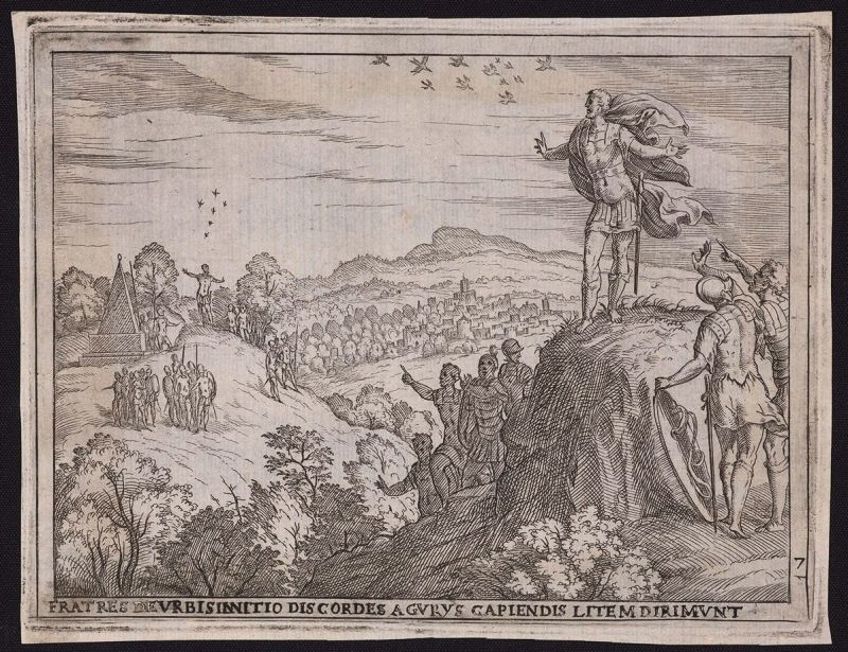
The legendary founding date of Rome is 753 BCE. Archaeology instead reveals a gradual process in which settlements around the hills near the Tiber became an urban center. The city eventually grew into the capital of a far-reaching empire. Today, Rome’s unusually dense layers of ancient, medieval, Renaissance, Baroque, and modern fabric are part of its UNESCO World Heritage significance.
Roman chronology helps organize the material, but art did not change overnight when a ruler or constitution changed. Workshops, religious practices, portrait types, and building methods crossed conventional period boundaries.
| Historical Framework | Conventional Dates | Useful Art-Historical Focus |
|---|---|---|
| Etruscan context | c. ninth–third centuries BCE | Urbanism, temple design, terracotta, metalwork, funerary culture |
| Roman Kingdom | Traditionally 753–509 BCE | Formation of civic and religious institutions |
| Roman Republic | 509–27 BCE | Public monuments, portraiture, conquest, collecting, elite houses |
| Roman Empire in the West | 27 BCE–476 CE | Imperial imagery, provincial exchange, concrete architecture, late-antique transformation |
The Etruscan Context (c. Ninth–Third Centuries BCE)
The Etruscans were not simply a preliminary stage of Roman culture. They formed a network of powerful city-states in central Italy with their own language, religious practices, trade relations, and artistic traditions. Their temples used timber and mudbrick superstructures on stone foundations, often with richly modeled terracotta roof decoration. Tomb paintings, carved sarcophagi, bronze work, and imported Greek pottery testify to sophisticated local cultures and Mediterranean exchange.
Early Rome interacted closely with Etruscan cities through trade, conflict, migration, and elite rule. Roman religious and civic practices retained elements associated with Etruscan ritual expertise, and early temple building shared central Italian forms. Rome later conquered Etruscan territories, but Etruscan influence continued within a larger, changing Italian world.
The Roman Kingdom (Traditionally 753–509 BCE)
Roman tradition describes seven kings beginning with Romulus and ending with Tarquinius Superbus. These narratives were written centuries after the events and mingle political memory with legend. They are most useful when read alongside archaeology rather than treated as a complete contemporary record.
By the late sixth century BCE, Rome had major public works, sanctuaries, drainage, and a growing civic center. The Temple of Jupiter Optimus Maximus on the Capitoline became a defining religious monument. Its scale and form connected Rome to central Italian building traditions while announcing the city’s ambitions.

The Roman Republic (509–27 BCE)
According to Roman tradition, the monarchy ended in 509 BCE and was replaced by a republic governed through elected magistracies, the Senate, and popular assemblies. Political participation was unequal, and competition among elite families shaped public building, portrait display, triumphal commemoration, and funerary ritual.
Expansion across Italy and then the Mediterranean brought enormous wealth, captives, objects, and artists to Rome. Greek sculpture and painting were collected, copied, adapted, and displayed, but Roman art was not merely derivative. Roman patrons selected Greek styles for particular meanings, combined them with Italian practices, and developed new approaches to portraiture, historical relief, urban infrastructure, and domestic space. The Hellenistic tradition remained active rather than functioning as a closed past.
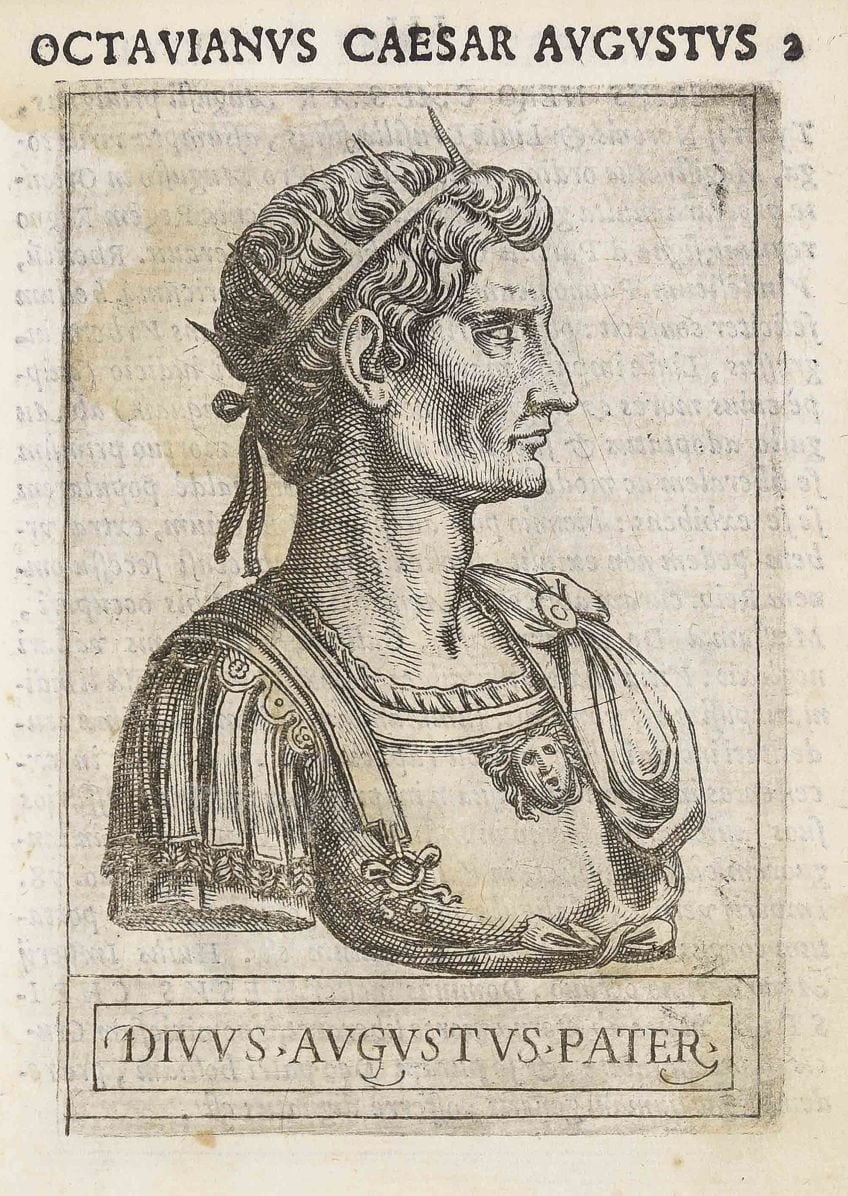
Late Republican civil wars destabilized the political system. Octavian’s victory over Antony and Cleopatra at Actium in 31 BCE led to a new settlement. In 27 BCE, the Senate granted him the title Augustus, marking the conventional beginning of the imperial period.
The Roman Empire (27 BCE–476 CE in the West)
Augustus presented his rule as a restoration of peace and tradition, using architecture, portraiture, coins, and public ritual to make the new order visible. Later emperors continued to shape their public identities through carefully controlled images. As the Metropolitan Museum of Art’s overview of Roman portraiture explains, portraits ranged from individualized Republican likenesses to imperial types that communicated authority, ancestry, military success, or divine association.
The empire’s art was never produced only in Rome. Provincial workshops and patrons adapted imperial forms to local languages, religions, materials, and viewing habits. Objects and craftsmen circulated in multiple directions. “Roman art” is therefore a useful umbrella for a connected but highly diverse visual world.
The empire changed profoundly during late antiquity. Diocletian established the Tetrarchy in 293 CE; Constantine later became sole emperor and refounded Byzantium as Constantinople in 330 CE. After the permanent administrative division of 395 CE, eastern and western courts followed different political trajectories. The last western emperor was deposed in 476 CE, but the Eastern Roman Empire continued from Constantinople for nearly another thousand years.
Roman Artwork
Roman art joined public and private experience. A wall painting could create an imaginary landscape inside a dining room; a portrait could claim family continuity; a relief could turn military conquest into an official narrative; and a vaulted bath complex could make engineering itself part of imperial spectacle.
Roman Paintings
Much surviving Roman painting comes from the Vesuvian cities buried by the eruption of 79 CE, especially Pompeii and Herculaneum. This accident of preservation can distort the picture: it gives exceptional evidence for domestic decoration in one region and moment, not a complete survey of painting across the empire.
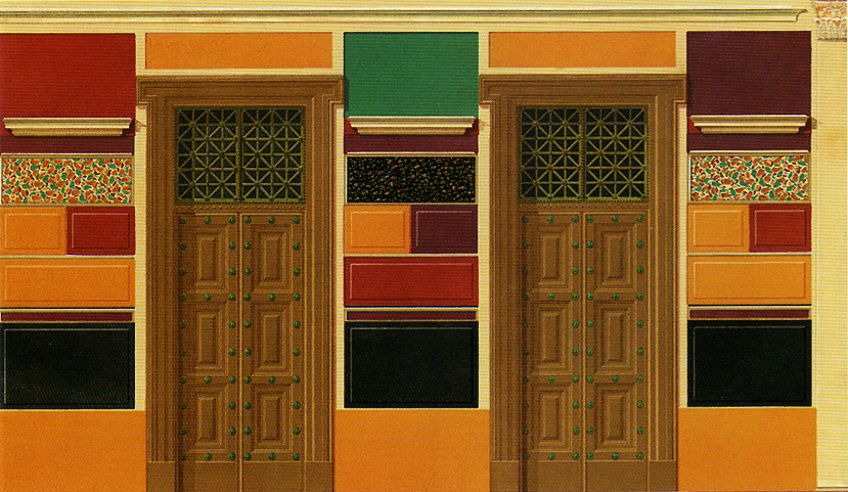
The four “Pompeian Styles,” first systematized by August Mau, describe changing approaches to wall decoration. They overlap and were sometimes revived or combined.
| Style | Approximate Date | Visual Strategy |
|---|---|---|
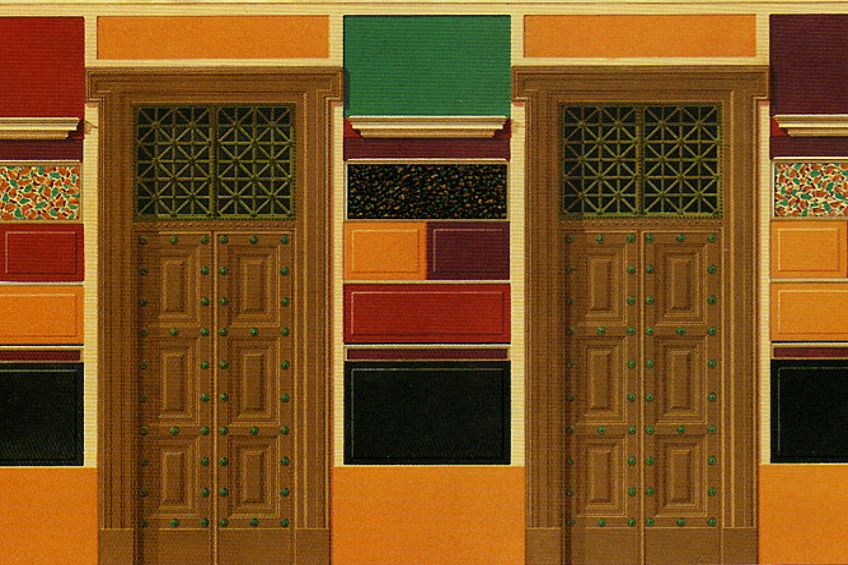
| First | c. 200–80 BCE | Painted and modeled surfaces imitate costly masonry |
| Second | c. 80–20/10 BCE | Illusionistic architecture opens walls into imagined space |
| Third | c. 20/10 BCE–45 CE | Flat color fields, delicate frameworks, and small central scenes |
| Fourth | c. 45–79 CE | Dense combinations of illusion, ornament, panels, and framed pictures |
First Style: Incrustation Style
The First Style used plaster relief and paint to imitate blocks or veneers of colored stone. Rather than “poor copies” of luxury materials, these rooms should be understood as coordinated decorative systems that staged status, architectural order, and surface variety.
Second Style: Architectural Style
Second Style painters treated the wall as an opening into another world. Painted columns, platforms, doors, landscapes, and buildings create complex perspectival effects. The system is not equivalent to modern linear perspective; viewpoints may shift across a wall to organize an immersive room.
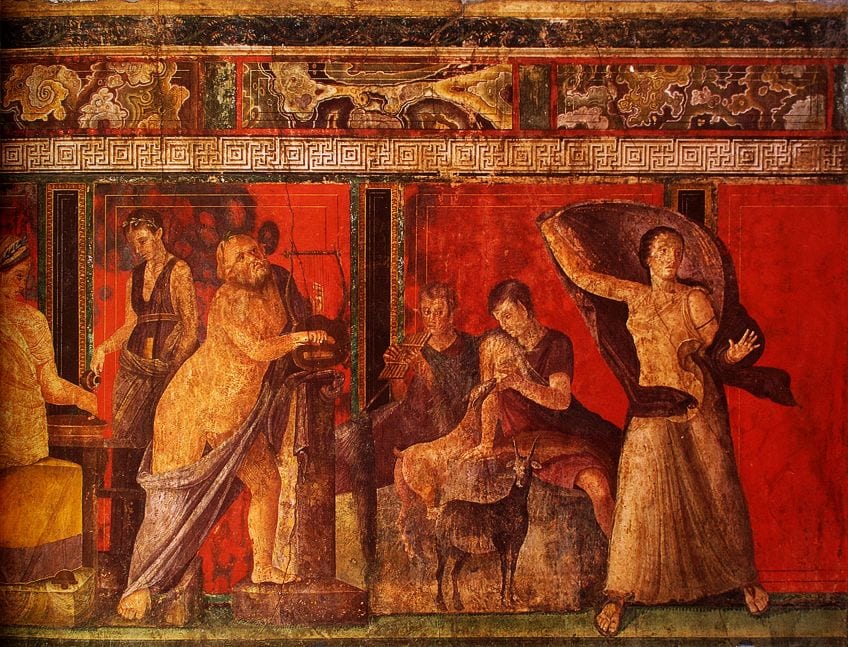
The Villa of the Mysteries near Pompeii is famous for its large-scale frieze of nearly life-size figures. Its subject remains debated, with interpretations involving Dionysiac ritual, marriage, initiation, theater, or an intentionally layered combination. The room is an important reminder that confident labels can exceed surviving evidence.
Third Style: Ornate Style
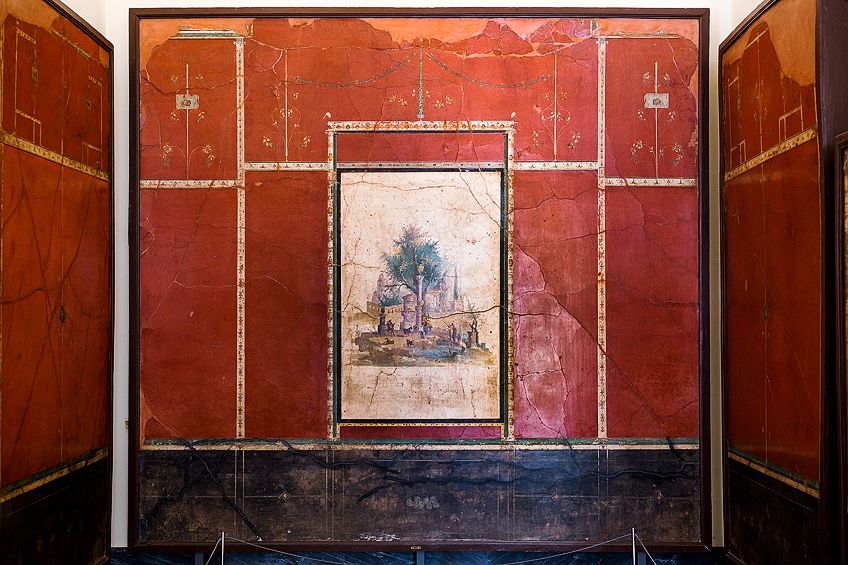
Third Style decoration often reasserted the wall’s flatness. Broad monochrome fields are divided by thin, fantastical architectural frameworks, while small landscapes or mythological panels appear like precious pictures suspended at the center. Precision and restraint replace the expansive architectural illusion of many Second Style rooms.
Fourth Style: “Intricate Style”
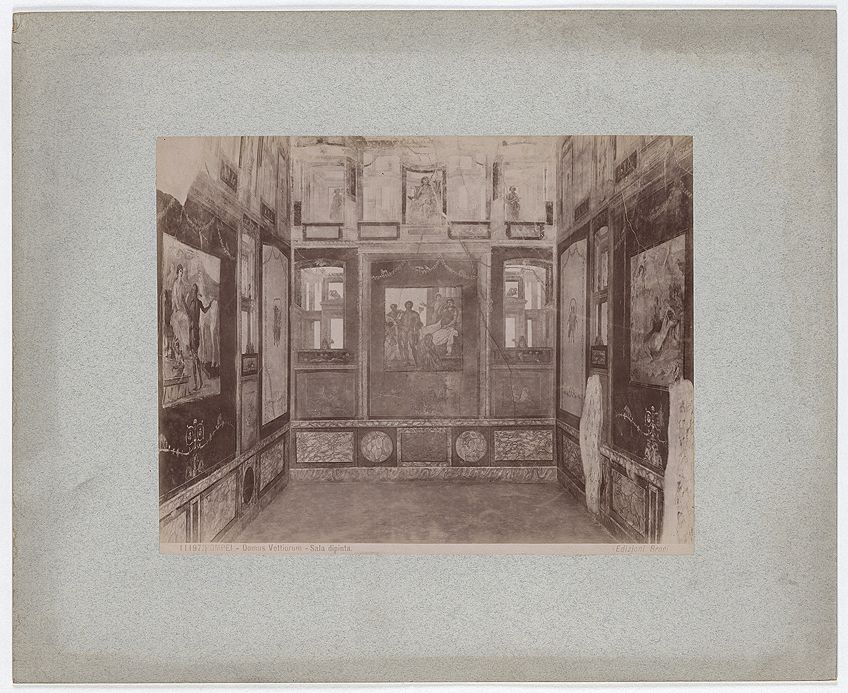
The Fourth Style recombined earlier devices into elaborate ensembles. Rooms may juxtapose illusionistic vistas, framed mythological scenes, delicate ornament, still life, and richly patterned borders. Because many Vesuvian houses were being redecorated when Vesuvius erupted, Fourth Style interiors survive in substantial numbers.
Roman Architecture
Roman architecture developed through the interaction of materials, structural systems, labor, patronage, and urban planning. Temples and colonnades could adopt Greek orders, while arches, vaults, concrete, and brick-faced construction supported new spatial ambitions. Roads, bridges, aqueducts, sewers, warehouses, basilicas, baths, amphitheaters, apartment blocks, villas, palaces, and sanctuaries made architecture central to daily life and government.
The Roman architect Vitruvius wrote De architectura in the late first century BCE. It is the only extensive architectural treatise to survive from antiquity, but it should not be treated as a neutral record of every Roman building practice. Its prescriptions, examples, and theory reflect a particular author and audience.
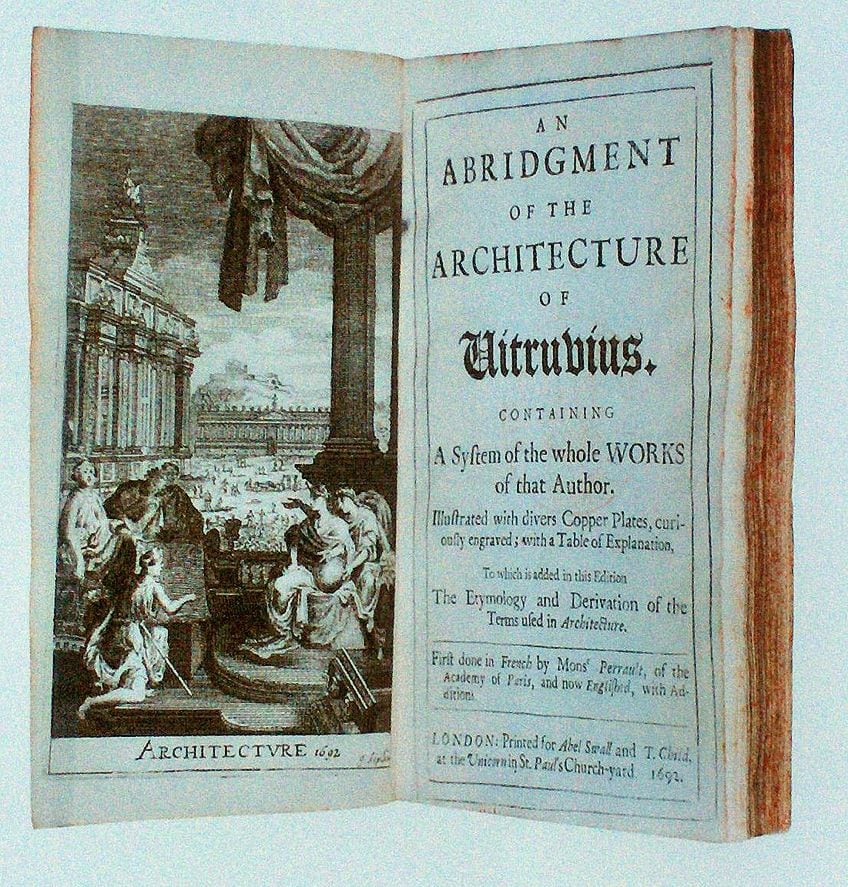
The Roman Architectural Revolution
Roman builders did not invent the arch or concrete from nothing. They developed earlier Mediterranean knowledge at exceptional scale. Opus caementicium—a concrete made from lime mortar, aggregate, and often volcanic material—could be faced with stone or brick and shaped into walls, barrel vaults, groin vaults, and domes. Pozzolanic mixtures could harden in wet conditions, supporting harbors and water infrastructure.
These technologies let architects coordinate enormous interiors and complex circulation. The effect depended on organized labor, surveying, supply networks, and repeated experimentation as much as on a single “invention.” Concrete was normally concealed beneath facing, marble veneer, stucco, paint, or mosaic; structure and finish worked together.
Republican Roman Architecture
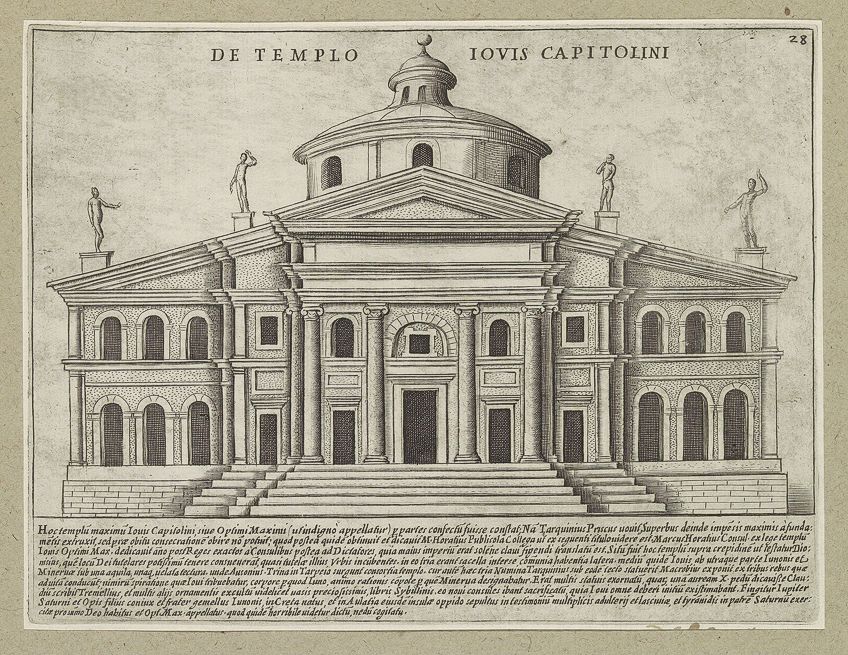
Republican temples often combined a frontal stair and deep porch associated with central Italian traditions with Greek columns and orders. The Temple of Jupiter Optimus Maximus was traditionally dedicated in 509 BCE, though it was repeatedly destroyed and rebuilt. Later images reconstruct its appearance rather than document one unchanged original.
Sanctuary complexes could exploit steep terrain. The Sanctuary of Fortuna Primigenia at Palestrina, expanded monumentally in the late second century BCE, organized terraces, ramps, porticoes, and axial views across a hillside. Its dramatic planning demonstrates that large-scale architectural theater was already present before Augustus.

Civic space was equally important. Forums gathered temples, basilicas, commemorative monuments, shops, law courts, and political activity. As Roman power expanded, roads, bridges, colonies, and standardized building types connected distant communities while leaving room for local variation.
Imperial Roman Architecture
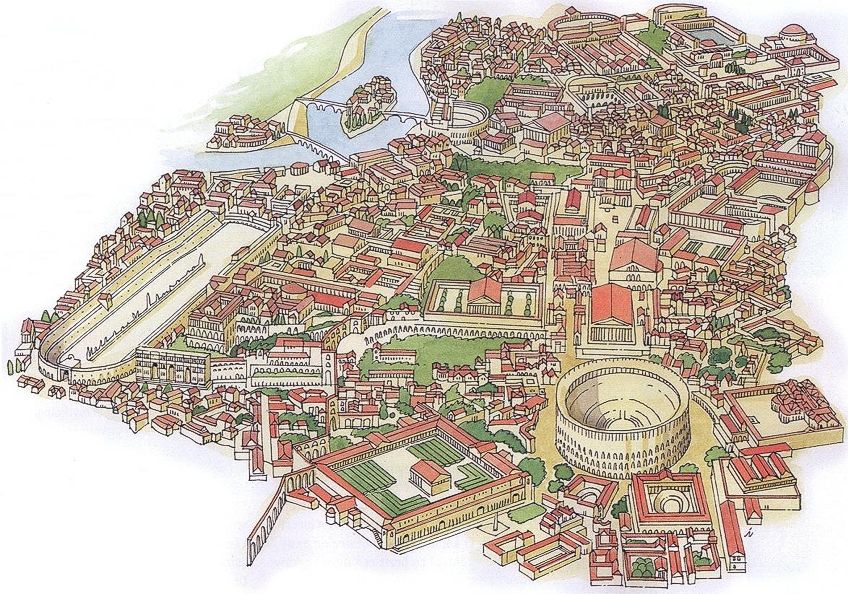
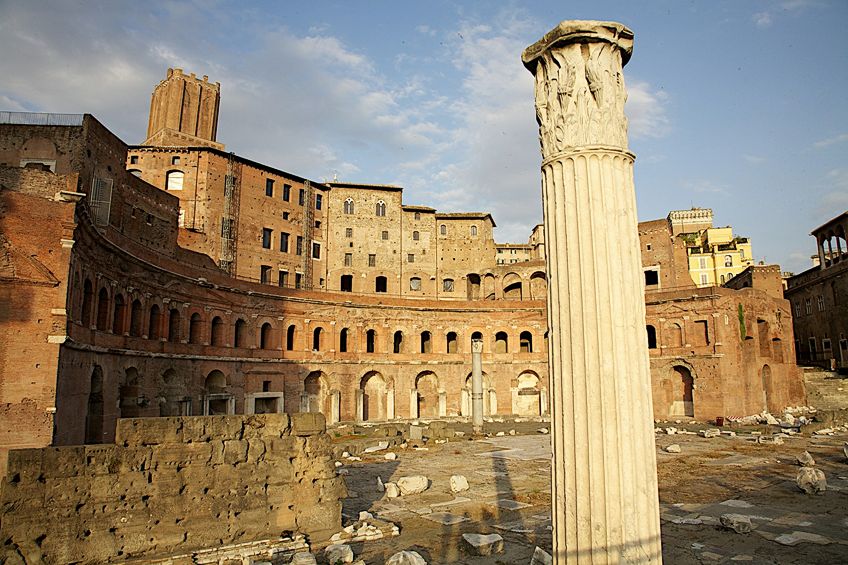
Imperial patrons transformed Rome through forums, palaces, baths, entertainment buildings, and monuments. Trajan’s Forum, designed under Apollodorus of Damascus and inaugurated in the early second century CE, combined a vast piazza, basilica, libraries, commemorative sculpture, and the Column of Trajan. Architecture framed movement and made imperial conquest legible at an urban scale.
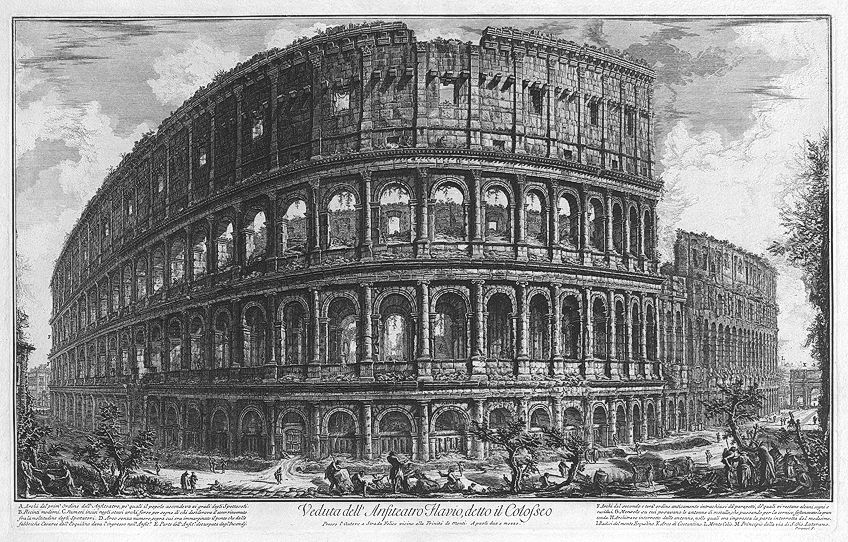
The Colosseum, begun under Vespasian and inaugurated under Titus in 80 CE, could hold tens of thousands of spectators. Its concrete and masonry structure supported tiered seating, corridors, stairs, and controlled entrances. The stacked exterior orders supplied visual rhythm, but the building’s social importance also lies in its seating hierarchy and spectacles, which placed imperial generosity beside violence and exclusion.
The Pantheon is a particularly concentrated example of Roman spatial design. Agrippa built an earlier monument on the site in 25–27 BCE. The present building belongs to Hadrian’s reign, usually dated c. 118–125/126 CE, while the façade retained Agrippa’s inscription. A traditional portico leads into a cylindrical rotunda capped by a coffered concrete dome and open oculus. The official Pantheon history also records its later conversion into the church of Santa Maria ad Martyres, a major reason for its preservation.
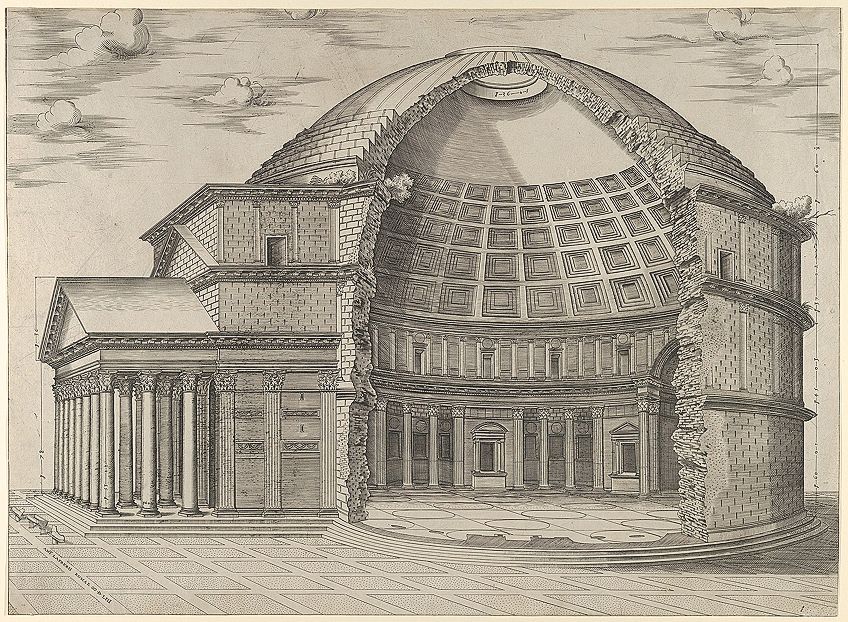
Roman architecture should therefore be evaluated as a choreography of structure, light, materials, ceremony, and bodies—not only as a list of technical breakthroughs.
Roman Sculpture
Roman sculpture included portraits, cult statues, funerary monuments, historical reliefs, decorative works, and replicas or adaptations of Greek models. Marble and bronze survive most visibly, but terracotta, precious metals, ivory, and painted surfaces also mattered. Many stone sculptures were originally colored.
Republican portraiture is often associated with verism: emphatic age lines, thin cheeks, and other signs of lived experience. Such features could communicate seriousness, service, ancestry, and elite virtue, yet not every Republican portrait is veristic and not every aged face is a literal documentary likeness.
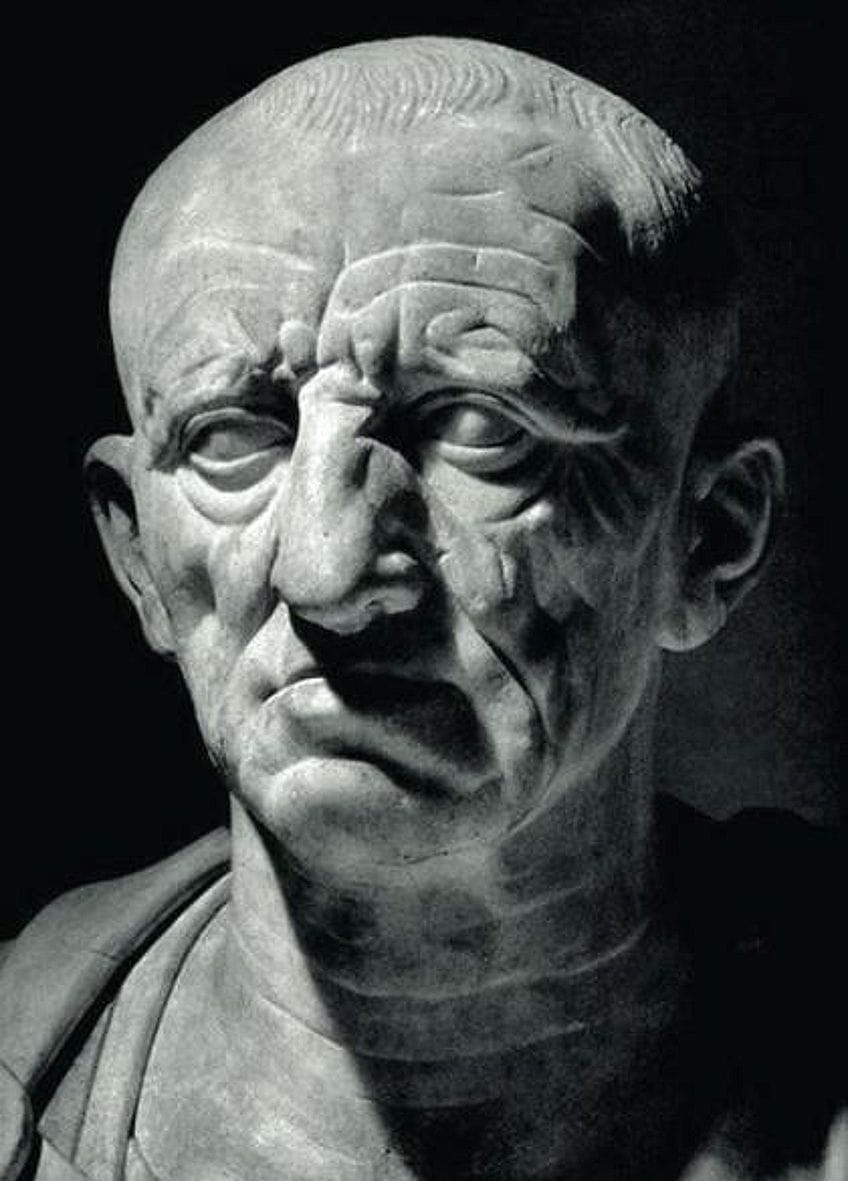
The so-called Patrizio Torlonia, or Head of a Roman Patrician, is often used to illustrate this mode. The photographed object’s precise identification and date require care: “patrician” is a modern descriptive title, not a securely known sitter. The inherited source scan also needs a human rights and metadata check before republication.
Imperial portraits balanced recognizability with idealization and type. Copies sent across the empire could standardize a ruler’s hairstyle, expression, and attributes. The Augustus of Prima Porta, found at the Villa of Livia and dated to the early first century CE, presents the emperor in an orator’s pose. Its cuirass links Roman and Parthian figures to the return of military standards, while the body recalls prestigious Greek sculptural models. The Vatican Museums record provides the essential object context.

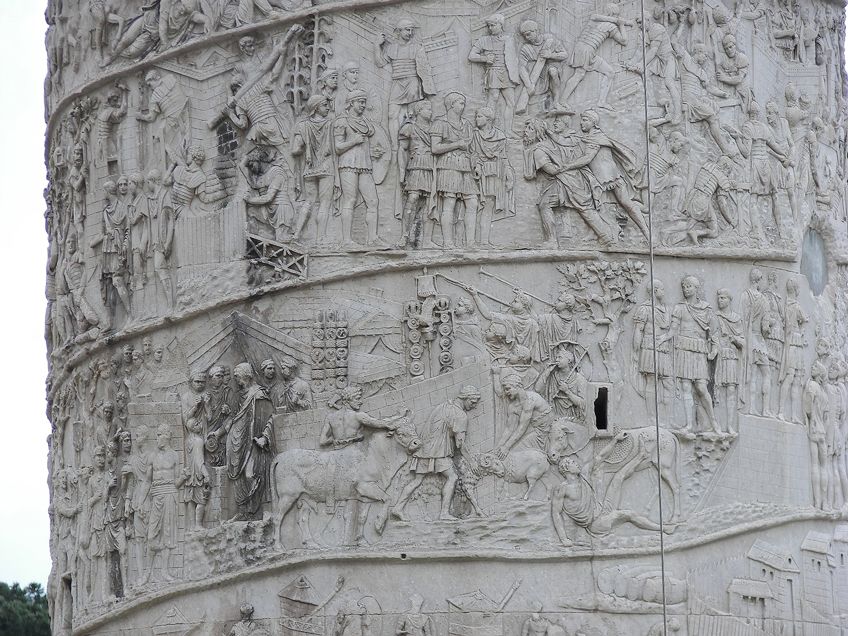
Narrative relief turned historical events into selected, politically charged sequences. The Column of Trajan, dedicated in 113 CE, wraps more than 150 episodes from the Dacian Wars around a monumental shaft. The spiral is difficult to inspect from the ground, suggesting that the column’s total commemorative presence mattered alongside close reading of every scene.
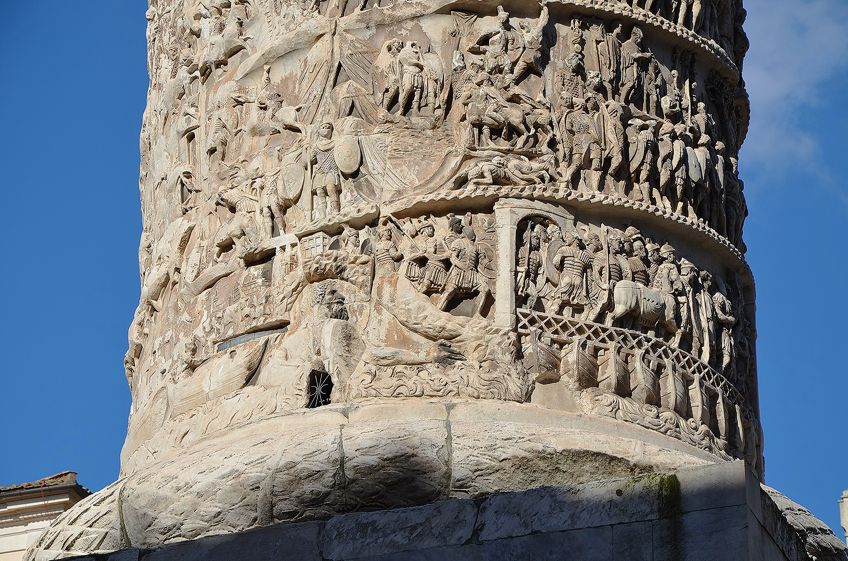
The Column of Marcus Aurelius, probably completed in the late second century CE, also depicts northern campaigns. Its deeper carving, emphatic gestures, and dramatic episodes create stronger contrasts of light and shadow. Similar formats can therefore support distinct visual rhetoric.
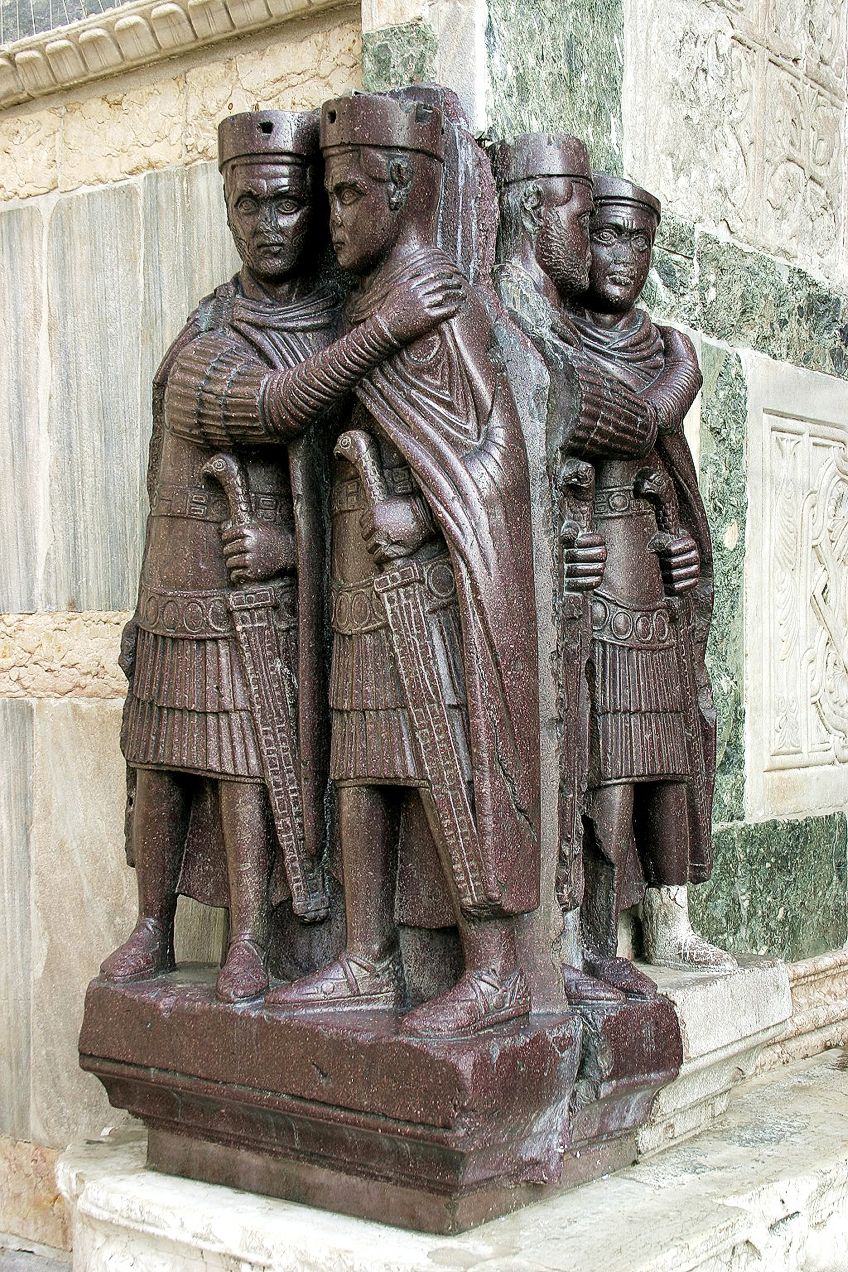
Late-antique works are not evidence that Roman artists simply “lost” classical skill. The porphyry group of the Tetrarchs uses squat bodies, repeated features, and an embrace to emphasize shared office and concord rather than individual naturalism. Made in the fourth century and probably associated with Constantinople, it was taken to Venice after the Fourth Crusade and installed at St. Mark’s.
The Weakened West Remains Eternal
The political breakup of the Western Roman Empire did not erase Roman art. Churches reused basilica forms; rulers, bishops, and communities repurposed monuments and materials; workshops maintained and transformed mosaic, metalwork, manuscript, ivory, and architectural traditions. Constantinople remained the capital of the Eastern Roman Empire, while many post-Roman states in the West used Roman law, titles, imagery, and infrastructure to establish authority.
The phrase “fall of Rome” is useful only when its scope is clear. The western imperial office ended in 476 CE, but cities, trade, religious institutions, and artistic production changed at different rates in different regions. Late antiquity is now studied as a period of transformation as well as conflict.
Rome’s later artists and architects repeatedly reinterpreted antiquity. Renaissance study, Baroque urbanism, Grand Tour collecting, Neoclassicism, archaeology, modern conservation, cinema, and popular culture have all created new “Romes.” The result is not a frozen classical legacy but a continuing argument about power, beauty, citizenship, empire, and historical memory.
Frequently Asked Questions
What Is Roman Art?
Roman art is the diverse visual and material culture produced within Roman society and the Roman Empire, conventionally from the city’s early development through late antiquity. It includes painting, sculpture, mosaics, architecture, metalwork, glass, ceramics, coins, and other media made across Europe, North Africa, and western Asia.
What Are the Characteristics of Roman Art?
There is no single Roman style. Common features include selective adaptation of Greek and regional forms, strong links between art and social status, individualized and typological portraiture, narrative historical relief, illusionistic wall painting, richly staged interiors, and architecture organized through arches, vaults, domes, concrete, and urban infrastructure.
What Are the Four Styles of Roman Painting?
The four Pompeian Styles are the First or Incrustation Style, Second or Architectural Style, Third or Ornate Style, and Fourth or Intricate Style. They are a modern framework for wall painting around the Bay of Naples from roughly the second century BCE to 79 CE, not a universal sequence for every province.
What Was the Difference Between Greek and Roman Art?
The traditions overlap deeply. Roman patrons collected, copied, and adapted Greek art, while Greek artists worked for Roman audiences. Roman art also developed distinct emphases in portrait display, historical commemoration, domestic decoration, engineering, and urban planning. “Greek” and “Roman” should not be treated as isolated or uniformly opposed styles.
Did the Romans Invent Concrete?
No. Concrete-like mixtures and arches existed before Rome. Roman builders refined lime-based concrete, often using volcanic pozzolana, and applied it at unprecedented scale to walls, vaults, domes, harbors, baths, and infrastructure. Their achievement was a long development of materials, construction systems, logistics, and architectural design.

Isabella studied at the University of Cape Town in South Africa and graduated with a Bachelor of Arts majoring in English Literature & Language and Psychology. Throughout her undergraduate years, she took Art History as an additional subject and absolutely loved it. Building on from her art history knowledge that began in high school, art has always been a particular area of fascination for her. From learning about artworks previously unknown to her, or sharpening her existing understanding of specific works, the ability to continue learning within this interesting sphere excites her greatly.
Her focal points of interest in art history encompass profiling specific artists and art movements, as it is these areas where she is able to really dig deep into the rich narrative of the art world. Additionally, she particularly enjoys exploring the different artistic styles of the 20th century, as well as the important impact that female artists have had on the development of art history.
Learn more about Isabella Meyer and the Art in Context Team.
Cite this Article
Isabella, Meyer, “Roman Art – A Brief Study of the History of Ancient Roman Art.” Art in Context. May 26, 2021. URL: https://artincontext.org/roman-art/
Meyer, I. (2021, 26 May). Roman Art – A Brief Study of the History of Ancient Roman Art. Art in Context. https://artincontext.org/roman-art/
Meyer, Isabella. “Roman Art – A Brief Study of the History of Ancient Roman Art.” Art in Context, May 26, 2021. https://artincontext.org/roman-art/.


