

Iconoclasm – Looking at the History of Icons in Iconoclasm Art

Iconoclasm is the deliberate destruction, removal, or defacement of images and monuments because of what they represent. The target may be a religious icon, a political portrait, a public statue, or another object invested with authority. The word can also describe a person who challenges established beliefs, although that figurative meaning does not necessarily involve physical destruction.
What Is Iconoclasm?
Iconoclasm turns an image into the focus of a larger conflict. A statue may be attacked not because of its material value, but because it embodies a ruler, faith, institution, or social order. Religious iconoclasm has appeared in several traditions, while political iconoclasm has accompanied events such as the French Revolution, revolutions in Russia and China, and the removal of monuments associated with fallen regimes.
The term comes from Greek words for “image” and “breaker.” It is useful only when the symbolic target matters: accidental damage, ordinary theft, and destruction carried out solely for profit are not iconoclasm in the same sense.
| Term | What it describes | Key distinction |
|---|---|---|
| Iconoclasm | Attacking or removing an existing image, object, or monument for its symbolic meaning | The act is directed at what the object represents |
| Aniconism | A practice of avoiding certain kinds of images | It does not necessarily involve destroying an existing work |
| Vandalism | Unauthorized damage to property | It may overlap with iconoclasm, but symbolic or ideological purpose is not required |
| Political decommemoration | Official or public removal of a monument from a place of honor | Removal can be lawful and need not entail physical destruction |
This short overview introduces the term through representative religious and political cases:
Biblical Iconoclasm
The Hebrew Bible repeatedly condemns idolatry and describes the destruction of cult images and altars. In Exodus 32, Moses burns the golden calf made by the Israelites while he is on Mount Sinai. Other passages command the removal of foreign cult objects, while the Books of Kings judge Israelite rulers partly by whether they suppressed unauthorized shrines.
These accounts also reveal an important distinction: the issue was not simply “art versus no art.” The biblical narratives object to images, altars, and ritual sites understood as rivals to the worship authorized by the text. King Jehu destroyed the sanctuary of Baal in Samaria but retained the golden calves associated with Israelite worship and was criticized for doing so. King Josiah’s reforms went further by eliminating shrines outside the Jerusalem Temple.
Biblical iconoclasm is best understood as a struggle over legitimate worship, sacred place, and religious authority rather than as a general rejection of visual culture.

Early Christian Traditions
Early Christian attitudes toward images were diverse. Christians rejected sacrifice to Roman gods, yet surviving paintings and objects show that Christian visual culture was developing by the third century. After Christianity gained imperial support in the fourth century, attacks on some pagan sanctuaries and sculptures accompanied the transformation of the Roman religious landscape.
At the same time, images of Christ, Mary, saints, and biblical narratives became increasingly important in Christian worship and teaching. This growth of Christian iconography created the conditions for later debates about whether sacred images were aids to devotion or improper substitutes for the divine.

The icon above was painted centuries after the Byzantine controversy it commemorates. Its ordered display of icons and their defenders shows that the eventual restoration of images was itself turned into a powerful visual statement. Christian iconography could therefore record a theological victory as well as teach a sacred narrative.
Iconoclasm in Islamic Contexts
Islamic traditions have often restricted images in mosques and other religious settings, especially representations that might invite idolatry. That principle should not be mistaken for a universal prohibition on all figurative art: secular manuscripts, courtly objects, and other forms of Islamic art have included human and animal figures in many regions and periods.
The cleansing of pagan idols from the Kaaba in Mecca after Muhammad’s return in 630 became a central model of rejecting idolatry. A decree traditionally attributed to the Umayyad caliph Yazid II in the early 720s also ordered the removal of images in parts of his realm, but that policy was short-lived and did not establish a single practice for every later Muslim community.
Religious buildings under Muslim rule were not treated uniformly. Christian and Jewish communities often retained places of worship and continued to make art, while conquest, local law, sectarian conflict, and reform movements sometimes produced conversions, concealment, or destruction. The history is therefore better explained case by case than through a blanket statement about Islam and images.
Byzantine Icons and Iconoclasm
Within the Byzantine Empire, Iconoclasm became a long imperial and theological conflict over sacred images in the eighth and ninth centuries. Its causes remain debated. Military crisis, imperial authority, biblical objections to idols, changing devotional practices, and contact with Jewish and Muslim critiques all formed part of the setting, but the conflict cannot be reduced to a simple imitation of Islamic aniconism.
Iconoclasts argued that a material image could misrepresent Christ or encourage idolatry. Defenders of icons, known as iconodules or iconophiles, maintained that Christ’s incarnation made depiction possible and distinguished respectful veneration from the worship owed to God alone.

The debate reached beyond church decoration. Emperor Justinian II placed an image of Christ on gold coinage in the late seventh century, while the Umayyad caliph Abd al-Malik soon developed a distinct, text-centered Islamic coinage. Such changes made religious and political identity visible in objects that circulated widely.
| Period | Central development | Outcome |
|---|---|---|
| c. 726-787 | Imperial opposition to icons developed under Leo III and Constantine V | The Second Council of Nicaea restored the veneration of icons in 787 |
| 815-843 | Iconoclasm returned under Leo V and his successors | Empress Theodora restored icons in 843, commemorated as the Triumph of Orthodoxy |
726-787: The First Iconoclastic Period
The first phase is conventionally associated with Emperor Leo III. Accounts of his earliest actions are difficult to reconstruct, but by the 730s imperial policy opposed the veneration of icons. Leo’s son Constantine V gave the program a more systematic theological and institutional form. The council held at Hieria in 754 condemned sacred images, and imperial measures fell especially hard on some monastic supporters of icons.
The policy did not eliminate all visual art. Crosses and imperial images remained acceptable, demonstrating that the dispute concerned particular kinds and uses of representation rather than every image. Monasteries became important centers of resistance, and John of Damascus emerged as an influential defender of icons from outside Byzantine imperial territory.

This later English painting is not a Byzantine object. It provides a Western comparison: political and religious reform could also use imagery to declare that one form of authority had displaced another.
Opposition to icons did not go uncontested. Patriarch Germanos I resisted imperial policy, and theological defenses of images became increasingly sophisticated. In 787, Empress Irene convened the Second Council of Nicaea. The council rejected iconoclasm and permitted the respectful veneration of icons while reserving worship for God.

815-843: The Second Iconoclastic Period
Emperor Leo V revived iconoclasm in 815. Michael II continued the policy, and Theophilos became its last major imperial advocate. The second period was not simply a repeat of the first; its political circumstances and enforcement varied, while iconodule arguments and networks remained active.

After Theophilos died, Empress Theodora acted as regent for Michael III and restored icons in 843. The first Sunday of Lent is still observed in Eastern Orthodox churches as the Triumph of Orthodoxy. Monumental images soon proclaimed the restored position of sacred figuration. The Theotokos mosaic in the apse of Hagia Sophia, unveiled in 867, is one of the best-known examples.
This Smarthistory video examines that Hagia Sophia mosaic and its place after Byzantine Iconoclasm:
The following overview focuses on the theological and political conflict commonly called the Icon Controversy:
Later Islamic and Sectarian Cases
Later acts involving Muslim rulers or movements differed greatly in motive and scale. After the Ottoman conquest of Constantinople in 1453, Hagia Sophia became a mosque, and many figural mosaics were covered over time. It became a museum in 1935 and was converted to a mosque again in 2020. This layered history combines conversion, concealment, conservation, and changing public access rather than a single moment of destruction.
In South Asia, conquest sometimes brought the damage or reuse of Hindu, Buddhist, and Jain sacred sites, but no single explanation covers centuries of conflict, patronage, political rivalry, and religious reform. The richly carved Hoysaleswara Temple at Halebidu is part of the UNESCO World Heritage property Sacred Ensembles of the Hoysalas. Its surviving sculpture demonstrates that a monument’s later historical value cannot be reduced to episodes of conflict or damage.

Reform movements have also attacked shrines used by other Muslims when those sites were regarded as idolatrous. In March 2001, the Taliban destroyed the monumental Bamiyan Buddhas in Afghanistan. That act combined religious rhetoric, political power, and a highly visible assault on cultural heritage.
Reformation Iconoclasm
During the Protestant Reformation, arguments about idolatry reshaped churches across Europe. Reformers did not all take the same position. Huldrych Zwingli and John Calvin supported removing religious images from worship, while other Protestant communities retained more visual art. Destruction could be officially ordered, negotiated by civic authorities, or carried out by crowds.
In Zurich in 1524, church images were systematically removed. The Beeldenstorm in the Low Countries in 1566 involved attacks on Catholic images, altars, stained glass, and furnishings. Economic grievance, anti-clericalism, confessional conflict, and political resistance could converge in the same event.

Iconoclasm also marked the English Reformation and the English Civil War. In 1643 and 1644, the parliamentary visitor William Dowsing recorded his campaign against objects he considered superstitious in churches across Cambridgeshire and Suffolk. His journal documents damaged images, crosses, inscriptions, and church fittings, making it unusually direct evidence of state-backed iconoclasm.
Secular and Political Iconoclasm
Modern political movements have often attacked religious and dynastic imagery. During the French Revolution, royal emblems, tombs, church objects, and statues became targets because they represented monarchy and ecclesiastical privilege. Revolutionary Russia and Maoist China likewise saw campaigns against religious institutions and symbols associated with older social orders.
Political iconoclasm can also replace one image system with another. Portraits and monuments of a new leader may occupy spaces cleared of an old regime’s symbols. The destruction of images is therefore not always an attempt to create an image-free society; it can be a struggle over whose images command public space.

The toppling of Saddam Hussein’s statue in Baghdad’s Firdos Square on April 9, 2003, illustrates this symbolic logic. The act physically removed a monument while publicly dramatizing the fall of the regime it represented.
The Figurative Meaning of Iconoclast
In modern English, an iconoclast can be a person who challenges an established belief, convention, or institution. A scientific, artistic, or political thinker may be called iconoclastic without damaging a physical image. This figurative use keeps the idea of breaking an “icon,” but the icon is a revered assumption rather than an object.
The term should not become a synonym for anyone who disagrees with a majority. It is most meaningful when a person directly challenges an idea or institution treated as authoritative and does so in a way that changes how others understand it.
How to Analyze an Iconoclastic Act
Calling damage “iconoclasm” is an interpretation, not merely a description. The following framework helps separate the visible act from the motives and consequences attached to it:
- Identify the exact target. Determine whether the object is a devotional image, political monument, portrait, architectural feature, book, or another kind of symbol.
- Identify the actor and authority. Distinguish a crowd, government, religious institution, occupying army, protester, and individual assailant. Official removal and unauthorized attack may look similar but carry different implications.
- Establish the stated and plausible motives. Religious reform, political revolution, protest, profit, censorship, and military destruction can overlap. A declared motive should not automatically be treated as the only one.
- Examine the method. Destruction, defacement, concealment, relocation, reuse, and replacement affect an object’s meaning in different ways.
- Follow the afterlife. Ask whether the object was restored, preserved as evidence, replaced by a new symbol, moved to a museum, or remembered mainly through photographs and accounts.
This method also explains why classification can be contested. The same act may be described as reform by its supporters, vandalism by a property owner, protest by an activist, and iconoclasm by an art historian. The most useful account states the evidence for each label instead of assuming that one word settles the issue.
Examples of Iconoclasm
The following cases show that attacks on images can emerge from religious reform, political transition, nationalist conflict, and protest. They also demonstrate why the object’s identity, the actor’s purpose, and the aftermath all matter.
Cathedral of Saint Martin Reliefs (Utrecht, Netherlands)
Utrecht experienced several waves of Reformation iconoclasm between 1566 and 1580. Catholic sculptures and church furnishings were damaged, removed, buried, or discarded. Defaced reliefs in the Cathedral of Saint Martin make the intervention legible: missing heads and faces show that the figures themselves, not merely the surrounding stone, were targeted.
The image below provides architectural context for the cathedral precinct; it shows the cathedral tower and the Buurkerk rather than a close view of the damaged reliefs.

The Toppling of the Statue of Lenin
Lenin monuments once organized public space across the Soviet Union. After its collapse, some were removed by authorities, while others became focal points for demonstrations and clashes over history, national identity, and ties to Russia.
On December 8, 2013, protesters toppled the Lenin statue in central Kyiv during the Euromaidan demonstrations. The event was both a physical attack on a monument and a declaration that the Soviet political symbol no longer deserved its commanding place in the city.

Rokeby Venus by Diego Velázquez
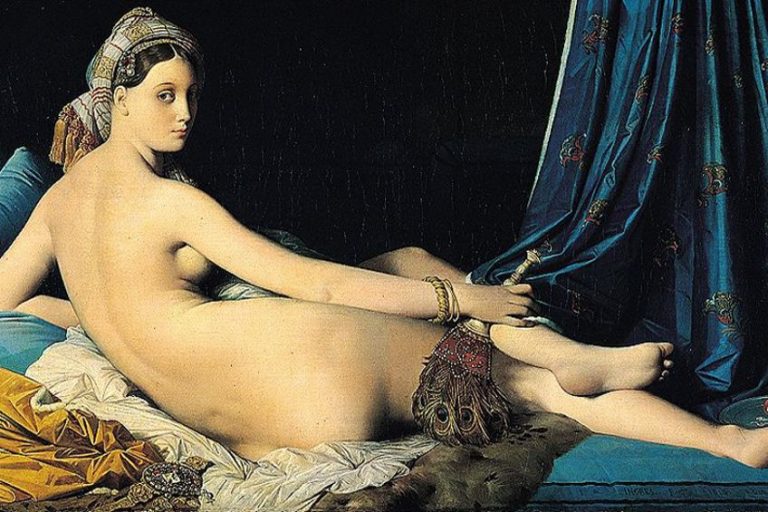
On March 10, 1914, suffragette Mary Richardson slashed Diego Velázquez’s Rokeby Venus with a meat cleaver at the National Gallery in London. Richardson connected the attack to the arrest of Emmeline Pankhurst, making the painting a substitute target in a political protest.
The case lies at the boundary between iconoclasm and vandalism. The assault damaged a specific artwork, yet its meaning came from the painting’s cultural value, its display in a national institution, and the publicity created by attacking it. The work was subsequently repaired.

Fountain of Justice (Bern, Switzerland)
Hans Gieng’s sixteenth-century figure of Justice in Bern stands above a pope, emperor, sultan, and civic ruler, all subordinated to the allegory of justice. On October 13, 1986, attackers used a rope and tackle to pull the statue down. It was shattered in the fall.
The attack was widely associated with the separatist Groupe Bélier, although responsibility for the act remained disputed. The damaged original entered the Bern Historical Museum, and a copy has stood on the fountain since 1988. The case shows how political conflict can turn a civic allegory into a target.

The Apse Mosaic of the Church of the Dormition (Iznik, Turkey)
The apse decoration of the Church of the Dormition at Nicaea, now Iznik, preserves the sequence of Byzantine image policy. An image of the Virgin and Child was replaced by a cross during Iconoclasm; after the restoration of icons, a new Virgin and Child mosaic was installed over it. The outline of the cross remained visible against the gold ground in early photographs.
The church was destroyed in 1922, so photographs and archaeological study now carry much of the evidence. The case is especially valuable because concealment, replacement, and restoration occupied the same architectural surface.
Iconoclasm is not simply the disappearance of art. Damaged faces, covered mosaics, empty plinths, repaired paintings, and replacement monuments can all preserve evidence of the struggle over an image’s authority.
Frequently Asked Questions
What Is Iconoclasm?
Iconoclasm is the deliberate destruction, removal, concealment, or defacement of an image or monument because of what it represents. Religious icons, political portraits, public statues, and architectural decoration can all become targets.
What Is the Difference Between Iconoclasm and Aniconism?
Iconoclasm acts against an existing image or symbol, while aniconism is a practice of avoiding certain images in the first place. The two can be related, but a community can prefer nonfigurative art without destroying earlier works.
Why Did Byzantine Iconoclasts Oppose Icons?
Byzantine iconoclasts believed that sacred images risked idolatry or misrepresented divine subjects. Their opponents argued that Christ’s incarnation made depiction possible and that venerating an icon was distinct from worshiping God.
Did All Protestant or Muslim Communities Reject Images?
No. Protestant and Muslim traditions have taken varied positions depending on period, place, setting, and type of image. Some reformers removed devotional images, while other communities retained figurative art or restricted it mainly in religious spaces.
Is Every Attack on Art an Act of Iconoclasm?
No. Damage becomes iconoclastic when the target’s symbolic, religious, or political meaning is central to the act. Theft, accidental damage, and profit-driven destruction may harm art without functioning as iconoclasm.

Isabella studied at the University of Cape Town in South Africa and graduated with a Bachelor of Arts majoring in English Literature & Language and Psychology. Throughout her undergraduate years, she took Art History as an additional subject and absolutely loved it. Building on from her art history knowledge that began in high school, art has always been a particular area of fascination for her. From learning about artworks previously unknown to her, or sharpening her existing understanding of specific works, the ability to continue learning within this interesting sphere excites her greatly.
Her focal points of interest in art history encompass profiling specific artists and art movements, as it is these areas where she is able to really dig deep into the rich narrative of the art world. Additionally, she particularly enjoys exploring the different artistic styles of the 20th century, as well as the important impact that female artists have had on the development of art history.
Learn more about Isabella Meyer and the Art in Context Team.
Cite this Article
Isabella, Meyer, “Iconoclasm – Looking at the History of Icons in Iconoclasm Art.” Art in Context. April 4, 2022. URL: https://artincontext.org/iconoclasm/
Meyer, I. (2022, 4 April). Iconoclasm – Looking at the History of Icons in Iconoclasm Art. Art in Context. https://artincontext.org/iconoclasm/
Meyer, Isabella. “Iconoclasm – Looking at the History of Icons in Iconoclasm Art.” Art in Context, April 4, 2022. https://artincontext.org/iconoclasm/.