

London Gallery Lists $69,850 Self-Portrait as a Titian

A London gallery has moved a small portrait from the qualified auction category “attributed to Titian” to an unqualified presentation as a Titian self-portrait, with a £1.5 million asking price. Everett Fahy proposed the attribution, and Peter Humfrey, Nicholas Penny, and Ian Kennedy have since discussed the painting and its date; it has also been cleaned and X-rayed.
From “Attributed to Titian” to a £1.5 Million Titian
Dickinson’s London exhibition listing names the maker as “Tiziano Vecellio, called Titian,” without a qualifier. It gives the title as Self-portrait of the Artist, the medium as oil on canvas, and the dimensions as 44.4 by 33.5 centimeters. The exhibition opened November 25 and runs through December 18, 2026.
That presentation is substantially firmer than the documentary record from two years earlier. In its February 1, 2024 sale, Sotheby’s catalogued lot 410 as “Attributed to Tiziano Vecellio, called Titian.” Sotheby’s called it a high-quality replica, estimated it at $30,000 to $40,000, and described its eyes as blue rather than brown, although a National Gallery technical study records Nicholas Penny’s view that Titian gave himself grey eyes in his self-portraits.
The Art Newspaper reported on November 26 that the painting sold for $69,850 and is now offered for £1.5 million. Its account traces the attribution proposal to 2009, when the picture emerged from a French private collection and the late American art historian Everett Fahy proposed Titian as its author. The current owner acquired it in 2024, after which it was cleaned, X-rayed, and studied.
Dickinson told the publication that Peter Humfrey, Nicholas Penny, and Ian Kennedy have written about the painting and debated its date, variously placed between 1546–47 and 1560. That wording establishes serious scholarly engagement. It does not establish that every named scholar has adopted an identical attribution or date, and the gallery’s short public object page does not reproduce their individual conclusions.
The change, then, is real but precisely bounded: an auction qualifier and “replica” description have given way to a dealer’s unqualified attribution after further treatment and study. That is stronger than a casual discovery claim, but it is not the same thing as a published museum attribution or a field-wide consensus.

What the Cleaning and X-Ray Can—and Cannot—Prove
Cleaning can make original paint easier to read by removing discolored varnish and later retouching. X-radiography can disclose changes below the visible surface, differences in paint density, and elements of a composition that an artist altered while working. In an Old Master painting, those findings can materially strengthen or weaken an attribution.
Neither procedure identifies a painter on its own. A change revealed beneath the surface may support the idea that a composition developed during painting, but it still has to be interpreted alongside materials, technique, provenance, workshop practice, and comparison with securely attributed works.
That distinction matters here because the publicly accessible gallery listing gives no technical findings, while the news report states only that the canvas was cleaned and X-rayed. No radiograph, pigment result, canvas analysis, or conservation report is identified in those materials. The short object page and The Art Newspaper report do not disclose the technical findings; Dickinson’s exhibition page also links a public digital catalogue.
The accepted Berlin self-portrait shows what a useful technical disclosure looks like. The Gemäldegalerie says X-rays revealed that Titian changed the head covering and sharpened the facial features during an earlier stage. Those observations describe specific evidence. They do not turn “has been X-rayed” into a substitute for the evidence itself.
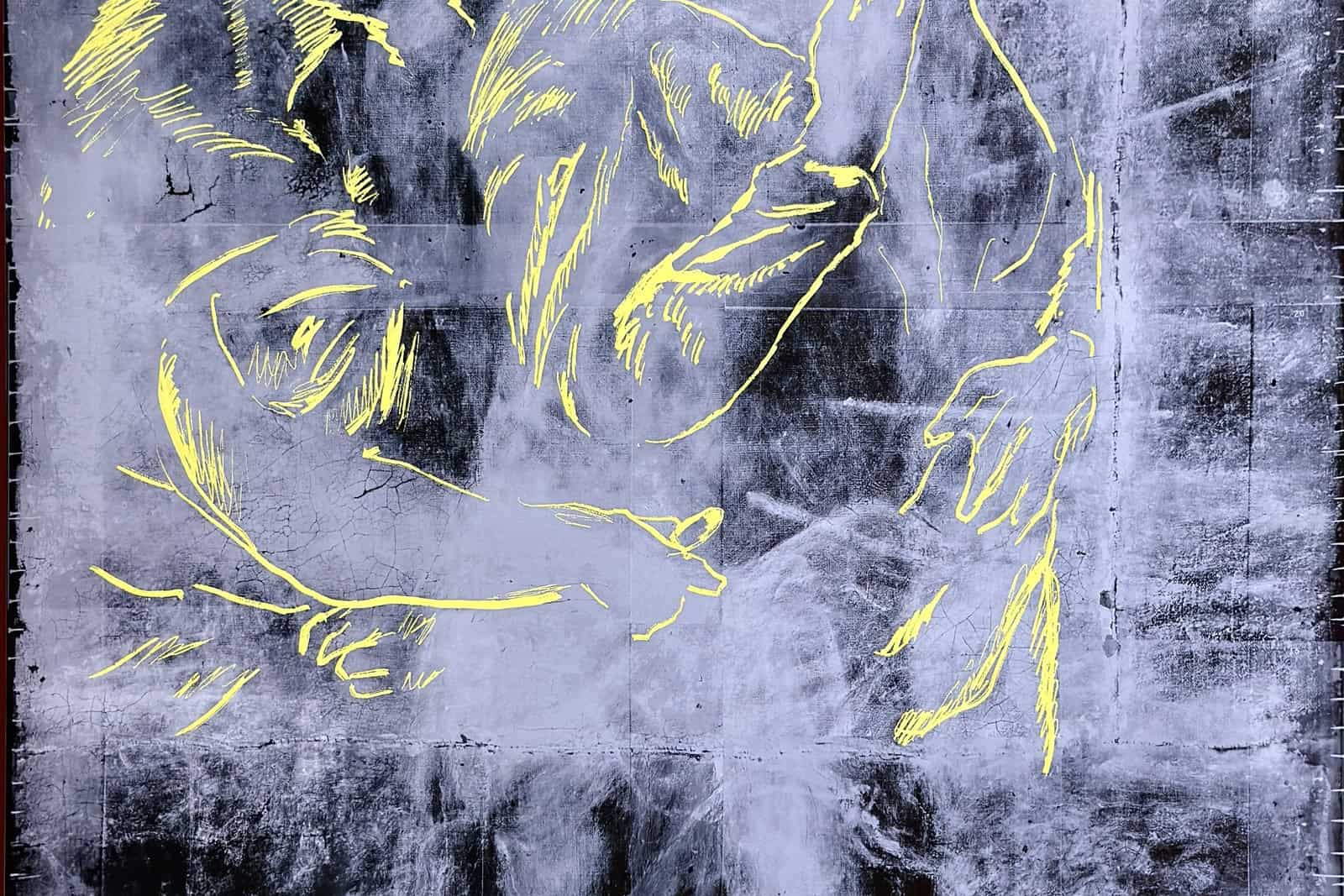
An X-radiograph of Titian’s Saint Sebastian, a different painting, demonstrates how imaging can reveal an earlier composition and changes made during execution. Alexey Yakovlev; image hosted by Wikimedia Commons; CC0 1.0.
The Two Accepted Self-Portraits Set a Difficult Benchmark
The Gemäldegalerie’s permanent record calls its partially unfinished canvas one of only two authenticated Titian self-portraits and identifies the Prado portrait in Madrid as the other. The Berlin painting is far larger than the London work, at 100.1 by 77 centimeters, and presents the aging artist in a fur-trimmed cloak with a gold chain and his hands visible.
Sotheby’s did not describe the small portrait as an unrelated likeness. It called the picture a replica of the Berlin composition, whose image circulated in multiple versions during Titian’s lifetime. That makes authorship the central question: whether this is Titian revisiting his own image, a workshop product, or a later hand repeating a successful model.
The Prado portrait provides a second secure comparison. Titian appears in profile, the chain again marking his elevated status, while the implement in his right hand points back to painting. Together, the Berlin and Madrid works show how deliberately he fashioned his public identity, a defining concern within Venetian Renaissance portraiture.
Dickinson’s proposed third self-portrait would therefore add more than another version of a famous face. If accepted as autograph, it would expand the very small surviving group through which Titian’s self-representation is studied. The importance of that possibility is also why the standard of proof must remain high.
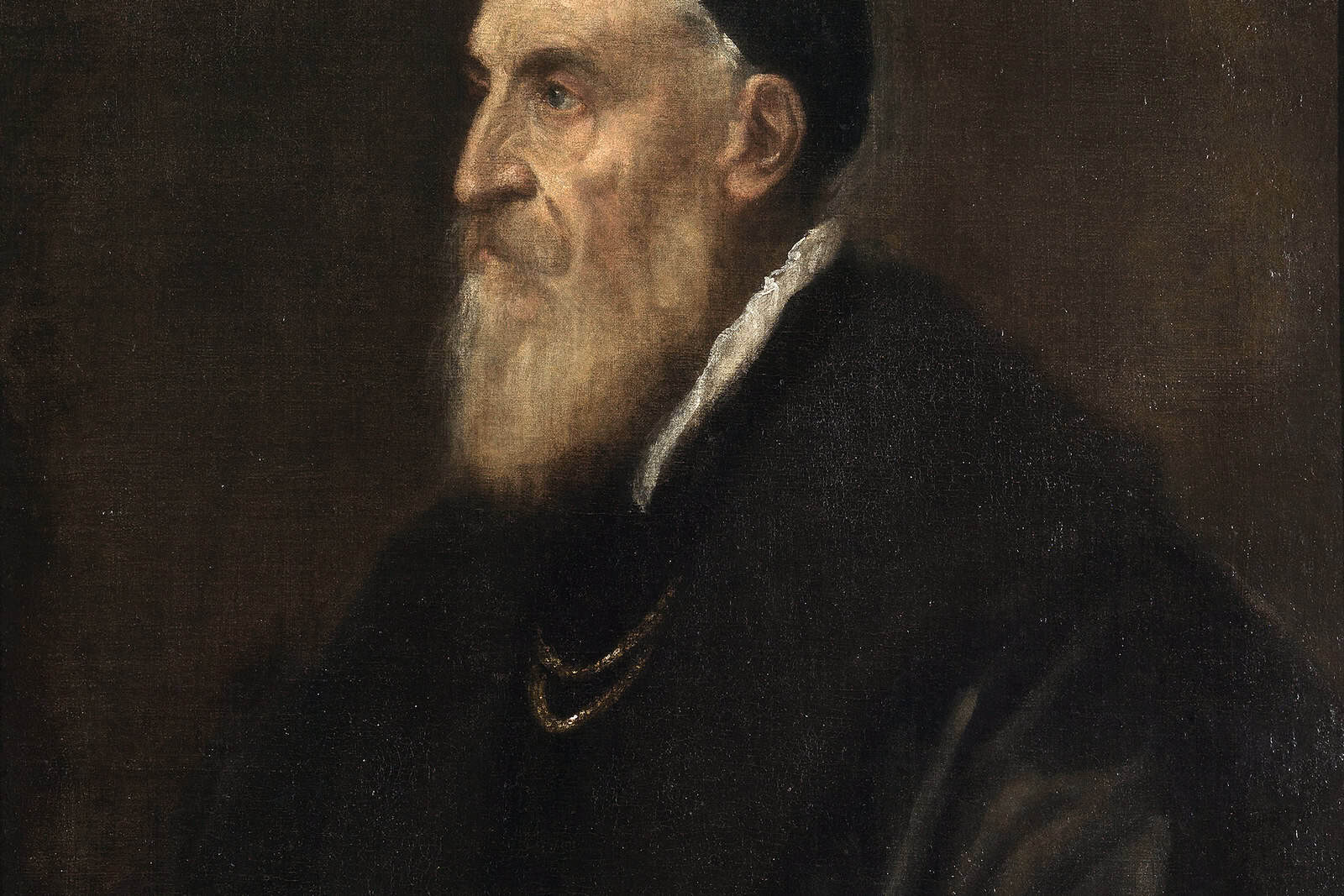
Titian’s accepted late Self-Portrait, around 1562, in the Museo del Prado. Titian; image hosted by Wikimedia Commons; Public Domain Mark 1.0.
The Asking Price Is Not an Achieved Titian Price
The £1.5 million figure is an asking price reported by The Art Newspaper, not a completed transaction. It should not be treated as a new auction result, a market valuation endorsed by an independent appraiser, or evidence for the attribution.
The 2024 sale supplies the last public transaction: $69,850 against a $30,000 to $40,000 estimate, under an “attributed to” designation. The current price reflects the owner’s and dealer’s confidence after cleaning and research, as well as the commercial consequences of moving from a qualified attribution to an autograph work. A future buyer may accept, negotiate, or reject that proposition.
The painting is also being presented by the business offering it for sale. That does not invalidate the research, but it makes careful attribution essential: the gallery’s claim, the scholars’ individual positions, the technical evidence, and the price are four related but distinct things.
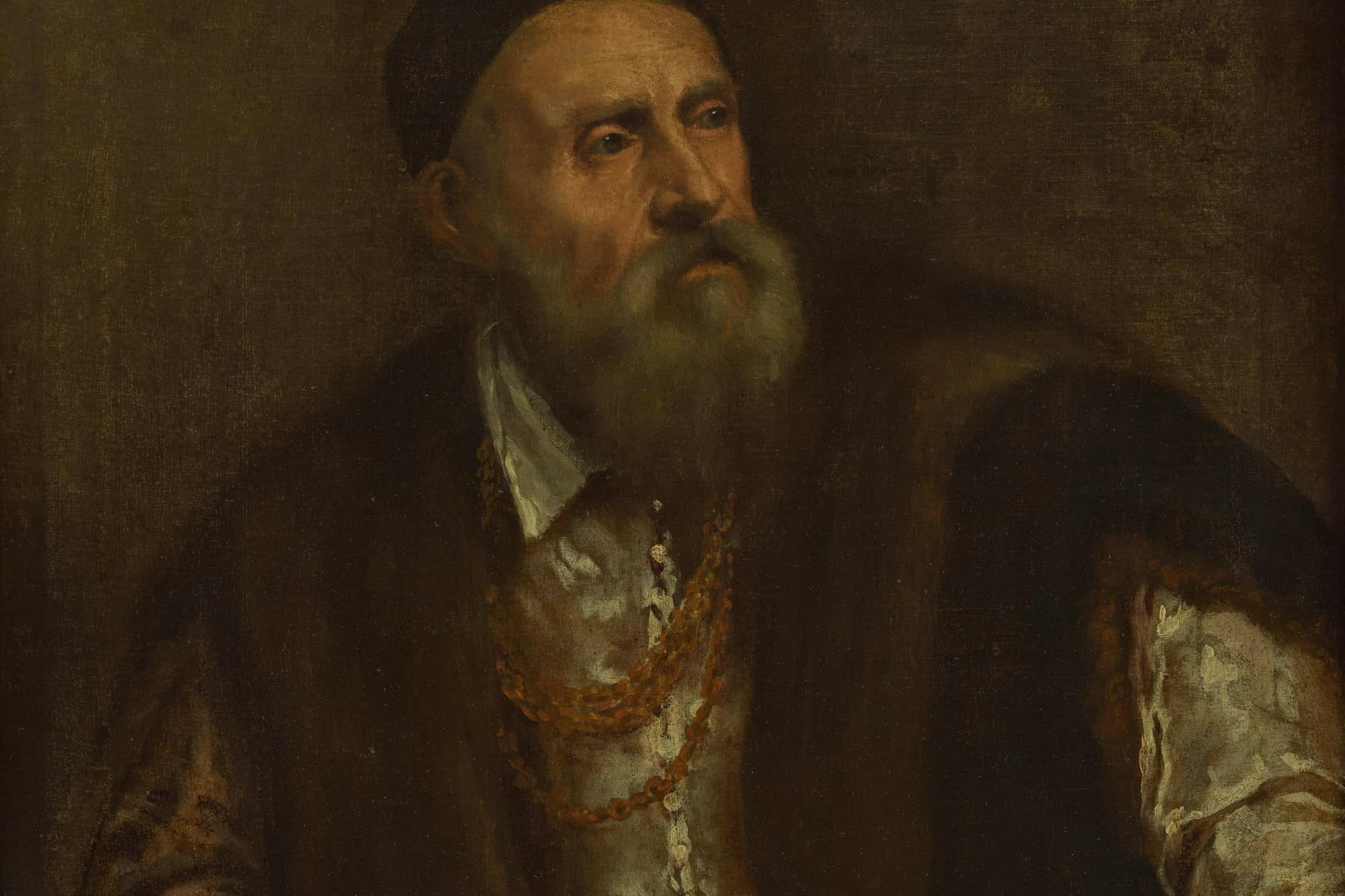
Titian’s authenticated Self-Portrait in Berlin’s Gemäldegalerie, the model Sotheby’s cited for the London canvas. Titian; Staatliche Museen zu Berlin, Gemäldegalerie / Dietmar Gunne; image hosted by Wikimedia Commons; Public Domain Mark 1.0; cropped.
A Third Titian Self-Portrait Remains a Proposal
Sotheby’s 2024 catalogue establishes that the canvas was then offered as “attributed to Titian” and described as a high-quality replica of the Berlin self-portrait. The $69,850 result is the last reported sale, while £1.5 million is the current asking price rather than an achieved value.
Dickinson now publishes the work under Titian’s name after cleaning, X-radiography, and further study. The Gemäldegalerie’s collection record, however, still identifies only the Berlin and Prado paintings as authenticated self-portraits.
The short object page and The Art Newspaper report do not state the specific X-ray findings, conservation analysis, or each named scholar’s position, while Dickinson separately links a digital exhibition catalogue. Until those can be evaluated, the proposed third self-portrait is a serious, commercially consequential attribution—not a settled addition to Titian’s accepted oeuvre.

Isabella studied at the University of Cape Town in South Africa and graduated with a Bachelor of Arts majoring in English Literature & Language and Psychology. Throughout her undergraduate years, she took Art History as an additional subject and absolutely loved it. Building on from her art history knowledge that began in high school, art has always been a particular area of fascination for her. From learning about artworks previously unknown to her, or sharpening her existing understanding of specific works, the ability to continue learning within this interesting sphere excites her greatly.
Her focal points of interest in art history encompass profiling specific artists and art movements, as it is these areas where she is able to really dig deep into the rich narrative of the art world. Additionally, she particularly enjoys exploring the different artistic styles of the 20th century, as well as the important impact that female artists have had on the development of art history.
Learn more about Isabella Meyer and the Art in Context Team.
Choose Art in Context as a preferred source to see more of our reporting in Google Top Stories and other Google Search experiences.
Cite this Article
Isabella, Meyer, “London Gallery Lists $69,850 Self-Portrait as a Titian.” Art in Context. November 26, 2026. URL: https://artincontext.org/titian-self-portrait-attribution-dickinson-2026/
Meyer, I. (2026, 26 November). London Gallery Lists $69,850 Self-Portrait as a Titian. Art in Context. https://artincontext.org/titian-self-portrait-attribution-dickinson-2026/
Meyer, Isabella. “London Gallery Lists $69,850 Self-Portrait as a Titian.” Art in Context, November 26, 2026. https://artincontext.org/titian-self-portrait-attribution-dickinson-2026/.


