

British Museum Promises Audio-Described Bayeux Tapestry Tour After Legal Challenge

The British Museum has promised an in-person audio-described tour of its Bayeux Tapestry exhibition after a blind visitor sent a pre-action letter alleging disability discrimination. The change matters because the exhibition is built around a 70-meter visual narrative, but the museum’s new offer has not ended the legal dispute or produced a court ruling.
The Legal Step Is Pre-Action, Not a Court Ruling
Dr. Yusuf Ali Osman, who is registered blind, asked about live audio-described tours before the exhibition opened. According to Leigh Day, the museum initially said audio-described tours were not part of its programme; after Osman’s September 24 pre-action letter, it publicly said that one would be held.
- July 2026: Osman contacted the museum to ask whether live audio-described tours would be available.
- September 10: The exhibition opened at the British Museum for a run scheduled through July 11, 2027.
- September 24: His lawyers sent a pre-action protocol letter alleging that the absence of audio description placed him at a substantial disadvantage.
- September 30–October 1: Leigh Day publicized the letter, and the museum said it would hold an in-person audio-described tour and was considering an audio-described option in its app.
In Leigh Day’s September 30 account, Osman seeks damages, a declaration that he was discriminated against, policy changes and disability-awareness training. Those are requested remedies, not outcomes. The firm identifies a pre-action letter; it does not announce a judgment.
That distinction matters because an October 1 headline in The Art Newspaper says Osman “sues” the museum, while the report itself describes the pre-action step. The Civil Procedure Rules explain that pre-action correspondence comes before proceedings and is intended to exchange positions and, where possible, avoid litigation. The publicized step is therefore a serious legal challenge, but it is not proof that the museum breached the law.
The museum’s response also remains incomplete. The Art Newspaper reported that an in-person tour will be offered, that an app version is being considered and that further accessibility measures are being explored. Leigh Day told the publication it had not received official notice of a policy change and was keeping the action under review.

Why Audio Description Changes Access to the Artwork
The Bayeux Tapestry is not simply an object accompanied by historical facts. It is an image-led account of the events surrounding the Norman Conquest, unfolding across 58 scenes in wool embroidery on linen. Gestures, repeated figures, ships, animals, Latin inscriptions and the upper and lower borders carry parts of the story. A conventional audio guide can supply dates and context without describing where those elements sit or how one scene leads into the next.
Audio description addresses that difference. It translates visible composition into language: who appears, what a figure is doing, where an action occurs and which details organize the viewer’s attention. For a work whose meaning accumulates along roughly 70 meters, a large-print guide does not provide the same function to a visitor who cannot see it. That is the substance of Osman’s allegation, not a demand that conservation controls be relaxed.
The museum says specialist access consultants informed the exhibition experience. Yet, as The Art Newspaper reported, the public exhibition page listed a large-print guide for visually impaired visitors while the opening program offered no audio-described tour. The institutional question is therefore not whether access was considered at all, but why this intensely visual exhibition opened without that form of access.
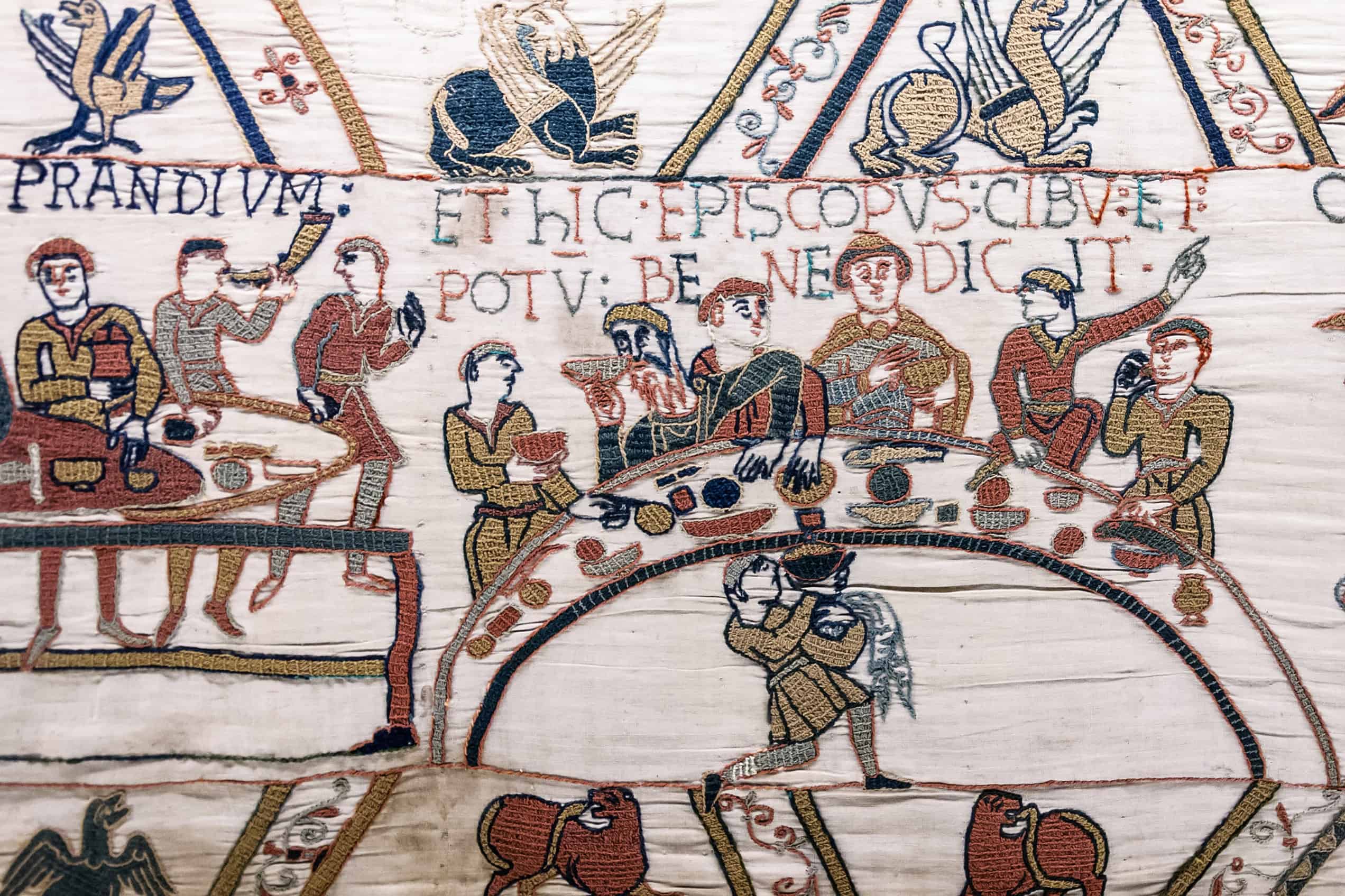
Scene 43 of the Bayeux Tapestry, showing Bishop Odo blessing the Normans’ first meal in England. Photograph by Myrabella via Wikimedia Commons, CC0 1.0 Universal Public Domain Dedication; cropped.
Light Limits Affect the Two Proposed Remedies Differently
According to Leigh Day, the museum told Osman that restrictions on weekly light exposure limit visitor numbers and led it to prioritize self-guided visits over programmed events. That conservation concern is real. The fragile textile is displayed in dim light, visitors enter in timed groups, and Le Monde reported that French and British officials settled on 40 lux as part of a compromise over display hours.
But the museum’s two new possibilities do not impose the same demand on the object. A dedicated live tour may require a programmed slot within the limited illuminated hours. An audio-described app track could be used by a visitor holding an ordinary timed ticket and would not, by itself, add light exposure. It might still raise practical questions about pacing, navigation, headphones and congestion around a continuous display, but those are exhibition-design questions rather than new conservation exposure.
The light budget can explain why gallery time is tightly managed; it does not by itself explain why visual description could not accompany an existing admission slot. The museum’s willingness to consider both a live tour and an app track suggests two different ways to reduce the access barrier, though it has not yet published enough detail to judge their frequency, completeness or availability.
What the Equality Act Allegation Does and Does Not Establish
Section 20 of the Equality Act 2010 says that when the absence of an auxiliary aid would put a disabled person at a substantial disadvantage, the service provider must take reasonable steps to provide one. Schedule 2 applies that duty to services and frames it in relation to disabled people generally, which is why advance planning matters.
The statute does not automatically entitle a visitor to any preferred format or schedule. Reasonableness depends on the effectiveness and practicality of the proposed adjustment and the circumstances of the service. Here, a future court could have to assess the museum’s conservation and crowd-management evidence against the disadvantage Osman alleges and the available alternatives. No court has made that assessment in the publicized dispute.
Nor does the museum’s promised tour amount to an admission of liability. It could narrow the practical disagreement, particularly if the offer is frequent and bookable, but Osman’s requested declaration, damages and training extend beyond a single event.
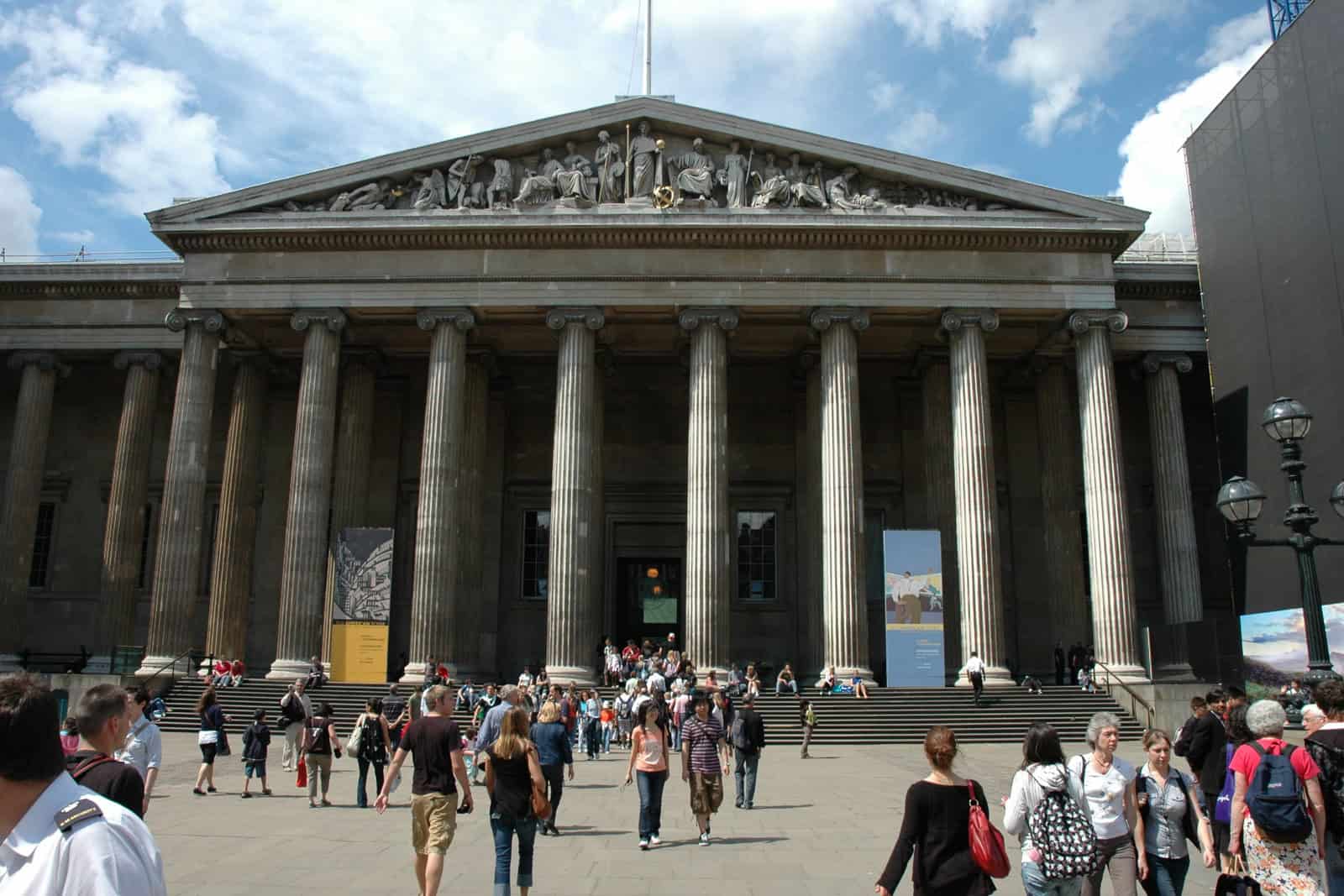
The British Museum in London. Photo: Ludi Ling / Wikimedia Commons / CC BY-SA 3.0.
A New Tour Is Promised, but the Claim Is Still Open
The dated record establishes four points:
- The legal measure publicized on September 30 was a September 24 pre-action letter, not a judgment; a headline saying Osman “sues” outruns the procedural stage identified in the report beneath it.
- According to Leigh Day, the museum initially ruled out audio-described tours while prioritizing self-guided visits under a strict light budget, then promised an in-person tour after the letter.
- The conservation limit bears directly on scheduled gallery time, but not identically on an app track used during an existing timed visit.
- As of October 1, the tour’s date, frequency and format were unspecified, the app addition was only being considered, and Leigh Day said the action remained under review.

Isabella studied at the University of Cape Town in South Africa and graduated with a Bachelor of Arts majoring in English Literature & Language and Psychology. Throughout her undergraduate years, she took Art History as an additional subject and absolutely loved it. Building on from her art history knowledge that began in high school, art has always been a particular area of fascination for her. From learning about artworks previously unknown to her, or sharpening her existing understanding of specific works, the ability to continue learning within this interesting sphere excites her greatly.
Her focal points of interest in art history encompass profiling specific artists and art movements, as it is these areas where she is able to really dig deep into the rich narrative of the art world. Additionally, she particularly enjoys exploring the different artistic styles of the 20th century, as well as the important impact that female artists have had on the development of art history.
Learn more about Isabella Meyer and the Art in Context Team.
Choose Art in Context as a preferred source to see more of our reporting in Google Top Stories and other Google Search experiences.
Cite this Article
Isabella, Meyer, “British Museum Promises Audio-Described Bayeux Tapestry Tour After Legal Challenge.” Art in Context. October 1, 2026. URL: https://artincontext.org/british-museum-bayeux-tapestry-audio-described-tour-challenge/
Meyer, I. (2026, 1 October). British Museum Promises Audio-Described Bayeux Tapestry Tour After Legal Challenge. Art in Context. https://artincontext.org/british-museum-bayeux-tapestry-audio-described-tour-challenge/
Meyer, Isabella. “British Museum Promises Audio-Described Bayeux Tapestry Tour After Legal Challenge.” Art in Context, October 1, 2026. https://artincontext.org/british-museum-bayeux-tapestry-audio-described-tour-challenge/.


