

Rafael Ferrer Dies at 93, Leaving a Career Beyond Categories

Rafael Ferrer, the Puerto Rican artist and professional Afro-Cuban drummer whose work moved through process installations, public sculpture and large-scale figurative painting, has died at 93. El Museo del Barrio confirmed his death in an announcement reported on September 30; Horton-Mathie Funeral Home lists his death date as September 27, 2026, and no cause has been reported.
Rafael Ferrer’s Death: What Is Confirmed
Artnet News reported on September 30 that El Museo del Barrio had confirmed Ferrer’s death through an Instagram post. Hyperallergic independently listed the artist’s lifespan as 1933–2026 that same day. Artnet News says Ferrer was 93, while Hyperallergic lists his lifespan as 1933–2026; neither report states his death date or cause. September 30 is the publication date of the two reports; Horton-Mathie Funeral Home lists September 27, 2026, as Ferrer’s death date.
El Museo is more than the institution that announced the news. In 2010, it organized Retro/Active: The Work of Rafael Ferrer, the first solo museum exhibition intended to examine the breadth of his production. Approximately 100 works covered the mid-1950s onward, providing a broad institutional outline of his career.
That record places Ferrer’s beginnings in Santurce, Puerto Rico, in 1933. He attended Syracuse University, where music was a central pursuit, and studied painting with the exiled Spanish Surrealist Eugenio Fernández Granell at the University of Puerto Rico. During a 1954 European trip, he met Wifredo Lam, André Breton and Benjamin Péret. These encounters informed his work, but they did not turn him into a doctrinaire Surrealist.
Within the longer history of Puerto Rican art, Ferrer occupied an unusually mobile position. He worked between Puerto Rico and the continental United States, entered international avant-garde exhibitions, and later painted Caribbean people and places without accepting the tourist image of the tropics as his only subject.

From Leaves and Ice to Room-Size Installations
Ferrer entered the history of Post-Minimalism by making material, location and change part of the work. El Museo’s record places him in two defining 1969 exhibitions: Anti-Illusion: Procedures/Materials at the Whitney Museum and When Attitudes Become Form at Kunsthalle Bern. The works were not self-contained sculptures so much as events shaped by their surroundings.
The artist’s installation chronology provides a detailed sequence:
| Year | Work or exhibition | What changed |
|---|---|---|
| 1968 | Three Leaf Pieces | Natural material entered three New York art sites. |
| 1969 | Anti-Illusion and Bern | Process became the subject. |
| 1970 | 50 Cakes of Ice | Ice made duration unavoidable. |
| 1972–74 | Museo, Deseo, Isla | Environments grew narrative and place-specific. |
This chronology corrects an easy compression of Ferrer’s career. He did not move directly from melting ice to easel painting. During the early 1970s, he developed installations that combined found objects, neon, printed or painted imagery and allusions to travel. He also pursued long-running bodies of maps, paper-bag faces, kayaks and tent-like constructions. El Museo’s account describes approximately 100 map drawings and more than 500 bag faces.
50 Cakes of Ice also demonstrates how an institution preserves an artwork made to disappear. MoMA records the piece in its collection as gelatin silver prints, while a museum history identifies the original as an eight-ton ice sculpture installed for the 1970 exhibition Information. The ice vanished; photographs became the durable museum object. Ferrer’s early reputation consequently survives through documentation as much as through physical sculpture.

Kunsthalle Bern, where Ferrer participated in When Attitudes Become Form in 1969. Photograph: Jean-Pierre Dalbéra, CC BY 2.0, via Wikimedia Commons.
The 1980 Turn to Painting Was Not a Clean Break
Accounts of Ferrer’s life often describe a return to figurative painting in the 1980s. El Museo frames 1980–1997 as Ferrer’s principal period of sustained large-scale painting, although he made large canvases in 1998–99 and later returned to the medium. The subjects included portraits, nudes, musicians, nightclubs, cockfights, landscapes and scenes from the Dominican Republic, where he lived and worked part-time.
Calling this a pivot is accurate, but incomplete. Ferrer changed medium without abandoning improvisation, unstable space or the Caribbean references already present in his installations. In a 2013 interview with Barry Schwabsky, he described art as responding to “the needs of the moment” within a repertoire. He also explained that his paintings remained concerned with odd spaces, unusual light and people who resisted familiarity.
The institutional chronology supports a narrower conclusion than the idea of two unrelated careers. Leaves, ice and room installations made contingency visible in real space; the paintings transferred that instability to depicted space, color and figure. Later blackboards, collages and renewed paper-bag drawings further undermine any claim that painting replaced his earlier methods permanently.
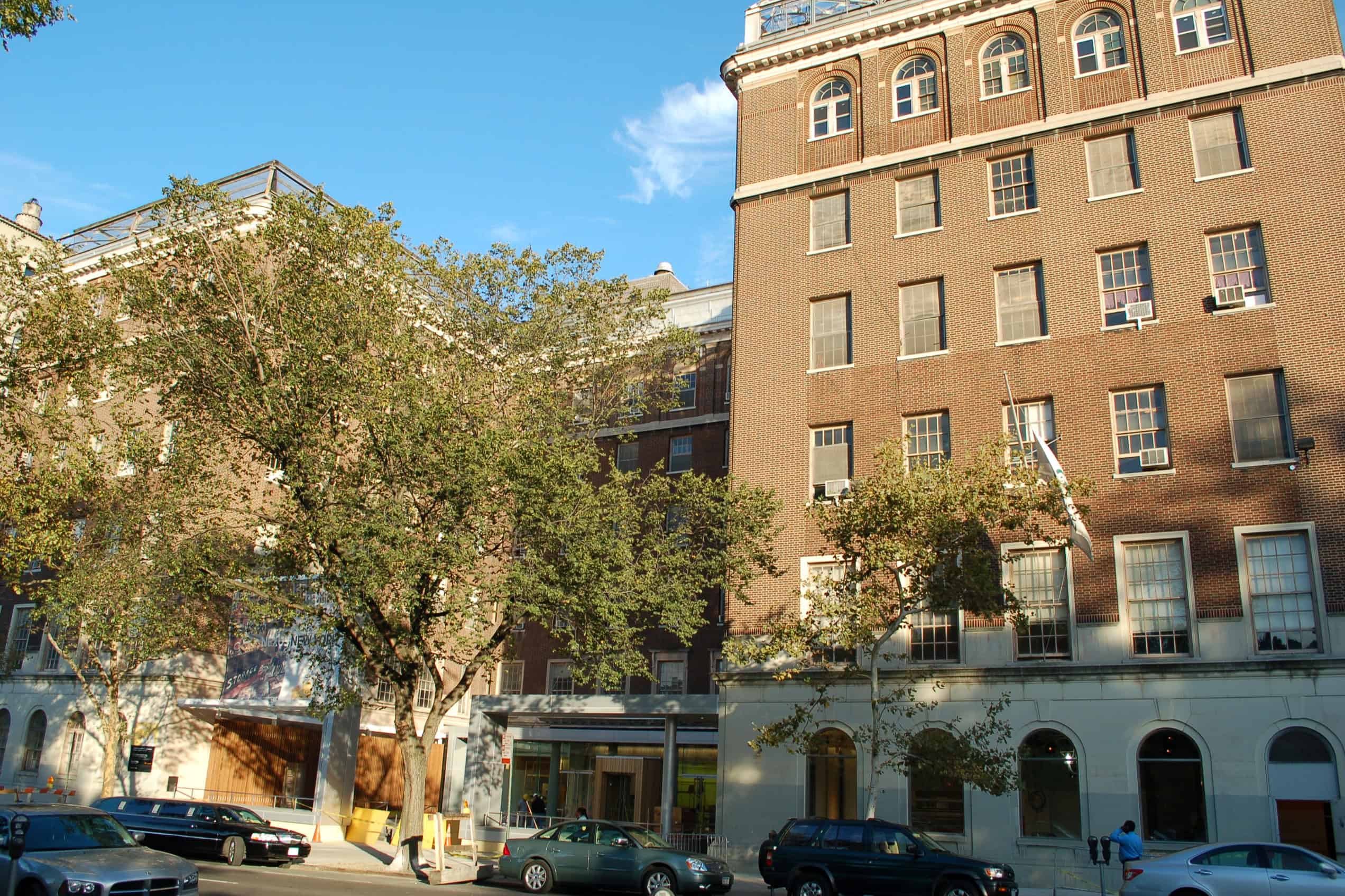
El Museo del Barrio in New York, which organized Rafael Ferrer’s 2010 retrospective and confirmed his death. Photograph by The Fixers (Wikis Take Manhattan 2009 participant), via Wikimedia Commons, licensed under Creative Commons Attribution-Share Alike 3.0 Unported.
What Museum Collection Pages Preserve—and Separate
The public collection records of major United States museums place varying emphasis on different phases of Ferrer’s career, although the Met’s records themselves connect his conceptual reputation with his later painting. MoMA displays two works online, both dated 1970. The Whitney lists one work, Neon Corner from 1970, and says it first acquired Ferrer in 1971. The Met’s online records include Resume (1973) and several other works, among them paintings from 1983 and 1998–99, while the Smithsonian American Art Museum holds a 1979 steel maquette for Flotilla of Kayaks in a Tropical Storm.
The National Gallery of Art presents a different phase: Trilogía de la Noche II, Pedro Fermín (Papón), a 1993 oil painting acquired as a gift in 2024. These online pages are not complete catalogues of Ferrer’s career, and they do not establish everything each museum owns. As public-facing records, they show varying institutional emphases, though the Met’s online collection includes both 1970s works and later paintings.
El Museo’s 2010 retrospective addressed that split directly by placing approximately 55 years of work in one exhibition. Its account also argued that Ferrer’s move into large-scale painting pushed him outside established narratives of the avant-garde while leaving his post-1980 work insufficiently integrated into histories of American, Puerto Rican and Latino art. El Museo’s 2010 account argues that Ferrer’s post-1980 work remained insufficiently integrated into established art histories; collection pages alone cannot establish the reasons for that reception.

The Whitney Museum of American Art. Photograph: Beyond My Ken, CC BY-SA 4.0, via Wikimedia Commons.
Ferrer’s Death Reports and Career Chronology
- Ferrer’s death at 93 was reported on September 30, 2026; Horton-Mathie Funeral Home lists his death date as September 27.
- Institutional records place him in major post-Minimalist exhibitions in 1969, followed by 50 Cakes of Ice in 1970 and increasingly narrative installations through 1974.
- El Museo identifies 1980–1997 as a central phase of Ferrer’s large-scale painting, although large canvases from 1998–99 extend beyond that span.
- His exact date and cause of death remain undisclosed in the two September 30 reports.

Isabella studied at the University of Cape Town in South Africa and graduated with a Bachelor of Arts majoring in English Literature & Language and Psychology. Throughout her undergraduate years, she took Art History as an additional subject and absolutely loved it. Building on from her art history knowledge that began in high school, art has always been a particular area of fascination for her. From learning about artworks previously unknown to her, or sharpening her existing understanding of specific works, the ability to continue learning within this interesting sphere excites her greatly.
Her focal points of interest in art history encompass profiling specific artists and art movements, as it is these areas where she is able to really dig deep into the rich narrative of the art world. Additionally, she particularly enjoys exploring the different artistic styles of the 20th century, as well as the important impact that female artists have had on the development of art history.
Learn more about Isabella Meyer and the Art in Context Team.
Choose Art in Context as a preferred source to see more of our reporting in Google Top Stories and other Google Search experiences.
Cite this Article
Isabella, Meyer, “Rafael Ferrer Dies at 93, Leaving a Career Beyond Categories.” Art in Context. October 1, 2026. URL: https://artincontext.org/rafael-ferrer-dies-93-process-art-painting/
Meyer, I. (2026, 1 October). Rafael Ferrer Dies at 93, Leaving a Career Beyond Categories. Art in Context. https://artincontext.org/rafael-ferrer-dies-93-process-art-painting/
Meyer, Isabella. “Rafael Ferrer Dies at 93, Leaving a Career Beyond Categories.” Art in Context, October 1, 2026. https://artincontext.org/rafael-ferrer-dies-93-process-art-painting/.


