

Glasgow Receives Repatriation Request for Nekht’s Remains

Glasgow Life has confirmed that it received a request to repatriate the remains of the ancient Egyptian priest Nekht to Egypt, but no return has been approved. The city’s own permanent catalog shows why the scope matters: it describes an adult skeleton in a child-sized painted coffin, not simply the intact “4,000-year-old mummy” of some headlines, and the public confirmation does not say whether the coffin is included.
A Request Has Started a Review, Not a Return
Glasgow Life said the approach arrived “in the last few days” when the news was published on November 1. The exact date of receipt has not been disclosed. In a confirmation published November 2, the museum operator said it had received a request to repatriate Nekht’s remains to Egypt and would follow Glasgow’s established process.
Youm7 identifies Egypt’s Ministry of Tourism and Antiquities as the sender of the formal request. The Sunday Post attributed the approach to “Egyptian authorities,” but The Independent reported on November 1 that Glasgow Life could not say who made it. A request for return to Egypt is established, and Youm7 identifies Egypt’s Ministry of Tourism and Antiquities as the requester.
That distinction matters because Glasgow Life manages the museums, while Glasgow City Council owns the collections. Under the city’s 2024–2029 collections policy, repatriation is decided case by case, within the council’s legal position and after ethical implications and available guidance are considered. Museum staff report a case to the Working Group for Repatriation, Restitution and Spoliation; the matter then goes to the City Administration Committee, or another appropriate council committee, for determination.
Receipt is only the entry point to that sequence. Glasgow Life has not announced a working-group recommendation, a committee date, or a transfer decision. Calling the possible return settled would skip the two bodies named in the governing policy.
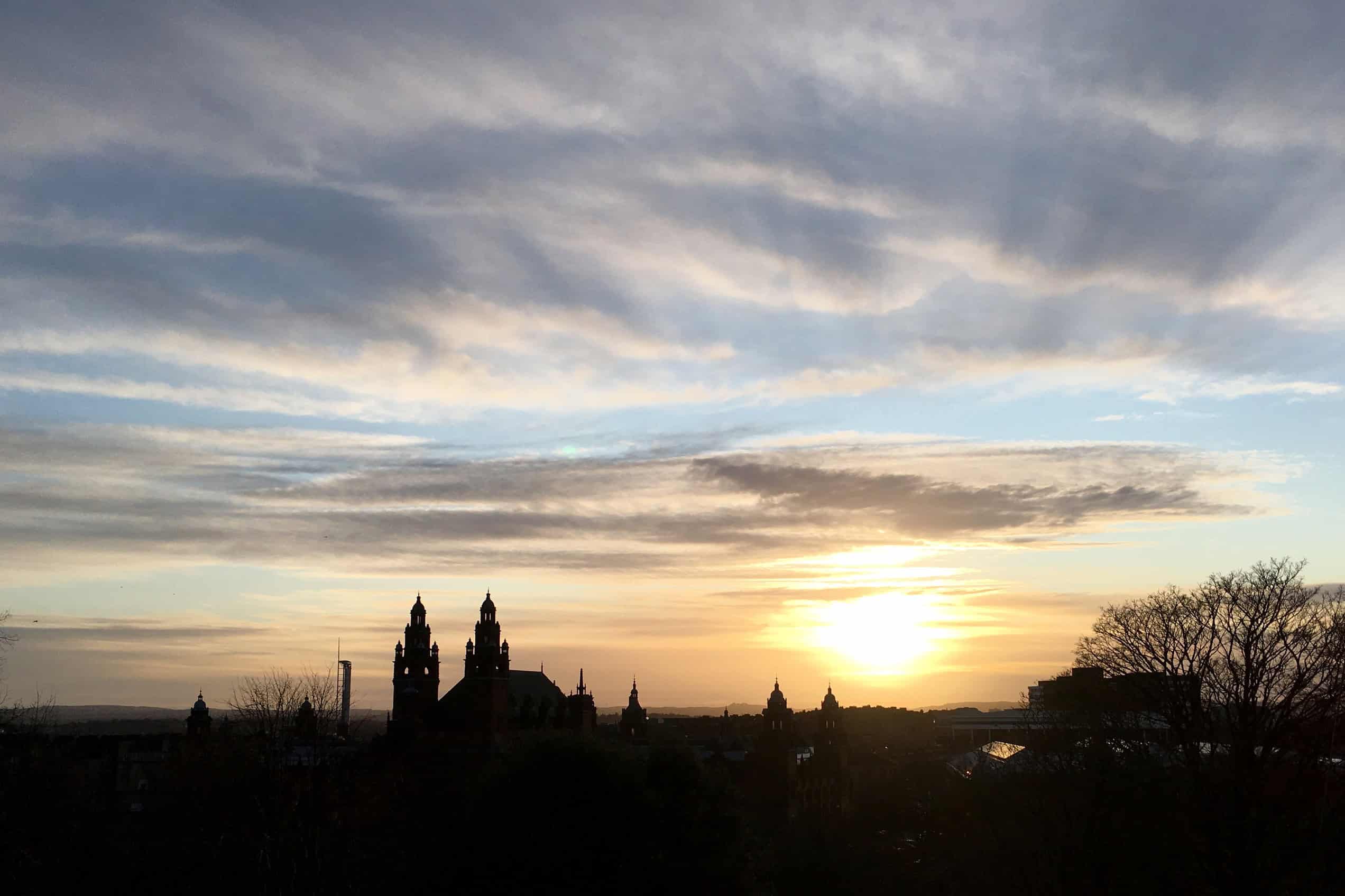
Kelvingrove Art Gallery and Museum in Glasgow. Photograph by LornaMCampbell via Wikimedia Commons, licensed under CC BY-SA 4.0; cropped.
Glasgow’s Catalog Describes a Skeleton, Not an Intact Mummy
The permanent collection record spells the name “Nakht” and identifies accession 1923.33.a.1 as a painted wooden coffin from Tomb 130 at Beni Hasan in Middle Egypt. It dates the object to the 12th Dynasty, approximately 1985–1797 B.C.E., and says Garstang excavated it.
The coffin is itself an important artwork. Its painted recesses and buttresses imitate a mud-brick palace, making the box an eternal house. Eyes on the left side face the rising sun, and bands of hieroglyphs give an offering formula. A leopard skin painted on the lid identifies Nakht as a sem-priest, a figure associated with the Opening of the Mouth ceremony.
That visual program belongs to the ritual language of ancient Egyptian art: image, text, and container operate together rather than merely decorating a surface. It also connects the coffin to the wider tradition of ancient Egyptian paintings in which pictures could sustain identity and ritual action after death.
The most consequential line in the catalog is anatomical. Glasgow records that the coffin’s small size shows it was intended for a child, but that it contains the skeleton of an adult man. The catalog adds that Nakht’s mummy “must have decayed and been reburied,” wording that presents decay and reburial as the museum’s interpretation of the evidence.
That is more precise than the repeated description of an intact “mummy.” Glasgow Life’s recent public language and specialist coverage have called the material mummified remains, while the permanent object record says skeleton. The catalog does not, by itself, prove the current description is wrong: “mummified remains” may be being used broadly, and the online record may not reflect a recent examination. It does establish that the city’s two public descriptions differ.
Glasgow says the Egyptian Research Students’ Association’s Glasgow branch gifted the coffin in 1923, and the record places it in the J. May Buchanan Collection. The city’s policy describes its Egyptian and northern Sudanese holdings as approximately 5,000 items, including a small group of coffins and mummified human and animal remains. Neither Glasgow Life’s confirmation nor the November 1–2 reports set out the legal or evidentiary basis of the present claim.
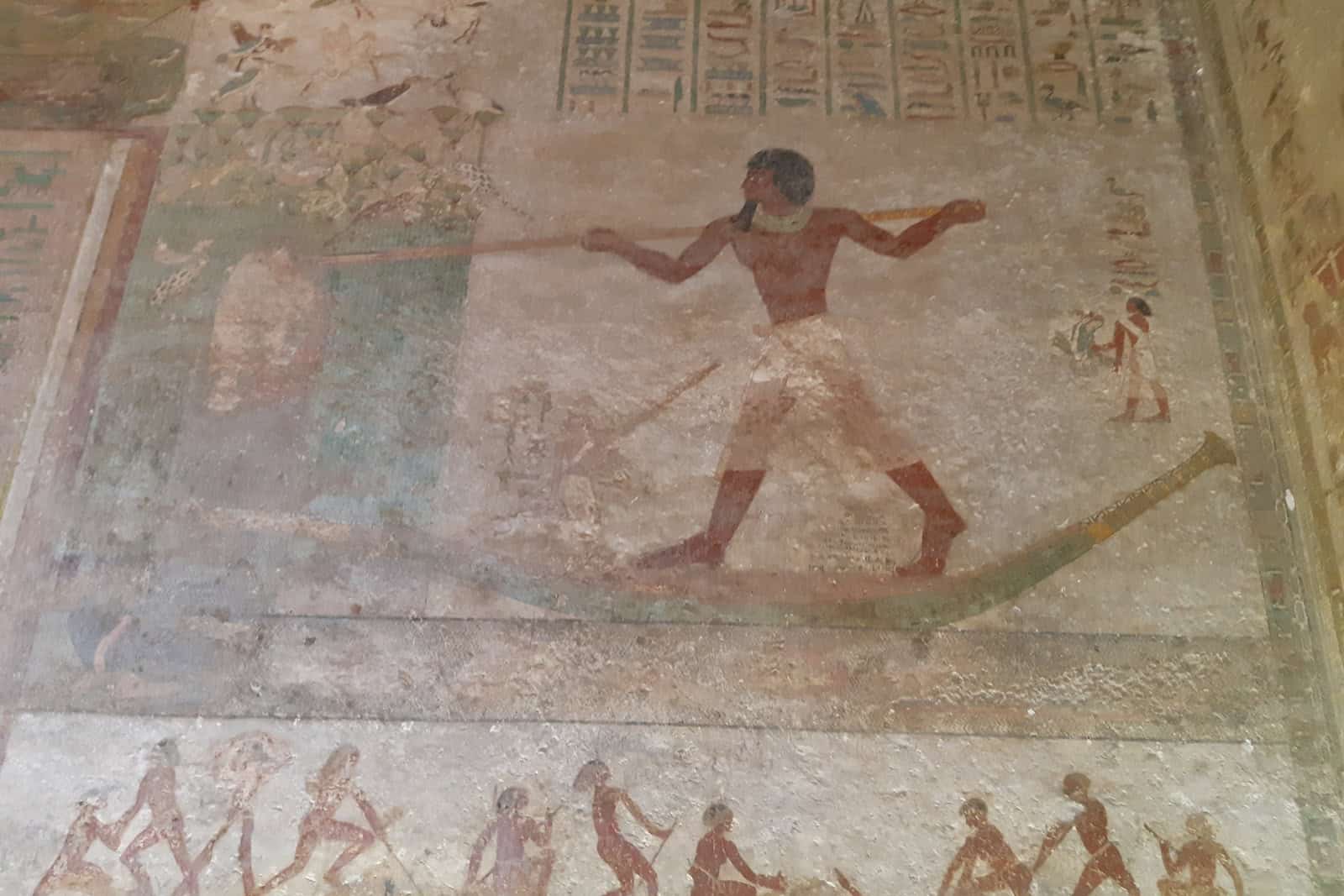
The rock-cut tombs at Beni Hasan in Middle Egypt, the archaeological site named in Glasgow’s catalog record for Nakht’s coffin. Photograph by Leon petrosyan via Wikimedia Commons, licensed under CC BY-SA 4.0; cropped.
Display, Storage, and Repatriation Are Separate Decisions
Nekht’s remains were taken off view before the request became public. Glasgow Life said the display decision followed its developing human-remains policy: without documented and informed consent from the deceased or, where appropriate, descendants, removal was considered more respectful. The operator said remains removed from view would eventually be held in restricted-access storage at Glasgow Museums Resource Centre.
The revised ICOM Code of Ethics, adopted June 25, 2026, says museums should uphold the dignity of human remains, collaborate with known descendants or source communities, and consider restricted use or repatriation where continuing cultural or spiritual importance exists. It does not make removal or return automatic. Glasgow’s consent test is the city operator’s stated policy direction, while repatriation remains a separate council decision.
Three actions should not be collapsed into one:
- Removal from display changes what visitors can see; it does not change ownership.
- Restricted storage changes access and care arrangements; it is not approval to transfer.
- Repatriation would change custody and potentially legal title, and requires the formal review described in the council policy.
The same separation exposes the largest scope question. Glasgow Life’s quoted confirmation names “the remains,” while the collection record is for a painted coffin containing those remains. No published statement says whether the requester seeks the coffin as well. Returning only the human material and returning the complete funerary assemblage would be different museum actions with different conservation and interpretive consequences.
The decision path is therefore short but not immediate:
- Museum staff assess the case’s legal position, ethics, documentation, and applicable guidance.
- The Working Group for Repatriation, Restitution and Spoliation reviews the case.
- A council committee determines the request; only an approval would open the way to transfer arrangements.
The policy publishes no deadline for that sequence, and Glasgow Life has announced none for Nekht.
The Coffin’s Status and the Requester Remain Unknown
Several elements remain unresolved:
- Glasgow Life received a request to return Nekht’s remains to Egypt, but Glasgow City Council has not approved a return.
- Glasgow’s catalog identifies an adult skeleton in a child-sized 12th-Dynasty coffin from Beni Hasan; current “mummified remains” language is broader than that permanent record.
- The 1923 gift and the object’s accession are documented, but the claim’s legal and evidentiary basis has not been made public.
- The published process runs from museum review to a specialist working group and then to a council committee.
- Youm7 identifies Egypt’s Ministry of Tourism and Antiquities as the requester, while the intended recipient, the coffin’s inclusion and any timetable remain undisclosed.

Isabella studied at the University of Cape Town in South Africa and graduated with a Bachelor of Arts majoring in English Literature & Language and Psychology. Throughout her undergraduate years, she took Art History as an additional subject and absolutely loved it. Building on from her art history knowledge that began in high school, art has always been a particular area of fascination for her. From learning about artworks previously unknown to her, or sharpening her existing understanding of specific works, the ability to continue learning within this interesting sphere excites her greatly.
Her focal points of interest in art history encompass profiling specific artists and art movements, as it is these areas where she is able to really dig deep into the rich narrative of the art world. Additionally, she particularly enjoys exploring the different artistic styles of the 20th century, as well as the important impact that female artists have had on the development of art history.
Learn more about Isabella Meyer and the Art in Context Team.
Choose Art in Context as a preferred source to see more of our reporting in Google Top Stories and other Google Search experiences.
Cite this Article
Isabella, Meyer, “Glasgow Receives Repatriation Request for Nekht’s Remains.” Art in Context. November 3, 2026. URL: https://artincontext.org/nekht-repatriation-request-glasgow-kelvingrove/
Meyer, I. (2026, 3 November). Glasgow Receives Repatriation Request for Nekht’s Remains. Art in Context. https://artincontext.org/nekht-repatriation-request-glasgow-kelvingrove/
Meyer, Isabella. “Glasgow Receives Repatriation Request for Nekht’s Remains.” Art in Context, November 3, 2026. https://artincontext.org/nekht-repatriation-request-glasgow-kelvingrove/.


