

What Cooper Union’s 150-Year Chrysler Lease Means for Art Students

Cooper Union has finalized a 150-year Chrysler Building ground lease with Tishman Speyer, restoring a long-term revenue framework for the New York art, architecture, and engineering school after its former tenant defaulted. The agreement supports Cooper Union’s plan to provide full-tuition scholarships to every undergraduate by 2028–29, but neither the rent nor a contractual guarantee of that outcome has been disclosed.
What Cooper Union and Tishman Speyer Actually Signed
Cooper Union and Tishman Speyer announced the completed agreement on October 7, 2026. Under the institution’s official account of the transaction, Tishman Speyer holds a 150-year ground lease and is joined by institutional investors led by Canada’s Public Sector Pension Investment Board.
Cooper Union owns the land beneath the Chrysler Building, which Peter Cooper’s children granted to the school in 1902. The new lessee controls and operates the tower while making ground-lease payments to the college. That arrangement turns one of New York’s best-known architectural assets into a source of educational revenue without transferring the underlying land away from Cooper Union.
The announcement associates the transaction with a $235 million investment, but that number should not be treated as the rent Cooper Union will receive. The release identifies the investment and the ground-lease payments separately, then says equity from Tishman Speyer and its partners will finance the lease and redevelopment program. Commercial Observer likewise reported that the $235 million is for upgrades in addition to the lease payments.
That distinction corrects an ambiguity in some early coverage. Bisnow described Tishman Speyer as agreeing to pay $235 million plus future ground rent. The official announcement does not allocate the $235 million, while The New York Times described it as the building’s purchase price and Commercial Observer described it as an upgrade investment; the ground-rent terms remain undisclosed. The rent amount and escalation schedule remain undisclosed.
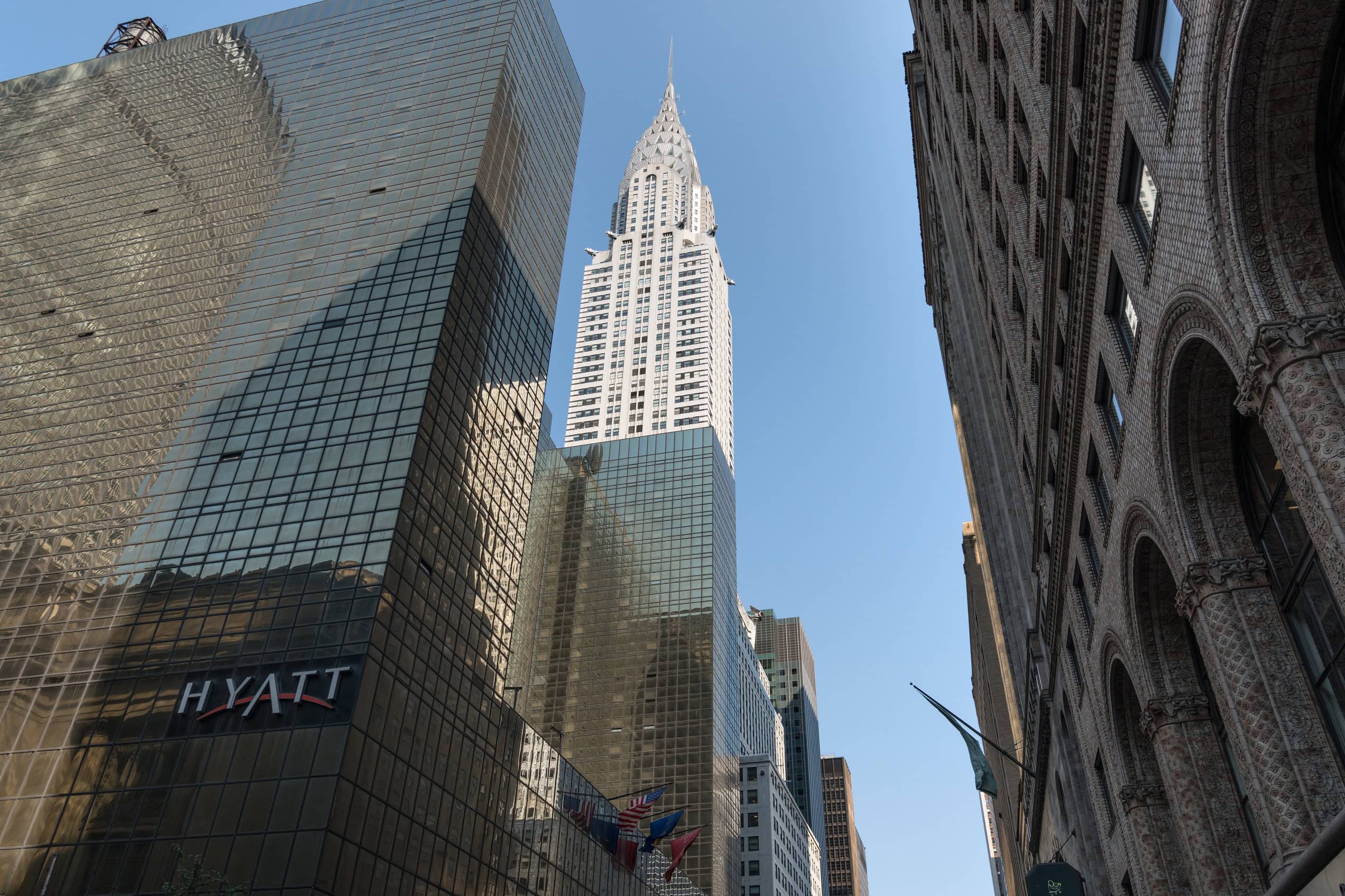
Tishman Speyer plans to restore the façade and stainless-steel crown, modernize elevators and mechanical, electrical, air-handling, and cooling systems, and create hospitality and wellness amenities. It also intends to prebuild 75 percent of currently or soon-to-be vacant office space. The work therefore addresses the commercial performance of the architectural landmark whose lease revenue helps fund the college.

Why the Lease Matters to Cooper Union’s Art Students
Cooper Union is not simply a passive landowner in this story. It is a private college with schools of art, architecture, and engineering, and its current scholarship policy applies across its undergraduate programs. For School of Art students, income from a Midtown office tower consequently bears on whether studying painting, sculpture, graphic design, photography, film, and related disciplines can again be tuition-free.
The immediate financial position is substantial but not yet universal. Cooper Union lists undergraduate tuition at $44,550 for 2026–27 and gives every admitted undergraduate a half-tuition scholarship worth $22,275. Its financial-aid page reports that during 2025–26, grants or scholarships covered all tuition for 50 percent of full-time undergraduates and covered an average of 91 percent across that group.
Those figures also show why “return to free tuition” requires precision. Cooper Union instituted partial tuition in 2014 after generations of providing every undergraduate with a full-tuition scholarship. In 2018, its trustees adopted a ten-year plan to restore the universal benefit. Separately funded gifts made tuition free for four successive senior classes beginning in 2024, but students in other years continue to receive varying levels of additional aid above the guaranteed half-tuition award.
President Steven W. McLaughlin described the lease as part of an integrated financial plan that gives Cooper Union a framework to pursue the scholarship goal. “Framework” is the operative word: the agreement supplies a long-duration revenue mechanism, while the college’s broader plan also depends on fundraising, expense control, investment performance, operating surpluses, and continued investment in academic programs and facilities.
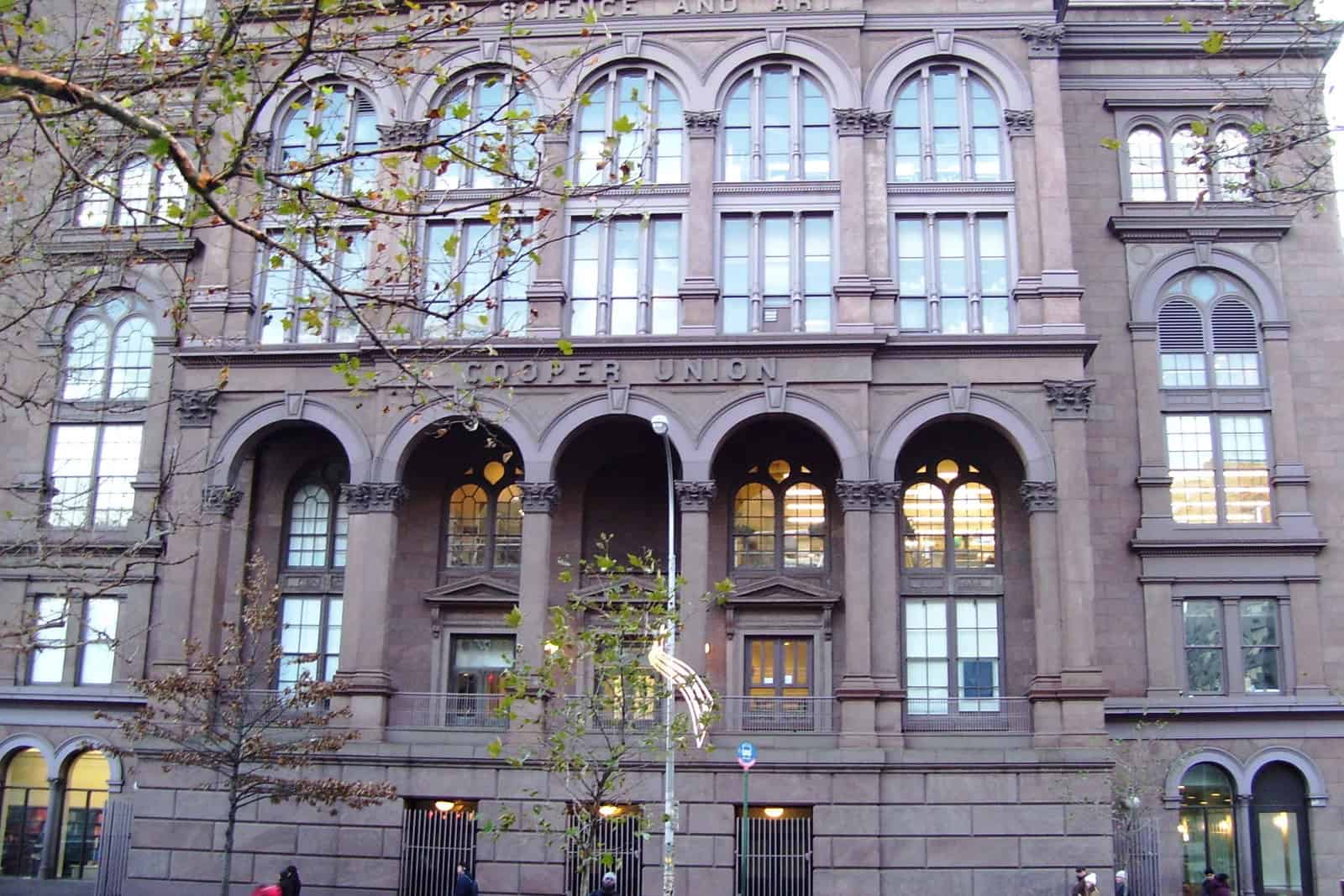
Cooper Union’s Foundation Building on Astor Place. Photograph by Beyond My Ken via Wikimedia Commons, licensed under Creative Commons Attribution-Share Alike 4.0 International; cropped.
The New Agreement Follows a Two-Year Lease Crisis
The finalized lease resolves an institutional risk that became public in September 2024. Cooper Union then said R&S Chrysler LLC, associated with RFR, had stopped making monthly ground-rent payments. The college issued a termination notice on September 13 and announced that the prior lease would terminate on September 27, with building control transferring to Cooper Union.
The transfer was not as simple as that announcement suggested because litigation continued. A November 2024 court order cleared the way for Cushman & Wakefield to operate the property, and a judge terminated RFR’s lease the following January. The October 2026 closing therefore marks more than a change of operator: it replaces an interrupted payment relationship with a newly negotiated 150-year structure.
The earlier disruption did not immediately reduce student scholarships. In its September 2024 message about the default, Cooper Union said it had built reserves and surpluses and had planned for lease termination as one of several adverse scenarios. That statement established resilience during the dispute, but it did not make a replacement lease unnecessary. A stable lessee remains important because Chrysler Building income has historically supplied a large part of the college’s financial base.
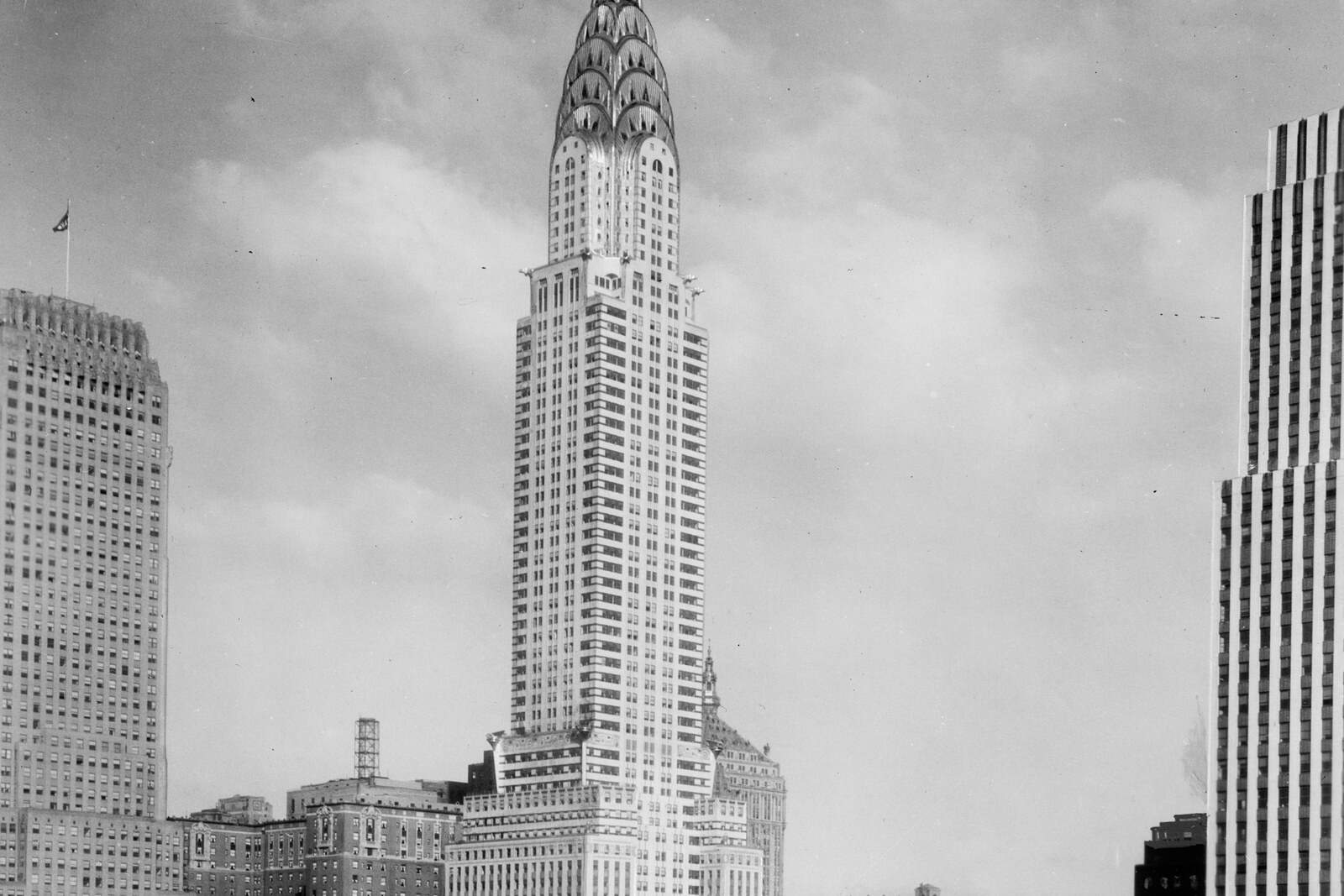
The Chrysler Building around 1930. Detroit Publishing Co., Library of Congress, via Wikimedia Commons; public domain in the United States.
Why the Lease Supports, but Does Not Guarantee, Free Tuition
Cooper Union’s 2024 five-year review explains the conditions behind the scholarship target. The plan calls for scholarships to reach 100 percent of tuition for all undergraduates starting in fiscal 2029, but increases are tied to fundraising, operating expenses, and operating-cash goals. The report also says the institution’s independent financial monitor identified a Composite Financial Index score of 4.0 or better as necessary for a sustainable return to full-tuition scholarships; Cooper Union reported a score of 2.47 for fiscal 2023.
The lease announcement does not publish an updated index score, annual rent, payment schedule, expected net revenue, or a revised financial projection through 2028–29. It therefore cannot show, on its own, whether the new rent exactly matches the assumptions behind the scholarship plan. The responsible conclusion is that the agreement removes a major uncertainty and strengthens the plan, not that it completes the plan financially.
The same caution applies to the restoration program. Tishman Speyer says the investment will include repairs to the exterior and crown as well as major building-system upgrades, but no detailed construction calendar was announced. The building’s commercial revival matters to Cooper Union because a well-occupied, maintained tower is better positioned to sustain payments over time, yet the school has not disclosed whether any part of its rent varies with occupancy or building income.
The Rent Is Still the Missing Number
The finalized agreement establishes a 150-year lessee, a $235 million transaction and redevelopment investment, and a building program backed entirely by investor equity. Cooper Union’s own records establish that the ground payments are separate from that investment and that the land has supported the school since its 1902 gift.
The agreement also gives Cooper Union a firmer foundation for its 2028–29 full-tuition objective, but the school’s financial plan shows that lease income is only one of several required components. Reports that present $235 million as money paid directly to the college go beyond the wording of the official announcement. The annual rent, escalation terms, and expected net contribution to scholarships remain undisclosed, but Cooper Union’s March 2026 board minutes say it had achieved the 4.0 Composite Financial Index target and expected to maintain that level if the Chrysler transaction succeeded.

Isabella studied at the University of Cape Town in South Africa and graduated with a Bachelor of Arts majoring in English Literature & Language and Psychology. Throughout her undergraduate years, she took Art History as an additional subject and absolutely loved it. Building on from her art history knowledge that began in high school, art has always been a particular area of fascination for her. From learning about artworks previously unknown to her, or sharpening her existing understanding of specific works, the ability to continue learning within this interesting sphere excites her greatly.
Her focal points of interest in art history encompass profiling specific artists and art movements, as it is these areas where she is able to really dig deep into the rich narrative of the art world. Additionally, she particularly enjoys exploring the different artistic styles of the 20th century, as well as the important impact that female artists have had on the development of art history.
Learn more about Isabella Meyer and the Art in Context Team.
Choose Art in Context as a preferred source to see more of our reporting in Google Top Stories and other Google Search experiences.
Cite this Article
Isabella, Meyer, “What Cooper Union’s 150-Year Chrysler Lease Means for Art Students.” Art in Context. October 8, 2026. URL: https://artincontext.org/cooper-union-chrysler-building-lease-scholarships/
Meyer, I. (2026, 8 October). What Cooper Union’s 150-Year Chrysler Lease Means for Art Students. Art in Context. https://artincontext.org/cooper-union-chrysler-building-lease-scholarships/
Meyer, Isabella. “What Cooper Union’s 150-Year Chrysler Lease Means for Art Students.” Art in Context, October 8, 2026. https://artincontext.org/cooper-union-chrysler-building-lease-scholarships/.


