
Met Breaks Ground on Frida Escobedo’s Tang Wing

The Metropolitan Museum of Art formally broke ground on Frida Escobedo’s Tang Wing on September 15, marking a construction milestone for a five-story home for modern and contemporary art expected to open in 2030. The museum has raised $670 million, but that figure is not a newly stated construction price: it combines the full building cost with part of a new operating endowment.
The Tang Wing Has Moved From Design to Construction
The Met’s September 15 announcement records the formal groundbreaking for the Oscar L. Tang and H.M. Agnes Hsu-Tang Wing. Escobedo, who works from Mexico City and New York, is the first woman to design a wing in the museum’s 156-year history. The Met expects the new space to open to the public in 2030.
The ceremony is a milestone, not the first physical activity at the site. The museum’s project page says preparation began in May 2026 and that major construction activities begin this fall. The September event therefore marks the project’s formal launch while work moves from preparation into the principal building phase.
The art remains the reason for the intervention. The southwest wing is meant to hold a collection spanning painting, sculpture, design, installation, works on paper, video, and other time-based media. It includes the Leonard A. Lauder Cubist Collection and the Alfred Stieglitz Collection, alongside work by artists from Pablo Picasso and Georgia O’Keeffe to Carmen Herrera, Ibrahim El-Salahi, Kerry James Marshall, and Wangechi Mutu. The new galleries are intended to place that modern art in conversation with the Met’s much older holdings rather than isolate it as a separate story.
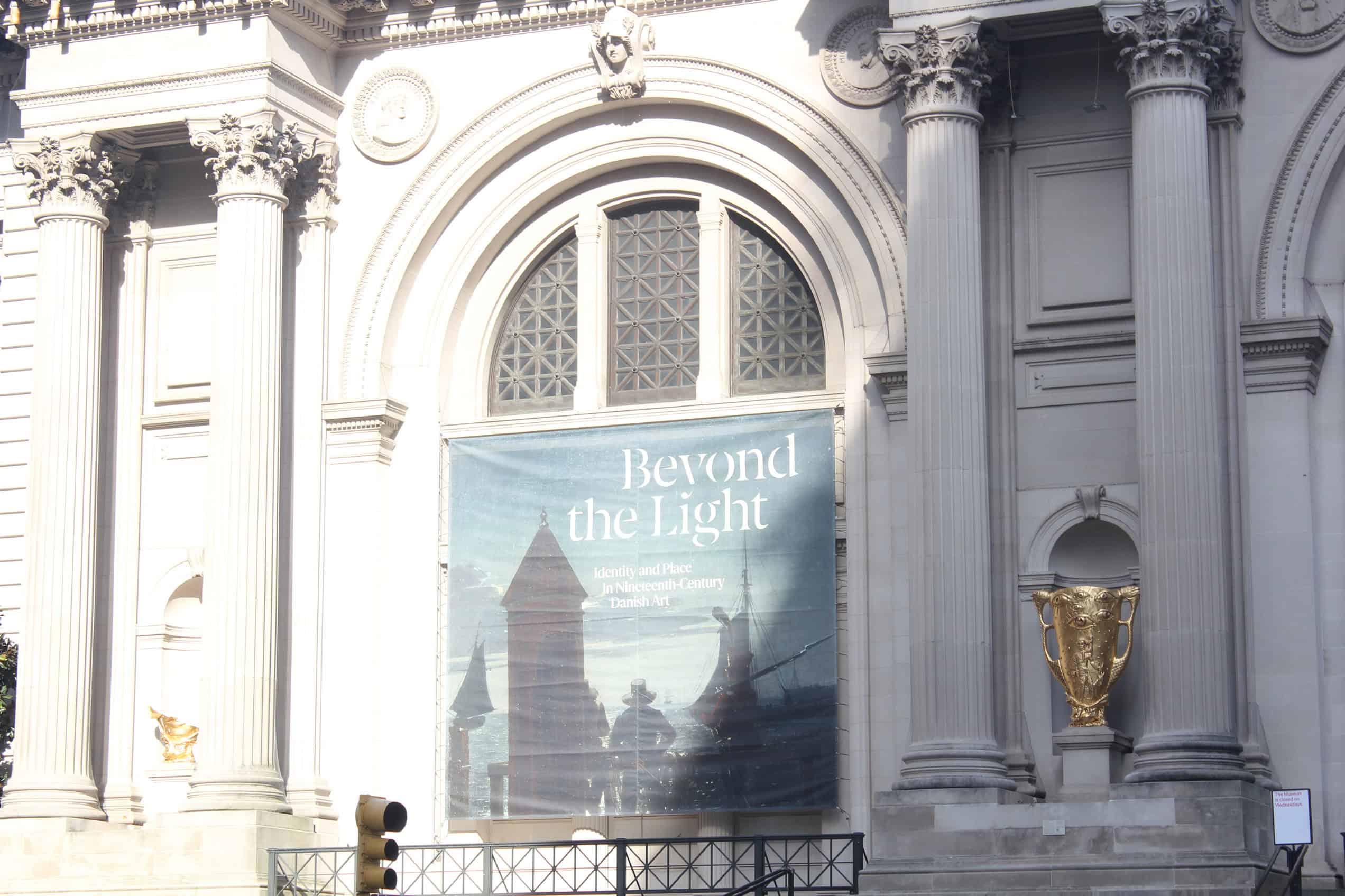
The Metropolitan Museum of Art’s Fifth Avenue facade in April 2023. Photograph by Epicgenius via Wikimedia Commons, licensed under Creative Commons Attribution-Share Alike 4.0 International.
Why $670 Million Is Not the Construction Price
The museum says it has raised $670 million “to fund the full cost of construction” and a significant portion of a newly created endowment for operating the wing. That wording establishes that construction is fully funded, but it does not reveal the construction allocation or the endowment allocation. Calling the project a $670 million building would turn a combined fundraising total into a construction estimate the Met has not published.
The earlier $550 million number needs the same care. In May 2024, the Met described it as a fundraising milestone in private donations, not as a final construction bill. Comparing the two museum announcements shows that the campaign total has risen by $120 million, or about 22 percent, since that milestone. It does not show that building costs rose by that amount.
That distinction also resolves the apparent mismatch in coverage. The Art Newspaper’s current report accurately says $670 million has been raised for the building and its operation, while linking to its 2024 description of a “$550 million wing.” The Art Newspaper’s 2024 report called it a “$550m project” and also said the Met had secured $550 million in private donations; the museum’s 2026 statement does not clarify whether the earlier figure ever represented a construction budget. Neither source supplies a standalone current construction budget.
Oscar Tang and Agnes Hsu-Tang pledged $125 million toward the project, which the museum identified as its largest capital gift when the naming was announced. Their gift is included within the broader private campaign, not added on top of the $670 million total.
More Gallery Space Without a Larger Museum Footprint
The redesigned wing will occupy 126,000 square feet within the Met’s existing footprint. Of that total, 69,500 square feet will be exhibition space—about 55 percent of the wing and nearly 50 percent more gallery area than the current arrangement. The figures matter because a 126,000-square-foot redesign is not the same thing as 126,000 square feet of new galleries. The 2025 environmental review separately reports 124,900 gross square feet above grade, 38,000 gross square feet below grade, 69,300 net square feet of galleries, and 18,700 square feet of rooftop art terrace. It separately identifies circulation, building systems, a 1,000-square-foot cafe, gathering areas, and approximately 18,500 square feet of outdoor terraces.
Escobedo’s galleries will vary from 11 to 22 feet in height, allowing large installations and smaller works to occupy differently scaled rooms. The design also tackles a conservation problem in the existing wing. The Met says at least one-quarter of the current galleries have southern or western exposure that makes them unsuitable for long-term art display and energy-intensive to control. The proposed facade, window placement, and below-ground mechanical space are intended to reduce solar gain while admitting managed natural light.
Outside, a three-story base supports recessed fourth and fifth floors. A limestone celosía, or screen, will filter and change with daylight, joining a vocabulary associated with multiple architectural traditions to the glass and stone of the museum’s existing campus. It is the project’s clearest contribution to contemporary architecture, but it also has a practical role in mediating light around galleries that must protect sensitive objects.
The fourth- and fifth-floor terraces will add approximately 18,500 square feet of outdoor space. The Cantor Roof Garden will move from the fifth floor to an expanded fourth-floor terrace, growing from 7,500 square feet to nearly 10,000 square feet, while indoor spaces will make the Central Park and skyline views available year-round.
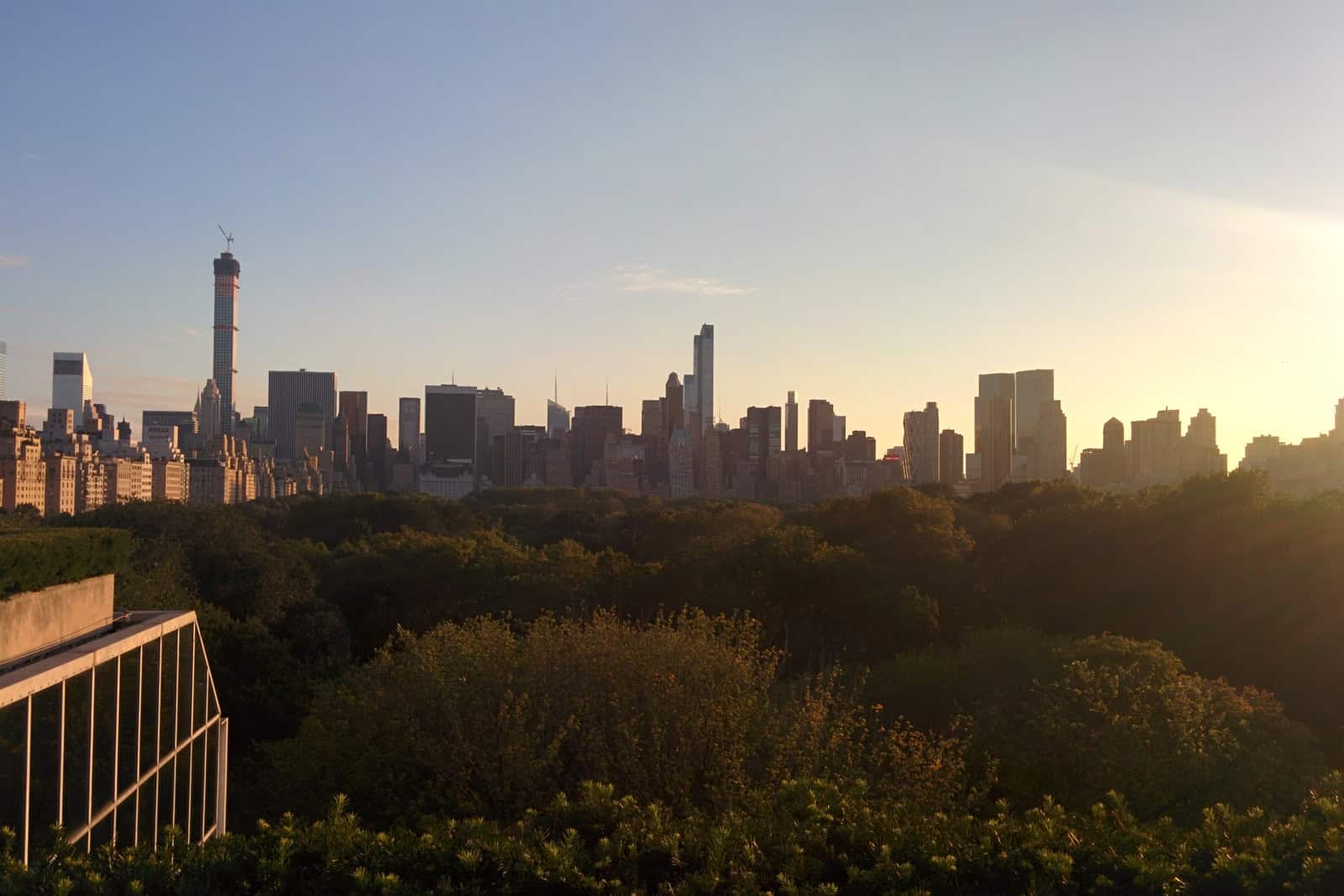
Central Park and Midtown Manhattan viewed from the Met’s roof in 2014. Photograph by MusikAnimal via Wikimedia Commons, licensed under Creative Commons Attribution-Share Alike 3.0 Unported.
Where the Modern and Contemporary Collection Goes Until 2030
Construction does not remove modern and contemporary art from the Met for four years. The museum says highlights will remain distributed across the Fifth Avenue building, with select works in The Face of Life: Modern Portraits at The Met through 2029 and rotating installations elsewhere. Met Live Arts and special exhibitions are also scheduled to continue during construction.
The first announced rotation begins immediately. Liu Wei’s Speculation opens on the Fifth Avenue facade on September 17, 2026, followed by David Hartt’s Peripheries on September 25, There Are No Words: Si Lewen’s Parade on October 1, and Krasner and Pollock: Past Continuous on October 4. Their closing dates run from January through June 2027. These are specific, time-limited presentations rather than a substitute permanent wing, and the Met has not yet published a complete display calendar through 2030.
The interim plan may also preview the curatorial premise of the new building. Showing 20th- and 21st-century works in multiple departments can create the cross-period encounters the Met says the Tang Wing will encourage. Whether that dispersed presentation remains legible to visitors will depend on installation choices and wayfinding, two issues the new wing itself is designed to improve with a second elevator core, ramps, additional entry points, and clearer circulation.
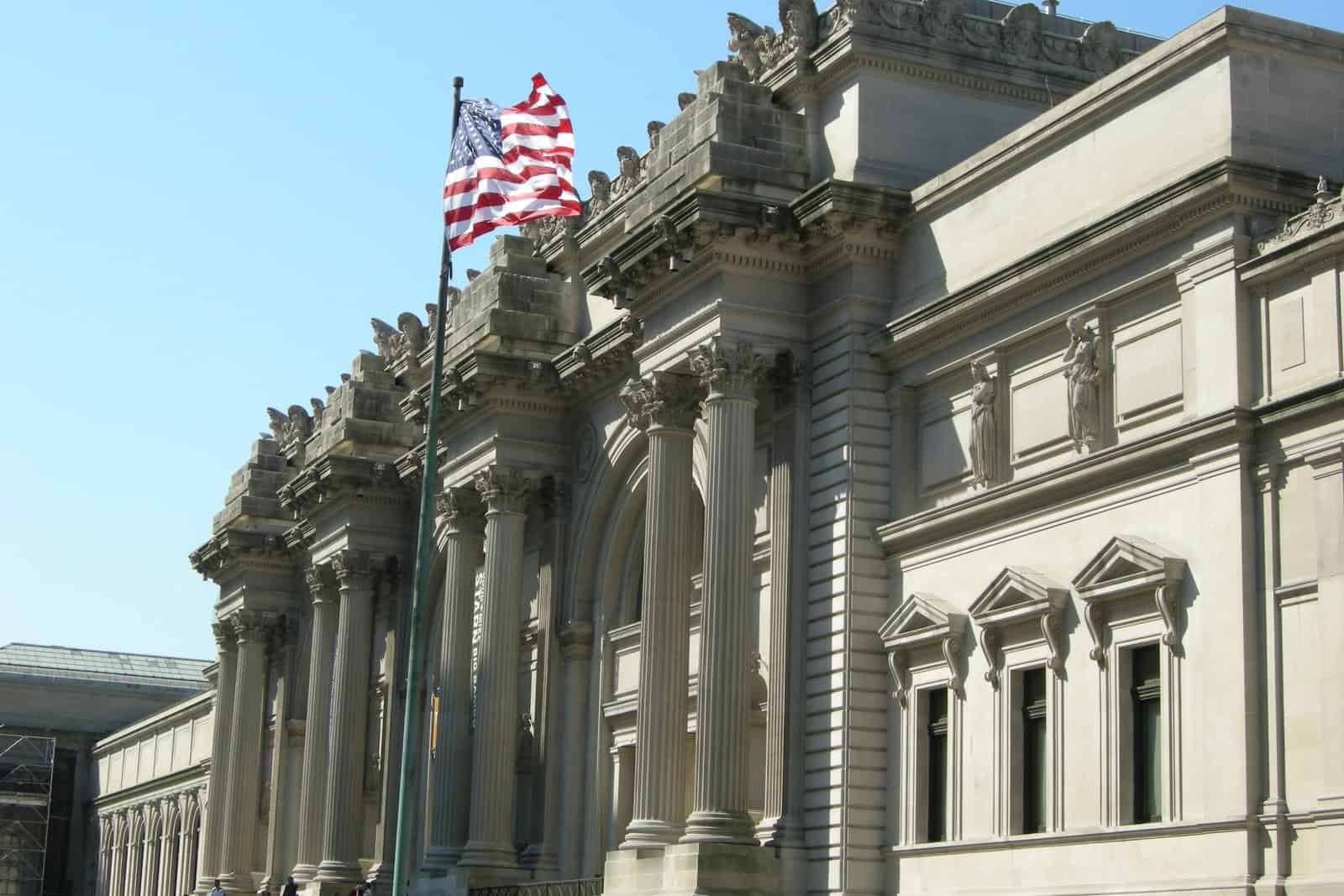
The Metropolitan Museum of Art’s Fifth Avenue entrance facade in 2010. Photograph by Sailko via Wikimedia Commons, licensed under Creative Commons Attribution-Share Alike 3.0 Unported.
A Funded Wing, With One Financial Detail Still Missing
The Met’s permanent record now establishes a September 15, 2026, groundbreaking, 69,500 square feet of exhibition space within a 126,000-square-foot redesign, and an expected 2030 opening. Its 2024 and 2026 announcements establish that private fundraising grew from $550 million to $670 million, while the newer total covers both all construction costs and part of an operating endowment. The exact division between those two uses remains undisclosed.
The same record establishes that preparatory site work preceded the ceremony and that major construction is due to begin this fall. During the construction period, named installations and a portrait display through 2029 will keep portions of the modern and contemporary collection in public view. What remains unknown is the full exhibition plan after 2029 and whether the museum’s 2030 target will hold once the principal construction phase is underway.

Isabella studied at the University of Cape Town in South Africa and graduated with a Bachelor of Arts majoring in English Literature & Language and Psychology. Throughout her undergraduate years, she took Art History as an additional subject and absolutely loved it. Building on from her art history knowledge that began in high school, art has always been a particular area of fascination for her. From learning about artworks previously unknown to her, or sharpening her existing understanding of specific works, the ability to continue learning within this interesting sphere excites her greatly.
Her focal points of interest in art history encompass profiling specific artists and art movements, as it is these areas where she is able to really dig deep into the rich narrative of the art world. Additionally, she particularly enjoys exploring the different artistic styles of the 20th century, as well as the important impact that female artists have had on the development of art history.
Learn more about Isabella Meyer and the Art in Context Team.
Choose Art in Context as a preferred source to see more of our reporting in Google Top Stories and other Google Search experiences.
Cite this Article
Isabella, Meyer, “Met Breaks Ground on Frida Escobedo’s Tang Wing.” Art in Context. September 16, 2026. URL: https://artincontext.org/met-tang-wing-groundbreaking-2026/
Meyer, I. (2026, 16 September). Met Breaks Ground on Frida Escobedo’s Tang Wing. Art in Context. https://artincontext.org/met-tang-wing-groundbreaking-2026/
Meyer, Isabella. “Met Breaks Ground on Frida Escobedo’s Tang Wing.” Art in Context, September 16, 2026. https://artincontext.org/met-tang-wing-groundbreaking-2026/.