

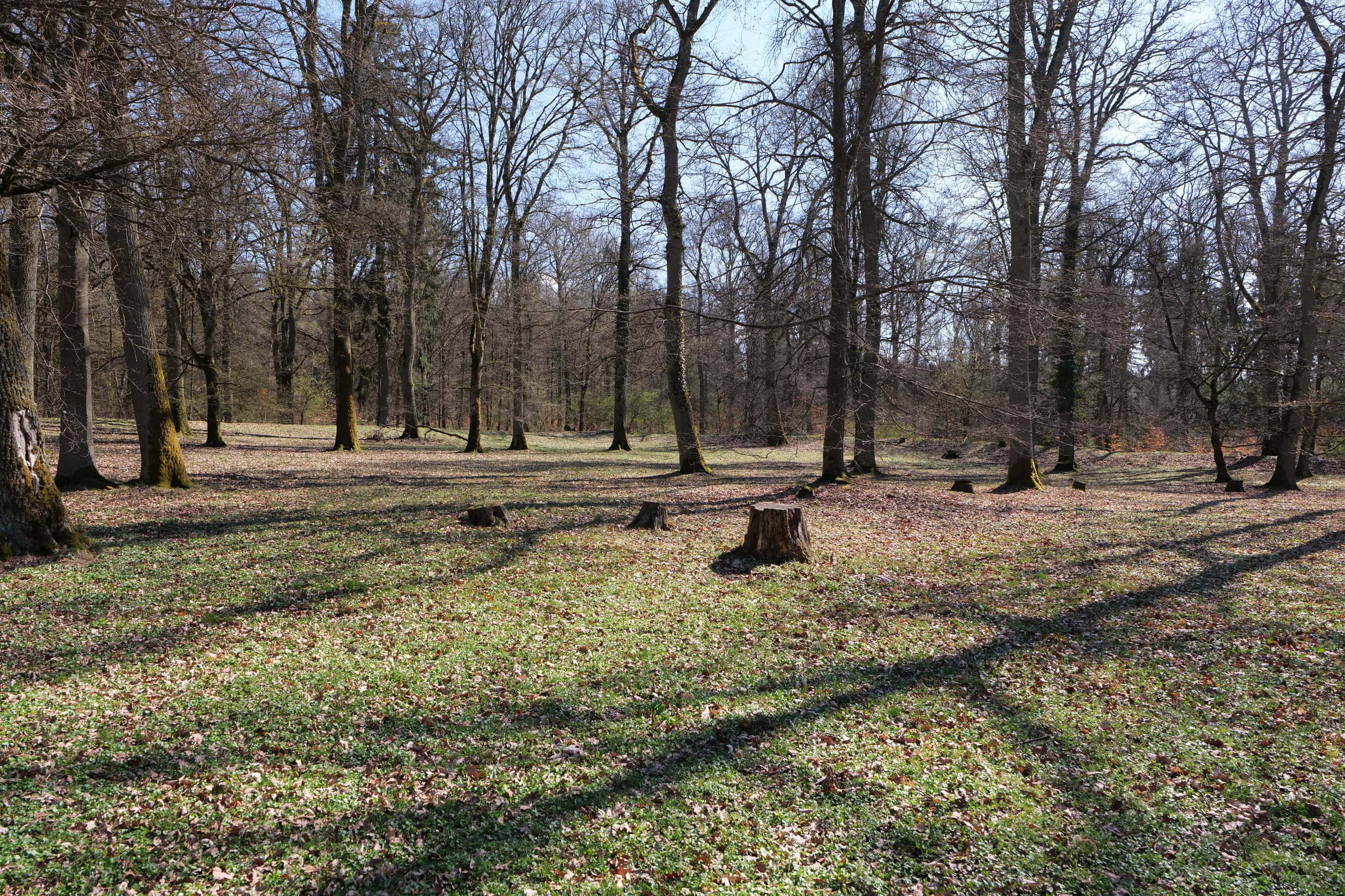
Roman Victoria and Probable Mars Fragments Found at Kapersburg

Excavators at Kapersburg in Hesse have recovered the nearly complete torso of a Roman Victoria statuette from a newly exposed frontier temple, alongside fragments that may represent Mars. Victoria’s wings, palm branch, and laurel secure one identification, while the reported Mars attribution remains provisional and the inscriptions remain under study.
What the Kapersburg Sculptures Actually Establish
On September 25, 2026, hessenARCHÄOLOGIE announced the latest finds from the civilian settlement, or vicus, outside Kapersburg fort in the eastern Taunus. The state archaeology service has been investigating the settlement with the University of Frankfurt’s provincial Roman archaeology seminar. A detailed Hessenschau report followed on September 27; those are publication dates, while the objects emerged during the current excavation campaign.
The official announcement names a temple, two newly found votive stones, a Victoria statuette, and fragments of another statue thought to depict Mars. Hessenschau adds the decisive visual detail: the Victoria survives as an almost complete torso with wings, a palm branch, and a victory laurel. By contrast, the broadcaster describes a detached divine hand, animal fragments, and a probable—rather than confirmed—Mars attribution.
| Find | Published evidence | Status |
|---|---|---|
| Victoria torso | Wings, palm, laurel | Secure identification |
| Second figure | Hand and associated fragments | Probably Mars |
| Cult building | Plan, walls, votive material | Identified as a temple |
| Two new stones | Latin inscriptions under study | Dedications unresolved |
The find is a Victoria torso, not an intact statuette, and the second deity has not yet been identified through a published attribute such as armor, helmet, shield, or spear.
Hessenschau describes a roughly five-meter-long rectangle with a small central chamber and walls about 50 centimeters thick. No fourth wall is visible, and an outer foundation may indicate a roofed passage around the chamber. Published evidence identifies the building more specifically as a Mars sanctuary: hessenARCHÄOLOGIE calls it a temple dedicated to Mars, and Kai Mückenberger says the 2023 Mars dedication was excavated inside its double cella.

Why Victoria and Mars Fit the Roman Frontier
Victoria’s attributes belong to a durable language of Roman art: wings mark her supernatural movement, while the palm and wreath make victory visible. Their survival on the Kapersburg torso gives the identification multiple, mutually reinforcing signs rather than a name based only on findspot.
A close frontier comparison comes from Öhringen, where excavations in 2020 and 2022 produced sculptures of Victoria and Mars. A German Limes Commission study describes the Öhringen Victoria in an image type widespread since Augustus, originally holding a palm in one hand and a wreath in the other. Its Mars wears full armor and belongs to the Mars Ultor type.
The same study says images of both deities were widespread at forts along the Limes and also appeared in civilian settings, sometimes joined to local religious ideas in eastern Gaul and northern Upper Germany. That makes a Victoria-and-Mars context at Kapersburg art-historically plausible. It does not prove that the detached hand belonged to Mars, or that the two Kapersburg figures formed a designed pair.
The comparison also shows why context changes meaning. At Öhringen, the sculptures were discarded near fort gates and were interpreted as projecting military victory and imperial rule. Kapersburg’s figures came from a temple in the vicus. Katharina Grießhaber of the Saalburg museum told Hessenschau that worship there can be understood as an exchange of a divine favor for a promised gift. The votive stones support a cult setting; their dedicators and terms remain unidentified.
A complete armored Mars from another Roman province can demonstrate the attributes that normally stabilize such an identification. Kapersburg’s published evidence does not yet provide that visual chain. For now, “probable Mars” is the accurate label.
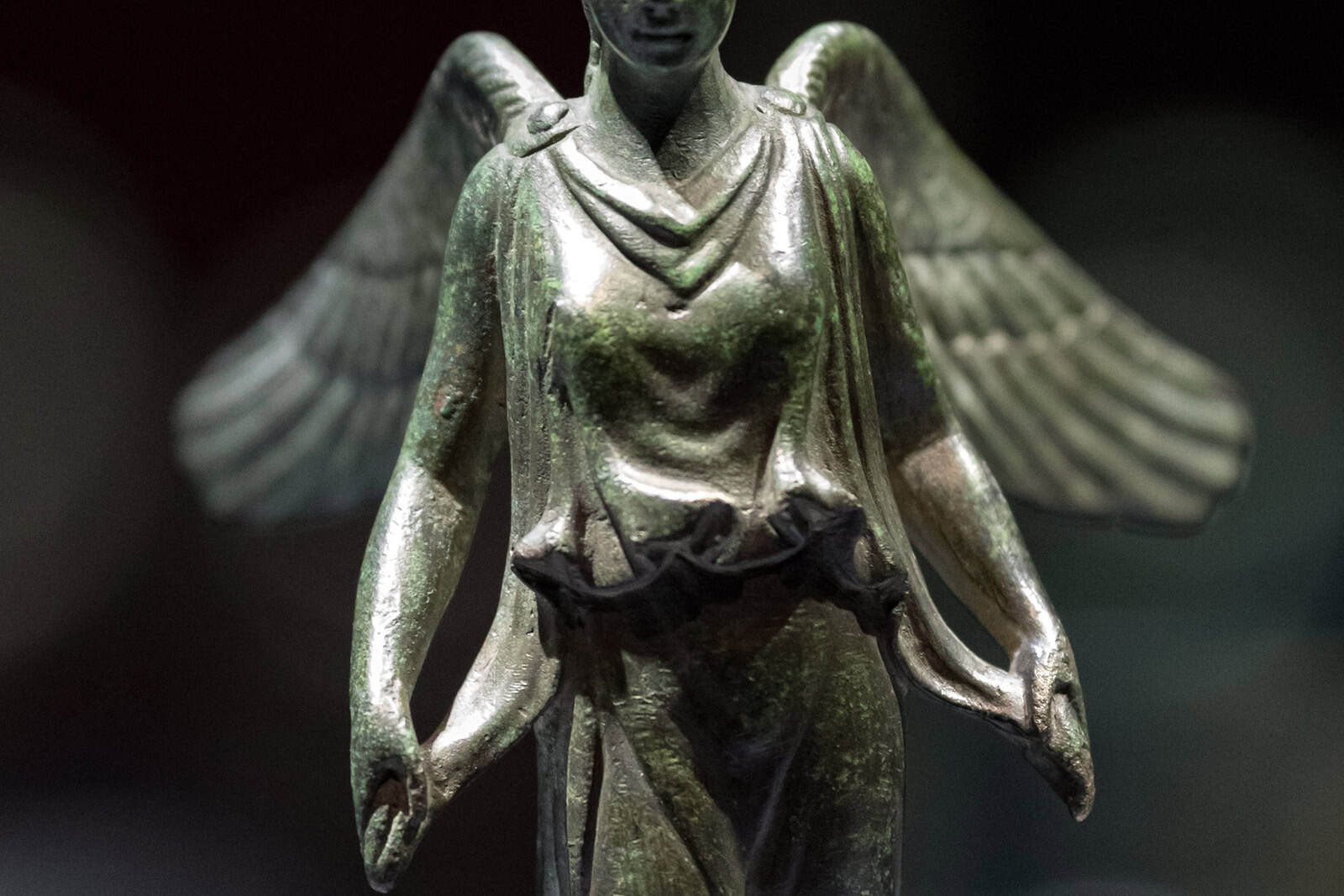
A Roman Victoria figurine in the Kunsthistorisches Museum, Vienna—a comparison, not the Kapersburg find. Photograph by Manfred Werner (Tsui), via Wikimedia Commons, licensed under Creative Commons Attribution-Share Alike 4.0 International.
The Official Timeline Starts Before 2024
The agency’s releases preserve two different starting points. A May 12, 2026, notice says a 2023 excavation campaign exposed exceptionally preserved temple foundations and a Roman votive stone dedicated to Mars. The September announcement says the present joint investigation of the vicus has run since 2024 and was in its third year in 2026.
Those statements are not necessarily contradictory. The 2023 work may have preceded the current collaboration, but the agency does not explain the transition. The firmer chronology is therefore limited to what each record expressly dates:
- 2023: temple foundations and a Mars-dedicated votive stone, according to the May notice.
- 2024: start of the current joint vicus project, according to the September announcement.
- 2026: announcement of two additional votive stones, the Victoria statuette, and probable Mars fragments.
This sequence matters for the sculptural attribution. Mars was already named in an inscription from the temple area before the probable statue fragments were announced. That independent textual connection strengthens the Mars context without converting the newly found hand into a securely identified image of the god.
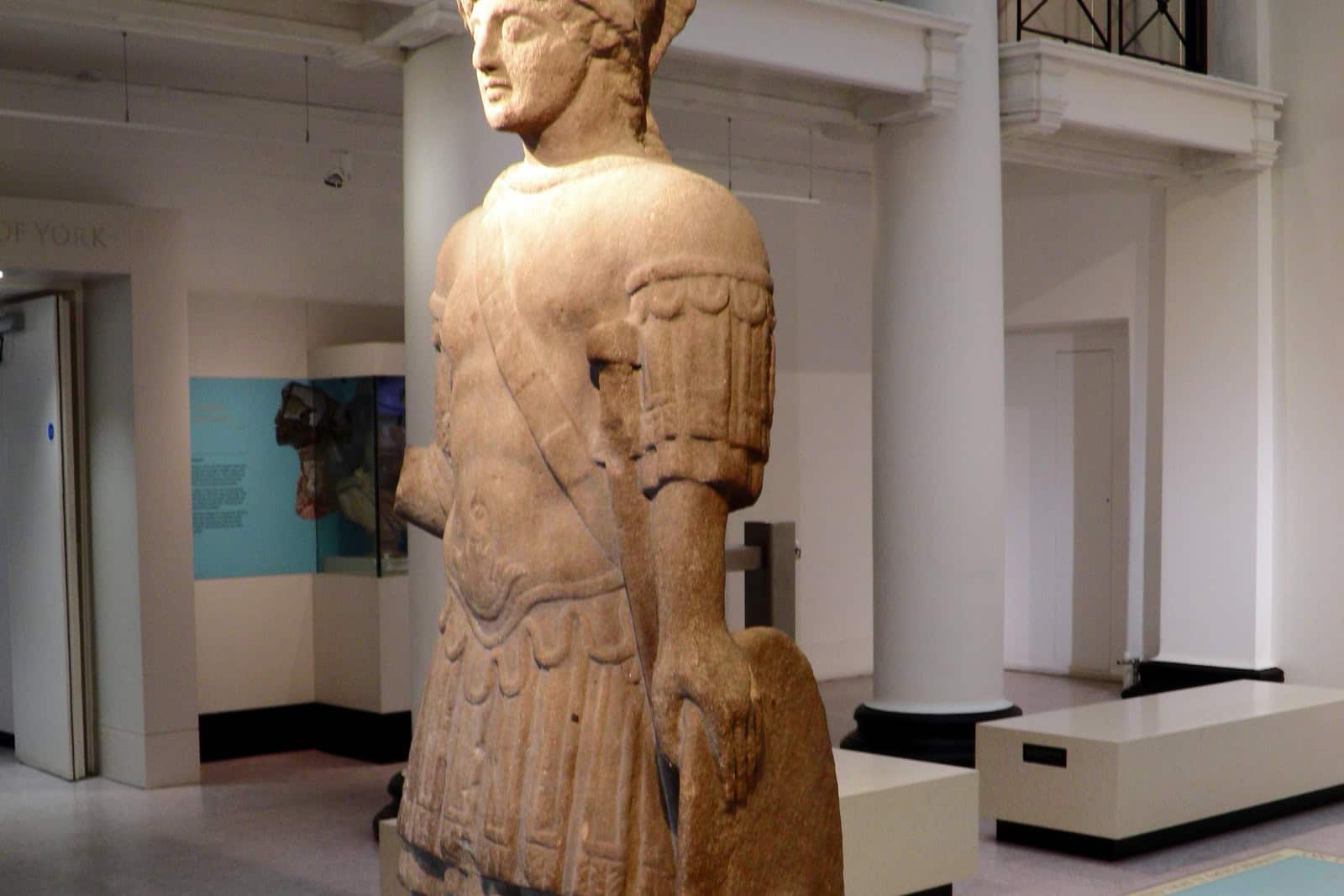
An early fourth-century Roman Mars from York—a comparison, not the Kapersburg find. Photograph by Carole Raddato, via Wikimedia Commons, licensed under Creative Commons Attribution-Share Alike 2.0 Generic.
What the Inscriptions and Later Finds Could Change
The two newly found votive inscriptions are being studied by Markus Scholz at the University of Frankfurt. The state archaeology service says the earlier Mars stone has been translated, but it has not published readings of the two new stones in this announcement. Their dedicators, exact divine names or epithets, and dates therefore remain unknown in the public record.
Hessenschau raises the possibility that one inscription might reveal the settlement’s ancient name. That is a prospect, not a deciphered result. No released reading establishes a place-name.
The temple area also produced a late-antique brooch and handmade pottery. The official account describes them conditionally as possible first archaeological evidence that the area remained in use after Rome abandoned the Limes fort in the mid-third century, perhaps by Alamanni living in the Wetterau region.
Hessenschau goes further, saying people apparently continued to visit the temple after the soldiers left. The official wording supports later activity in the area, not yet continued worship in the building. A brooch beside a temple is not by itself proof that the cult survived; the excavators have not published the stratigraphic relationship in the announcement.
Victoria Is Certain; Mars and the Temple’s Afterlife Are Not
- The Kapersburg torso is securely identifiable as Victoria because Hessenschau records three surviving attributes: wings, palm, and laurel.
- The second sculpture remains a probable Mars; no diagnostic attribute has yet been published for the surviving hand and fragments.
- Official records date temple foundations and a Mars-dedicated stone to 2023, the current joint project to 2024, and the newly announced sculptural group to 2026.
- The untranslated stones may refine the sanctuary’s gods, patrons, and chronology, but they do not yet supply the settlement’s name.
- The late-antique finds establish a serious case for later use of the area; continued worship at the temple remains unproven.

Isabella studied at the University of Cape Town in South Africa and graduated with a Bachelor of Arts majoring in English Literature & Language and Psychology. Throughout her undergraduate years, she took Art History as an additional subject and absolutely loved it. Building on from her art history knowledge that began in high school, art has always been a particular area of fascination for her. From learning about artworks previously unknown to her, or sharpening her existing understanding of specific works, the ability to continue learning within this interesting sphere excites her greatly.
Her focal points of interest in art history encompass profiling specific artists and art movements, as it is these areas where she is able to really dig deep into the rich narrative of the art world. Additionally, she particularly enjoys exploring the different artistic styles of the 20th century, as well as the important impact that female artists have had on the development of art history.
Learn more about Isabella Meyer and the Art in Context Team.
Choose Art in Context as a preferred source to see more of our reporting in Google Top Stories and other Google Search experiences.
Cite this Article
Isabella, Meyer, “Roman Victoria and Probable Mars Fragments Found at Kapersburg.” Art in Context. October 5, 2026. URL: https://artincontext.org/kapersburg-victoria-statuette-roman-temple/
Meyer, I. (2026, 5 October). Roman Victoria and Probable Mars Fragments Found at Kapersburg. Art in Context. https://artincontext.org/kapersburg-victoria-statuette-roman-temple/
Meyer, Isabella. “Roman Victoria and Probable Mars Fragments Found at Kapersburg.” Art in Context, October 5, 2026. https://artincontext.org/kapersburg-victoria-statuette-roman-temple/.


