

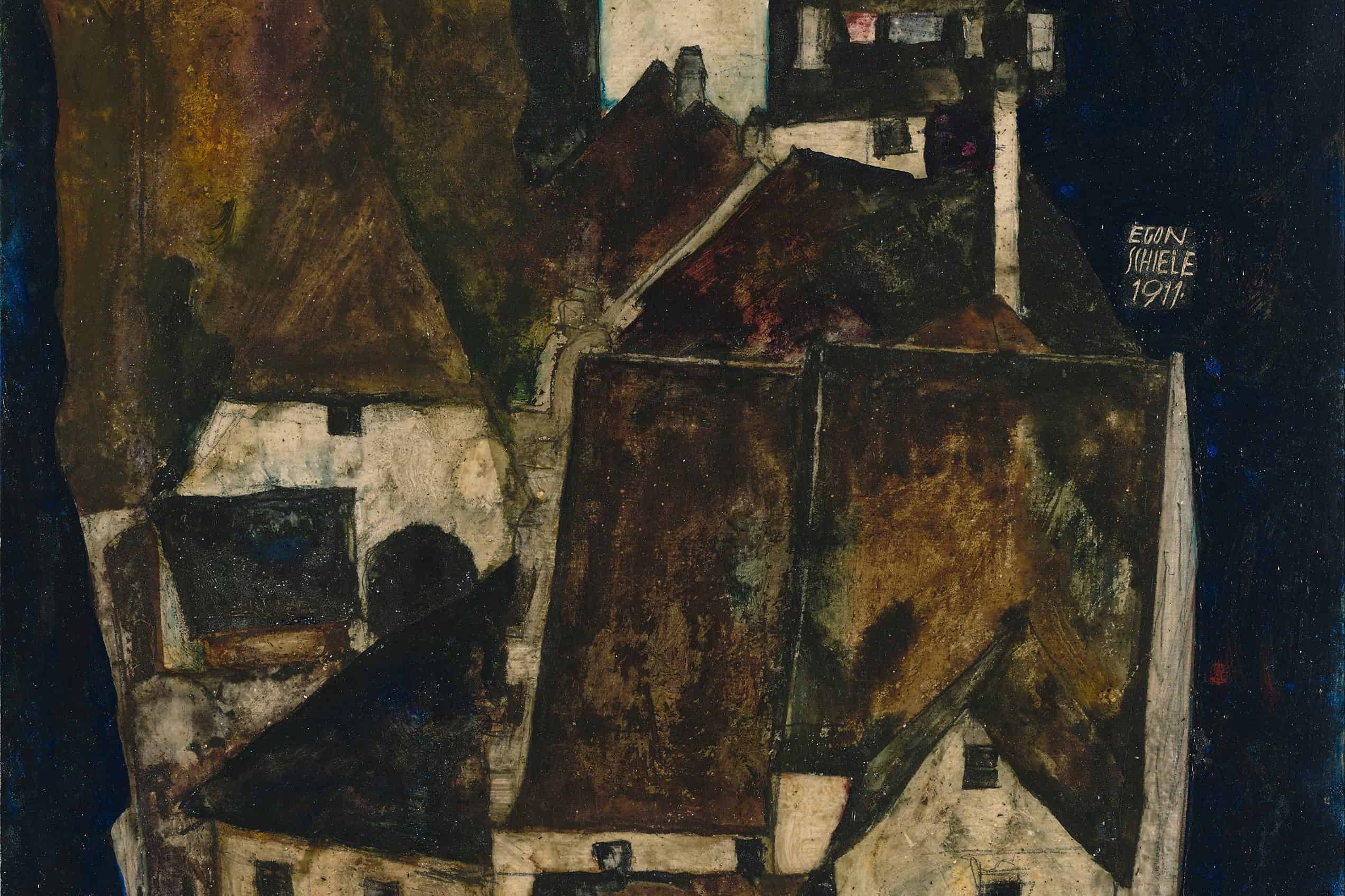
Senators Defend HEAR Act in Fight Over 12 Egon Schiele Works

US Senators John Cornyn and Richard Blumenthal have filed an amicus brief defending the amended HEAR Act in the Grünbaum heirs’ case for twelve Egon Schiele works in Vienna. The filing matters because the Austrian defendants are challenging rules Congress enacted in April 2026—not because any court has decided who owns the art.
What the Senators Filed—and What They Did Not
Cornyn and Blumenthal submitted their brief on September 18, 2026, in Reif v. Republic of Austria in the US District Court for the Southern District of New York. Their offices announced the intervention on September 24 and September 25; a Senate notice says they contend that Congress acted within its war-related and interstate and foreign commerce powers.
An amicus, or friend-of-the-court, brief offers legal argument from someone who is not a party. Judge John G. Koeltl is not bound by the senators’ position. Their filing does not authenticate a provenance, order restitution, or determine that the heirs have superior title.
The case docket identifies the Republic of Austria, the Albertina Museum, and the Leopold Museum Private Foundation as defendants. Ten of the claimed works are held by the Leopold Museum and two by the Albertina. The group includes Dead City III (1911), Self-Portrait With Grimace (1910), Standing Man With Red Scarf (1913), and works on paper that show the tense bodies and angular contours associated with Egon Schiele.
The heirs allege that Grünbaum lost his collection through Nazi persecution and never transferred valid title. The museums maintain that his sister-in-law, Mathilde Lukacs, sold works through the Swiss dealer Eberhard W. Kornfeld during the 1950s. Those are competing claims; the new filing addresses the rules under which they may be heard.

From the 2022 Complaint to the 2026 Amicus Brief
The dates separate the underlying ownership dispute from the constitutional question that has now emerged.
| Date | Development |
|---|---|
| December 15, 2022 | The heirs filed the federal complaint against Austria and the two Vienna museums. |
| October 16, 2023 | The court stayed the action while the plaintiffs completed service on the Albertina. |
| April 24, 2024 | Service on the Albertina was completed, according to the court’s later order. |
| April 13, 2026 | The amended HEAR Act became Public Law 119-82. |
| May 13, 2026 | The court lifted the stay. |
| September 18, 2026 | Cornyn and Blumenthal filed their amicus brief; their offices publicized it the following week. |
Although its short title says “Act of 2025,” the amendment became law in 2026. Its enacted text is unusually important here: it says the changes apply to claims pending on April 13, including appeals. It also removes the sunset date, bars listed time-based and non-merits defenses, provides nationwide service of process, and adds language directed at the Foreign Sovereign Immunities Act.

The Albertina Museum in Vienna, photographed by Harald Eisenberger / AlbertinaPresse, via Wikimedia Commons. Cropped. CC BY-SA 4.0.
The Constitutional Split Behind the Schiele Case
The parties are contesting access to a merits decision before the court can resolve the history of any drawing or painting. The principal arguments can be separated as follows.
| Issue | Austrian defendants’ position | Senators’ response |
|---|---|---|
| Tenth Amendment | Federal law cannot displace state procedural and equitable rules without a substantive federal claim. | Congress relied on enumerated war and commerce powers addressing a national and international problem. |
| Article III | The categorical exclusion of defenses such as laches intrudes on courts’ traditional equitable authority. | Congress may prescribe the legal rules and defenses governing covered claims without deciding their facts. |
| Foreign sovereign immunity | Austria and its institutions retain jurisdictional defenses available to foreign states. | The amendment expressly deems covered claims to place rights taken in violation of international law at issue under the statutory expropriation exception. |
The amended statute also names adverse possession, acquisitive prescription, the act-of-state doctrine, international comity, forum non conveniens, and prudential exhaustion among defenses that may not defeat an otherwise timely covered claim. Whether Congress constitutionally eliminated each defense is now for the court to decide.
Why a Win on Constitutionality Would Not Award the Art
A ruling upholding the HEAR Act would remove or narrow procedural barriers. The heirs would still have to establish that each work falls within the statute, that the court has jurisdiction over each defendant, and that their title is superior under the applicable law. The defendants could still contest the provenance and the merits.
The distinction also marks the HEAR Act’s geographic limit. It governs covered litigation in US courts; it is not a worldwide restitution tribunal. Other recoveries can depend on foreign law or voluntary institutional action, as a recent Goudstikker portrait recovery in Argentina illustrates.
The Provenance Record Behind the Legal Arguments
The Leopold Museum’s own Grünbaum dossier records substantial prewar evidence. It says Grünbaum lent nineteen Schiele works—seventeen watercolors and two drawings—to a 1925–26 exhibition. A 1928 receipt records four oils and twenty-one works on paper supplied for another exhibition.
The same dossier shows why identifying individual sheets remains difficult. A Nazi-era valuation from July 1938 named five Schiele oils individually but grouped fifty-five colored drawings, twenty pencil drawings, and one etching without titles. That mismatch between detailed prewar exhibition records and a generalized 1938 inventory leaves room for disagreement over which later-emerging sheets belonged to Grünbaum.
The museum’s position is that Lukacs later sold the works through Kornfeld. The heirs dispute both her authority to convey title and the postwar account. In a 2019 New York appellate decision concerning two other Schiele drawings, the court held that possession by Lukacs was not equivalent to legal title and ruled for the heirs. That judgment is important precedent in the family’s restitution history, but it did not adjudicate the twelve Vienna works or decide the sovereign-immunity questions in the current federal case.

The Leopold Museum in Vienna, photographed by Fred Romero, via Wikimedia Commons. Cropped. Attribution 2.0 Generic.
Twelve Works, Two Museums, No Ownership Ruling Yet
- The pending claim concerns twelve Schiele works: ten at the Leopold Museum and two at the Albertina.
- Public Law 119-82 took effect on April 13, 2026, and expressly applies its amendments to cases already pending.
- Cornyn and Blumenthal argue that the revised law is supported by Congress’s war and commerce powers; their amicus brief is advisory, not a judgment.
- The court has not resolved constitutionality, jurisdiction, or title, and the competing accounts of the works’ post-1938 provenance remain disputed.

Isabella studied at the University of Cape Town in South Africa and graduated with a Bachelor of Arts majoring in English Literature & Language and Psychology. Throughout her undergraduate years, she took Art History as an additional subject and absolutely loved it. Building on from her art history knowledge that began in high school, art has always been a particular area of fascination for her. From learning about artworks previously unknown to her, or sharpening her existing understanding of specific works, the ability to continue learning within this interesting sphere excites her greatly.
Her focal points of interest in art history encompass profiling specific artists and art movements, as it is these areas where she is able to really dig deep into the rich narrative of the art world. Additionally, she particularly enjoys exploring the different artistic styles of the 20th century, as well as the important impact that female artists have had on the development of art history.
Learn more about Isabella Meyer and the Art in Context Team.
Choose Art in Context as a preferred source to see more of our reporting in Google Top Stories and other Google Search experiences.
Cite this Article
Isabella, Meyer, “Senators Defend HEAR Act in Fight Over 12 Egon Schiele Works.” Art in Context. September 30, 2026. URL: https://artincontext.org/hear-act-egon-schiele-grunbaum-amicus-brief/
Meyer, I. (2026, 30 September). Senators Defend HEAR Act in Fight Over 12 Egon Schiele Works. Art in Context. https://artincontext.org/hear-act-egon-schiele-grunbaum-amicus-brief/
Meyer, Isabella. “Senators Defend HEAR Act in Fight Over 12 Egon Schiele Works.” Art in Context, September 30, 2026. https://artincontext.org/hear-act-egon-schiele-grunbaum-amicus-brief/.


