

Spain’s Museum Security Response After Three Gold Thefts

Spain’s Culture Ministry said on August 31 that it had asked regional governments on August 11—and again on August 24—for details of museums holding significant precious-metal collections, after two gold thefts and before a third at Villena. The ministry also says it strengthened security at museums it manages directly. The chronology shows a national coordination effort, but not a single national chain of command for museum security.
Spain’s Museum Security Request, Dated
The ministry’s dated account begins after the July raid at the Museo de Albacete. In a communiqué reported by Cadena SER, the ministry said its heritage directorate had raised the two earlier thefts with the National Police’s Historical Heritage Brigade. The brigade then requested information about museums with significant holdings of gold, silver, other metals or precious stones, whether the objects were on display or in storage.
| Date | Documented event |
|---|---|
| April 25 | Thieves took 144 of the 149 gold coins in the Treasure of Villanueva de la Serena from the Provincial Archaeological Museum in Badajoz. |
| July 27 | Four intruders took most of two collections comprising 222 gold coins at the Museo de Albacete; the contemporaneous official account said a final theft count was still pending. |
| Late July | According to the ministry, its heritage directorate sought police help after the Albacete theft. |
| August 11 | The ministry says it first asked the autonomous communities for the police-requested collection data. |
| August 24 | The ministry says it repeated the request to nonresponding regions. Europol separately published its museum-heist report that day. |
| August 27 | Thieves removed much of the Treasure of Villena and three historic crowns from MUVI in Villena. |
| August 28 | The ministry met regional museum officials. Valencia says it then forwarded Europol’s warning to MUVI and other museums. |
El País’s August 31 report now places the Villena theft on August 27, consistent with its contemporaneous coverage and Europa Press; the detailed account of the Villena theft also uses that date.
The Badajoz total also changed after the first reports. Initial accounts said all 149 coins were gone; two days later, the government delegate in Extremadura said five had fallen during the escape, leaving 144 coins stolen.

The Treasure of Villena at the Municipal Archaeological Museum of Villena, photographed in December 2009 by Julio Garcia via Wikimedia Commons. Licensed under Creative Commons Attribution 2.0 Generic; cropped.
The Request Was an Inventory for Risk, Not a National Takeover
The requested data has a narrow operational purpose: identify museums where materials that can be melted down or separated from an object may require attention. The ministry says it immediately supplied the National Police with information for museums it directly manages and reinforced security at those institutions. It has not publicly itemized those changes, which museums received them or whether regional museums adopted comparable measures.
The material-based approach matches Europol’s August 24 assessment. The agency describes a European shift toward gold, silver, gemstones and other culturally important objects that can be resold or transformed, alongside more forceful entries. Art in Context’s analysis of the Europol museum-heists report explains the broader cases behind that warning.
That alignment does not establish that one network committed the three Spanish thefts. It establishes a common risk: when an archaeological object is targeted for its raw material, documentation and policing must address both cultural-property trafficking and an ordinary market for precious metals.

The Museo Arqueológico Provincial de Badajoz, a state-owned museum managed by Extremadura. Photograph: Diego Delso / CC BY-SA 4.0, via Wikimedia Commons.
Two State-Owned Museums, Three Different Managers
The ownership record changes how the ministry’s role should be understood. Spain’s central government can collect information, coordinate police expertise and act directly in museums it manages. Day-to-day responsibility at the three crime scenes sits elsewhere.
| Museum | Ownership and management |
|---|---|
| Badajoz | An official service charter calls it state-owned and says management transferred to Extremadura in 1989. |
| Albacete | A 2021 Culture Ministry order identifies it as state-owned; Castilla–La Mancha’s museum law records the 1984 transfer of management. |
| Villena | MUVI’s institutional history identifies the archaeological museum and its collections as municipal. |
This also corrects an error in Europa Press’s August 28 account, which said none of the three victim museums was state-owned. The official records show that Badajoz and Albacete are state-owned but regionally managed. The ministry’s later, narrower statement—that none of the three was under its direct management—is consistent with those records.
The distinction is more than administrative vocabulary. It explains why Madrid says it could reinforce security immediately in museums under direct ministry management while requesting information and convening other administrations for the rest. It also prevents a false conclusion that state ownership automatically gives the Culture Ministry operational control of a particular building.
The Europol Alert Reached Villena After the Theft
The ministry’s collection-data request and the circulation of Europol’s report were separate communications. The ministry says Valencia did not answer its August 11 request or the August 24 follow-up. Valencia’s culture department, meanwhile, says it was not asked to distribute Europol’s warning until the intergovernmental meeting at 1 p.m. on August 28. It says MUVI received that guidance shortly after 2 p.m.—the day after the theft.
Those accounts are not mutually exclusive. One concerns a request for an inventory of at-risk holdings; the other concerns distribution of a report that Europol did not publish until August 24. The timeline establishes that the national data-gathering effort began before the Villena raid, while the documented onward transmission of Europol’s warning to MUVI came afterward.
It does not establish that receiving the warning earlier would have prevented the crime. Nor has any authority said whether Villena had already changed its precautions in response to the two earlier Spanish thefts. A warning can inform risk assessment, but it is not evidence of what a specific security plan would have stopped.
Three Raids Share a Material Pattern, Not a Proven Crew
The Badajoz thieves took 144 of the hoard’s 149 historic gold coins in April. A month before Villena, four intruders took most of two collections comprising 222 gold coins at Albacete; the contemporaneous official account said a final theft count was still pending. At Villena, the stolen objects included a large part of a Bronze Age ensemble of gold, silver, iron and amber, as well as three crowns associated with the Virgin of the Virtues and the Christ Child.
Europa Press reported that all three entries involved a forced side window, quickly smashed display cases and gold among the stolen material. That resemblance explains the national request, but it is not proof of common authorship. National Police heritage specialists are handling the Badajoz and Albacete cases; the Guardia Civil is handling Villena. Authorities have investigated possible links, but none has confirmed that the same offenders carried out all three raids.
The cultural loss also cannot be reduced to bullion weight. The coins preserve numismatic and historical evidence as groups, while the Treasure of Villena is an exceptional Bronze Age assemblage whose archaeological meaning depends on the objects surviving together. Melting or separating them would destroy information that market value cannot measure.
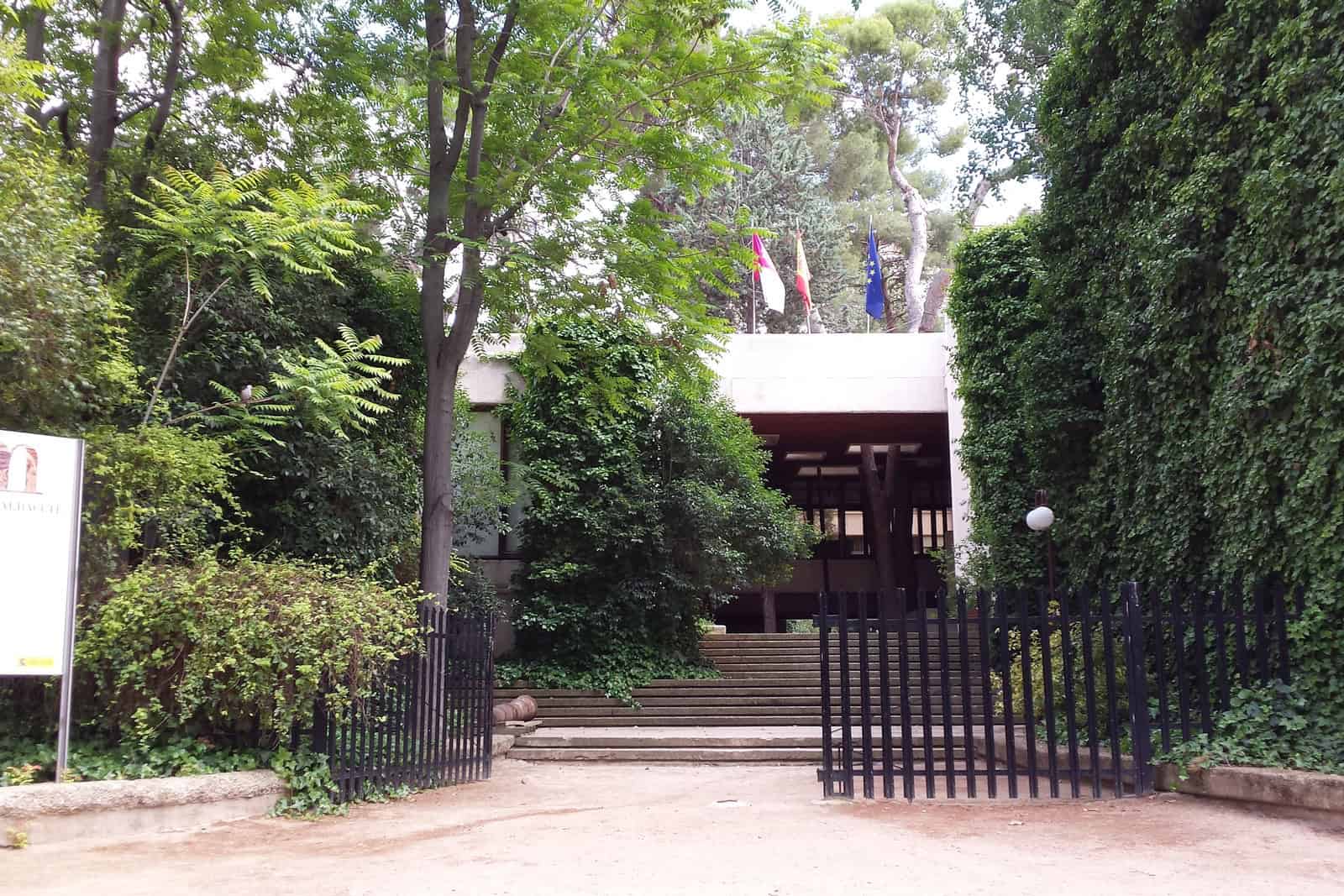
Entrance to the Museo de Albacete, a state-owned institution managed by Castilla–La Mancha. Photograph: JPOK / CC BY-SA 3.0, via Wikimedia Commons.
What Spain Has Actually Established
The ministry says it requested precious-material collection data on August 11, repeated the request on August 24 and reinforced security in museums it directly manages. Official institutional records establish that the Badajoz and Albacete museums are state-owned but regionally managed, correcting Europa Press’s broader ownership claim. Europol published its warning on August 24, but Valencia says MUVI received the forwarded guidance on August 28, after the theft. The three raids share fast, forceful entry and a focus on gold, but investigators have not established a single crew.

Isabella studied at the University of Cape Town in South Africa and graduated with a Bachelor of Arts majoring in English Literature & Language and Psychology. Throughout her undergraduate years, she took Art History as an additional subject and absolutely loved it. Building on from her art history knowledge that began in high school, art has always been a particular area of fascination for her. From learning about artworks previously unknown to her, or sharpening her existing understanding of specific works, the ability to continue learning within this interesting sphere excites her greatly.
Her focal points of interest in art history encompass profiling specific artists and art movements, as it is these areas where she is able to really dig deep into the rich narrative of the art world. Additionally, she particularly enjoys exploring the different artistic styles of the 20th century, as well as the important impact that female artists have had on the development of art history.
Learn more about Isabella Meyer and the Art in Context Team.
Choose Art in Context as a preferred source to see more of our reporting in Google Top Stories and other Google Search experiences.
Cite this Article
Isabella, Meyer, “Spain’s Museum Security Response After Three Gold Thefts.” Art in Context. August 31, 2026. URL: https://artincontext.org/spain-museum-security-response-gold-thefts-2026/
Meyer, I. (2026, 31 August). Spain’s Museum Security Response After Three Gold Thefts. Art in Context. https://artincontext.org/spain-museum-security-response-gold-thefts-2026/
Meyer, Isabella. “Spain’s Museum Security Response After Three Gold Thefts.” Art in Context, August 31, 2026. https://artincontext.org/spain-museum-security-response-gold-thefts-2026/.


