


Fra Angelico’s Saint Sixtus Lawsuit Moves Forward, but Ownership Is Undecided

A New York judge has allowed most claims over Fra Angelico’s Saint Sixtus to continue, but the October 26 ruling did not find that the Renaissance panel was stolen or decide who owns it. The decision, filed November 16, keeps the title dispute alive while narrowing claims against Richard Feigen’s revocable trust.
What the Saint Sixtus Ruling Actually Decided
New York Supreme Court Justice James G. Clynes rejected most of an attempt by Richard Feigen’s estate and associated businesses to dismiss the case, according to an November 20 report by ARTnews. The decision was dated October 26 and entered on November 16, a distinction that matters when tracking the litigation.
The plaintiffs—Gonzalve, Charles, and Guillaume Bich—say their family’s chauffeur, Roy Morrow, stole the painting around 2006 and sold it to Feigen. They seek the panel’s return from collectors Álvaro Saieh and Ana Guzmán, as well as damages and proceeds allegedly connected to Feigen’s later sale. The defendants dispute essential parts of that account.
Most Claims Survived, but One Group Was Narrowed
Clynes allowed the central case to proceed because factual questions about the painting’s removal, Feigen’s acquisition, and the timing of the claims could not be settled on the dismissal motion. ARTnews reported that claims against Feigen’s revocable trust and its trustees in that capacity were dismissed because the complaint did not adequately connect the trust to the sale proceeds. The report says the plaintiffs may renew those claims if additional evidence supplies that connection.
That is a procedural result, not a verdict. The judge has not determined whether Morrow stole the panel, whether Feigen knew or should have known of a title defect, whether Saieh and Guzmán acquired valid title, or which party is entitled to possess the work.

The Painting and Its Documented Timeline
Saint Sixtus is a tempera-on-panel painting attributed to Fra Angelico and dated to about 1453–1455, near the end of the artist’s life. A contemporaneous account of its 2010 Yale exhibition says the figure was once identified as Saint Peter and that later scholarship placed the panel during Angelico’s second Roman period. The work has also been proposed as one wing of a triptych whose related panel is at Harvard’s Fogg Art Museum.
The available court filings and exhibition record produce the following chronology. Allegations remain allegations unless a court ultimately accepts them.
| Date | What the record says |
|---|---|
| 1972 | Marcel Bich bought Saint Sixtus at Sotheby’s for £130,000, according to the heirs’ complaint. |
| 1994 | The complaint says Bruno Bich inherited the panel after Marcel’s death and placed it in trust for his sons. |
| About 2006 | The heirs allege that Morrow took the panel and sold it to Feigen for $3 million without valid title. |
| 2010 | The painting appeared at Yale as part of the Richard L. Feigen collection. |
| 2018 | The complaint says Feigen consigned it to Christie’s, which sold it to Saieh and Guzmán for $5.4 million. |
| 2023–2024 | The brothers say they located the painting in 2023, demanded its return in late 2024, and were refused. |
| 2026 | They sued on March 19; Clynes dated the dismissal ruling October 26, and it was filed November 16. |
What the 2010 Exhibition Does—and Does Not—Prove
The Yale appearance establishes that the panel was not continuously hidden after the alleged taking. Yale described the 2010 presentation as the first complete public exhibition and catalogue of Feigen’s Italian paintings, and its official release said the catalogue supplied provenance, bibliography, and condition notes for every work.
Public exhibition does not by itself prove that Bruno Bich or his sons saw the painting, received the catalogue, or knew Feigen possessed it. The Yale catalogue provides a published provenance, bibliography, and condition notes for Saint Sixtus; any lender files or correspondence would require separate examination.
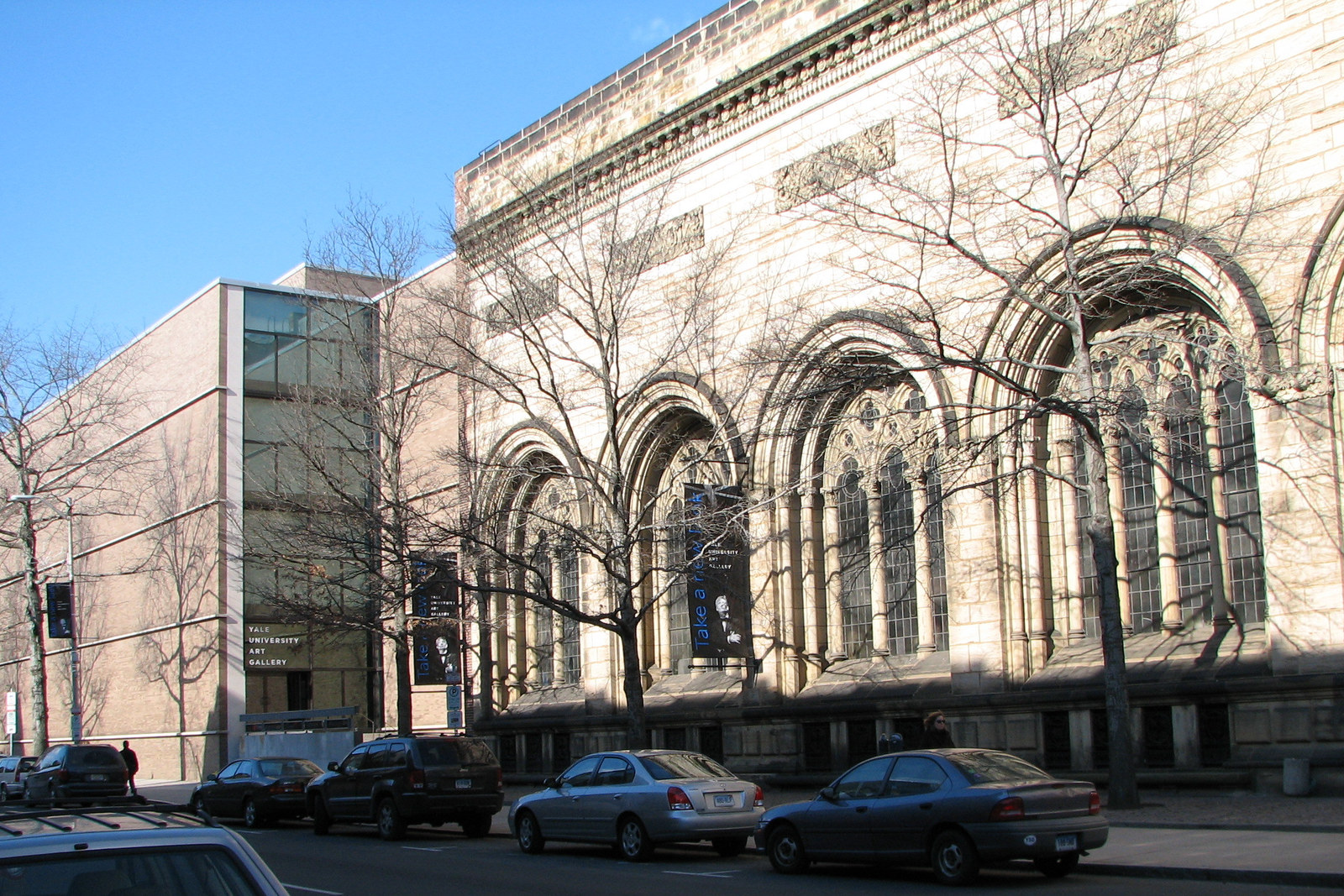
The Yale University Art Gallery, where Saint Sixtus was publicly exhibited in 2010. Photograph: Ragesoss, public domain, via Wikimedia Commons.
An Earlier Court Order Records a Conflicting Removal Story
A separate family case complicates the 2026 complaint’s account. In a February 22, 2024 order in Bich v. Bich, another New York judge recorded Veronique Bich’s contention that a third party removed a Fra Angelico painting in 2007 or 2008 for initially legitimate reasons. The order also records her argument that she and Bruno decided by 2010 not to pursue its return.
The 2026 complaint presents a materially different story: it alleges a theft around 2006 and says Bruno continued trying to learn what happened to the panel until his death in 2021. The 2024 order does not identify the third party in the relevant passage, and it does not establish that Veronique’s version was true.
The earlier court denied her request on procedural grounds, including the lateness of the proposed limitations defense; it did not resolve the underlying facts. The two narratives therefore should not be merged into a settled account. Their inconsistency is evidence the parties will have to address through documents and testimony.
Why Demand and Refusal Do Not End the Dispute
New York generally treats a replevin claim against a good-faith purchaser of stolen property as accruing when the asserted owner demands the object and the possessor refuses. The New York Court of Appeals confirmed that rule in Solomon R. Guggenheim Foundation v. Lubell, while preserving the equitable defense of laches.
That distinction explains why the late-2024 demand matters without automatically deciding timeliness. The current possessors say they bought through Christie’s in good faith. The plaintiffs, however, allege that Feigen’s 2006 purchase was not innocent. ARTnews reported that Clynes found too many unresolved facts about that transaction to dispose of the limitations questions now.
Laches asks a different question: whether an unreasonable delay prejudiced the opposing party. The 2010 exhibition, the family’s earlier litigation, the timing of their discovery, and any loss of witnesses or records may become relevant. Clynes left that defense available for later stages.
Unlike the Nazi-era ownership history underlying the Metzinger restitution dispute, the alleged taking here occurred in Manhattan around 2006. The critical record is therefore modern: household records, Morrow’s reported bill of sale, Feigen’s provenance file, Yale’s lender documentation, Christie’s research, the 2024 demand, and records tracing the sale proceeds. Christie’s is not a defendant.

The New York County Supreme Courthouse in Manhattan. The litigation remains unresolved. Photograph: wallyg, CC BY 2.0, via Wikimedia Commons.
Saint Sixtus Remains in Legal Limbo
The October 26 decision establishes only that most claims are sufficiently pleaded to continue; it establishes neither theft nor ownership. The 2010 Yale exhibition documents the panel’s public visibility but does not prove that the Bich family knew where it was. The 2024 court order preserves a removal account that conflicts with the heirs’ present allegations, without endorsing either version. Still unresolved are the panel’s valid chain of title, the defendants’ knowledge, the effect of any delay, and who received or retains the 2018 sale proceeds.

Isabella studied at the University of Cape Town in South Africa and graduated with a Bachelor of Arts majoring in English Literature & Language and Psychology. Throughout her undergraduate years, she took Art History as an additional subject and absolutely loved it. Building on from her art history knowledge that began in high school, art has always been a particular area of fascination for her. From learning about artworks previously unknown to her, or sharpening her existing understanding of specific works, the ability to continue learning within this interesting sphere excites her greatly.
Her focal points of interest in art history encompass profiling specific artists and art movements, as it is these areas where she is able to really dig deep into the rich narrative of the art world. Additionally, she particularly enjoys exploring the different artistic styles of the 20th century, as well as the important impact that female artists have had on the development of art history.
Learn more about Isabella Meyer and the Art in Context Team.
Choose Art in Context as a preferred source to see more of our reporting in Google Top Stories and other Google Search experiences.
Cite this Article
Isabella, Meyer, “Fra Angelico’s Saint Sixtus Lawsuit Moves Forward, but Ownership Is Undecided.” Art in Context. November 21, 2026. URL: https://artincontext.org/fra-angelico-saint-sixtus-lawsuit-ruling/
Meyer, I. (2026, 21 November). Fra Angelico’s Saint Sixtus Lawsuit Moves Forward, but Ownership Is Undecided. Art in Context. https://artincontext.org/fra-angelico-saint-sixtus-lawsuit-ruling/
Meyer, Isabella. “Fra Angelico’s Saint Sixtus Lawsuit Moves Forward, but Ownership Is Undecided.” Art in Context, November 21, 2026. https://artincontext.org/fra-angelico-saint-sixtus-lawsuit-ruling/.


