
Fauvism – The Origins, Artworks, and Artists of the Fauve Movement

Fauvism was a brief, loosely connected current in French painting that reached public visibility at the 1905 Salon d’Automne and lasted roughly from 1904 to 1908. Henri Matisse, André Derain, and Maurice de Vlaminck were its leading figures. They used saturated, often non-naturalistic color, visible brushwork, simplified forms, and compressed space to make color an active structure rather than a local description of objects.
What Is Fauvism?
Fauvism was not a formal organization with a manifesto, membership list, or single technique. The label groups artists whose paintings briefly shared heightened color and assertive handling in the first decade of the 20th century. Most still painted recognizable portraits, landscapes, interiors, bathers, and still lifes; their radicalism lay less in abandoning the visible world than in rebuilding it through color.
The National Gallery of Art dates the short-lived current to about 1904–1908. Matisse and Derain were central, while Vlaminck, Albert Marquet, Henri Manguin, Charles Camoin, Jean Puy, Kees van Dongen, Othon Friesz, Raoul Dufy, and Georges Braque participated unevenly or for limited periods.
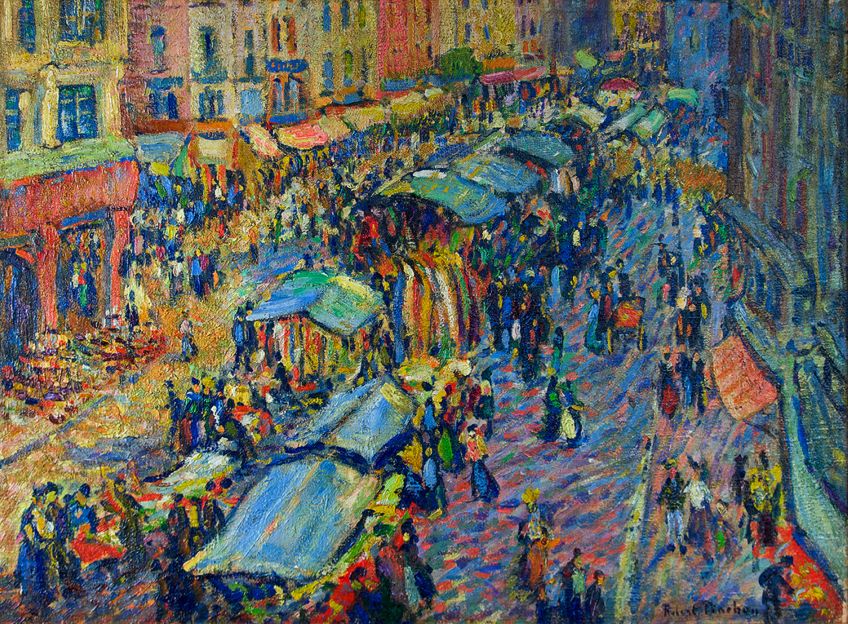
Robert Antoine Pinchon’s market scene demonstrates the wider spread of high-keyed color, but Pinchon belonged primarily to the Rouen circle and should not replace Matisse, Derain, or Vlaminck in a definition of the Parisian Fauves.
Fauvist Color
Fauvist color does not simply mean “bright.” Artists used complementary contrasts, unmodulated planes, exposed canvas, separated marks, and unexpected hues to construct light, depth, rhythm, and mood. A face might contain green, violet, orange, and blue without those colors describing its literal appearance.
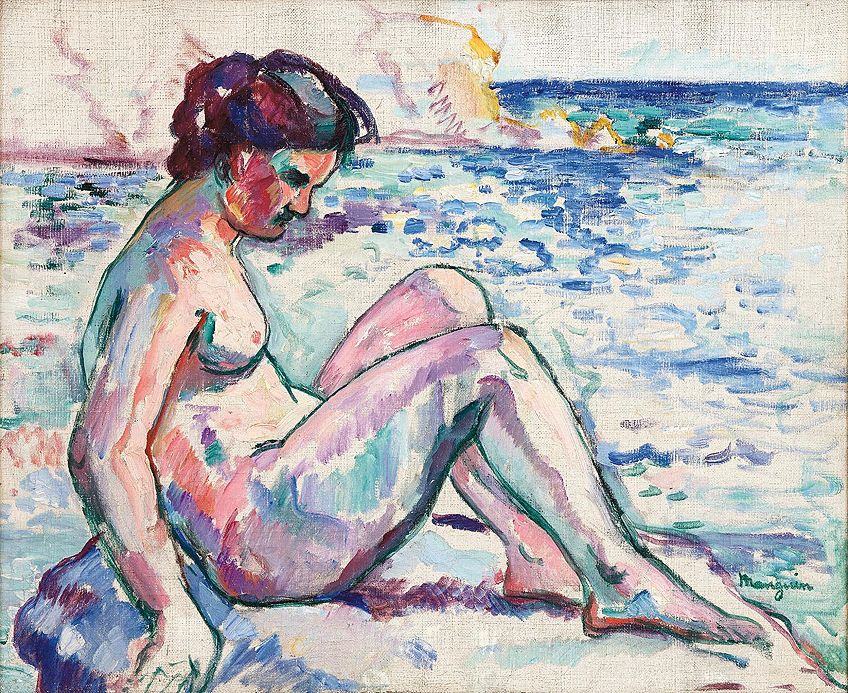
Manguin’s Jeanne au rocher shows how intense color could remain sensuous and calm. Fauvist paintings range from thin, broken touches to dense areas of paint; “wild” brushwork is not a universal formula.
Form, Space, and Subject
Simplified contours and compressed depth make a canvas read as both scene and painted surface. Perspective may remain legible but is subordinated to color relations. Landscapes, ports, portraits, leisure scenes, and bathers dominate, partly because artists worked together in coastal places such as Collioure, Saint-Tropez, and L’Estaque.
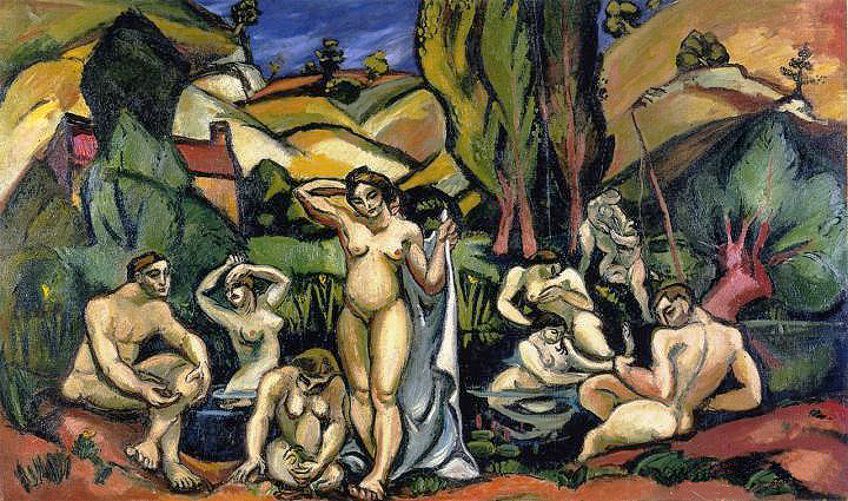
Friesz’s Bathers of Andelys dates to 1908, when several former Fauves were returning to more structured form. It is better read as a transition than as a pure statement of the 1905 breakthrough.
How Fauvism Developed
Teachers and Post-Impressionist Sources
Matisse, Marquet, Camoin, Manguin, and others studied with Gustave Moreau, who encouraged individual exploration. Their immediate sources included Cézanne’s constructive brushwork, Van Gogh’s urgent color and handling, Gauguin’s flattened zones and symbolic color, and Neo-Impressionist color division associated with Seurat, Signac, and Cross.


Cézanne mattered for the organization of form as much as for color. The Large Bathers was completed near his death in 1906 and belongs to Cézanne’s independent late project; it influenced later modernists but is not itself a Fauvist painting.
Artists also encountered African and Oceanic sculptures through colonial markets and museums. Formal influence should be discussed alongside the violent colonial systems that displaced objects and stripped them of context. The old language of “primitive art” reproduces those hierarchies and should be avoided.
Collioure in 1905
Matisse invited Derain to Collioure on the Mediterranean in summer 1905. Over about nine weeks they exchanged ideas through paintings, drawings, watercolors, portraits, and landscapes. The Met’s recent study of Collioure emphasizes that they redefined natural color through sensation while varying their brushwork from blended passages to blocky marks.
The 1905 Salon d’Automne
At the Salon d’Automne, paintings by Matisse, Derain, Vlaminck, Marquet, Manguin, Camoin, and others were installed around a more conventionally modeled sculpture. Critic Louis Vauxcelles’s comparison produced the memorable phrase “Donatello among the wild beasts,” and les Fauves became the name attached to the painters.
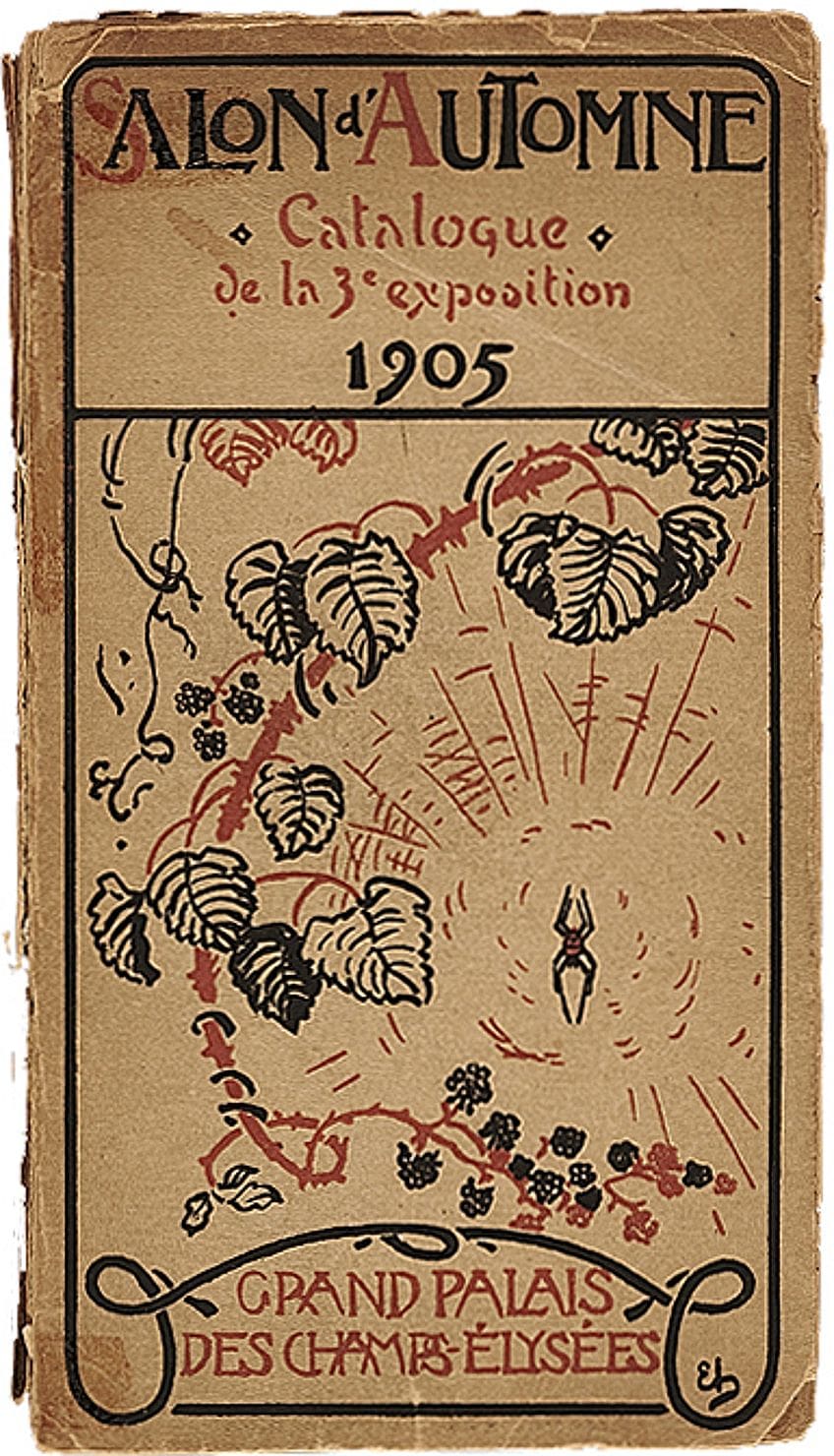
The exhibition did not introduce one uniform style, and the label was initially critical rather than chosen by the artists. It nevertheless gave a public identity to experiments already underway.

Vauxcelles was influential, but origin stories that reduce the movement to one witty review hide the networks of artists, dealers, collectors, critics, models, and exhibitions that sustained it.
Major Fauvist Artists and Artworks
Henri Matisse
Matisse used color as a structural and expressive system across a much longer career. Fauvism was a decisive phase, not a label for everything he made.
In Luxe, calme et volupté (1904), separate touches derived from Neo-Impressionism generate a shimmering surface, but the composition and color already move beyond scientific color theory toward personal construction.
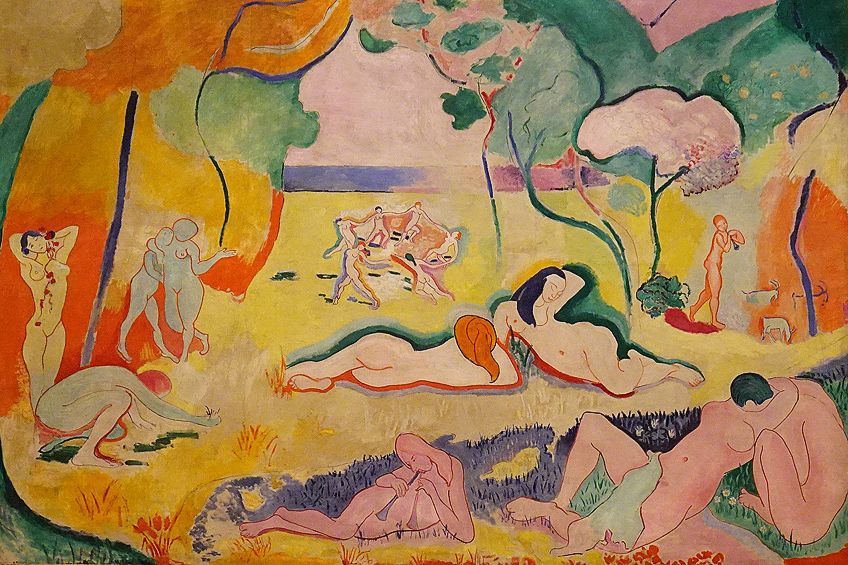
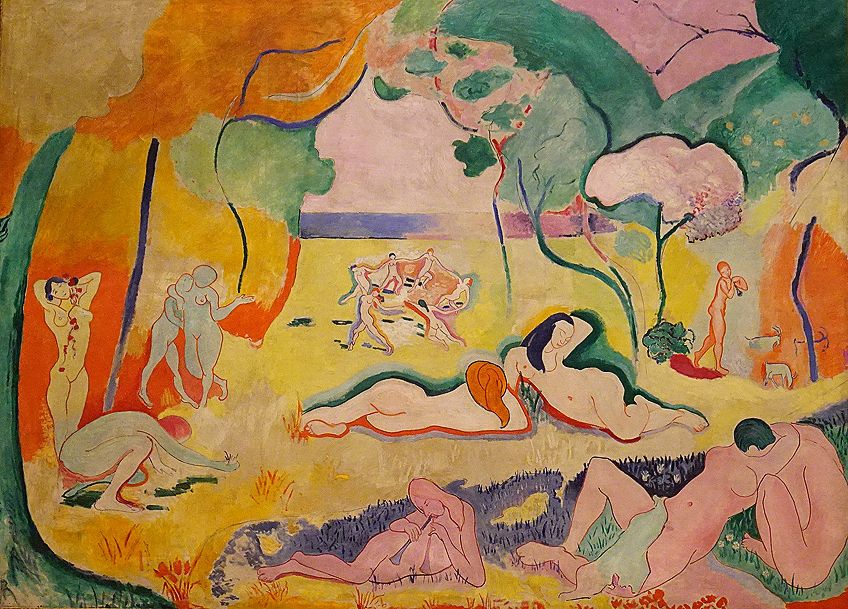
Le Bonheur de vivre (1905–06) enlarges bathers, dancers, musicians, and landscape into an invented arcadian field. Scale, contour, and color do not obey one stable viewpoint. The supplied image is a later photograph of the painting, whose Commons record currently treats the underlying Matisse work as public domain.
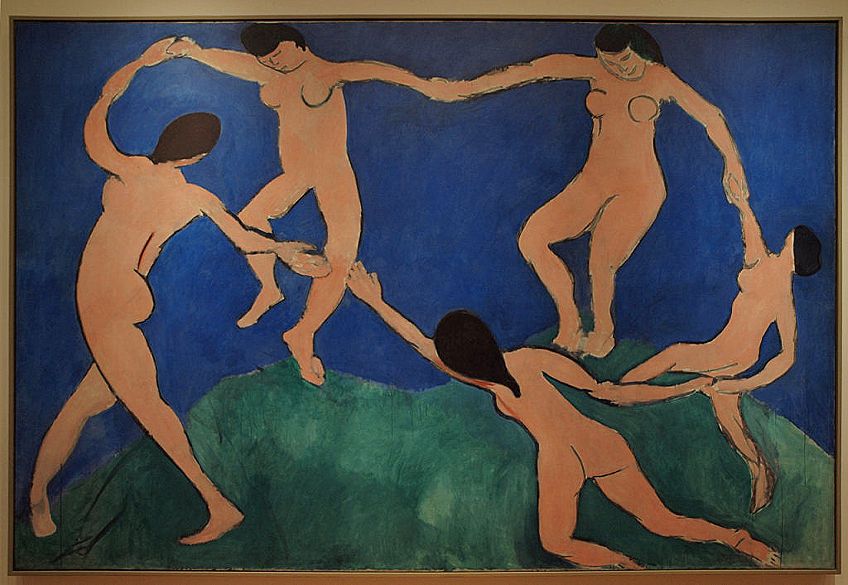
Dance (1910) carries forward simplified bodies and powerful color, but it postdates the short Fauvist phase. Its green ground, blue sky, and red figures show the longer afterlife of Matisse’s “construction by colored surfaces.”
Charles Camoin and the Wider Circle
Camoin trained in Moreau’s studio and worked with Matisse, Marquet, and Manguin. His portraits, ports, and Mediterranean views often use a gentler palette than the most famous Fauvist examples, illustrating the group’s stylistic range.
Camoin’s Marseille harbor paintings were made within a broader culture of travel and shared coastal motifs. Claims about a view being inaccessible to outsiders require evidence; their historical value lies in how color, framing, and paint turn observed places into constructed images.
André Derain
Derain’s 1905 work at Collioure and his 1906 London paintings are central to Fauvism. He used saturated contrasts and separated marks to turn light into pictorial energy, but he also remained concerned with structure and later moved toward more restrained, classicizing styles.
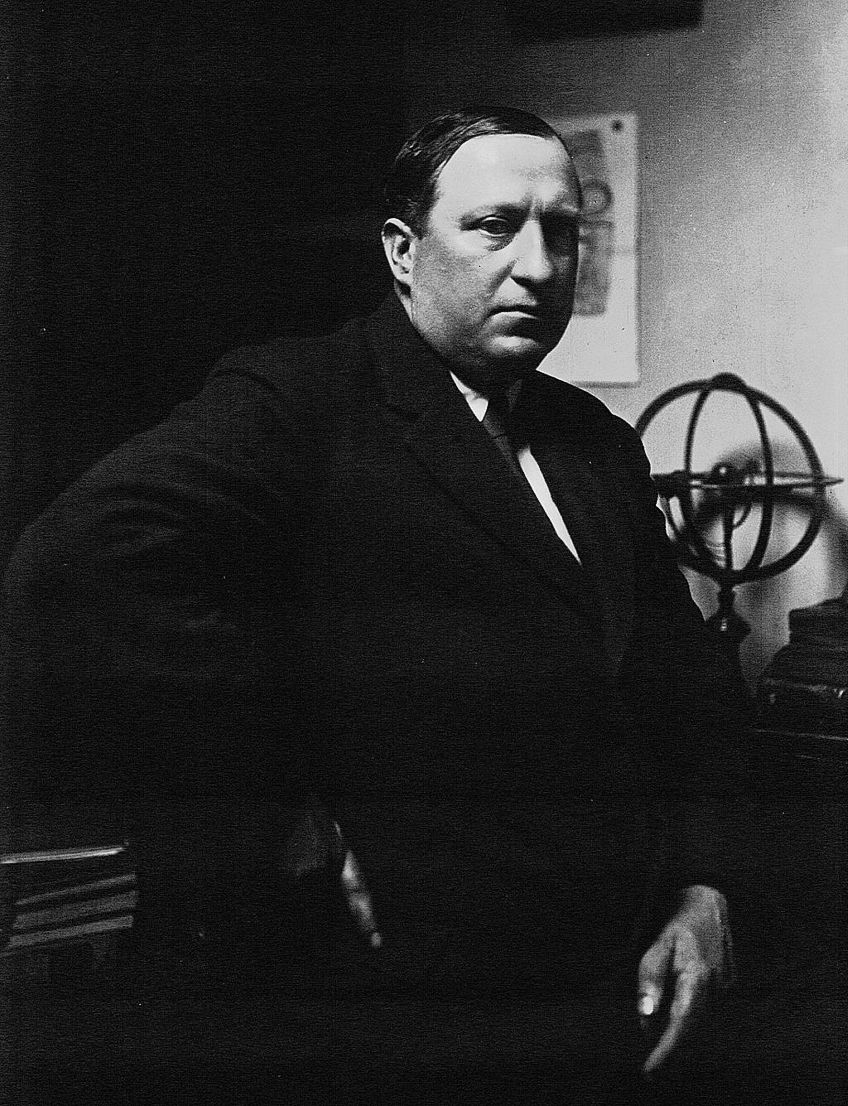
His portrait of Matisse and landscapes such as Mountains at Collioure use non-naturalistic shadows, visible strokes, and compressed depth. The colors do not provide a direct transcript of emotion; they are carefully related decisions within the painting.
MoMA’s record for Derain’s Charing Cross Bridge explains how the customary gray London sky became dramatic color after the Collioure experiments.
Maurice de Vlaminck and Other Fauves
Vlaminck favored forceful landscapes, dark outlines, and charged color. Van Dongen applied brilliant color to portraits and nightlife; Dufy and Friesz briefly adopted Fauvist palettes before pursuing other directions. Women were crucial as artists’ models, partners, organizers, and collectors even though the canonical group is overwhelmingly male. Amélie Matisse, for example, posed repeatedly and sustained Matisse’s practice during the Collioure period.
Georges Braque
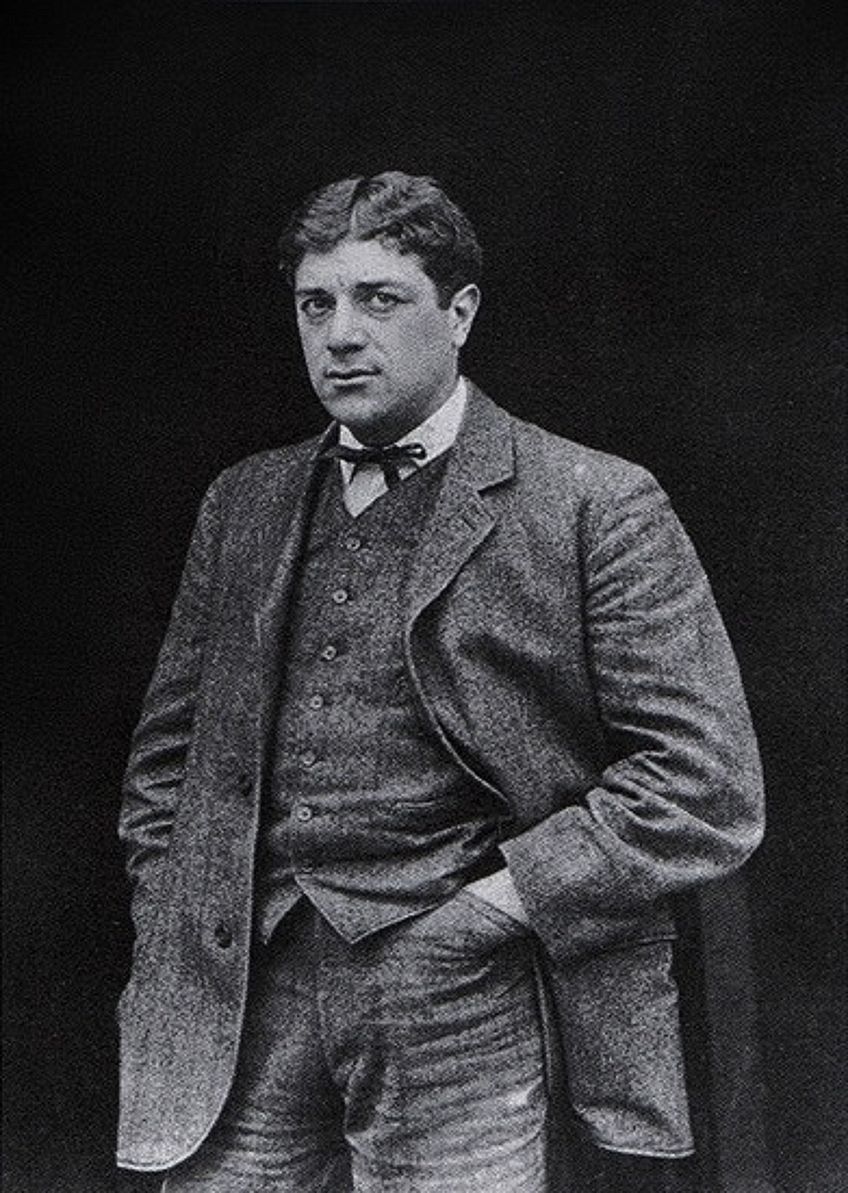
Braque painted Fauvist landscapes at L’Estaque in 1906–07 before his close work with Picasso helped develop Cubism. His rapid shift shows why Fauvism is better understood as a catalytic episode than a stable lifelong identity.
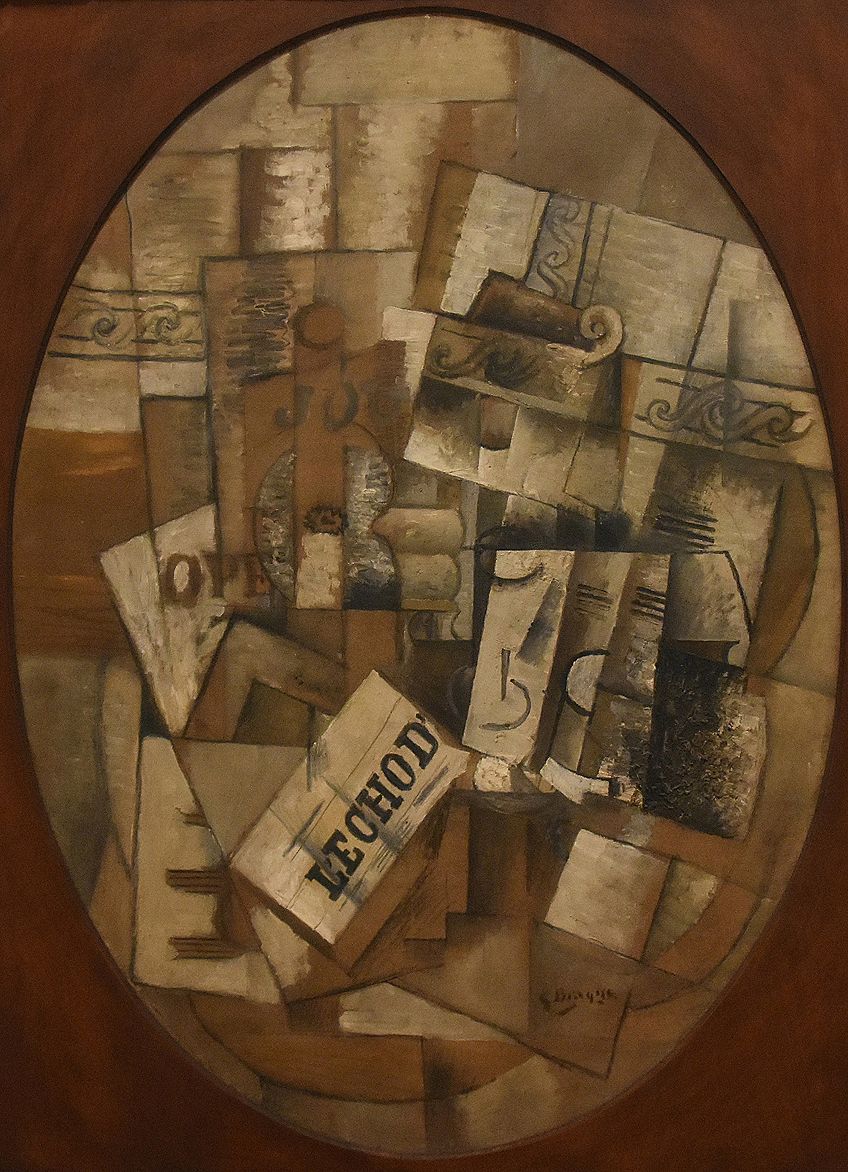
Still Life with Glass and Newspaper (1913) is Cubist, not Fauvist. It belongs in the story only as evidence of Braque’s later transformation. The photograph’s Creative Commons license does not by itself resolve every jurisdiction’s rights in the underlying Braque painting, so the record requires manual confirmation.
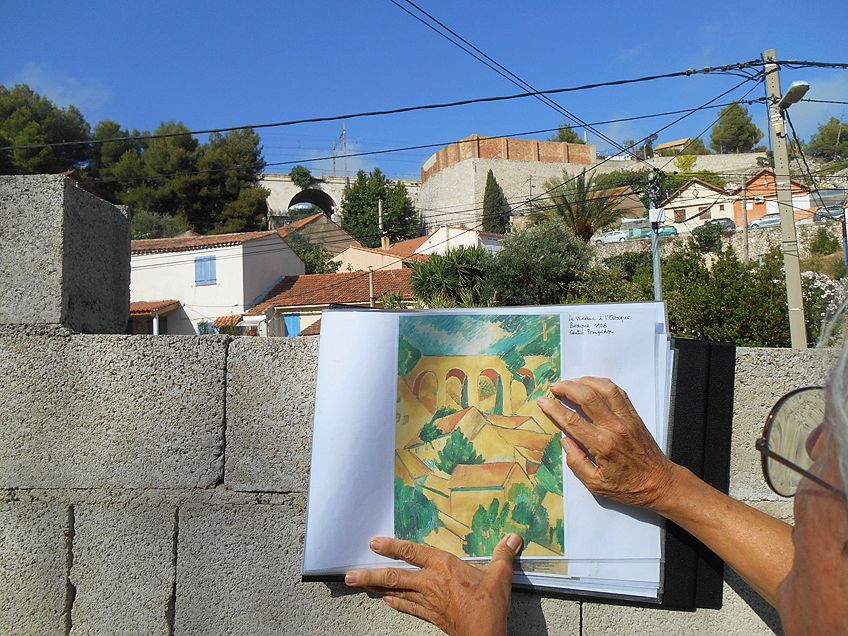
The modern photograph of the L’Estaque viewpoint documents a place, not Braque’s painting. Comparing the two can reveal how radically the artist selected, flattened, colored, and reorganized a motif.
Why Fauvism Matters
Fauvism demonstrated that color could organize a picture independently of local appearance. Its short duration opened paths for Matisse’s later art, Derain’s experiments, Braque’s transition toward Cubism, and German Expressionist color, but it did not directly “cause” every later movement.
Its legacy also includes unresolved questions. The movement’s leisure subjects were shaped by access to travel and models; its borrowings were entangled with colonial collecting; and the “wild beast” myth can make deliberate composition look impulsive. Close viewing reveals control beneath the apparent freedom.
Frequently Asked Questions About Fauvism
What Is Fauvism?
Fauvism was a brief current in French painting, about 1904–1908, in which artists used saturated, often non-naturalistic color, visible brushwork, simplified forms, and compressed space.
Why Were the Artists Called Fauves?
At the 1905 Salon d’Automne, critic Louis Vauxcelles compared a conventionally modeled sculpture with the surrounding boldly colored paintings and used a phrase meaning “Donatello among the wild beasts.” The label stuck.
Who Were the Main Fauvist Artists?
Henri Matisse, André Derain, and Maurice de Vlaminck were central. Other associated artists include Albert Marquet, Henri Manguin, Charles Camoin, Kees van Dongen, Othon Friesz, Raoul Dufy, Jean Puy, and briefly Georges Braque.
What Made Fauvist Color Different?
Fauvist color could depart from observed hues and instead construct light, space, rhythm, and sensation. Artists used contrasts, exposed canvas, separated marks, and flat zones rather than one standardized method.

Isabella studied at the University of Cape Town in South Africa and graduated with a Bachelor of Arts majoring in English Literature & Language and Psychology. Throughout her undergraduate years, she took Art History as an additional subject and absolutely loved it. Building on from her art history knowledge that began in high school, art has always been a particular area of fascination for her. From learning about artworks previously unknown to her, or sharpening her existing understanding of specific works, the ability to continue learning within this interesting sphere excites her greatly.
Her focal points of interest in art history encompass profiling specific artists and art movements, as it is these areas where she is able to really dig deep into the rich narrative of the art world. Additionally, she particularly enjoys exploring the different artistic styles of the 20th century, as well as the important impact that female artists have had on the development of art history.
Learn more about Isabella Meyer and the Art in Context Team.
Cite this Article
Isabella, Meyer, “Fauvism – The Origins, Artworks, and Artists of the Fauve Movement.” Art in Context. June 18, 2021. URL: https://artincontext.org/fauvism/
Meyer, I. (2021, 18 June). Fauvism – The Origins, Artworks, and Artists of the Fauve Movement. Art in Context. https://artincontext.org/fauvism/
Meyer, Isabella. “Fauvism – The Origins, Artworks, and Artists of the Fauve Movement.” Art in Context, June 18, 2021. https://artincontext.org/fauvism/.