


Türkiye Unveils 100 Antiquities Returned From US Collections

Türkiye presented 100 antiquities returned from the United States at the Istanbul Archaeological Museums on November 2, revealing a group dominated by 40 Early Bronze Age objects from Horoztepe and 44 Archaic terracotta plaques from Düver. The unveiling matters because it adds archaeological detail missing from the September U.S. repatriation announcement—and shows that the institutional count and the object-group count describe the same return in two different ways.
What Türkiye’s 100 Returned Antiquities Include
The legal return preceded the Istanbul presentation. In a September 18 announcement, the Manhattan District Attorney’s Office said it had repatriated 100 antiquities valued collectively at more than $2.2 million to Türkiye. It specified that 52 were seized from the Metropolitan Museum of Art, but did not publish an object-by-object inventory.
At the November 2 event, Culture and Tourism Minister Mehmet Nuri Ersoy supplied a different breakdown. According to Anadolu Agency’s report from the presentation, the collection includes 40 objects attributed to Horoztepe, 44 architectural terracottas from Düver, a portrait from Aphrodisias, and additional pieces including theater masks and goddess figurines.
The two official disclosures describe the same return but do not form a complete catalogue:
| How the return is counted | What is disclosed |
|---|---|
| U.S. institutional source | 52 seized from the Met; 44 transferred by Getty; four from sources not publicly identified |
| Archaeological group or type | 40 Horoztepe; 44 Düver; one Aphrodisias portrait; 15 other objects not individually listed |
The four and 15 are arithmetic remainders, not two names for the same objects. The public documents do not provide the crosswalk needed to say which archaeological groups account for every Met object, or who held every object outside the Met and Getty.
Getty’s contribution is unusually clear. Getty’s June 24 statement says it initiated the return of 44 architectural terracotta fragments acquired between 1977 and 1979 after reliable information indicated that the pieces had been stolen or illegally excavated. Ersoy identified them in Istanbul as Düver material and said they will eventually be combined with related pieces already held by the Istanbul Archaeological Museums.
The Met’s permanent records add object-level confirmation without completing the list. Its record for a Hattian standard with two long-horned bulls, dated about 2300–2000 BCE, now states that it was restituted in September 2026. The DA’s release separately singled out a bronze statuette of Hermes, valued at about $500,000, that it said had been exported from Türkiye in the 1960s and sold to the Met without provenance in 1971.

Different Evidence Rebuilt Different Provenances
The Istanbul account is most useful where it distinguishes how the claims were built. The evidence was not a single scientific test applied across the entire collection; each object group required a different combination of archaeological comparison and documentary history.
| Group | Evidence described at the unveiling |
|---|---|
| Horoztepe, 40 objects | Tahsin Özgüç’s research; records of illicit digging in 1953 and recovered finds; comparisons of form and manufacture; collection and export records |
| Düver, 44 plaques | Decoration, shape, and style compared with known pieces; archive and collection records tracing dispersal |
| Aphrodisias portrait | Archaeological evidence; old collection records; a 1976 scene report recording that more objects had been stolen than were then documented |
The Horoztepe group, dated roughly 2300–2000 BCE, includes ceremonial musical instruments, weapons, and metal vessels. The comparison matters because objects removed without a controlled excavation lose the find context that would ordinarily establish origin. Here, excavated comparanda and decades-old records were used together to rebuild that connection.
For the Düver plaques, the identification rests on architectural vocabulary as well as paperwork. Their ornaments, forms, and styles were compared with known Archaic examples, while archive and collection records traced their movement. The Getty return follows a Düver plaque recovered from the United States in 2022, Denmark’s 2024 decision to repatriate 48 pieces that were handed over in 2025, and the Virginia Museum of Fine Arts return in 2025.
The Aphrodisias portrait depended on a different documentary hinge: a 1976 incident report stating that the theft extended beyond the pieces identified at the time. Turkish experts combined that record with archaeological and collection evidence to support the claim. Ersoy also said officials stopped a May 2026 U.S. auction after sharing scientific material with Manhattan prosecutors and Homeland Security Investigations, but the available announcements do not name the auction house or identify which objects were intercepted there.
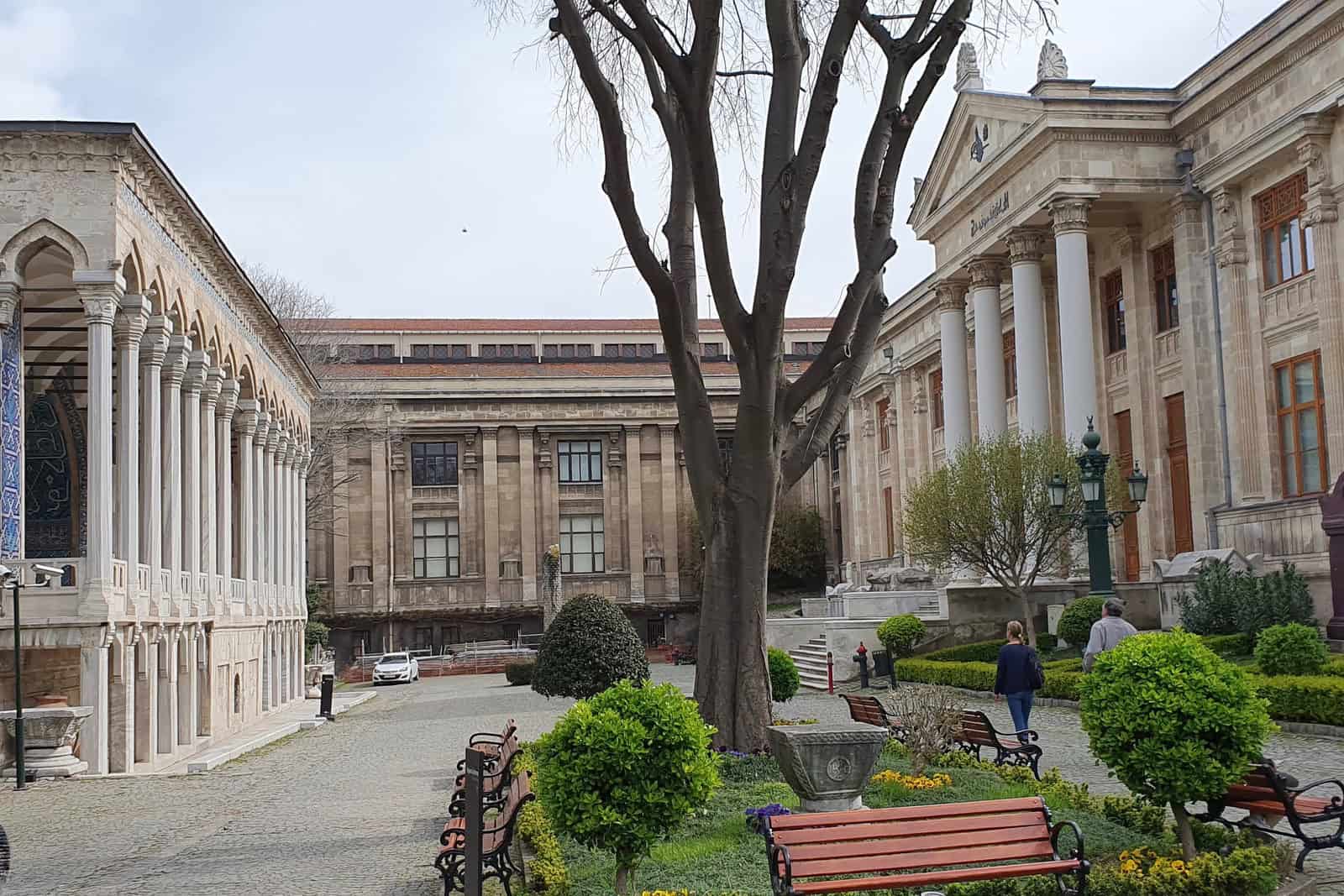
The Istanbul Archaeological Museums, where Türkiye presented the returned antiquities on November 2, 2026. Photograph by Yair Haklai, hosted by Wikimedia Commons, licensed under CC BY-SA 4.0.
The Boubon Exhibition Is a Separate Part of the Event
The November 2 program also opened “No Escape: Boubon,” an exhibition of returned Roman bronzes from the ancient city’s Sebasteion. The available accounts treat the presentation of the 100 antiquities and the opening of the Boubon exhibition as two parts of the same museum event, not as interchangeable object lists.
The physical and laboratory evidence described at the event—including foot-and-base matching and soil and lead-isotope analysis—concerns Boubon. Researchers compared eyewitness accounts, old photographs, and museum records; matched attachment traces on statues’ feet to their bases; and used soil and lead-isotope analysis. Ersoy said the foot mold of the Marcus Aurelius statue corresponded to recesses in its base. Those findings support the Boubon provenance work, but they should not be generalized into a claim that isotope testing established the origin of all 100 newly presented antiquities.
The exhibition brings together works associated with Roman emperors and the imperial family that had been separated after illicit excavations in the 1960s. Its opening alongside the 100-object presentation makes institutional sense: both show how archives, archaeology, and law enforcement can restore an object’s context, not merely change its address.
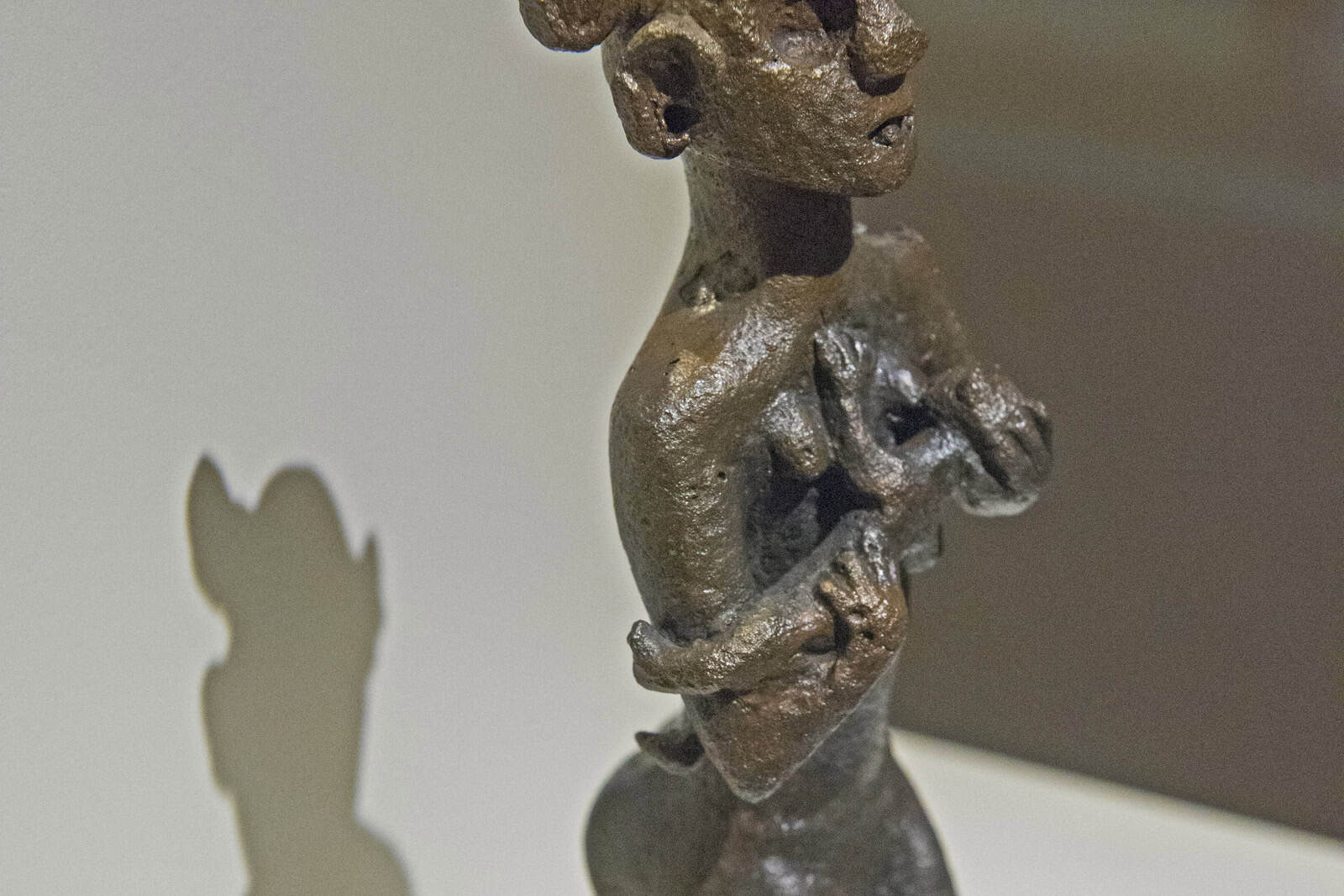
A securely excavated bronze nursing figurine from Horoztepe, shown as archaeological context rather than as one of the 40 newly returned objects. Photograph by Dick Osseman, hosted by Wikimedia Commons, licensed under CC BY-SA 4.0.
What the Records Now Establish
The combined records settle four points that the September announcement alone did not:
- The 100 antiquities legally repatriated in September were publicly presented in Istanbul on November 2.
- The prior-source count is 52 Met objects and 44 Getty fragments, leaving four objects whose U.S. source is not identified in the available announcements.
- The archaeological breakdown identifies 40 Horoztepe objects, 44 Düver plaques and one Aphrodisias portrait, leaving 15 outside those groups; the DA separately describes at least one of them, the bronze Hermes.
- The foot-and-base matching and isotope evidence discussed at the event belongs to the Boubon investigation, which accompanied the unveiling as a separate exhibition.

Isabella studied at the University of Cape Town in South Africa and graduated with a Bachelor of Arts majoring in English Literature & Language and Psychology. Throughout her undergraduate years, she took Art History as an additional subject and absolutely loved it. Building on from her art history knowledge that began in high school, art has always been a particular area of fascination for her. From learning about artworks previously unknown to her, or sharpening her existing understanding of specific works, the ability to continue learning within this interesting sphere excites her greatly.
Her focal points of interest in art history encompass profiling specific artists and art movements, as it is these areas where she is able to really dig deep into the rich narrative of the art world. Additionally, she particularly enjoys exploring the different artistic styles of the 20th century, as well as the important impact that female artists have had on the development of art history.
Learn more about Isabella Meyer and the Art in Context Team.
Choose Art in Context as a preferred source to see more of our reporting in Google Top Stories and other Google Search experiences.
Cite this Article
Isabella, Meyer, “Türkiye Unveils 100 Antiquities Returned From US Collections.” Art in Context. November 3, 2026. URL: https://artincontext.org/turkiye-100-antiquities-returned-us-istanbul/
Meyer, I. (2026, 3 November). Türkiye Unveils 100 Antiquities Returned From US Collections. Art in Context. https://artincontext.org/turkiye-100-antiquities-returned-us-istanbul/
Meyer, Isabella. “Türkiye Unveils 100 Antiquities Returned From US Collections.” Art in Context, November 3, 2026. https://artincontext.org/turkiye-100-antiquities-returned-us-istanbul/.


