

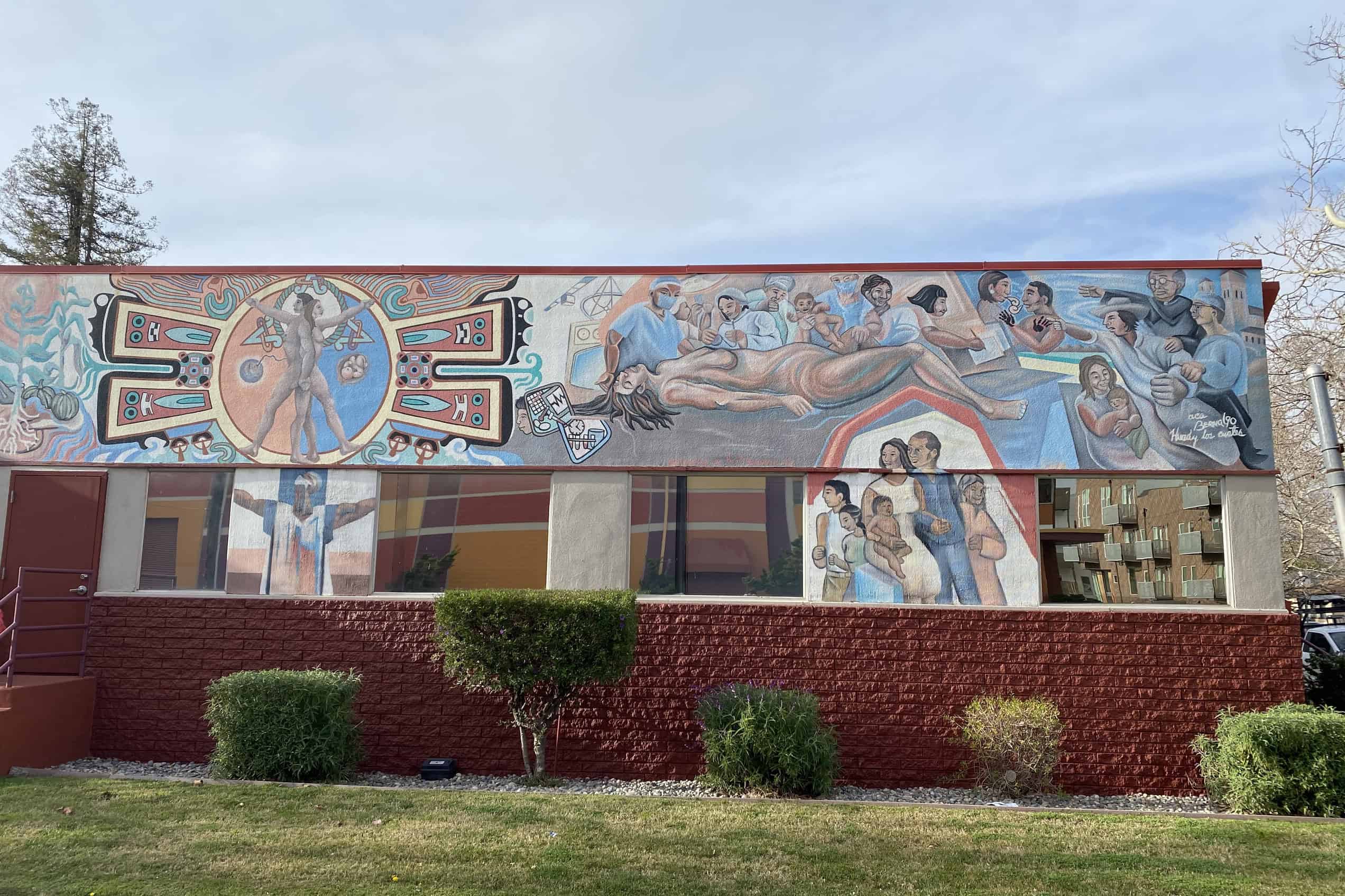
The Alta Opens With a 4,000-Work Chicano Art Collection

AltaMed was scheduled to open The Alta to the public in Montebello, California, on November 15, giving its approximately 4,000-work collection a public-facing center. The significant change is not simply a new gallery: about 1,400 works already circulate through clinics and offices, while the new site adds open storage, conservation visibility, residencies, a library, and exhibitions.
What Opened at The Alta on November 15
AltaMed marked The Alta’s public opening with ¡HOLA ALTA!, a free, all-ages program scheduled from 11 a.m. to 3 p.m. on November 15. The official event listing promised access to the inaugural exhibition, resident artists’ studios, live screen printing, performances, and wellness activities.
The center was not starting from an empty room. An official May 30 report records a VIP preview of Patssi Valdez: LA LA LA and says The Alta was then open by appointment. The exhibition itself is dated May 30, 2026, through April 9, 2027. November 15 was therefore the public launch of an institution already presenting art and receiving limited visitors, not the first day work was installed inside it.
The Alta occupies a converted warehouse at 1401 N. Montebello Boulevard, in a city east of Los Angeles. Its own description combines an exhibition program with an art library, film, education, research, artist residencies, and culturally rooted wellness programming. That mix distinguishes it within the wider landscape of Los Angeles art museums: The Alta grows out of a healthcare provider’s collection rather than a conventional municipal or private museum project.

A 4,000-Work Collection With More Than One Front Door
The institution’s figures and independent reporting show a collection operating across two kinds of public encounter. The Alta lists approximately 4,000 works and 3,200 square feet of exhibition space. The Art Newspaper reports that the full center occupies 30,000 square feet and about 1,400 works are installed in AltaMed clinics and offices.
| Access measure | Verified picture |
|---|---|
| Collection | Approximately 4,000 works |
| Clinics and offices | About 1,400 works |
| Montebello center | 30,000 square feet |
| Exhibition gallery | 3,200 square feet |
| Beyond the gallery | Open storage, conservation and digitization views, library, and studios |
The published totals put roughly 35 percent of the collection in healthcare sites and the dedicated exhibition area at about 11 percent of the Montebello building. Neither percentage is a count supplied by AltaMed or a measure of the share of the collection visible at The Alta. The number of works visible in Montebello at one time has not been published. Open storage and other spaces extend access beyond the formal gallery.
This distributed model matters. A patient may encounter a work without choosing a museum visit; a visitor to The Alta can instead see a curated exhibition, works on storage racks, and parts of the conservation and digitization process. The center does not replace the clinics as the collection’s public surface. It adds a place where the holdings can be studied and interpreted as a collection.
The Collection Has Two Published Starting Points
The chronology is less settled than the current scale. AltaMed’s collection homepage says it has maintained a corporate art collection since the 1980s. The Art Newspaper says collecting began in the 1970s and describes the holdings as more than 50 years in the making. The phrases “began collecting” and “maintained a corporate art collection” may refer to different stages, but neither source explains the distinction. AltaMed says it began collecting art in the 1970s and has maintained a corporate art collection since the 1980s.
Patssi Valdez Makes the Opening an Artistic Argument
The inaugural exhibition keeps the launch centered on an artist, not on institutional branding. The official exhibition record describes LA LA LA as Patssi Valdez’s first solo show in more than a decade. It spans work from the late 1970s to the present and emphasizes photography, collage, installation, and collaborations with rafa esparza and Gabriela Ruiz.
Valdez, a founding member of Asco, helped expand Chicano art through performance and conceptual practice as well as image-making. At The Alta, manipulated photographs, cut and layered paper, found objects, audio, and crystal accents return attention to her early photographic practice and to the underground Chicano and Latino communities of East Los Angeles.
Choosing Valdez also defines how the collection wants to be read. The show does not present Chicano art as a closed historical category. Recent remakings of earlier images and new intergenerational collaborations position it as a living practice in which memory, glamour, urban life, and self-fashioning continue to change form.

A Patssi Valdez display in Tending and Dreaming at the San José Museum of Art. Photo: GualdimG, via Wikimedia Commons, CC BY-SA 4.0.
The Art-and-Health Claim Depends on Access
AltaMed says art is vital to healing and connects The Alta to its work in Latino and other underserved communities. That is the institution’s stated philosophy, not evidence of a measured clinical effect. Its published materials do not provide health-outcome data. The concrete record is instead one of cultural access: art installed in medical facilities, artist-led workshops, creative-aging programs, and now a center where storage, research, exhibitions, and making are brought together.
The residency program makes that bridge visible. Reporting from inside the center describes Felicia Montes and Mujeres de Maíz’s La Botánica del Barrio, an educational apothecary with traditional teas, tinctures, and a decorated pushcart, alongside a Wellness Wall where visitors contribute home remedies and healing practices. These are participatory cultural projects. They show what The Alta means by wellness without turning an institutional mission into a medical claim.
Long-term public access remains the practical test. The Alta’s center page directs visitors to a limited tour waitlist, but no standing weekly timetable was posted on opening day. The Art Newspaper reported that regular visitor hours were planned, but the official pages did not post a standing weekly timetable on opening day. The launch is public; the eventual balance among walk-in access, scheduled tours, and research appointments is not yet defined there.

Work by rafa esparza in Tending and Dreaming at the San José Museum of Art. Photo: GualdimG, via Wikimedia Commons, CC BY-SA 4.0.
The Alta’s Reach Is Already Larger Than Its Gallery
With about 1,400 works installed in clinics and offices, The Alta serves as the hub of a distributed collection, not its only point of contact. The Montebello center adds a 3,200-square-foot gallery, open storage, conservation visibility, a library, studios, and research access.
AltaMed’s own homepage and independent reporting give different decades for the collection’s beginnings. On opening day, the official site had not yet published the regular weekly hours described in advance coverage.

Isabella studied at the University of Cape Town in South Africa and graduated with a Bachelor of Arts majoring in English Literature & Language and Psychology. Throughout her undergraduate years, she took Art History as an additional subject and absolutely loved it. Building on from her art history knowledge that began in high school, art has always been a particular area of fascination for her. From learning about artworks previously unknown to her, or sharpening her existing understanding of specific works, the ability to continue learning within this interesting sphere excites her greatly.
Her focal points of interest in art history encompass profiling specific artists and art movements, as it is these areas where she is able to really dig deep into the rich narrative of the art world. Additionally, she particularly enjoys exploring the different artistic styles of the 20th century, as well as the important impact that female artists have had on the development of art history.
Learn more about Isabella Meyer and the Art in Context Team.
Choose Art in Context as a preferred source to see more of our reporting in Google Top Stories and other Google Search experiences.
Cite this Article
Isabella, Meyer, “The Alta Opens With a 4,000-Work Chicano Art Collection.” Art in Context. November 15, 2026. URL: https://artincontext.org/the-alta-art-center-opens-montebello/
Meyer, I. (2026, 15 November). The Alta Opens With a 4,000-Work Chicano Art Collection. Art in Context. https://artincontext.org/the-alta-art-center-opens-montebello/
Meyer, Isabella. “The Alta Opens With a 4,000-Work Chicano Art Collection.” Art in Context, November 15, 2026. https://artincontext.org/the-alta-art-center-opens-montebello/.


