

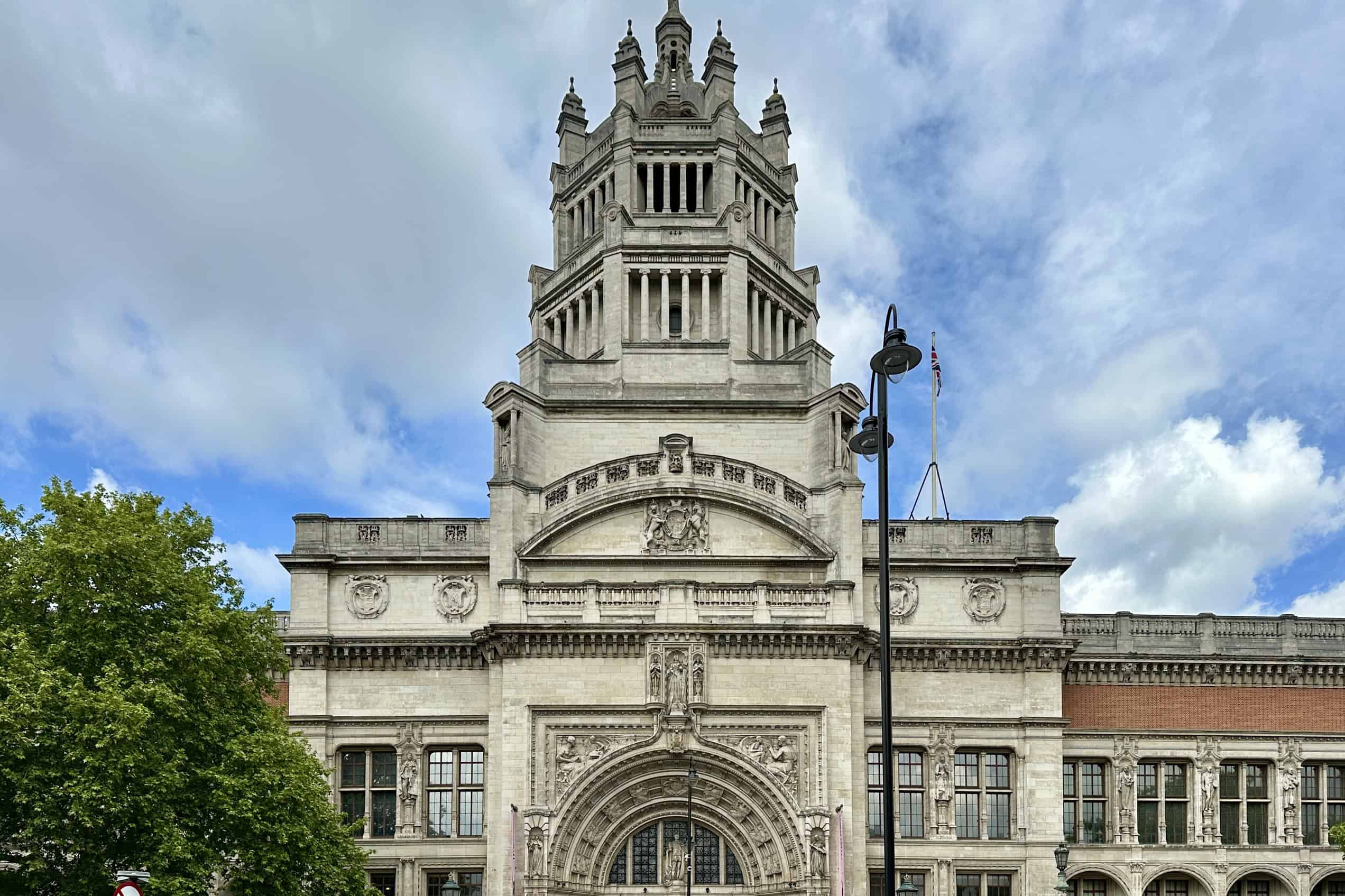
Rediscovered Mia Jackson Self-Portrait Enters the V&A

A rediscovered circa-1858 ambrotype acquired by London’s V&A is now attributed to Maria “Mia” Jackson, not her celebrated sister Julia Margaret Cameron. The small, deliberately staged mirror self-portrait does more than correct a family label: it places Jackson behind the making of a photograph for the first time.
What the V&A Acquired
V&A curator Marta Weiss set out the new attribution in an October 2026 study in The Burlington Magazine. Jackson’s relatives had found the photograph in family papers in summer 2025, inside an envelope marked “Mrs Cam. Self-portrait?” The note pointed toward Julia Margaret Cameron because she was the family’s known photographer. The object itself pointed elsewhere.
The glass plate, about 9.4 by 7.9 centimeters, shows a seated woman looking into an arched dressing mirror. Her reflected face is sharp enough to study, while the side and back of her body appear as softer gray forms. A camera faces the mirror from the center, with a blurred person beside it. The mirror perches on a small table in front of tall glazed doors; its base projects beyond the tabletop, one indication that the room was arranged for the picture.
The V&A acquired the self-portrait together with a smaller ambrotype of an unidentified South Asian woman. A British Photographic History acquisition report says the purchase was funded by the V&A Americas Foundation through Michael G. and C. Jane Wilson.
What an Ambrotype Records
An ambrotype is a collodion negative made on glass that reads as a positive when placed against a dark backing. In Jackson’s photograph, black varnish provides that backing. Unlike an albumen print made from a reusable negative, the image and the camera plate are one object, although copies can in principle be printed from an ambrotype plate.
That physical fact matters to the attribution. This is not a later paper copy that might have lost its original mount or context. Its oval brass surround and velvet-lined half-case belong to the object that passed through the family. Within the wider history of photography, the plate preserves both a finished portrait and evidence of how a wet-collodion picture was staged.

Why the Photograph Is Now Attributed to Mia Jackson
No single clue carries the attribution. The persuasive case is cumulative, and its parts do different jobs: the date and technique weaken the old Cameron label, while provenance and facial comparison identify Jackson positively.
| Test | Observed evidence | What it establishes |
|---|---|---|
| Object date | Case design and a V&A conservator’s examination place it in the late 1850s; the acquisition is dated about 1858. | It probably predates Cameron’s first camera. |
| Cameron record | Her seven exhibited glass positives were shown in 1865; their cataloged titles do not describe this scene. | The family label has no match in that known group. |
| Technique and style | The small, hard-edged ambrotype differs from Cameron’s familiar large, soft-focus paper portraits. | Cameron is an unlikely maker, though difference alone is not proof. |
| Family provenance | The plate remained with Jackson’s direct descendants. | It supplies a documented route back to the sitter’s family. |
| Facial comparison | Weiss compares the reflection with established portraits of Jackson, including one by O.G. Rejlander. | This is the strongest positive evidence for the sitter’s identity. |
| Composition | Woman, mirror, camera, and helper are intentionally included. | The image functions as an assisted self-portrait, not an accidental reflection. |
The table also shows the limit of a purely chronological argument. Cameron engaged with photographs and albums before she owned a camera, so “before 1863” cannot by itself exclude every form of participation. The stronger conclusion comes from combining the plate’s early date with its provenance, its visual mismatch with Cameron, and the resemblance to securely identified images of Jackson.
Why the Cameron Label Was Plausible but Did Not Hold
The V&A’s own biographical account of Julia Margaret Cameron says she received her first camera at age 48. Weiss dates that gift to late 1863 and her “first success” to January 1864. The Jackson ambrotype is likely several years earlier.
Cameron did exhibit seven collodion positives on glass at London’s French Gallery in November 1865, and no surviving examples have been identified. That fact prevents an absolute claim that she never used the format. Yet the exhibition titles refer to other subjects known through albumen prints, not a mirror portrait, and the newly found plate looks unlike the close, soft-focus paper portraits for which Cameron became known.
The envelope’s question mark was therefore appropriate: “Mrs Cam.” was a family hypothesis, not a settled attribution. Weiss’s identification of the sitter as Jackson answers the label with affirmative evidence rather than treating the label’s uncertainty as proof of error.
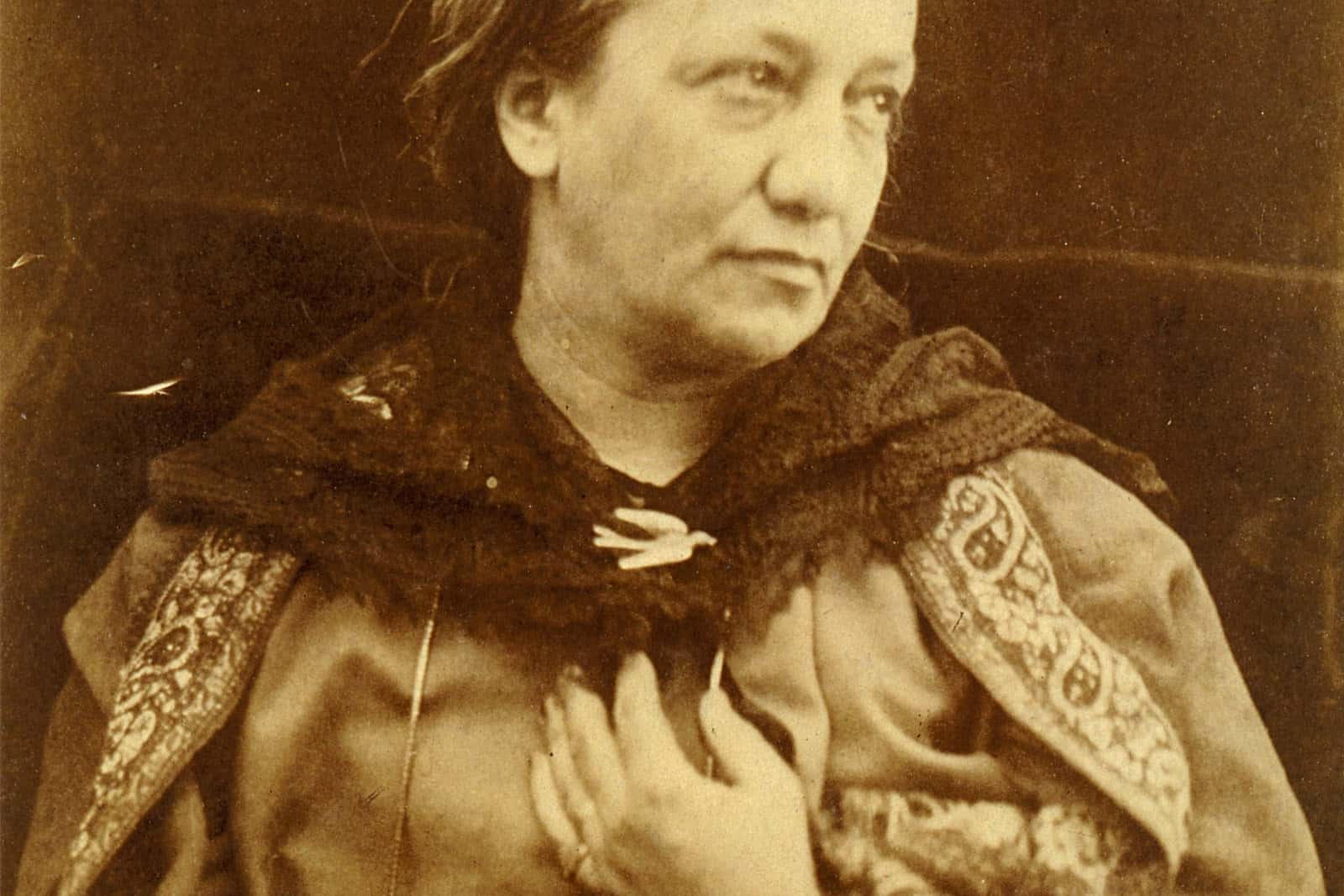
Julia Margaret Cameron in an 1870 albumen portrait by Henry Herschel Hay Cameron. Hosted by Wikimedia Commons; public domain.
The Mirror Is Evidence, Not Just a Prop
Mirrors were familiar studio accessories in nineteenth-century portraiture, often used to add another view of a sitter. Cameras also appeared incidentally when photographs documented mirrors or other reflective objects. Jackson’s plate behaves differently. The camera confronts the mirror squarely at the center, the mirror frames Jackson’s face, and the brass oval around the plate echoes the mirror’s arch.
Even the precarious tabletop placement helps distinguish design from accident. The mirror was carefully arranged to make the apparatus, sitter, and act of looking coexist within a palm-sized object. That is why “exceptionally early” is the defensible description.
The blurred person next to the camera complicates authorship without undoing it. Weiss proposes that this helper removed and replaced the lens cap during the exposure. The surviving image does not identify that person, and it does not show Jackson physically operating the camera. What it does show is Jackson occupying and organizing a self-representational scene whose camera is deliberately visible. “Assisted self-portrait” preserves both facts.
What the Find Changes About a Photographic Family
In 1863, Julia Margaret Cameron gave Jackson a mostly empty album inscribed “For my best beloved sister Mia.” It already held photographs by Rejlander and others; over the following decade, Cameron sent her own prints and directions for adding them. Jackson was consequently visible in photographic history as a recipient, organizer, and subject. The ambrotype supplies evidence that she was also an image-maker.
That revision is narrow but consequential. It does not transfer Cameron’s later body of work to her sister, and it does not yet establish a larger Jackson oeuvre. It changes the available model of creative exchange inside the Pattle family: photography may have moved through experiments, albums, sittings, and shared labor before it crystallized into one celebrated career.
The family connection continued into another generation. Mia’s daughter Julia Jackson became one of Cameron’s recurring sitters and later the mother of Virginia Woolf and Vanessa Bell. The new attribution makes that lineage less like a one-way inheritance from a famous aunt and more like a network in which women posed, selected, circulated, and perhaps made photographs.
The Second Ambrotype Remains Unidentified
The South Asian woman’s portrait was stored in the same envelope, but proximity is not proof of common authorship. Weiss reports substantial differences in size, style, and presentation: Jackson’s self-portrait has a metal surround, while the second plate has a paper mount painted to resemble tooled brass. She considers the maker almost certainly different.
The sitter wears Western-style dress beneath an Indian shawl draped over her head and lap. Mia and her sisters grew up between Calcutta and Versailles; Mia’s husband, Dr. John Jackson, worked for the East India Company, and photographs and drawings circulated through the family while its members lived across India, Britain, and continental Europe. That history supplies a route by which the portrait could have entered the papers, not an identity. The woman’s name, the maker, and the circumstances of the sitting remain unknown.
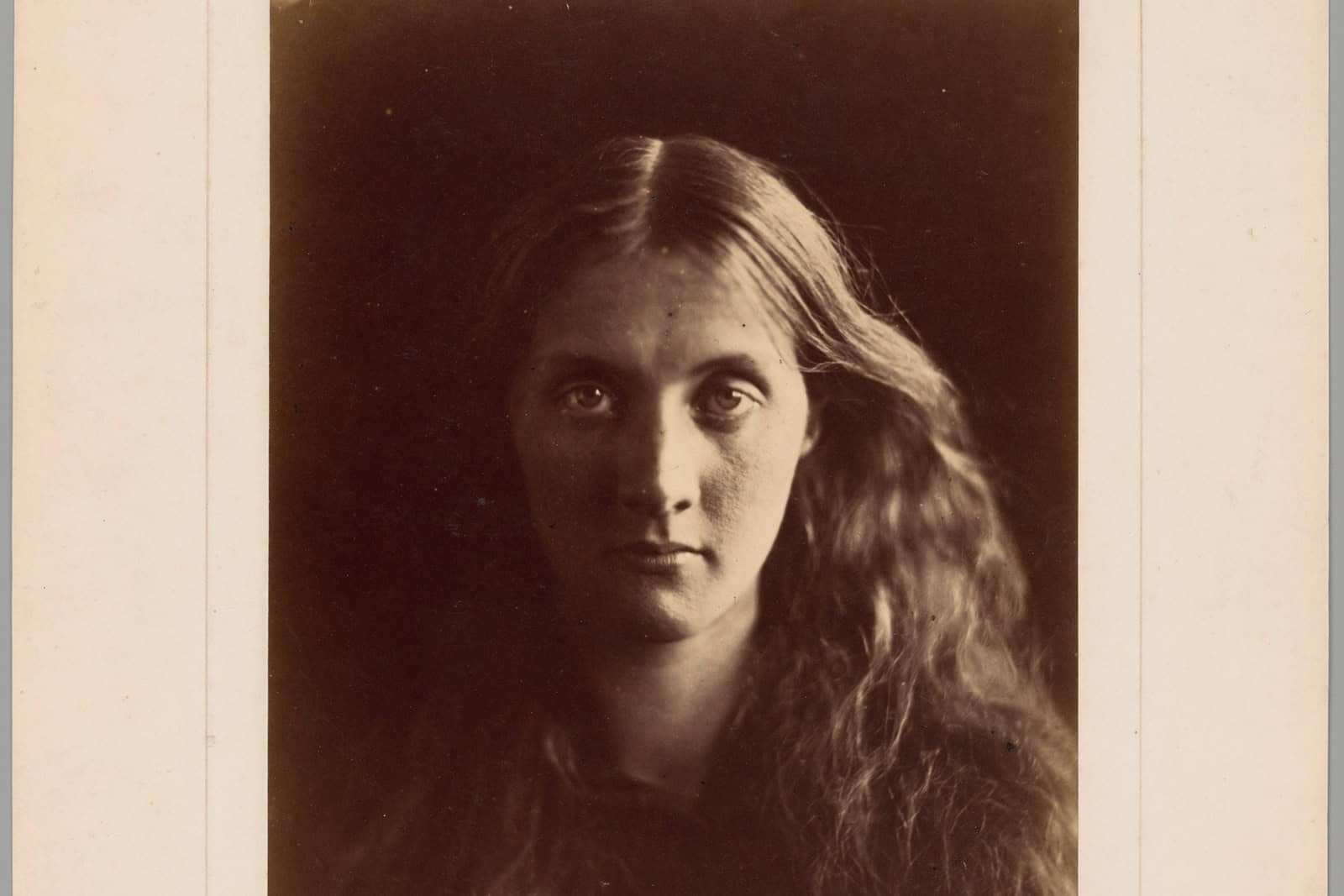
Julia Jackson in an 1867 albumen portrait by Julia Margaret Cameron. Hosted by Wikimedia Commons; CC0 1.0.
What the Evidence Establishes
- The V&A’s circa-1858 ambrotype is attributed to Mia Jackson on a cumulative case led by facial resemblance, direct family provenance, object dating, and a mismatch with Cameron’s known chronology and practice.
- The centered camera, deliberately placed mirror, and structured reflection support Weiss’s interpretation of the image as an assisted self-portrait rather than an incidental camera reflection.
- The photograph identifies Jackson as an image-maker for the first time, but it does not establish who handled the lens cap or whether more photographs by her survive.
- The second ambrotype belongs to the same family discovery, yet its sitter and maker remain unidentified and its different construction argues against simply assigning it to Jackson.

Isabella studied at the University of Cape Town in South Africa and graduated with a Bachelor of Arts majoring in English Literature & Language and Psychology. Throughout her undergraduate years, she took Art History as an additional subject and absolutely loved it. Building on from her art history knowledge that began in high school, art has always been a particular area of fascination for her. From learning about artworks previously unknown to her, or sharpening her existing understanding of specific works, the ability to continue learning within this interesting sphere excites her greatly.
Her focal points of interest in art history encompass profiling specific artists and art movements, as it is these areas where she is able to really dig deep into the rich narrative of the art world. Additionally, she particularly enjoys exploring the different artistic styles of the 20th century, as well as the important impact that female artists have had on the development of art history.
Learn more about Isabella Meyer and the Art in Context Team.
Choose Art in Context as a preferred source to see more of our reporting in Google Top Stories and other Google Search experiences.
Cite this Article
Isabella, Meyer, “Rediscovered Mia Jackson Self-Portrait Enters the V&A.” Art in Context. October 9, 2026. URL: https://artincontext.org/mia-jackson-self-portrait-va-acquisition-2026/
Meyer, I. (2026, 9 October). Rediscovered Mia Jackson Self-Portrait Enters the V&A. Art in Context. https://artincontext.org/mia-jackson-self-portrait-va-acquisition-2026/
Meyer, Isabella. “Rediscovered Mia Jackson Self-Portrait Enters the V&A.” Art in Context, October 9, 2026. https://artincontext.org/mia-jackson-self-portrait-va-acquisition-2026/.


