


Heidelberg Finds Hand-Signed Renoir Proof Once Dismissed as Fake

A sheet that Heidelberg University says a New York gallery once rejected as a fake has been identified by university researchers as a rare, hand-signed proof of Pierre-Auguste Renoir’s Jeune femme en buste (Amélie Diéterle). The reversal matters because the sheet’s apparent anomalies—a missing gray printing stage and an unusual signature—are now the evidence for its place in Renoir’s printmaking process.
From a Rejected Drawing to a Renoir Proof
Heidelberg University announced the finding on November 10, 2026. That is the announcement date, not the date of discovery: the university has not said when the team reached its final conclusion. Tagesschau published an SWR report on November 11 that relayed Heidelberg University’s account of the attribution.
The private owner had received the sheet in the 1970s from the estate of a gallerist friend. At an unspecified later point, a New York gallery judged it to be a forgery. Neither Heidelberg nor SWR has named that gallery, dated its examination, or published its reasoning, so the old rejection cannot be treated as a documented technical opinion.
In 2023, during a household clearance, the owner offered the work to Henry Keazor, founder of Heidelberg’s forgery study collection, HeFäStuS. Keazor’s first observation changed the question: the object was not an original pencil drawing at all, as it had been described, but a print. He and students at the Institute for European Art History then searched the graphic work of Pierre-Auguste Renoir for the composition.
They matched it to Jeune femme en buste, a portrait of the French actress and singer Amélie Diéterle associated with the 1899 Germinal portfolio. That portfolio was issued in 100 copies and contained 20 prints, including original works by Renoir and Toulouse-Lautrec as well as lithographic reproductions after Degas and Van Gogh by Auguste Clot and Emil Rudolf Weiss. The match established the image, but not yet the status of the Heidelberg sheet.

Why the Missing Printing Stone Became Evidence
In lithography, separate stones can carry separate tonal information. According to Keazor’s account, the familiar Germinal impression used two stones: one printed the black values and the other the gray. The Heidelberg sheet was pulled from only one of them. It therefore lacks part of the tonal structure expected in the finished edition—exactly the kind of difference that can make an unfamiliar state look wrong beside a standard impression.
The signature supplied a second distinction. On portfolio impressions, “Renoir” is part of the printed image. On the Heidelberg sheet it was drawn by hand in black grease chalk. Keazor’s explanation is that the printed signature belonged to the stone not used for this trial pull, so Renoir added it manually. That conclusion is the researchers’ attribution, supported by the physical comparison; no autograph committee or catalogue raisonné author is named in the announcement.
Microscopic examination also revealed the characteristic structure linked to the autotype paper Renoir used when preparing the image for the two stones. Heidelberg says international specialists supported the conclusion, although its release does not identify them or publish their individual opinions. Paper analysis, microscopy, the one-stone state, and the hand-applied signature therefore form a cumulative case rather than a verdict resting on the signature alone.
A completed impression in the Städel Museum’s collection makes the comparison more concrete. Its sheet measures 533 by 402 millimeters, carries a signature printed in the stone, bears the publisher’s LMM stamp, and is numbered 2/100. Heidelberg gives its proof as 53 by 40 centimeters—virtually the same sheet size—but describes neither an edition number nor the publisher’s stamp. Matching dimensions support a relationship to the edition; different inscriptions support Heidelberg’s conclusion that this is not one of the 100 portfolio copies.
The date needs similar precision. Heidelberg says the proof was made “around 1899,” and the Städel ties its numbered impression to the 1899 Germinal portfolio. The National Gallery of Art and Princeton University Art Museum, however, catalogue impressions of the same composition as 1892. Those records do not invalidate the attribution, but they do mean that 1899 should be understood as Heidelberg’s approximate date and the portfolio’s publication year, not as an uncontested date for the image’s first creation.
Amélie Diéterle Was More Than an Anonymous Model
The identification also restores the sitter’s name. Amélie Diéterle (1871–1941) was an actress and singer, not simply a generic “young woman.” Renoir returned to her likeness in other media, and the title used by Heidelberg places her identity at the center of the sheet rather than treating the work as an anonymous type.
A later pastel portrait, dated to about 1910, shows that Diéterle remained a subject for Renoir beyond the lithographic composition. The repetition matters here because it anchors the newly authenticated proof in an extended artist-model relationship, while the evidence for this particular sheet still comes from its printing state and material examination.
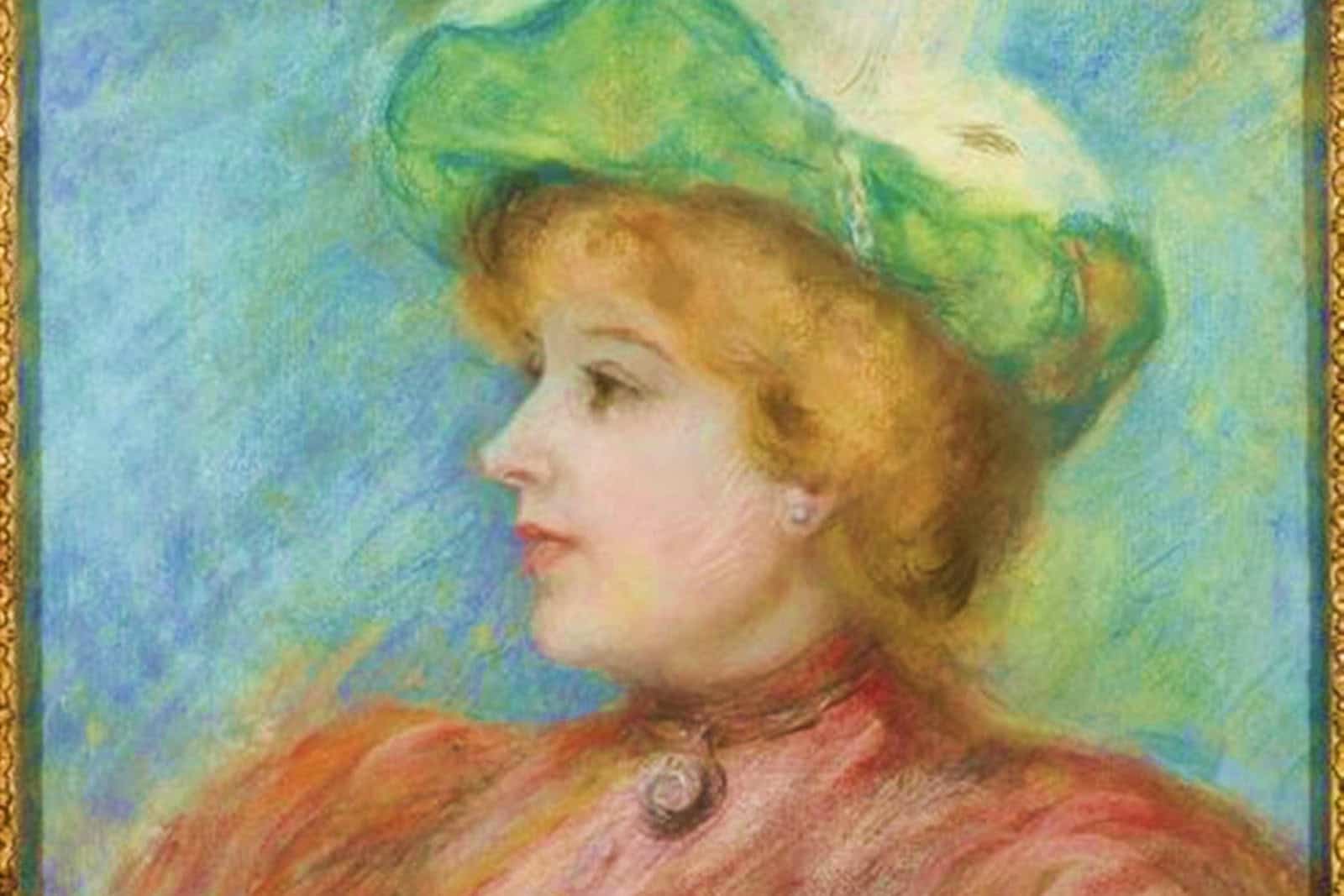
Pierre-Auguste Renoir, Portrait of Mademoiselle Amélie Diéterle, circa 1910, Musée Antoine-Lécuyer. Hosted by Wikimedia Commons. Creative Commons Public Domain Mark 1.0.
The Public Debut Begins November 27, Not November 26
Heidelberg’s November 10 release gives the exhibition run as November 26, 2026, through March 21, 2027. The official Heidelberg museum calendar separates the events more precisely: Keazor’s opening lecture is scheduled for 7 p.m. on November 26, while the Rätsel um Renoir cabinet exhibition runs from November 27 through March 21. For visitors, November 27 is the first listed exhibition day.
The presentation at the Kurpfälzisches Museum will place the proof beside other material, including a drawing that HeFäStuS considers an actual Renoir forgery. That comparison should let viewers see why an anomalous printing state cannot be judged by appearance alone. The museum says the display will compare print states and explain the features used to distinguish originals from fakes.
The sheet’s destination after March 21 remains unsettled. Heidelberg says its future will be decided in consultation with the previous owner. No permanent acquisition, sale, donation, valuation, or long-term display location has been announced.
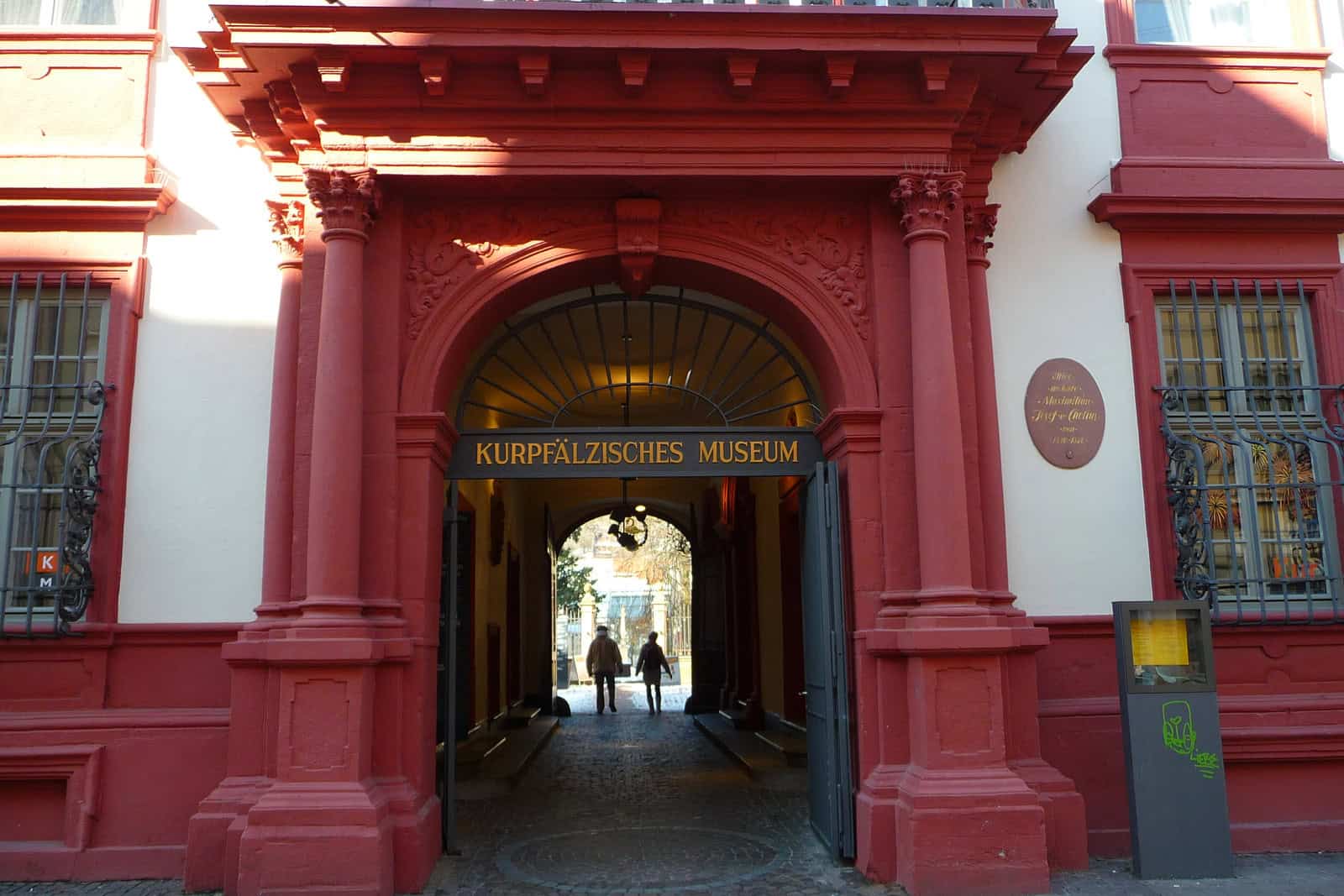
The entrance of the Kurpfälzisches Museum, Heidelberg. Photograph by 4028mdk09, 2010, via Wikimedia Commons. CC BY-SA 3.0.
A One-Stone Proof, Not a Germinal Edition Copy
Heidelberg researchers attribute the sheet to Renoir as a one-stone trial impression related to Jeune femme en buste, with a signature they say he applied by hand.
The Städel record independently supplies the clearest published comparison: nearly identical dimensions, but a printed signature, publisher’s stamp, and edition number on its Germinal copy.
The museum calendar corrects the practical date in the university release: the opening talk is November 26, while public exhibition hours begin November 27.
What remains unknown is ownership after the show. The work has moved from a blanket “fake” label to a technically argued attribution, but its next custodian and any market value have not been disclosed.

Isabella studied at the University of Cape Town in South Africa and graduated with a Bachelor of Arts majoring in English Literature & Language and Psychology. Throughout her undergraduate years, she took Art History as an additional subject and absolutely loved it. Building on from her art history knowledge that began in high school, art has always been a particular area of fascination for her. From learning about artworks previously unknown to her, or sharpening her existing understanding of specific works, the ability to continue learning within this interesting sphere excites her greatly.
Her focal points of interest in art history encompass profiling specific artists and art movements, as it is these areas where she is able to really dig deep into the rich narrative of the art world. Additionally, she particularly enjoys exploring the different artistic styles of the 20th century, as well as the important impact that female artists have had on the development of art history.
Learn more about Isabella Meyer and the Art in Context Team.
Choose Art in Context as a preferred source to see more of our reporting in Google Top Stories and other Google Search experiences.
Cite this Article
Isabella, Meyer, “Heidelberg Finds Hand-Signed Renoir Proof Once Dismissed as Fake.” Art in Context. November 12, 2026. URL: https://artincontext.org/heidelberg-renoir-proof-dismissed-fake/
Meyer, I. (2026, 12 November). Heidelberg Finds Hand-Signed Renoir Proof Once Dismissed as Fake. Art in Context. https://artincontext.org/heidelberg-renoir-proof-dismissed-fake/
Meyer, Isabella. “Heidelberg Finds Hand-Signed Renoir Proof Once Dismissed as Fake.” Art in Context, November 12, 2026. https://artincontext.org/heidelberg-renoir-proof-dismissed-fake/.


