
Found Object Art – A Look at the Found Object Art Movement

Found Object Art uses pre-existing natural or manufactured things as artistic material. The decisive act may be selection, relocation, combination, alteration, titling, or institutional display. From Marcel Duchamp’s readymades to assemblage, Surrealist objects, appropriation, and contemporary installation, the practice asks how context and authorship change what an object means.
What Is Found Art?
Found Object Art—also called found art or objet trouvé—is not one unified movement with a single start date. It is a broad artistic strategy that became central to 20th-century art. An artist takes something that already exists and makes its selection, arrangement, transformation, or presentation part of the work.
The object can be manufactured, discarded, purchased, collected, or found in nature. It may remain almost unchanged, become one element in an assemblage, or be reproduced in another material. Photographs, newspaper fragments, packaging, furniture, tools, clothing, and digital files can all function as found material.
Found Art in a Nutshell
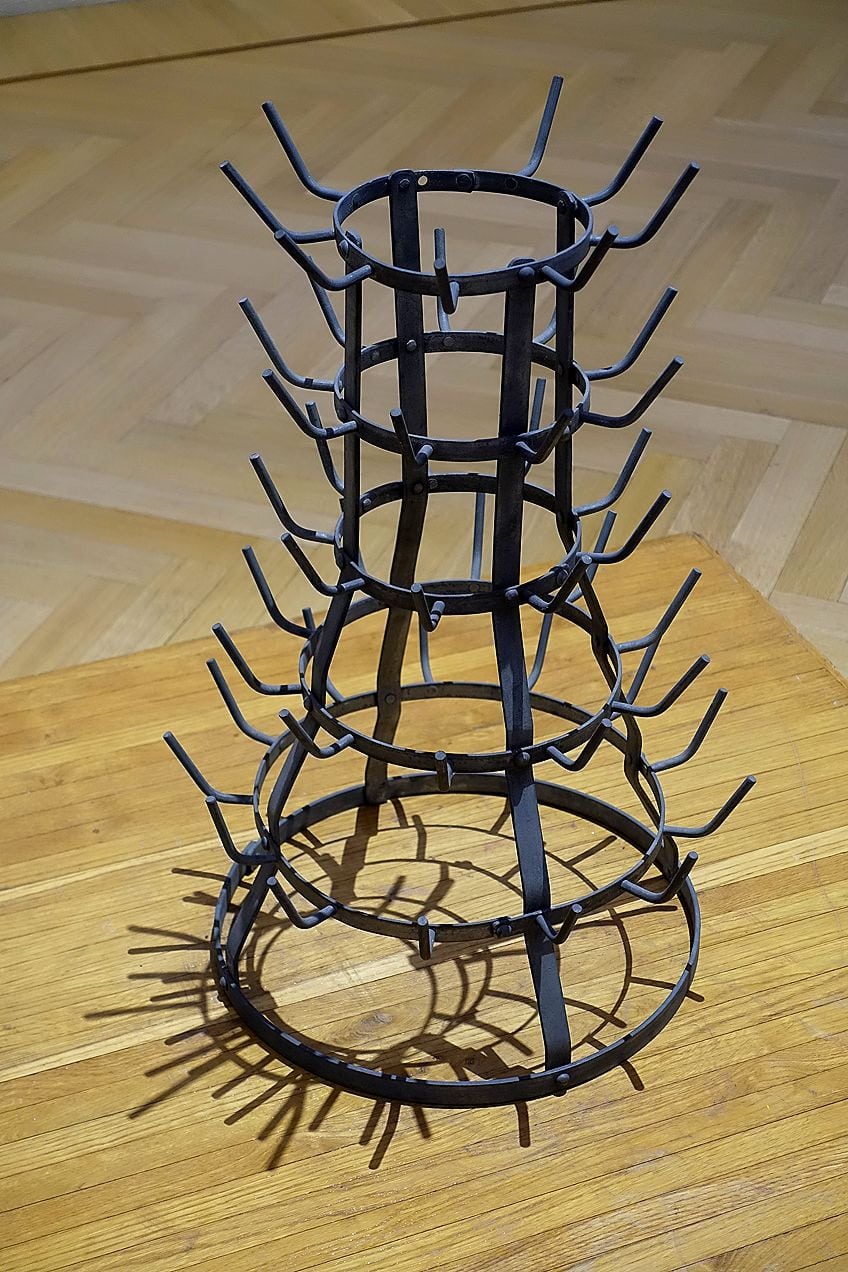
The central question is not simply whether the artist fabricated the object. It is what the artist’s choice, framing, title, and context ask the viewer to notice. Moving a bottle rack from a shop or studio into an exhibition can interrupt its practical use and make its form, associations, and institutional status newly visible.
Selection alone does not automatically make every object a compelling artwork. Meaning also depends on the historical situation, the artist’s stated or implied proposition, the exhibition context, and the viewer’s interpretation. Found Object Art therefore shifts attention from manual skill alone toward authorship, classification, originality, labor, value, and the authority of museums.
Dada provided an important setting for this challenge during and after World War I, while Cubist collage had already brought manufactured materials into pictures. Surrealists later selected and combined objects to activate desire, chance, humor, and the unconscious. After 1945, assemblage, Neo-Dada, Pop Art, Fluxus, Arte Povera, feminist art, installation, and conceptual practices extended these methods.
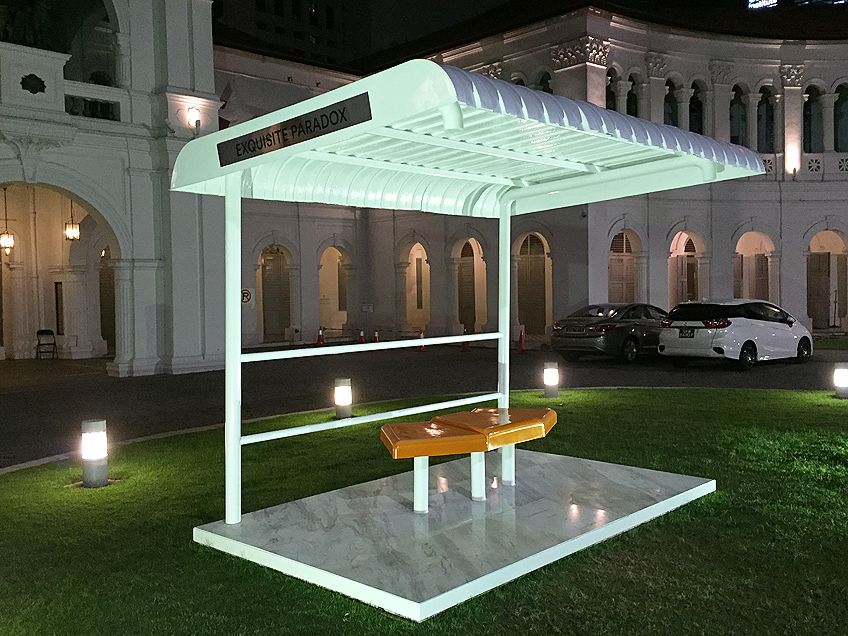
Earlier collections such as cabinets of curiosity included unusual natural and human-made objects, but they should not be called Found Object Art in the modern sense without qualification. Their collecting and display practices form a useful prehistory; the modern artistic argument about choice, authorship, and art institutions is different.
Found Object Art does not erase making; it relocates making into selection, framing, arrangement, alteration, interpretation, and the social systems that declare something art.
Key Terms
The terms overlap, but they are not interchangeable. The most useful distinction is between the object’s source, the artist’s operation, and the claim the finished work makes.
| Term | What It Usually Describes | Typical Artist Action | Important Limit |
|---|---|---|---|
| Found object / objet trouvé | A pre-existing thing used as art or material | Select, relocate, alter, or combine | Broad category, not one historical movement |
| Readymade | Duchamp’s term for selected manufactured objects | Choose, title, sign, reorient, or minimally alter | Historically specific even when used more broadly today |
| Assemblage | A work built from multiple three-dimensional elements | Join, arrange, construct | Its parts need not all be found |
| Appropriation | Reuse of existing images, objects, or cultural forms | Quote, copy, remake, or recontextualize | Raises separate questions of authorship, power, and rights |
Assemblage
Assemblage is the construction of a work from disparate, usually three-dimensional elements. Those elements may be found, bought, fabricated, or all three. It differs from a readymade because the artist typically builds a new configuration rather than presenting one manufactured object largely as selected.
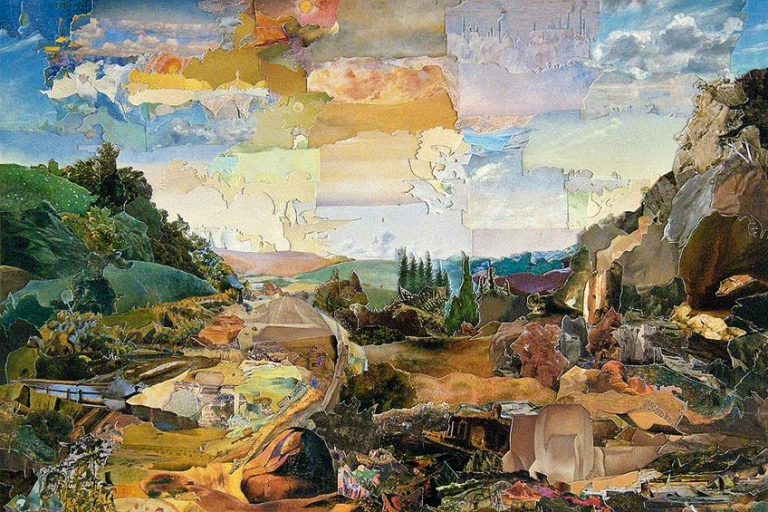
Picasso’s Still Life with Chair Caning (1912) is more precisely a collage or mixed-media work than a fully three-dimensional assemblage: printed oilcloth was attached to canvas and the oval support was edged with rope. It is important because manufactured material enters the pictorial field as both thing and representation. Later assemblage artists pushed this logic into relief and sculpture.
Ready-Made
“Readymade” is Marcel Duchamp’s term for ordinary manufactured objects selected and presented as art. Bicycle Wheel (1913) joins a bicycle wheel and fork to a stool and is often called an assisted readymade; Bottle Rack (1914) is closer to an unaltered readymade. The original objects were lost, and many museum examples are later replicas or authorized versions, making copy and originality part of the works’ histories.
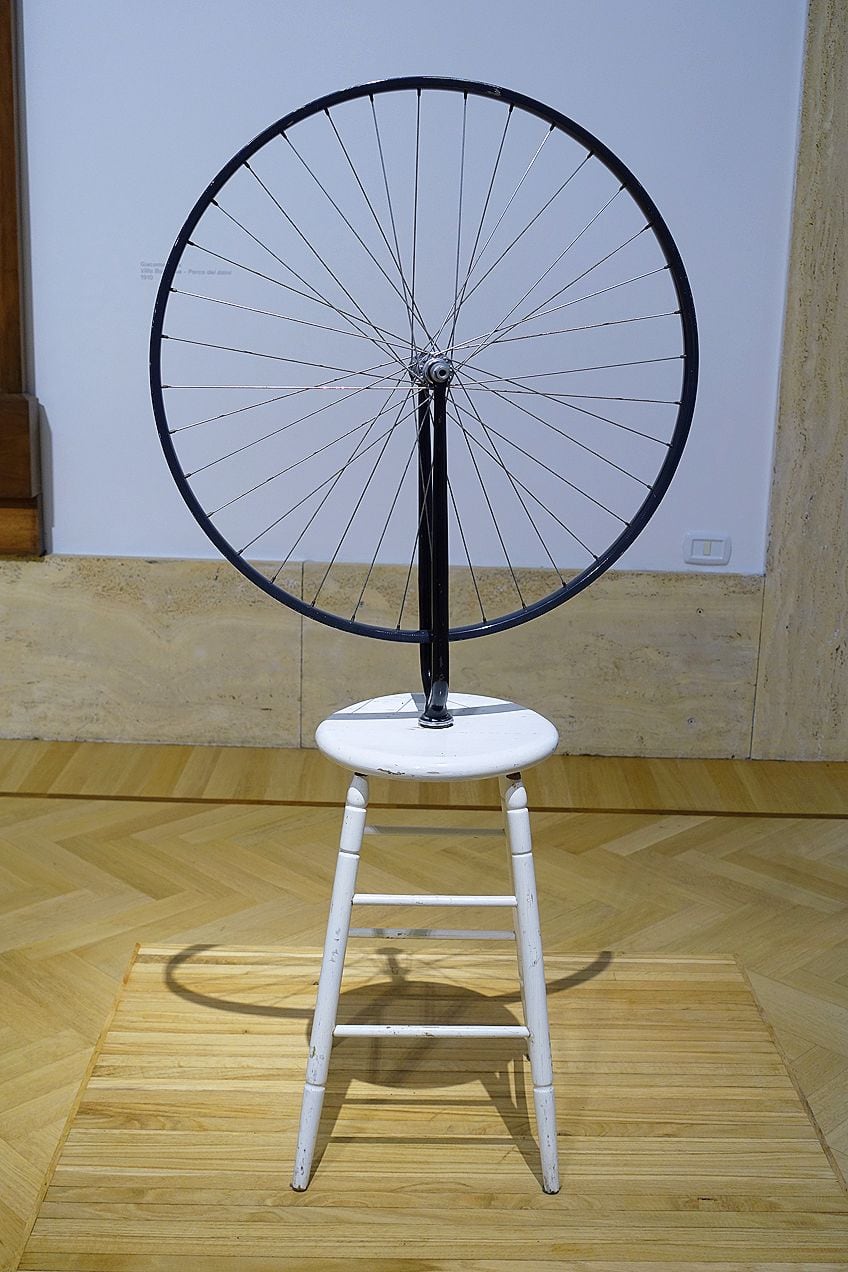
Duchamp’s gesture did more than cancel an object’s utility. It questioned artistic taste, originality, craftsmanship, ownership, exhibition rules, and the museum’s power to confer status. Readymades are therefore not best reduced to “anything is art”; they are structured provocations about the conditions under which something is encountered as art.
Appropriation
Appropriation is broader than using an unchanged object. Artists may quote, copy, photograph, reproduce, or remake existing images and works. The strategy can expose how originality and authority are constructed, but it can also raise ethical and legal questions about consent, cultural power, and copyright.
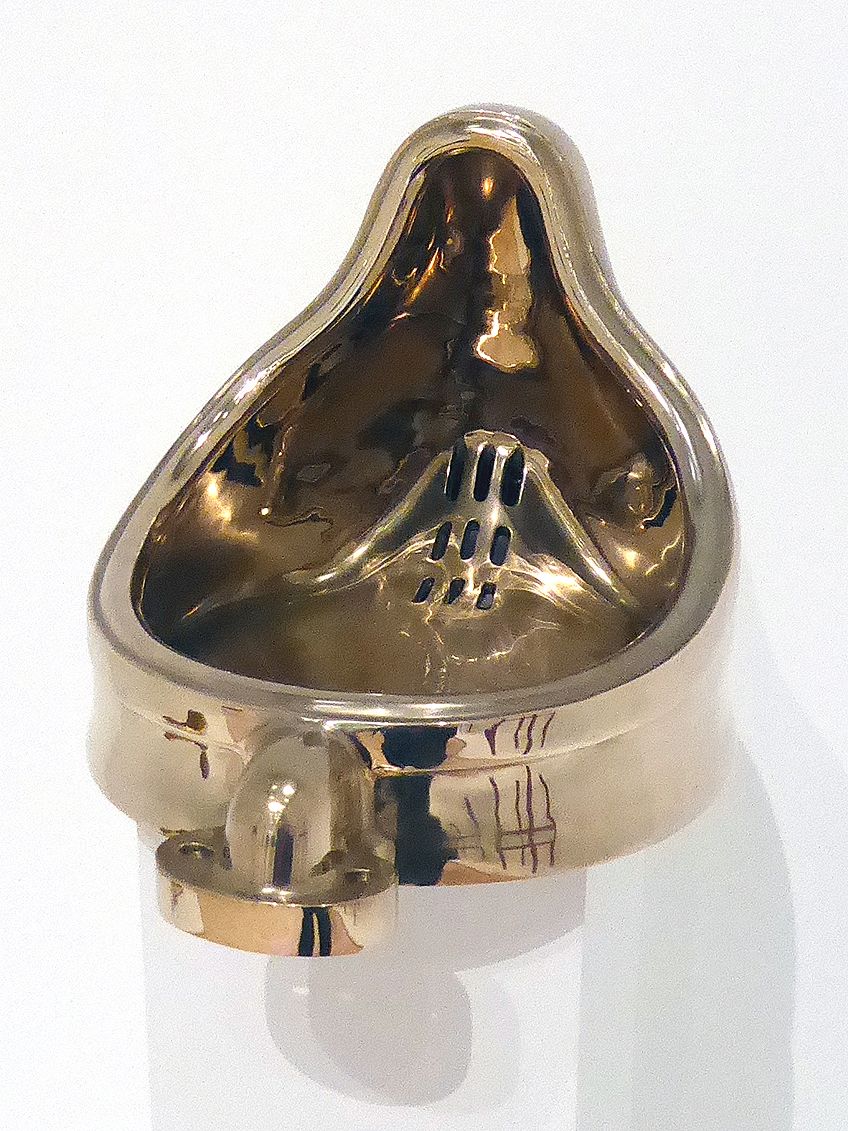
Sherrie Levine’s Fountain (Buddha) (1996) is not a found porcelain urinal. It is a polished bronze cast that remakes Duchamp’s readymade as a conventionally precious sculpture. The shift in material and authorship tests whether the once-radical readymade has itself become a canonical art object and examines the dominance of male artists in standard art histories.
Key Principles
Four operations clarify how found-object works create meaning:
- Selection: choosing one object rather than another.
- Displacement: moving it away from its usual function or setting.
- Transformation: altering, combining, reproducing, or arranging it.
- Framing: using a title, pedestal, label, photograph, or exhibition to guide interpretation.
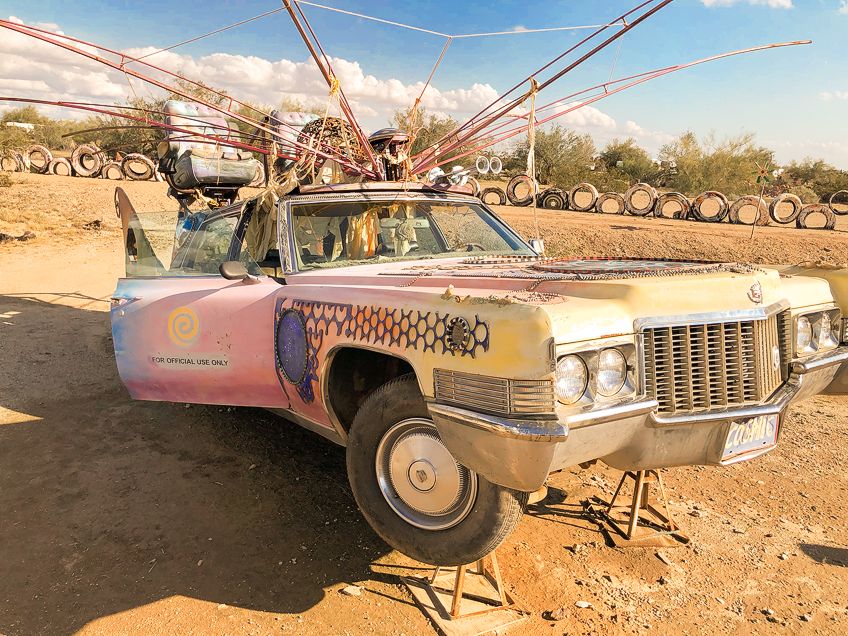
Not every work uses all four operations. An assemblage may depend on construction; a readymade may depend on selection and displacement; an appropriation work may depend on copying and critical comparison. This framework is more reliable than the claim that naming alone turns an object into art.
Material history remains visible. Wear, dirt, branding, prior use, and damage can carry social information about labor, class, consumption, waste, or personal memory. Contemporary artists also use salvaged material to address environmental extraction and disposal, but found material is not automatically sustainable: fabrication, transport, hazardous substances, conservation, and eventual storage still matter.
Notable Artists
Pablo Picasso and Georges Braque introduced newspaper, wallpaper, oilcloth, and other manufactured fragments into Cubist collage. Their works did not make every later found-object strategy inevitable, but they broke the visual boundary between representation and material reality.
Marcel Duchamp gave the selected manufactured object a historically specific name and conceptual force through his readymades. His key examples include Bicycle Wheel (1913), Bottle Rack (1914), In Advance of the Broken Arm (1915), and Fountain (1917). The surviving museum versions often postdate the lost originals, so replication is integral to their reception.
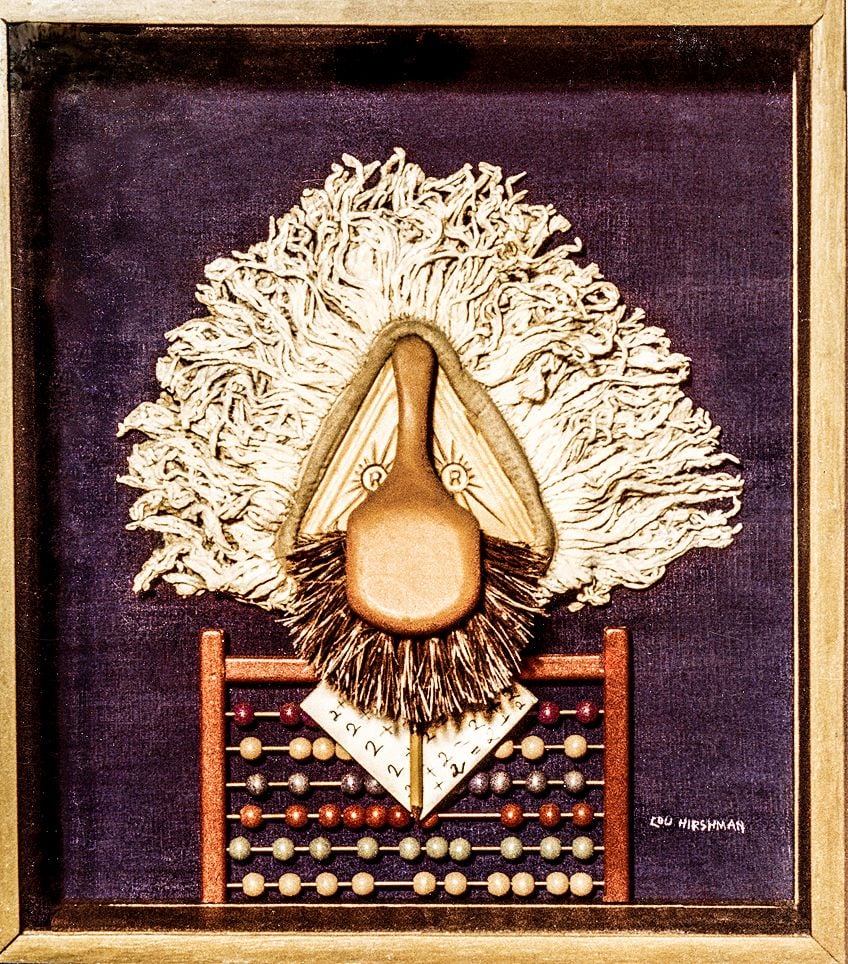
Man Ray and Surrealist artists explored altered and unexpected objects; Kurt Schwitters built collages and constructions from discarded printed matter and urban debris; Joseph Cornell arranged found materials in boxes; Robert Rauschenberg combined painting with everyday things; Louise Nevelson assembled wooden fragments into architectural reliefs.
Later practices broadened the questions. Arman accumulated consumer goods; Betye Saar transformed found images and objects into works about race, gender, spirituality, and memory; David Hammons used materials charged by Black urban life; Sarah Lucas, Bill Woodrow, Michael Landy, and Tracey Emin redirected domestic and consumer objects. These artists do not form one continuous “Found Art movement.” They use related operations for different historical purposes.
The legacy of the found object is not one style but a durable method for testing how objects acquire value, history, identity, and authority.
Major Artworks
The following works demonstrate three different operations: the selected readymade, the Surrealist composite object, and the autobiographical installation. They should not be treated as interchangeable examples of one movement.
The Fountain (1917) – Marcel Duchamp
Fountain was a manufactured urinal turned on its side, signed “R. Mutt 1917,” and submitted to the Society of Independent Artists exhibition in New York. Despite the society’s stated open-entry policy, it was withheld from display. The original was soon lost; Alfred Stieglitz’s 1917 photograph and later authorized replicas became central to the work’s history.
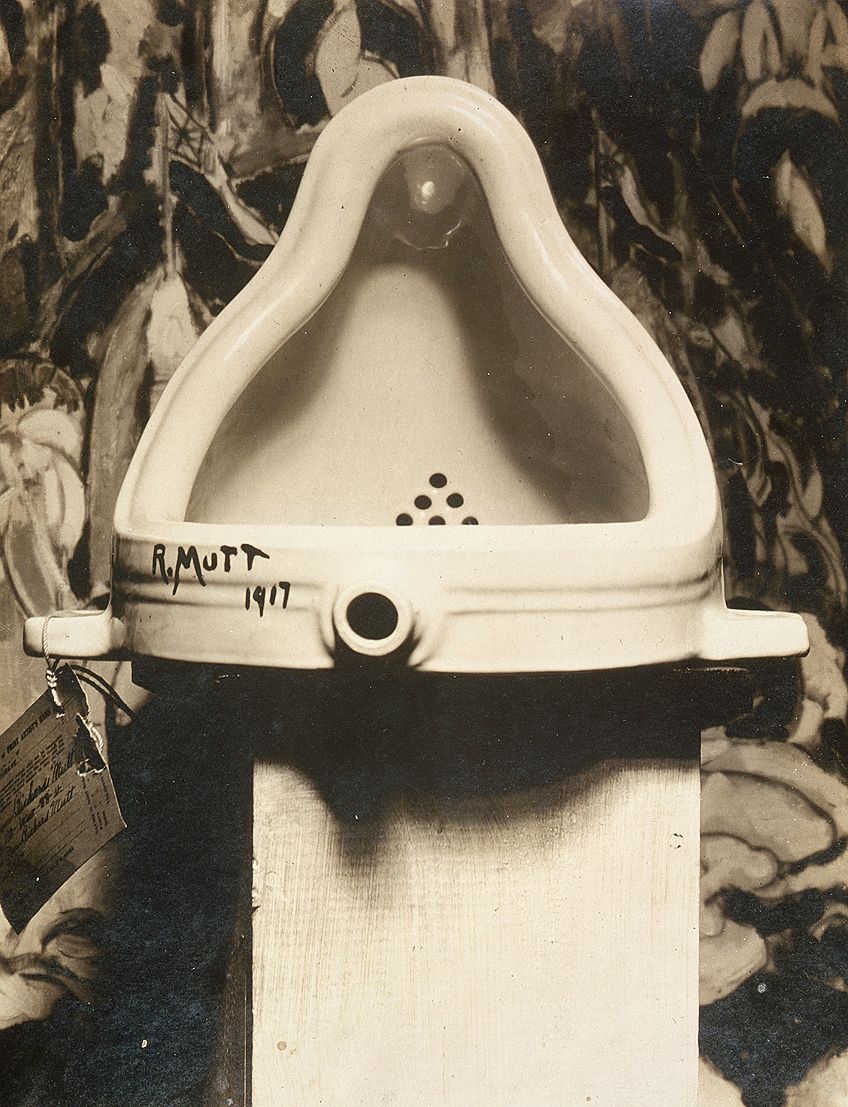
The work tests more than shock. Its pseudonym complicates attribution, its orientation changes bodily and sculptural associations, and its submission exposes the institution’s boundary-setting role. Because the original disappeared, the photograph, printed debate, replicas, and repeated retellings are not secondary details: they are the channels through which Fountain became canonical.
The supplied image is Stieglitz’s photograph of the 1917 object, not a photograph of one of the later full-size replicas. Museum labels should distinguish these versions clearly.
Lobster Telephone (1938) – Salvador Dali
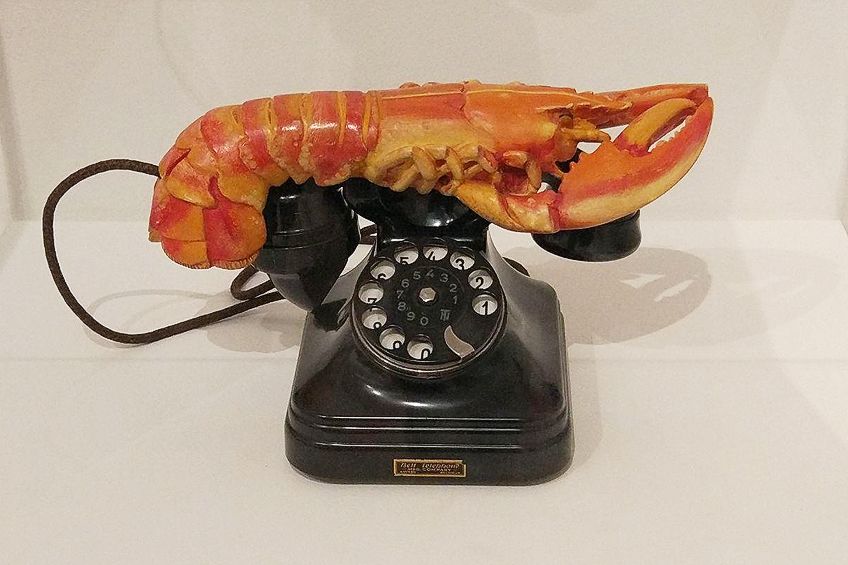
Lobster Telephone was created by Salvador Dalí and patron-poet Edward James in multiple versions. A plaster lobster rests on a functioning telephone, bringing together two familiar things in an impractical, erotic, humorous, and unsettling relationship. Tate dates its colored example to 1938.
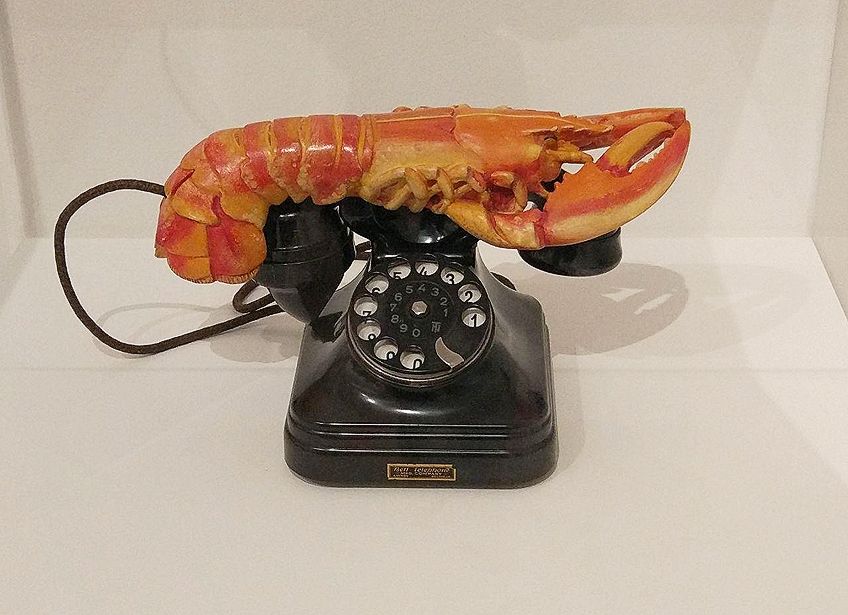
This is a Surrealist composite object, not a readymade in Duchamp’s strict sense. Its effect depends on combination and substitution: the lobster occupies the handset, while its tail lies over the mouthpiece. The work extends Dalí’s recurring association of lobsters with desire and danger without requiring one fixed symbolic translation.
My Bed (1998) – Tracey Emin
Tracey Emin first made My Bed in 1998 and exhibited it in the 1999 Turner Prize presentation, for which she was shortlisted but did not win. The installation includes her unmade bed and surrounding personal materials, presented after a period of emotional crisis.
Unlike an isolated readymade, My Bed is an arranged autobiographical environment. Its force comes from the tension between evidence and staging: the objects appear intimate and ordinary, yet their transfer into a gallery makes privacy, shame, gender, care, and spectatorship public questions.
The work was controversial, but disgust is not its only meaning. It also asks whose domestic experience is considered culturally significant, how authenticity is performed, and how museums conserve installations made from changing everyday materials.
Found Object Art matters because it makes the systems around objects—selection, ownership, display, memory, and interpretation—part of the artwork itself.
Frequently Asked Questions
Why Is Found Object Art Controversial?
Found Object Art can be controversial because it challenges expectations about skill, originality, ownership, value, and who has authority to define art. Particular works may also use intimate, taboo, politically charged, or culturally sensitive materials.
When Did the Found Object Art Movement Start?
Found Object Art is better understood as a strategy than one movement. Cubist collage introduced manufactured materials around 1912, and Duchamp developed the readymade from 1913. Earlier collecting traditions are relevant precedents but are not the same modern artistic practice.
What Is Found Art Sculpture?
Found art sculpture uses pre-existing objects or materials in three dimensions. It can be a largely unaltered readymade, an assisted readymade, an assemblage of multiple parts, or an installation organized around objects and their prior histories.
Can Found Object Art Be Two-Dimensional?
Yes. Newspaper, photographs, packaging, printed images, fabric, and other flat materials can enter collage, photomontage, painting, or conceptual work. “Found object” describes the material’s prior existence, not a required dimension.
Why Do Artists Use Found Objects?
Artists use found objects to redirect attention, question authorship and value, preserve traces of use, address consumption or waste, evoke personal and collective memory, and connect art to everyday social life.

Isabella studied at the University of Cape Town in South Africa and graduated with a Bachelor of Arts majoring in English Literature & Language and Psychology. Throughout her undergraduate years, she took Art History as an additional subject and absolutely loved it. Building on from her art history knowledge that began in high school, art has always been a particular area of fascination for her. From learning about artworks previously unknown to her, or sharpening her existing understanding of specific works, the ability to continue learning within this interesting sphere excites her greatly.
Her focal points of interest in art history encompass profiling specific artists and art movements, as it is these areas where she is able to really dig deep into the rich narrative of the art world. Additionally, she particularly enjoys exploring the different artistic styles of the 20th century, as well as the important impact that female artists have had on the development of art history.
Learn more about Isabella Meyer and the Art in Context Team.
Cite this Article
Isabella, Meyer, “Found Object Art – A Look at the Found Object Art Movement.” Art in Context. June 1, 2021. URL: https://artincontext.org/found-object-art/
Meyer, I. (2021, 1 June). Found Object Art – A Look at the Found Object Art Movement. Art in Context. https://artincontext.org/found-object-art/
Meyer, Isabella. “Found Object Art – A Look at the Found Object Art Movement.” Art in Context, June 1, 2021. https://artincontext.org/found-object-art/.