


Njideka Akunyili Crosby – Biography, Art and Key Works

Njideka Akunyili Crosby constructs large mixed-media pictures in which family life, Nigerian visual culture, and American domestic space occupy the same surface. Her paintings reward two kinds of attention: figures and rooms emerge from across a gallery, while close viewing reveals hundreds of transferred photographs embedded in skin, clothing, furniture, and walls.
Key Takeaways
- Njideka Akunyili Crosby is a Nigerian-American artist born in Enugu, Nigeria, in 1983 and based in Los Angeles.
- She combines acrylic paint, drawing, collage, and solvent-transferred photographs on paper.
- Her image archive includes family snapshots, Nigerian magazines, album covers, advertisements, historical images, and commemorative fabrics.
- Domestic interiors help her examine migration, marriage, memory, postcolonial history, and the construction of identity.
- Important works include Nwantinti, Predecessors, And We Begin to Let Go, Mother and Child, and the ongoing The Beautyful Ones series.
- She received a MacArthur Fellowship in 2017 and created the first official joint portrait of Barack and Michelle Obama in 2026.
Who Is Njideka Akunyili Crosby?
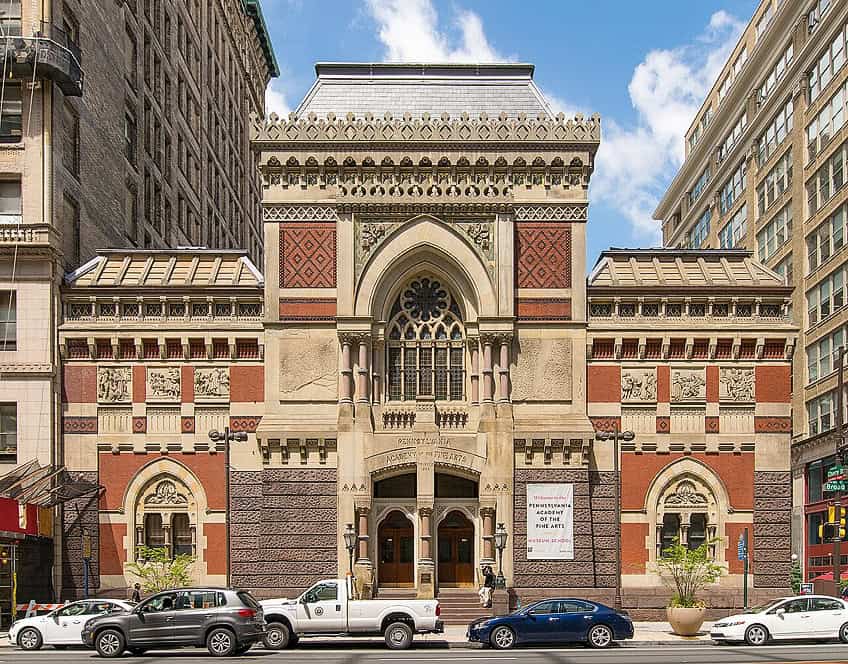
Njideka Akunyili Crosby was born in Enugu in 1983 and spent her childhood in Nigeria. She moved to the United States in 1999 at age sixteen. At Swarthmore College, she studied both art and biology, earning her BA in 2004. She then completed post-baccalaureate study at the Pennsylvania Academy of the Fine Arts and received an MFA from the Yale University School of Art in 2011.
Her work joins disciplined figurative drawing with an experimental approach to printed images. During a 2011–12 residency at the Studio Museum in Harlem, she developed the layered domestic pictures that brought her wider attention. Akunyili Crosby lives and works in Los Angeles, but her practice maintains close contact with Nigeria through family relationships, photographs, media, language, and repeated travel.
She has described herself as a cosmopolitan Nigerian rather than presenting migration as a clean break with home. Her pictures show identity as something assembled over time from attachments that coexist, overlap, and occasionally conflict.
How Njideka Akunyili Crosby Makes Her Art
Painting, Drawing, Collage, and Printmaking
Although usually called a painter, Akunyili Crosby works across several processes. A single piece may incorporate acrylic, colored pencil, charcoal, pastel, collage, transfer printing, graphite, and marble dust. Most of her best-known works are made on large sheets or joined panels of paper rather than canvas. The scale gives ordinary rooms the physical presence of history painting while preserving the immediacy of drawing.

She organizes figures, furniture, and architecture with careful linear structure, then varies the finish. A modeled face may sit beside a flat shirt, or a nearly empty wall beside a floor crowded with transferred images. These shifts prevent the scene from becoming a seamless illusion.
How the Photo-Transfer Technique Works
Photo transfer is central to her visual language. Akunyili Crosby photocopies selected images and uses a solvent to move the printed material onto paper. The transfer is less crisp than a pasted photograph: toner can appear faded, broken, or absorbed into the surrounding paint. She repeats and overlaps the fragments until they function simultaneously as pictures, patterns, and archives.
The transferred material comes from an expanding collection of personal and public sources. Family photographs sit alongside Nigerian musicians, models, athletes, politicians, advertisements, magazine covers, and images from colonial and post-independence history.
Commemorative portrait cloths made for weddings, funerals, religious occasions, and political campaigns introduce another kind of circulating image. A decorative area that first resembles wallpaper may therefore contain several generations of social history. The technique is not simply a symbol for blended identity. It changes how information is encountered. From afar, transfers merge into texture; up close, individual faces and products become legible. The viewer must move between an intimate scene and the larger histories packed inside it.
Style, Subjects, and Recurring Themes
Domestic Interiors as Historical Spaces
Living rooms, bedrooms, kitchens, porches, and dining tables recur throughout Akunyili Crosby’s work. The people in them are often modeled on the artist, her husband, relatives, and friends. They read, eat, rest, embrace, or sit in thought. Because the action is quiet, attention shifts to small cultural signals: a brand of tea, a hairstyle, a plastic doll, the pattern of a ventilation block, or a family photograph.

These interiors counter the expectation that art about Africa or migration must depict crisis, public conflict, or spectacular difference. Private life becomes a site where colonial inheritance, consumer culture, religion, family memory, and affection can be examined together. A domestic scene is personal without being sealed off from politics.
Diaspora Without a Simple “Two Worlds” Story
Diaspora describes the dispersal of people from an ancestral homeland and the communities and identities formed across locations. Akunyili Crosby’s art is frequently described as a negotiation between Nigeria and the United States, but her compositions resist a tidy division. Nigerian interiors contain imported products and colonial architectural legacies; American rooms hold photographs, textiles, and memories carried from Nigeria. Her spaces contain uneven histories and different degrees of belonging.
In some works, transferred images cover the artist’s body but not her white American husband’s, making cultural memory visible as something carried on the skin. Elsewhere, objects from several periods coexist in one room, suggesting that identity is also intergenerational.
Intimacy, Marriage, and Ambiguous Narrative
Couples appear close but are rarely easy to read. A hand on a shoulder can suggest tenderness, dependence, or uncertainty. Figures often look away from the viewer, absorbed in a private exchange. Akunyili Crosby offers enough information to imply a story but withholds the decisive event.

This ambiguity distinguishes her work from autobiography understood as direct confession. The scenes draw on lived experience, yet composition, scale, and transferred imagery transform that material. Viewers encounter a constructed picture, not transparent access to the artist’s private life.
Portraiture and Generational Memory
Parents, grandparents, siblings, and children connect different periods of Nigerian and American life in Akunyili Crosby’s work. Family photographs are not only sources for likenesses; they become fragments within floors, clothing, and architecture.
This repetition turns portraiture into a record of how images themselves pass between generations.
Her ongoing The Beautyful Ones series, begun in 2014, presents Nigerian children, including members of her family and social circle. Their direct presence differs from the inward-looking adults in many domestic scenes. The transfer patterns surrounding or crossing their bodies situate each individual within a dense cultural environment rather than presenting childhood as timeless.
Plants, Gardens, and Changing Ideas of Home
Recent works have moved beyond enclosed interiors into gardens and porches filled with plumeria, rubber plants, and fruit trees. The artist has referred to such species as cosmopolitan plants because they flourish across cities including Lagos and Los Angeles. They offer a botanical parallel to human migration without equating the two experiences.

The garden also changes the emotional register of the work. Dense greenery can provide privacy and shelter, while transferred images continue to carry public and family histories into the scene. Home becomes an environment that is cultivated rather than simply inherited.
Artistic Influences and Art-Historical Context
Akunyili Crosby’s work engages European and American figurative traditions while redirecting them toward experiences those traditions often excluded. The patterned interiors of Édouard Vuillard offer one point of comparison: in both artists’ work, walls, textiles, and bodies can merge into a continuous decorative field. Her interest in Georges Seurat includes his ability to balance intimate subject matter with abstraction and tactile mark-making.
Robert Rauschenberg’s solvent-transfer experiments provide a technical precedent, while Romare Bearden’s collage demonstrates how fragments of mass imagery can build complex Black social worlds.
Akunyili Crosby has identified Kerry James Marshall as a particularly strong influence. She has emphasized his use of specific hairstyles, fashions, patterns, and architectural details, as well as his transformation of academic painting to center Black life. Igbo patterns, Nigerian portrait fabrics, popular media, family archives, and postcolonial histories are equally formative. The work makes those sources interact without arranging them into a hierarchy.
Key Artworks by Njideka Akunyili Crosby
Nwantinti (2012)
Nwantinti depicts the artist and her husband in a bedroom, with his head resting in her lap. Red and pink tones bind the bed, walls, and figures into a close visual space. Transferred images pattern the artist’s body and the room, while her husband is rendered differently. The physical tenderness of the pose is balanced by the density of histories carried across the surface. Made during her Studio Museum residency, the work belongs to that museum’s collection.

Predecessors (2013)
This two-panel work places a seated woman beside a separate kitchen interior. The setting combines modern design with architectural and household elements associated with different periods in Nigeria. Transfers drawn from family photographs and popular culture create generational counterparts across the panels.
The title directs attention backward, but the work does not reconstruct a single past. It shows inheritance as a selective, ongoing relationship among people, images, and objects. Predecessors is in Tate’s collection.
And We Begin to Let Go (2013)
In And We Begin to Let Go, a Black woman sits in an ornate chair while a white man leans toward her ear. His gesture might be affectionate, cautionary, or conspiratorial; her lowered gaze does not resolve the encounter. Transferred photographs cover parts of the figures, chairs, and floor, destabilizing boundaries between body and room. MoMA’s account of the work emphasizes this narrative openness, which makes intimacy perceptible without making it fully knowable.

Mother and Child (2016)
Mother and Child connects four generations. The artist sits facing an image of her maternal grandmother holding her youngest aunt. Akunyili Crosby made the work while expecting her first child and after the death of her mother, Dora Akunyili. The floor incorporates transferred family photographs and popular imagery, while printed fabric on the wall commemorates her mother, a Nigerian public servant known for leading efforts against counterfeit pharmaceuticals.
Now in The Metropolitan Museum of Art, the picture treats motherhood as both an intimate bond and a structure of historical continuity.
Still You Bloom in This Land of No Gardens (2021)
Here, the artist holds her young child on the porch of her Los Angeles home amid abundant plants and vines. The composition extends her concern with intergenerational relationships into a cultivated outdoor setting. A photograph of her mother appears on the refrigerator, linking the child to an earlier generation. The artist has explained that she wanted to create an image of loving Black motherhood that she wished to see represented.

The Obamas: Springing Forth (2026)
Commissioned for the Obama Presidential Center in Chicago, The Obamas: Springing Forth is the first official joint portrait of President Barack Obama and First Lady Michelle Obama. The large work combines acrylic, colored pencil, charcoal, and transfers on paper. Archival photographs, family images, historical material, and meaningful objects connect the couple’s public careers with the communities and predecessors who shaped them.
Displayed in the Center’s Hope and Change Lobby, the portrait brings Akunyili Crosby’s long engagement with family archives and collective history into a civic setting.
Exhibitions, Awards, and Museum Collections
Akunyili Crosby’s 2011–12 Studio Museum residency led to Primary Sources, an exhibition featuring the residency cohort. Solo presentations followed at the Hammer Museum and Art + Practice in Los Angeles in 2015, the Norton Museum of Art in 2016, and the Contemporary Arts Center in Cincinnati in 2017. The Baltimore Museum of Art organized Counterparts, later shown at the Modern Art Museum of Fort Worth. The National Portrait Gallery in London presented works from The Beautyful Ones in 2018–19, and she participated in the 2019 Venice Biennale.

Later projects included exhibitions at the Yale Center for British Art, the Huntington, and the Blanton Museum of Art. Her honors include the Smithsonian American Art Museum’s James Dicke Contemporary Artist Prize in 2014, the Prix Canson in 2016, and a MacArthur Fellowship in 2017.
Her work is held by The Metropolitan Museum of Art, the Museum of Modern Art, Tate, the Whitney Museum of American Art, SFMOMA, the Studio Museum in Harlem, the Los Angeles County Museum of Art, the Museum of Contemporary Art Los Angeles, the Baltimore Museum of Art, and other public institutions. Because collection displays change, visitors should confirm current gallery information before making a special trip.
Why Her Work Matters
Akunyili Crosby has expanded contemporary figurative painting by giving private Black and diasporic life the scale and complexity traditionally reserved for public history. Her works do not illustrate identity as a fixed category. They show how identity is formed through media, architecture, family habits, political histories, consumer objects, and relationships. Her photo transfers are crucial to that achievement.
They operate as pattern from a distance and evidence at close range, joining visual pleasure to the labor of recognition. This double structure allows a room to remain intimate while opening onto histories far beyond its walls.
Njideka Akunyili Crosby’s art asks viewers to look slowly at scenes that initially appear familiar. Through painting, drawing, collage, and transferred photographs, she turns homes, bodies, and gardens into layered records of migration and memory. Her pictures are compelling because they preserve the specificity of individual lives while revealing the many images and histories from which those lives are made.

Frequently Asked Questions
What Is Njideka Akunyili Crosby Known For?
She is known for large figurative works on paper that combine acrylic painting, drawing, collage, and photo transfers. Her subjects often include domestic interiors, family members, Nigerian popular culture, diaspora, and intergenerational memory.
How Does Njideka Akunyili Crosby Make Her Photo Transfers?
She uses solvent to transfer photocopied images onto paper. By repeating, overlapping, and combining them with paint and drawing, she creates areas that function as both decorative patterns and archives of personal or public imagery.
Where Was Njideka Akunyili Crosby Born?
She was born in Enugu, Nigeria, in 1983. She moved to the United States in 1999 and now lives and works in Los Angeles.
What Themes Appear in Her Paintings?
Recurring themes include migration, cultural inheritance, family, marriage, Black domestic life, postcolonial history, consumer culture, motherhood, and changing ideas of home.
Which Museums Own Her Work?
Her work is represented in collections including The Met, MoMA, Tate, the Whitney, SFMOMA, the Studio Museum in Harlem, LACMA, and MOCA Los Angeles. The Obama Foundation also holds her official joint portrait of Barack and Michelle Obama.
Cite this Article
artincontext, , “Njideka Akunyili Crosby – Biography, Art and Key Works.” Art in Context. September 19, 2026. URL: https://artincontext.org/njideka-akunyili-crosby/
, a. (2026, 19 September). Njideka Akunyili Crosby – Biography, Art and Key Works. Art in Context. https://artincontext.org/njideka-akunyili-crosby/
, artincontext. “Njideka Akunyili Crosby – Biography, Art and Key Works.” Art in Context, September 19, 2026. https://artincontext.org/njideka-akunyili-crosby/.


