
Viking Art – The History of Norse and Viking Artwork

Viking Art is the ornamental and figural art made across the Scandinavian world and its overseas settlements during the Viking Age. It survives most vividly on ships, jewelry, weapons, carved wood, stone monuments, and portable objects. Rather than a single fixed look, it developed through overlapping styles that transformed animals, bodies, foliage, and interlace into dense, animated designs.
The Northmen: A Viking History
“Viking” does not describe every medieval Scandinavian or a single ethnic group. In historical usage it is most closely associated with seaborne raiding and expeditionary activity, while the broader Norse societies of Denmark, Norway, Sweden, Iceland, and their settlements also included farmers, merchants, craftspeople, poets, political leaders, and enslaved people. Modern readers therefore need to separate the activity of going on a Viking expedition from the much wider cultures that produced Viking Art.
The conventional beginning of the Viking Age is the raid on Lindisfarne in 793 CE, and 1066 is often used as a convenient endpoint in England. These dates are useful markers, not universal boundaries. Scandinavian trade, migration, artistic production, and political change developed before 793 and continued after 1066. Norse travelers moved west to the British Isles, Iceland, Greenland, and Newfoundland, and east along river systems toward the Baltic, the Black Sea, and Constantinople.
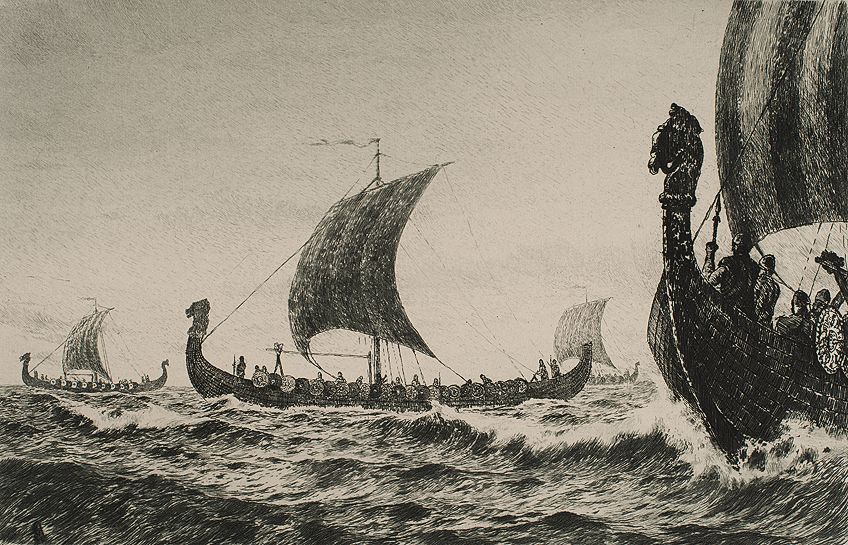
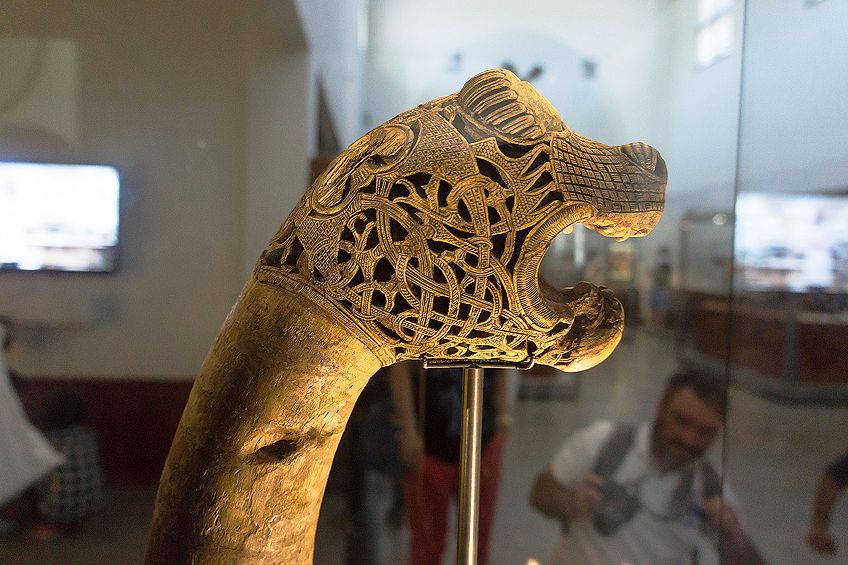
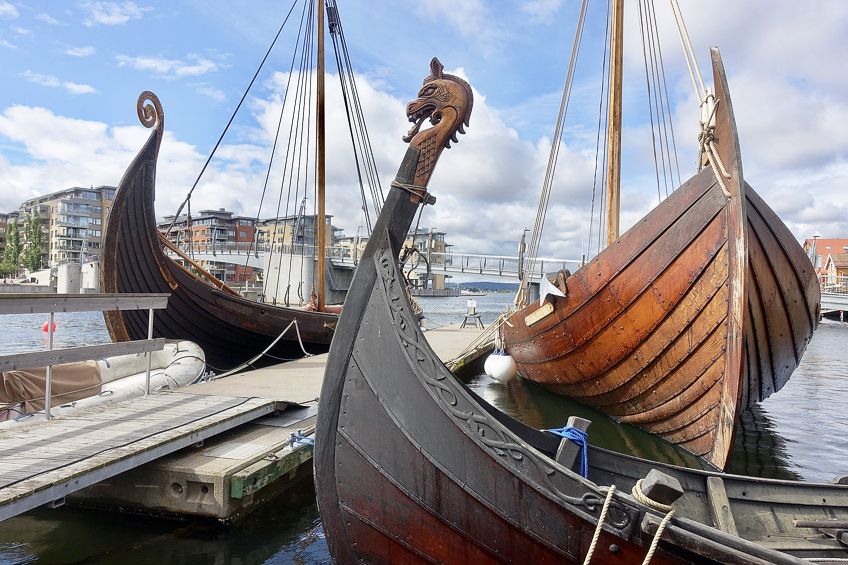
Longships made this mobility possible. Their clinker-built hulls, shallow draft, sails, and oars allowed crews to cross open water and travel into rivers. Ships were working technologies, symbols of prestige, and, in exceptional cases, elite burial settings. The Oseberg ship, built around 820 and used in a burial in 834, is especially important because its grave preserved carved wood, textiles, a wagon, sledges, and other objects that normally decay.
The Viking world was connected through exchange as well as conflict. Silver, glass, textiles, metalwork, and ideas moved over long distances, while local makers adapted motifs encountered in the British Isles, continental Europe, and farther east. Viking Art is consequently best understood as a Scandinavian visual tradition shaped by contact, not as an isolated “barbarian” style.
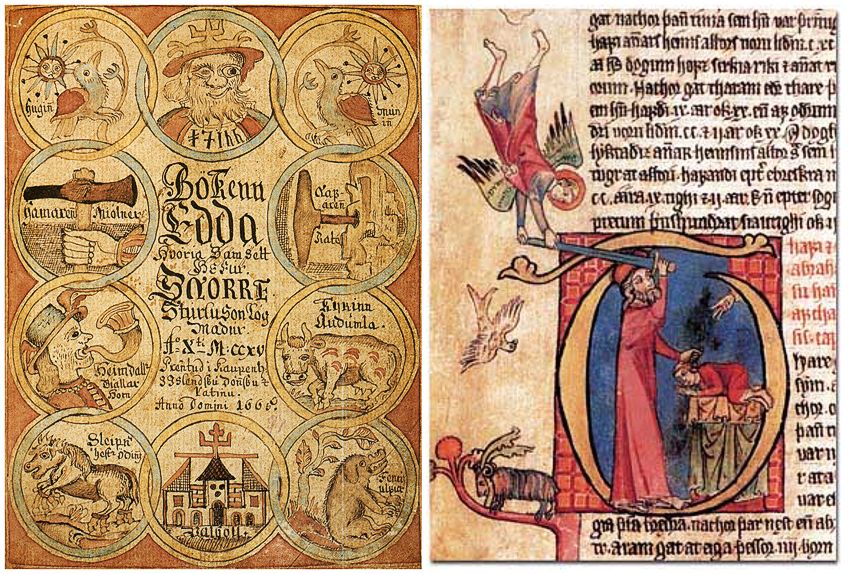
Norse religion and oral tradition also informed the visual world, but identifying a specific myth in an ornament is often difficult. The surviving Poetic Edda and Snorri Sturluson’s Prose Edda were written down in 13th-century Iceland, after the main Viking Age. They preserve indispensable material about Norse poetry and mythology, yet they are later textual witnesses rather than direct explanations for every earlier image.
Viking Art records a mobile and interconnected society through objects whose practical, social, religious, and commemorative functions often overlapped.
Viking Artwork
Much Viking artwork is ornament on useful or prestigious objects: brooches, pendants, buckles, weapon fittings, chests, wagons, ships, harness equipment, drinking vessels, and memorial stones. Calling this work “merely decorative” misses how ornament could display skill, wealth, allegiance, belief, memory, and access to materials. A carved or inlaid object communicated while it performed a function.
The surviving record is uneven. Metal and stone endure better than wood, leather, bone, and textiles, so museum collections do not represent everything Viking makers produced. The Oseberg burial is unusually valuable precisely because its conditions preserved wooden carvings and textiles that reveal a richer material environment.

Animals are central to Viking design. Makers elongated, compressed, doubled, and interlaced bodies until a creature might become both figure and pattern. Two recurring early motifs are the ribbon animal, with a long band-like body, and the gripping beast, whose paws clutch frames, neighboring forms, or its own body. Later styles developed the Great Beast, serpents, birds, foliate tendrils, and increasingly slender animals.
Interlace is not uniquely Norse, and the convenient phrase “Norse knotwork” can hide important differences. Scandinavian makers drew on earlier Germanic animal ornament and interacted with Insular, Carolingian, Byzantine, and other traditions. The result is not a simple borrowing from “Celtic Art,” but a changing network of shared techniques and locally distinctive solutions.
Viking artists worked in wood, stone, iron, bronze, silver, gold, bone, antler, walrus ivory, and textile. Techniques included carving, casting, gilding, niello, inlay, embroidery, and weaving. The choice of material affected the design: deep wood carving creates shadows and layered relief, while cast metal can repeat a compact motif on portable fittings.
Christianity did not replace pagan imagery overnight. The two systems overlapped during conversion, and makers could combine inherited animal ornament with crosses, Christ, or new funerary practices. The large Jelling stone is a key example because it presents runes, an interlaced beast and serpent, and an early Scandinavian image of Christ within one royal monument.
Viking Art Styles
Art historians organize Viking Age animal ornament into six principal, overlapping styles: Oseberg, Borre, Jellinge, Mammen, Ringerike, and Urnes. These categories are modern analytical tools named after findspots or major objects. They help date and compare objects, but they are not rigid schools with precise start and end dates. A single object can combine features, and regional versions in Britain, Ireland, the Baltic, and elsewhere may not fit a pure Scandinavian sequence.
| Style | Approximate Dates | Useful Recognition Clues | Key Reference |
|---|---|---|---|
| Oseberg | c. 775/800–875 | Ribbon animals, gripping beasts, dense carved relief | Oseberg ship and burial carvings |
| Borre | c. 850–975 | Compact symmetry, ring-chain interlace, gripping beasts | Borre cemetery fittings |
| Jellinge | c. 900–975 | S-shaped ribbon animals, beaded bodies, curled lips | Jelling silver cup |
| Mammen | c. 960–1000/1025 | Great Beast, birds, foliate tendrils, beading | Mammen axe and Jelling stone |
| Ringerike | c. 990–1050 | Great Beast, birds, snakes, energetic tendrils without beading | Runestones and carved stone |
| Urnes | c. 1050–1125 | Slender animals, elegant loops, almond eyes, asymmetry | Urnes Stave Church portal |
Oseberg Style (c. 775 – 875 CE)
The Oseberg style takes its name from the ship burial excavated near Tønsberg, Norway, in 1904–1905. The oak ship had first been a sailing vessel and was later used for the burial of two women. Its grave goods included a wagon, sledges, chests, textiles, buckets, animal-head posts, and richly carved ship timbers.
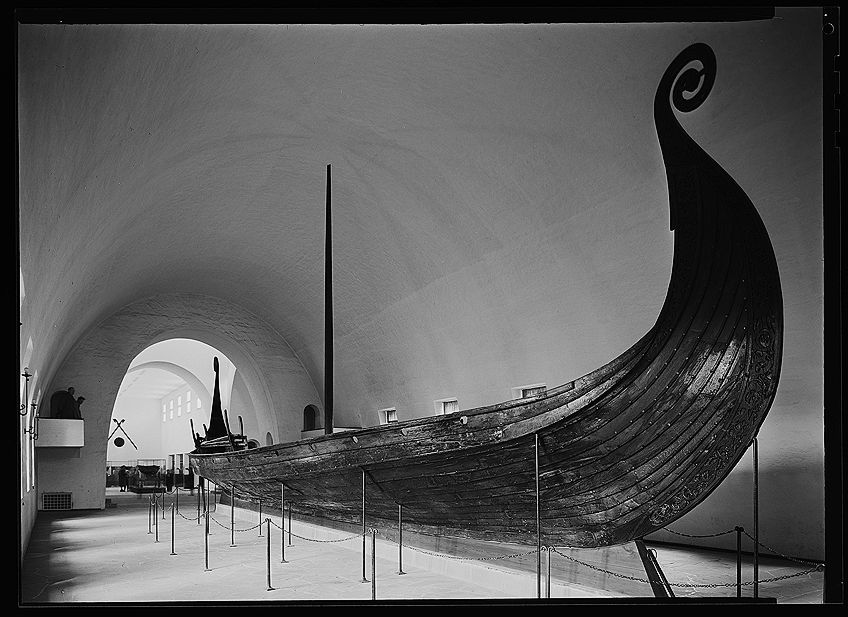
Oseberg ornament combines zoomorphic and geometric forms. Ribbon animals stretch into bands, while compact gripping beasts use distinct paws to clutch borders or neighboring creatures. Deeply carved wood produces overlapping planes and shadows, so the design changes as a viewer moves around it.
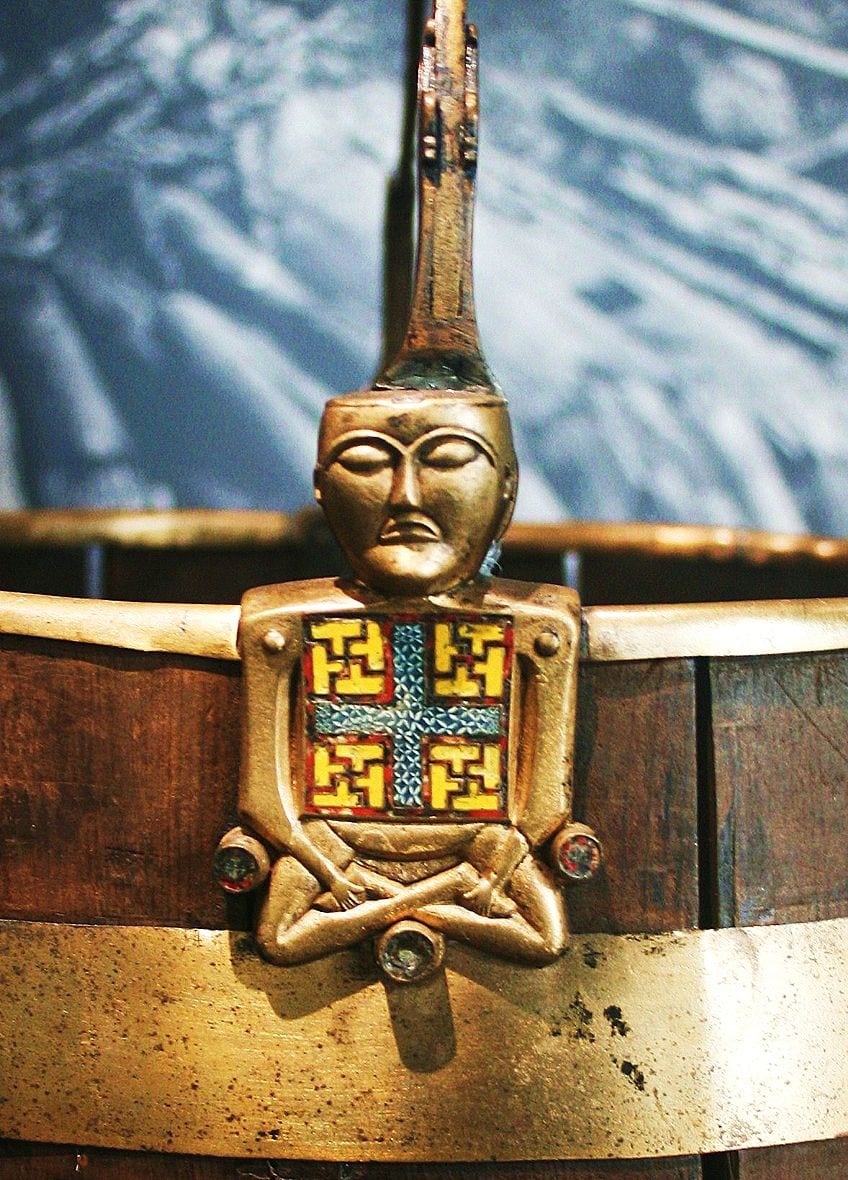
The so-called “Buddha bucket” illustrates the danger of turning resemblance into certainty. Its handle mounts show seated humanlike figures, but the nickname is modern and their identity remains debated. Comparisons with Buddhist or Celtic imagery are hypotheses, not proof that the object depicts the Buddha or the god Cernunnos.
Names such as the “Academician” and “Baroque Master” are scholarly labels for different carving hands or workshops, not known Viking artists. They help specialists compare technique and composition among the animal-head posts. The Broa finds from Gotland are closely related to early Viking ornament, which is why “Oseberg/Broa” sometimes appears as a combined label.
Borre (c. 850 – 975 CE)
The Borre style is named after fittings from the ship graves at Borre in Vestfold, Norway. It favors compact, often symmetrical compositions with little empty background. Gripping beasts, triangular or mask-like heads, rounded eyes, and the ring-chain or ring-braid pattern are useful identifiers.
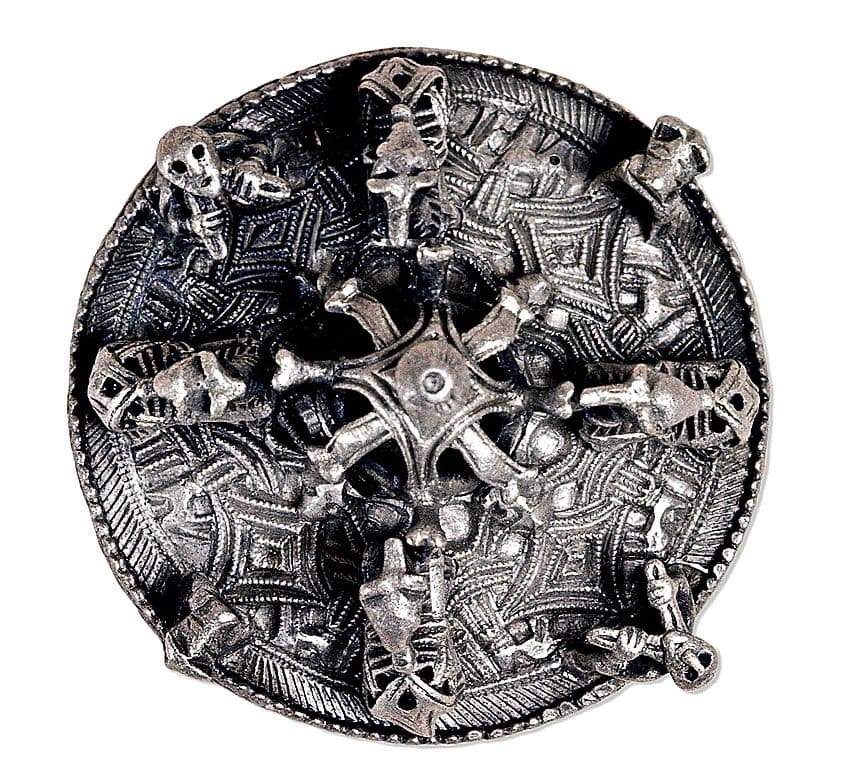
The cast silver disc brooch shown here demonstrates how human and animal figures can be organized into a circular field. Because bodies are compressed, repeated, and interlocked, the object rewards slow viewing from several orientations. Borre-style metalwork traveled widely and appears in Scandinavia, the British Isles, and Baltic regions, evidence of both movement and local adaptation.
Jellinge (c. 900 – 975 CE)
The Jellinge style—spelled with an added “e” in the art-historical name—is associated with the silver cup from a royal mound at Jelling, Denmark. Its principal animals have long S-shaped bodies, beaded interiors, profile heads, round eyes, curled lips, and lappets extending from the head. Compared with Borre, the field is often more open.
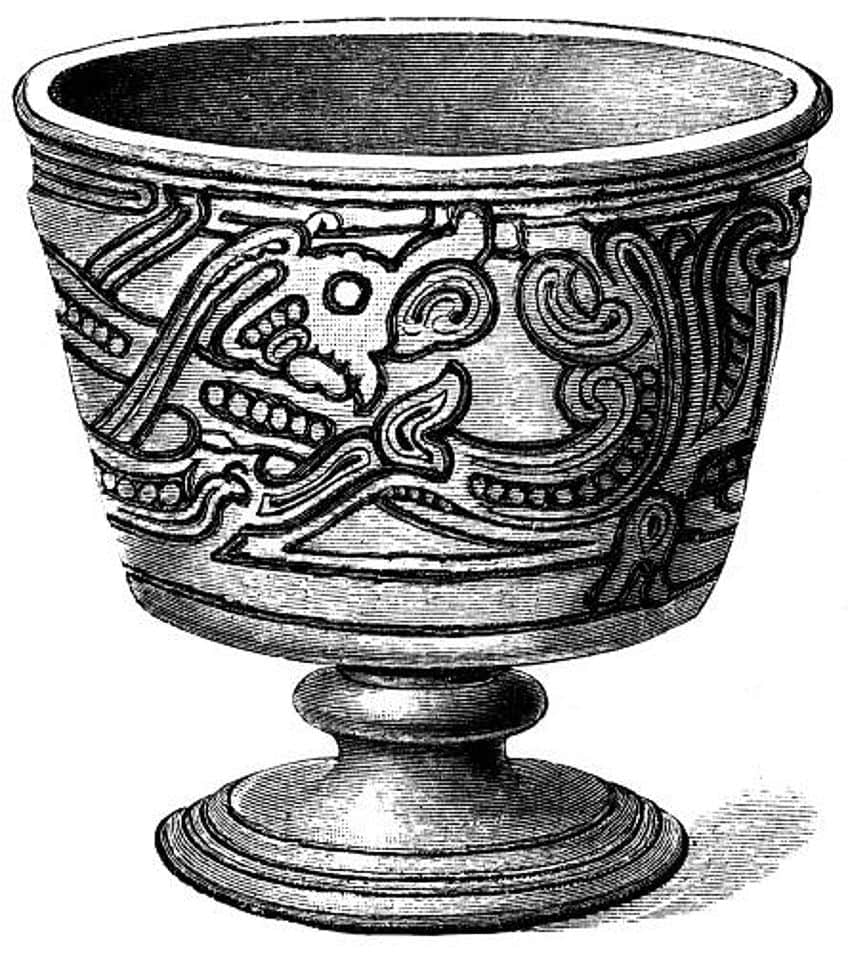
Jellinge is difficult to isolate because objects can share features with Borre and Mammen. It is therefore better treated as an overlapping phase than a sharply bounded movement. Its distribution beyond Denmark, including sculpture in northern England, also shows that the same motif could change when translated into different materials and regional traditions.
Mammen (c. 960 – 1000/1025 CE)
The Mammen style is named after a richly furnished grave at Mammen in Denmark, dated by wood to 970–971. A ceremonial iron axe from the burial is inlaid with silver. One face shows an elaborate bird intertwined with tendrils; the other has a plant- or tree-like design. The precious inlay distinguishes it from an ordinary working axe.
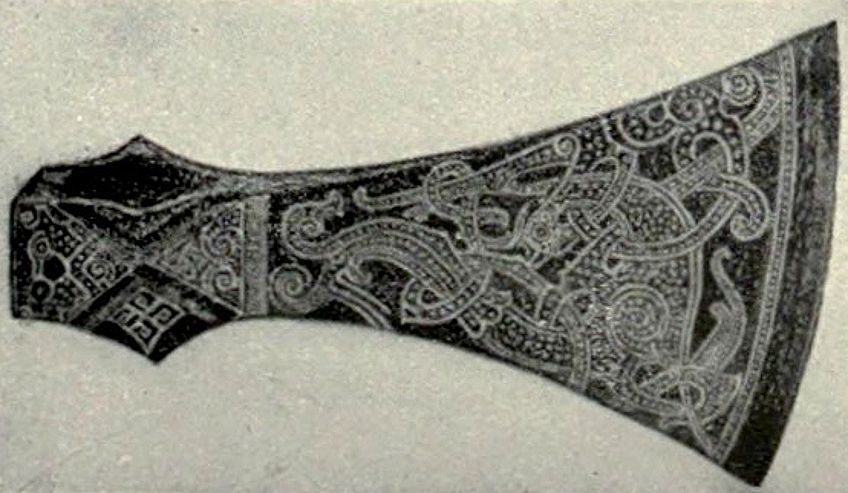
Reproduction of an ax head inlaid with silver, from Denmark (Viking Age); Unknown author Unknown author, Public domain, via Wikimedia Commons
Mammen compositions open further and develop the Great Beast, a large composite animal entangled with a serpent or vegetation. Foliate forms reflect contact with artistic traditions elsewhere in Europe, but their integration into Scandinavian animal ornament is distinctive.
The large Jelling stone, raised around 965 by Harald Bluetooth in memory of his parents Gorm and Thyra, is the most consequential monument connected with this style. Its inscription proclaims Harald’s rule and the Christianization of the Danes. One face shows a beast and serpent; another shows Christ surrounded by interlace. The imagery documents political authority and religious change without requiring a simple pagan-versus-Christian divide.
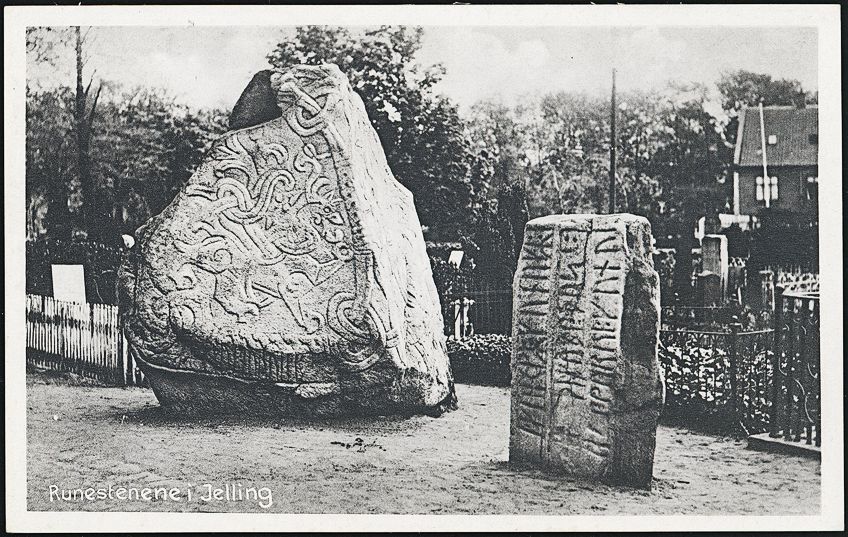
The earlier statement that Harald was a “devout Christian” goes beyond what the monument itself can prove. What can be established is that the stone publicly associates his kingship with Christianity. Likewise, the Great Beast may signify power, but its exact meaning is not securely known.
Ringerike (c. 990 – 1050 CE)
Ringerike ornament continues the Great Beast, double contour lines, spiral hip joints, birds, snakes, and foliate tendrils, but generally drops the beaded interiors characteristic of Jellinge and Mammen. Compositions can be energetic and asymmetrical, with tendrils of different thicknesses growing from animal bodies.
The style’s name refers to the Ringerike district of Norway, where suitable carved stone was quarried, rather than to a single defining archaeological discovery. Runestones, weapons, metalwork, and architectural fragments carry the style across Scandinavia and the British Isles.
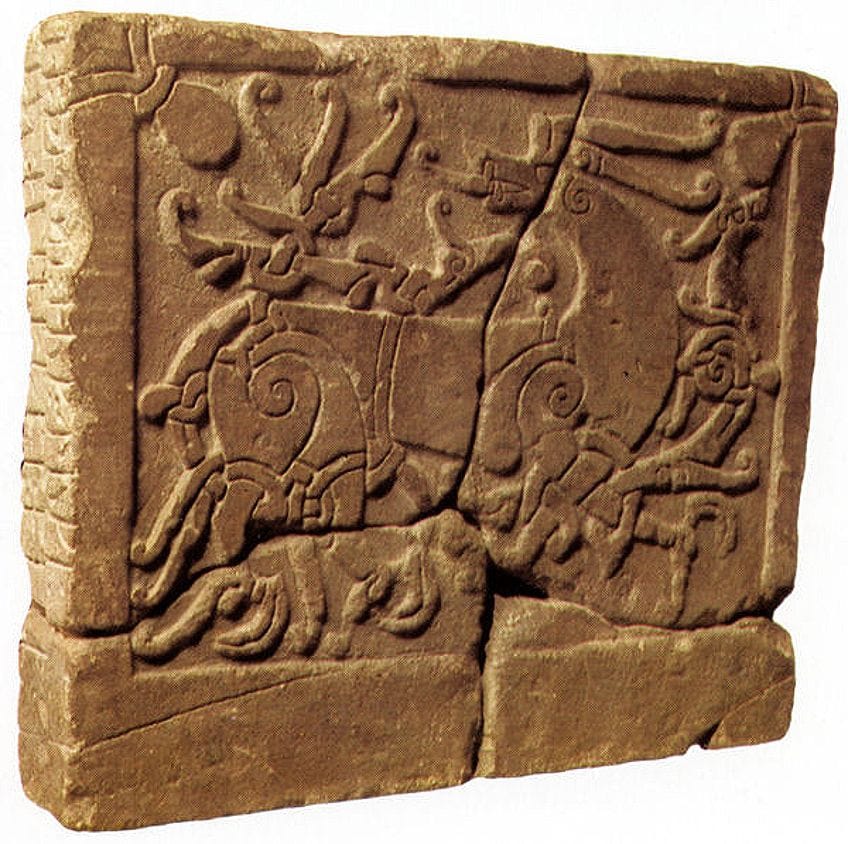
The stone from St Paul’s Churchyard in London shows the international reach of Scandinavian ornament. A Great Beast turns its head backward while serpents and smaller creatures bind the field. A runic inscription associates the monument with a Scandinavian-language community in an English city.
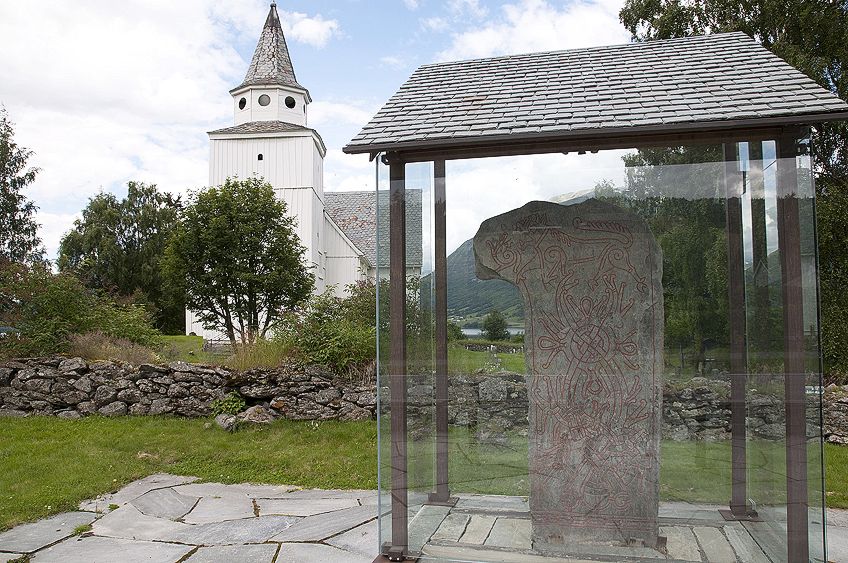
The Vang stone in Norway provides another version of Ringerike carving, with tendrils and an animal placed within a vertical memorial surface. Its red-painted appearance in modern photographs should not be assumed to reproduce an original Viking color scheme without object-specific evidence.
Urnes (c. 1050-1125 CE)
Urnes is the final principal Viking art style and takes its name from the carved portal preserved at Urnes Stave Church in western Norway. Although the present church dates from the 12th century, the decorated portal was reused from an earlier building. Its tall, slender Great Beast and looping serpent form a controlled but asymmetrical pattern.
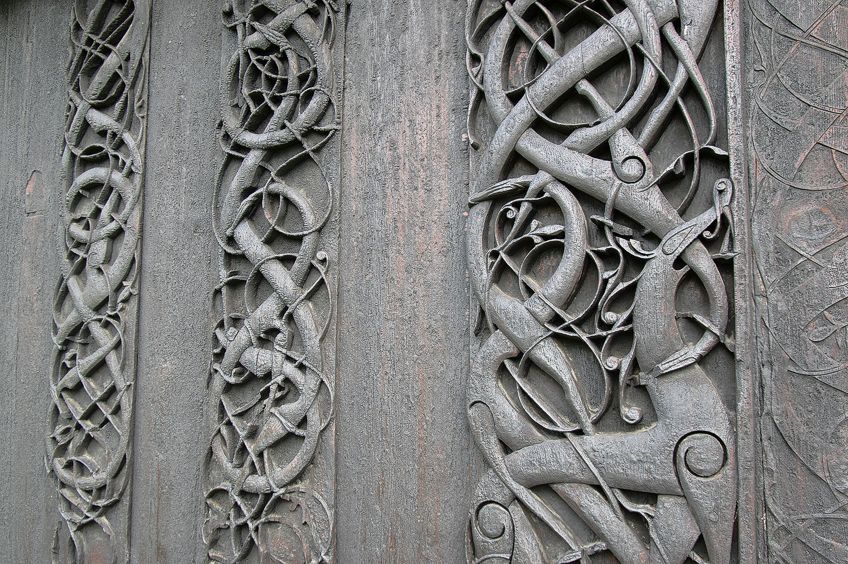
Urnes animals have narrow bodies, almond-shaped eyes, refined contours, and feet smaller than those in earlier gripping-beast designs. Thick and thin curves alternate, creating a clear visual hierarchy. The style belongs to a Christianizing and Christian medieval society, showing that Scandinavian animal ornament continued rather than disappearing at an arbitrary Viking Age endpoint.
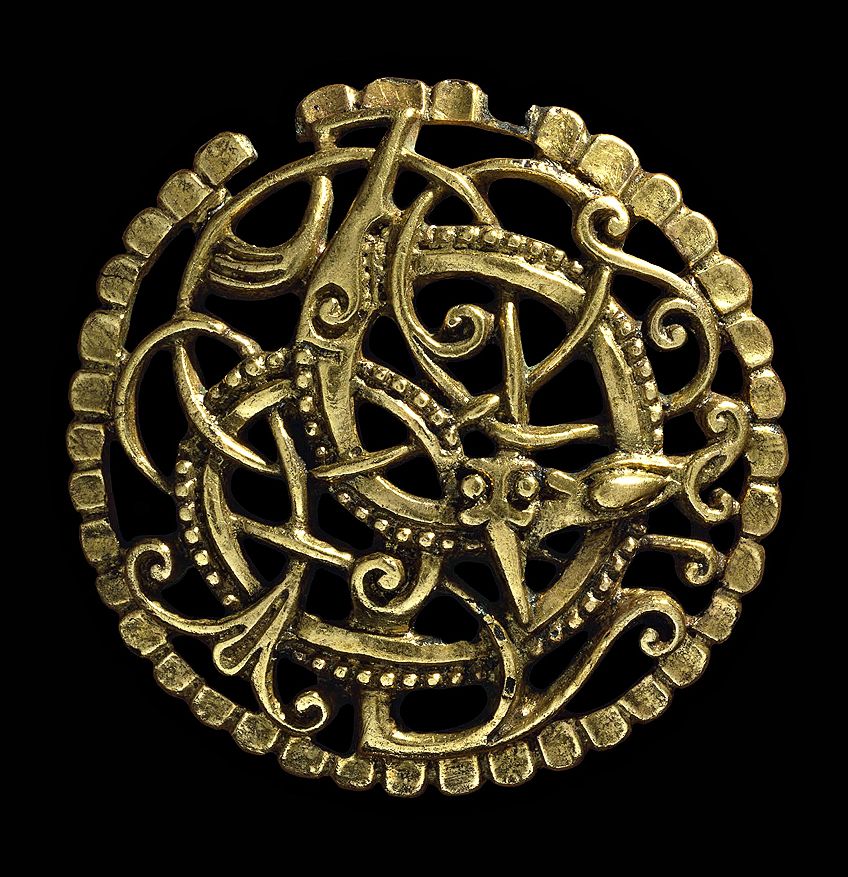
The Pitney brooch from Somerset demonstrates the style’s presence in England. Its gilt copper-alloy openwork compresses slender, interlaced animals inside a circular border. As with other portable objects, findspot does not automatically identify the maker; it shows circulation, use, or local production that must be assessed object by object.
The Viking Age Declines and the Romanesque Age Begins
There was no single moment when Viking Art ended and Romanesque Art began. By the 10th and 11th centuries, Scandinavian kingdoms were consolidating, Christianity was expanding, and burial practices were changing. These shifts reduced some types of pagan grave goods while creating new demand for churches, stone monuments, liturgical objects, and Christian images.

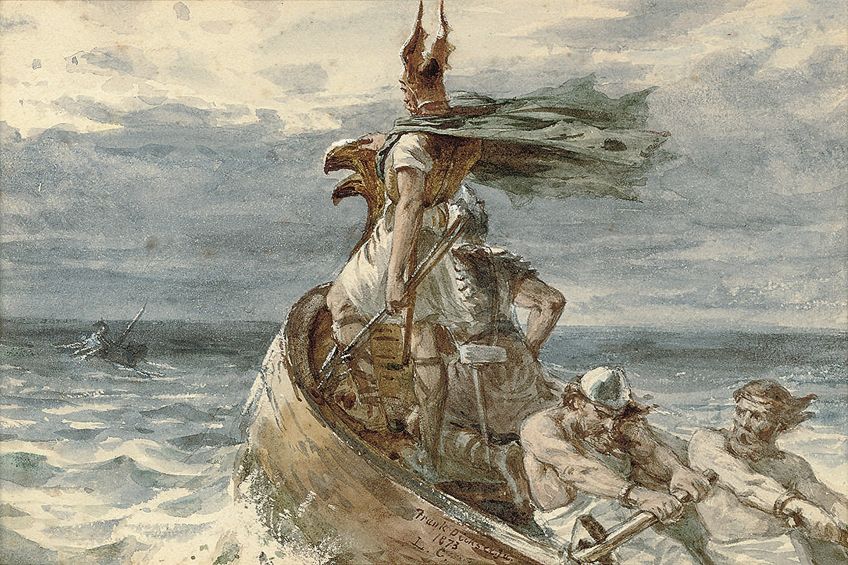
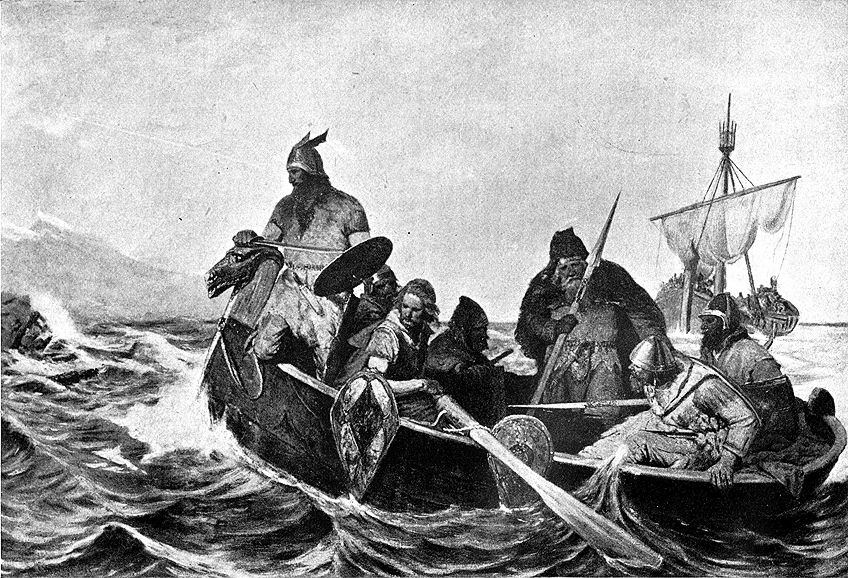
The supplied 19th-century image of Vikings heading for land is a later historical painting, not evidence of how Viking Age people represented themselves. It remains useful for understanding the romantic image of Vikings that developed in modern Europe. Horned helmets, uniform warrior identities, and other familiar clichés often belong to later theater, illustration, nationalism, film, and popular culture rather than archaeology.
Scandinavian animal ornament continued into church carving, manuscripts, metalwork, and regional Romanesque traditions. Urnes is the clearest bridge: its elegant interlace is both a late Viking style and part of a Christian architectural context. Period labels are therefore best used to track change, not to imply that one visual language vanished when another appeared.
The lasting significance of Viking Art lies in its ability to turn animal bodies, lines, materials, and objects into flexible systems of memory, identity, prestige, and belief.
Frequently Asked Questions
What Is Viking Art?
Viking Art is the visual and ornamental culture associated with Viking Age Scandinavia and Norse communities abroad, conventionally from the late 8th to the 11th century. It survives on ships, carved wood, jewelry, weapons, stone monuments, textiles, bone, and other objects, although preservation favors metal and stone.
What Were the Styles of Viking Art?
The six principal overlapping styles are Oseberg, Borre, Jellinge, Mammen, Ringerike, and Urnes. Their dates are approximate, and individual objects can combine features or adapt them to regional traditions.
What Are the Characteristics of Viking Art?
Common characteristics include stylized animals, ribbon-like bodies, gripping paws, serpents, interlace, spiral joints, foliate tendrils, asymmetry, and designs fitted closely to an object’s shape. The exact balance changes from dense Oseberg and Borre ornament to the slender, elegant animals of Urnes.
Was Viking Art Only Decorative?
No. Ornament could make an object beautiful, but it could also communicate status, memory, allegiance, belief, craftsmanship, or political authority. Practical, symbolic, and aesthetic functions often operated together.

Isabella studied at the University of Cape Town in South Africa and graduated with a Bachelor of Arts majoring in English Literature & Language and Psychology. Throughout her undergraduate years, she took Art History as an additional subject and absolutely loved it. Building on from her art history knowledge that began in high school, art has always been a particular area of fascination for her. From learning about artworks previously unknown to her, or sharpening her existing understanding of specific works, the ability to continue learning within this interesting sphere excites her greatly.
Her focal points of interest in art history encompass profiling specific artists and art movements, as it is these areas where she is able to really dig deep into the rich narrative of the art world. Additionally, she particularly enjoys exploring the different artistic styles of the 20th century, as well as the important impact that female artists have had on the development of art history.
Learn more about Isabella Meyer and the Art in Context Team.
Cite this Article
Isabella, Meyer, “Viking Art – The History of Norse and Viking Artwork.” Art in Context. June 2, 2021. URL: https://artincontext.org/viking-art/
Meyer, I. (2021, 2 June). Viking Art – The History of Norse and Viking Artwork. Art in Context. https://artincontext.org/viking-art/
Meyer, Isabella. “Viking Art – The History of Norse and Viking Artwork.” Art in Context, June 2, 2021. https://artincontext.org/viking-art/.