

Metal Museum Opens Overton Park Campus After $35M Campaign

Memphis’s Metal Museum has inaugurated its expanded Overton Park campus after a $35 million capital campaign, a transformation the museum calls its most significant since opening to the public in 1979. A ribbon cutting took place September 4 and a public celebration follows September 5, but regular museum hours do not begin until September 11.
The Metal Museum Opening Has Three Different Dates
Calling September 5 the opening is accurate, but incomplete. WMC reported that the institution held its ribbon cutting on Friday, September 4. The museum scheduled its free grand-opening celebration for noon to 4 p.m. Central time on Saturday, September 5, with exhibitions, metalworking demonstrations, hands-on activities, music, and food.
Regular admission is a separate milestone. The museum’s visitor information says normal hours begin Friday, September 11, after the temporary closure: 11 a.m. to 5 p.m., Wednesday through Sunday. The distinction matters for anyone who sees images from the celebration and assumes the galleries are immediately on their usual schedule.
| Date | Milestone |
|---|---|
| September 4 | Ribbon cutting |
| September 5 | Free public celebration |
| September 11 | Regular hours begin |
The new address is 1930 Poplar Avenue in Overton Park.

Rust Hall in Overton Park before its conversion into the Metal Museum. Photograph by Kenneth C. Zirkel via Wikimedia Commons, licensed under Creative Commons Attribution-Share Alike 4.0 International; cropped.
What “Three Times Larger” Actually Measures
Several scale claims surround the move, and they describe different things. Memphis Business Journal calls the Overton Park facility triple the space of the previous location, while a pre-opening account from We Are Memphis says “nearly three times.” Published comparisons differ: We Are Memphis says the facility is nearly three times the size of the former location, while WKNO reported an increase from about 17,000 to 75,000 square feet.
The program-specific increases are different. Memphis Magazine reported that the new metalworking area is three times the size of the space on the Bluff and that dedicated education space is eight times larger. Those figures should not be blended into one claim about the whole museum: workshops, classrooms, galleries, storage, and public circulation each have their own baseline.
| Measure | Reported change |
|---|---|
| Overall facility | Nearly threefold |
| Metalworking area | Threefold |
| Education space | Eightfold |
The often-repeated $35 million figure needs similar precision. The National Endowment for the Humanities award record identifies a $35 million capital expansion campaign and a $500,000 challenge grant for Rust Hall’s renovation and restoration. That establishes the campaign scale, not a published final construction-only bill.
The expansion is consequential because metal art requires unusually demanding infrastructure. Forging, casting, fabrication, enameling, repair, and large-object handling cannot simply share a white-walled gallery. At the former Bluff facility, active projects sometimes had to yield space to classes. Purpose-built zones and cranes at Overton Park allow production and teaching to operate together.
A Museum Organized Around Making as Well as Display
The Metal Museum’s permanent collection contains more than 3,000 objects, from contemporary hollowware, sculpture, and studio jewelry to historic works dating back to the Renaissance. Its holdings also include more than 6,000 books and folios and over 36,000 architectural drawings, photographs, and slides. More storage and flexible galleries therefore change what can be studied and shown, not merely how many visitors fit inside.
The opening exhibition, From the Bluff to the Park: The Metal Museum’s Collection Through Time, makes that institutional history its subject. The museum says the display follows the collection from its founding in 1979 through the current expansion. Works named on the exhibition page include Martha Banyas’s copper, enamel, and wood Winter’s Water: Rite of Passage; Marilyn da Silva’s steel, pewter, and copper Dwelling II; and Denise Wallace’s sterling-silver and fossilized-walrus-ivory brooch.
That arrangement is an act of curating, not a neutral greatest-hits display: early collecting choices, historical objects, and recent acquisitions are used to explain how the museum formed its identity. A second inaugural exhibition, Strike! Pour! Create!, shifts attention from collecting to labor by presenting work by more than 20 current and former apprentices. Together, the shows make the move legible through objects and makers rather than treating Rust Hall as an architectural launch with art added afterward.
The new Fine Metals Studio, Martha Banyas Enamel Studio, and adjoining demonstration area also broaden the kinds of practice visitors can encounter. The museum says ventilation and dedicated-space limits had previously kept fine metals less prominent than larger-scale work. Jewelry and enameling now gain purpose-built footing beside blacksmithing, foundry work, and fabrication.
Rust Hall Is Part of the Museum Experience
Rust Hall was designed by Memphis architect Roy Harrover for what became Memphis College of Art. The NEH describes it as an early Memphis example of modern architecture, while project architect LRK says the rehabilitation used the Federal Historic Tax Credit Program. The conversion retained the building’s identity while adding a metal-studio wing, accessible entry sequence, classrooms, offices, a café terrace, and a renovated 350-seat auditorium.
The result puts the question of whether architecture is art directly in a museum visit. Restored daylight, views into working shops, and a sculpture walk do more than house the program: they choreograph how visitors move between finished objects, active craft, and the park. Memphis Magazine reports that 14 sculptures have been installed outdoors, including Edwin “Ted” Rust’s Ikon, which had long stood at the former college.
The adaptive reuse also preserves an arts-education site after Memphis College of Art closed in 2020. Yet the Metal Museum is not simply taking over an art school’s rooms. Furnaces, ventilation, lifting equipment, visible workshops, and collections storage recast the building for a specialist institution whose subject is both the object and the process that made it.
The Bluff Campus Is Being Retained, Not Replaced
The move creates a two-campus institution. At Overton Park, the public can see exhibitions and the permanent collection, watch work in the Metals Studios, and attend classes and demonstrations. The museum’s current campus description assigns the riverfront site to an expanded artist-residency program, with further public engagement expected in 2027.
That division is more than a real-estate footnote. Overton Park concentrates public-facing display, interpretation, and introductory learning in a central location. The 3.2-acre Bluff campus preserves a quieter setting, on-site studios, housing potential, and the longer working time residencies require. It also keeps the institution connected to the historic site it has occupied since opening to the public in 1979.
The split allows the museum to separate activities that once competed for limited room. A visitor can encounter metalwork as collection, exhibition, and live demonstration at Overton Park; a resident artist can use the Bluff as a sustained production environment.
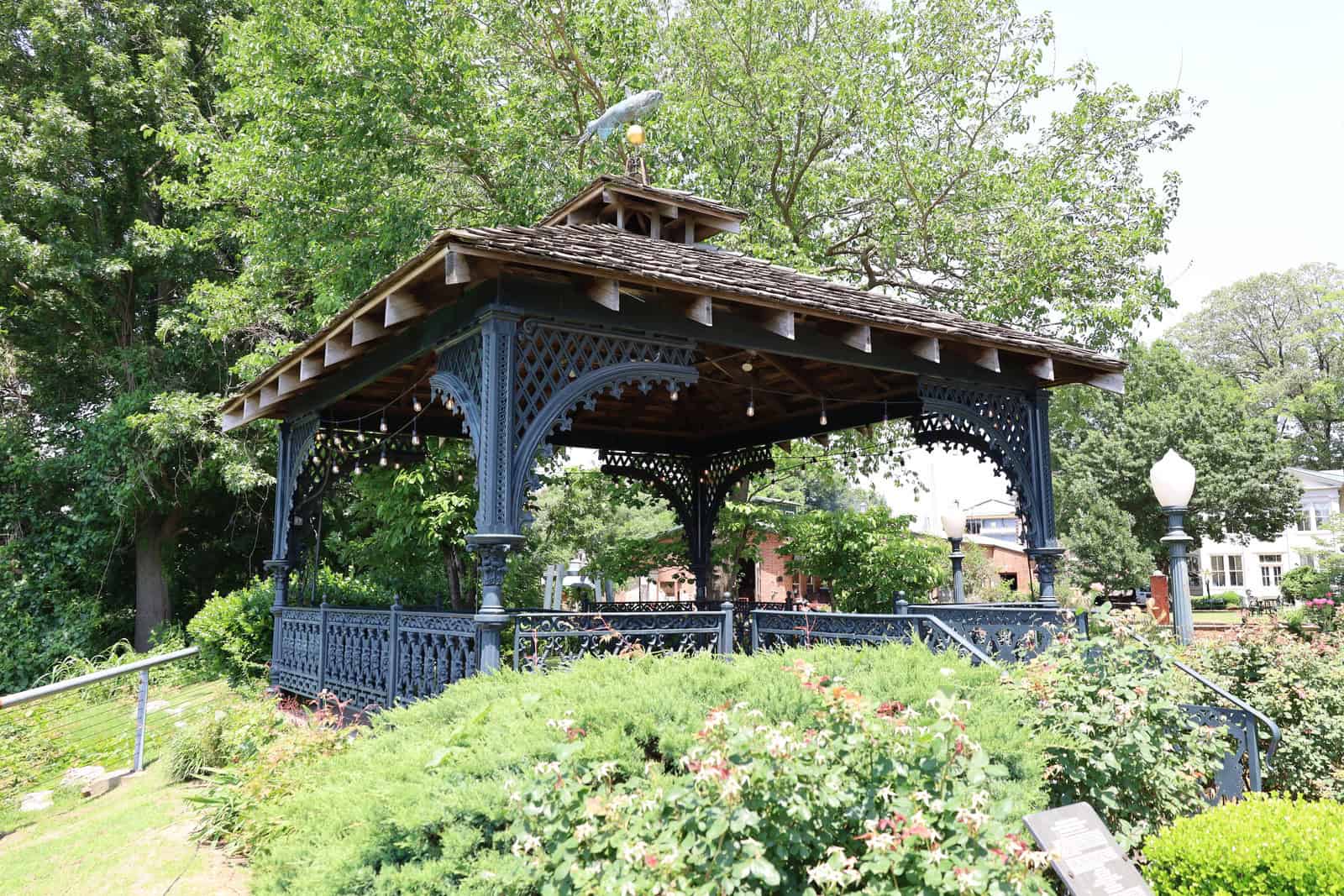
The gazebo at the Metal Museum’s retained Bluff campus in 2022. Photograph by Antony-22 via Wikimedia Commons, licensed under Creative Commons Attribution-Share Alike 4.0 International; cropped.
The Expansion Is Bigger Than a Change of Address. The expansion establishes Overton Park as the museum’s principal public campus while the Bluff remains in use for artist residencies and future engagement.

Isabella studied at the University of Cape Town in South Africa and graduated with a Bachelor of Arts majoring in English Literature & Language and Psychology. Throughout her undergraduate years, she took Art History as an additional subject and absolutely loved it. Building on from her art history knowledge that began in high school, art has always been a particular area of fascination for her. From learning about artworks previously unknown to her, or sharpening her existing understanding of specific works, the ability to continue learning within this interesting sphere excites her greatly.
Her focal points of interest in art history encompass profiling specific artists and art movements, as it is these areas where she is able to really dig deep into the rich narrative of the art world. Additionally, she particularly enjoys exploring the different artistic styles of the 20th century, as well as the important impact that female artists have had on the development of art history.
Learn more about Isabella Meyer and the Art in Context Team.
Choose Art in Context as a preferred source to see more of our reporting in Google Top Stories and other Google Search experiences.
Cite this Article
Isabella, Meyer, “Metal Museum Opens Overton Park Campus After $35M Campaign.” Art in Context. September 6, 2026. URL: https://artincontext.org/metal-museum-overton-park-opening/
Meyer, I. (2026, 6 September). Metal Museum Opens Overton Park Campus After $35M Campaign. Art in Context. https://artincontext.org/metal-museum-overton-park-opening/
Meyer, Isabella. “Metal Museum Opens Overton Park Campus After $35M Campaign.” Art in Context, September 6, 2026. https://artincontext.org/metal-museum-overton-park-opening/.


